Getting a dental implant should not cause sharp pain during placement because local anesthesia numbs the treatment area, although you can feel pressure or vibration. Soreness, swelling, and tenderness are expected afterward as the numbness wears off. For your 2026 treatment plan, ask about both comfort during surgery and pain management at home, especially if you also need an extraction or bone graft.
- Is getting a dental implant painful? Local anesthesia prevents surgical pain; soreness afterward needs a separate care plan.
- Harmony Dental Group offers dental implants for patients in La Jolla and nearby San Diego neighborhoods.
- Tell your dentist immediately if you feel sharp pain during placement; pressure and vibration are different sensations.
- Increasing pain, fever, pus, or worsening swelling need prompt dental assessment, not reassurance from a recovery timeline.
Is getting a dental implant painful?
Implant placement should feel numb, not sharply painful. The injection that provides local anesthesia can briefly sting, and you can still notice movement, pressure, or vibration after the area becomes numb. Your dentist should check the anesthesia before beginning and pause if you report pain.
Recovery is different from the procedure itself. Once the anesthesia wears off, the gum and surrounding tissues can feel sore, especially when eating or brushing near the surgical area.
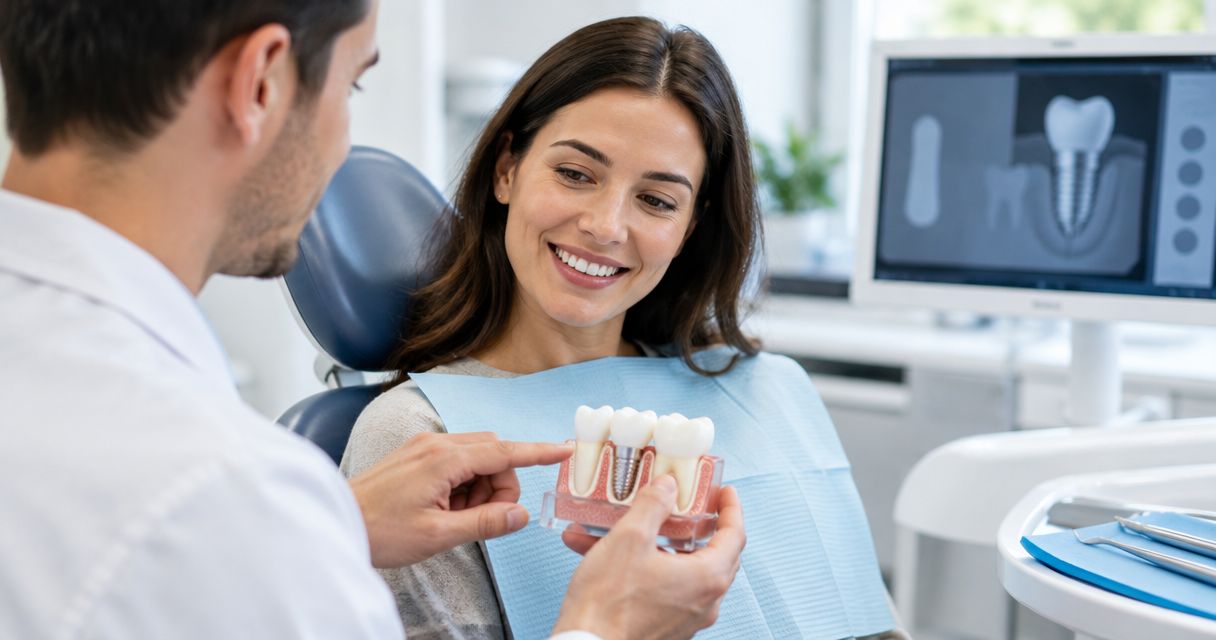
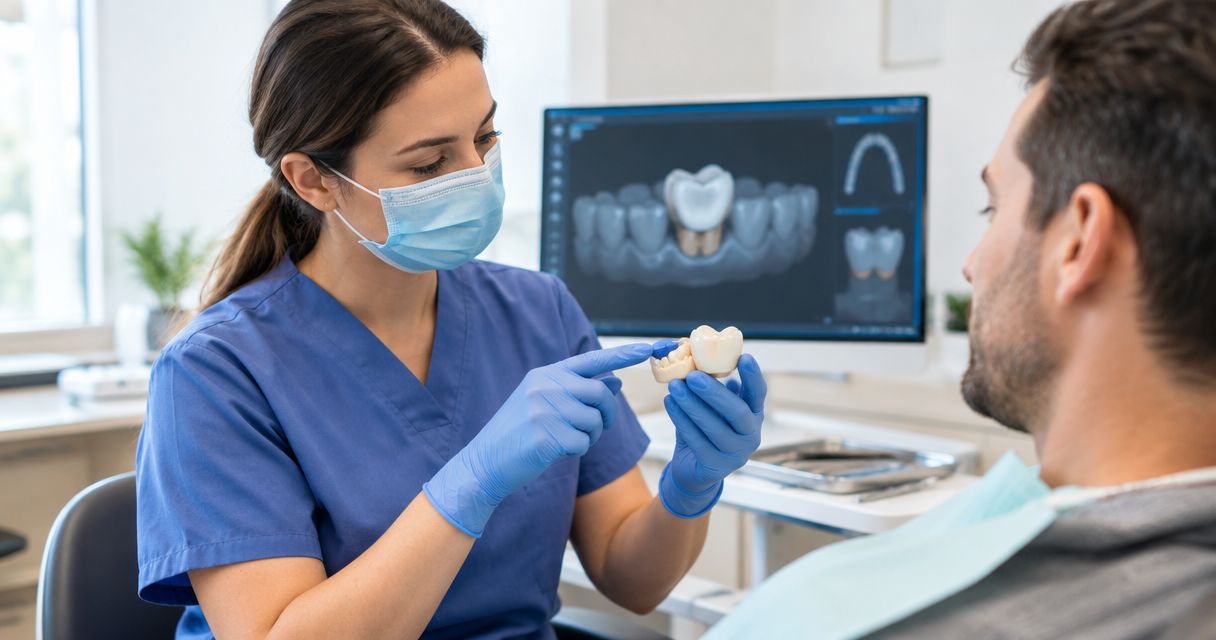
For local patients considering treatment, Harmony Dental Group offers dental implants in La Jolla. A consultation is the place to discuss your medical history, dental anxiety, and the treatment steps that affect comfort.
| Treatment stage | What you might feel | What to do |
|---|---|---|
| Numbing injection | A brief pinch, sting, or pressure | Tell the dentist about previous difficulty getting numb |
| Implant placement | Pressure, vibration, or movement | Report sharp pain immediately |
| Early recovery | Soreness, swelling, bruising, or tenderness | Follow the written aftercare and medication instructions |
| Later healing | Gradual improvement rather than escalating discomfort | Contact the dental team if pain increases or returns |
This table describes common experiences, not a promise about your recovery. The extent of surgery and your health matter more than another patient's account.
Why this matters
Fear of pain can make it difficult to arrange an implant consultation, even when you want a fixed replacement for a missing tooth. You do not have to commit to surgery to ask how the procedure would work.
Separate three questions: Will I be numb, will I feel anxious, and how will I manage recovery? Local anesthesia addresses surgical pain. Anxiety support and postoperative care address different needs, so each deserves a clear answer.
For a 2026 consultation, bring a medication list and describe any past dental experience that made you uncomfortable. Specific information helps the dentist plan around your needs rather than assume that a routine explanation is enough.
What does the numbing injection feel like?
A local anesthetic injection can produce a brief sting or burning sensation as the medication enters the tissue. The dentist then allows time for it to work and checks the treatment area before proceeding.
Being numb does not remove every sensation. You can notice pressure without feeling the sharpness associated with pain, and sounds or vibration can still feel unfamiliar.
Tell the dentist if a previous procedure remained painful despite anesthesia. Also mention any suspected reaction to an anesthetic, including what happened and whether you needed medical care; feeling faint or having a racing heartbeat does not by itself establish an allergy.
Local anesthesia: best for numbing the surgical area
Local anesthesia blocks pain signals from the treatment site while you remain awake. It is the foundation of comfort for many implant procedures, including those where additional anxiety support is used.
Its benefit is targeted numbness. Its limitation is that it does not necessarily reduce worry, awareness of sounds, or the feeling of pressure.
Agree on a stop signal before treatment, such as raising your hand. You should not have to tolerate sharp pain to finish an implant appointment. Tell the team rather than waiting for the next planned pause.
Sedation: best for discussing significant dental anxiety
Sedation can help selected patients feel more relaxed, but it is not a substitute for numbing the surgical site. The suitable approach depends on your health, medications, anxiety level, and the planned procedure.
The benefit is reduced anxiety or awareness, depending on the method. The trade-off is that some methods require fasting, an escort, monitoring, and restrictions on driving afterward.
| Comfort approach | Best for | Main benefit | Limitation or responsibility |
|---|---|---|---|
| Local anesthesia | Preventing pain at the implant site | Numbs the treatment area | Does not necessarily relieve anxiety |
| Nitrous oxide | Selected patients needing anxiety relief | Helps with relaxation during treatment | Does not replace local anesthesia |
| Oral or IV sedation | Selected patients with greater anxiety or procedural needs | Can reduce awareness or distress | Requires medical screening and method-specific safety instructions |
These are general dental approaches, not a statement that every method is available at this practice. Review the sedation dentistry options for anxious patients, then ask which methods are appropriate and available for your procedure.
Why dental implant discomfort varies
An implant procedure is not identical for every patient. These factors help explain why someone else's experience cannot predict yours:
- Extent of surgery: Treating several sites involves more tissue than treating a single site, although pain does not follow a simple implant-count formula.
- Tooth extraction: Removing a tooth creates another healing wound, whether extraction happens before or during implant treatment.
- Bone grafting: Adding bone material can introduce another surgical step and change the aftercare plan.
- Gum condition: Inflammation or existing disease needs assessment before the dentist plans treatment.
- Health and medications: Medical conditions and medicines can affect healing and the choice of pain relief.
- Smoking and home care: Smoking interferes with healing, while cleaning and eating instructions help protect the surgical area.
Ask your dentist which factors apply to you. An individualized explanation is more useful than a general promise that implants are easy or painless.
How should you prepare for comfortable implant treatment?
A good preparation plan covers the appointment and the period after you leave. Use these steps when discussing your 2026 implant treatment:
- Share your history. Include prescription medicines, supplements, allergies, smoking, relevant medical conditions, and previous anesthesia problems. Do not stop prescribed medication without instructions from the treating clinician.
- Confirm the procedure. Ask whether the appointment includes implant placement alone, an extraction, bone grafting, or another step. Clarify what happens now and what happens later.
- Agree on comfort. Discuss local anesthesia, anxiety support, a stop signal, and any transport or fasting requirements. Follow the instructions for your actual treatment rather than a generic online checklist.
- Plan recovery. Get written guidance on medication, eating, cleaning, activity, and whom to contact with concerns. Arrange help if your sedation instructions require it.
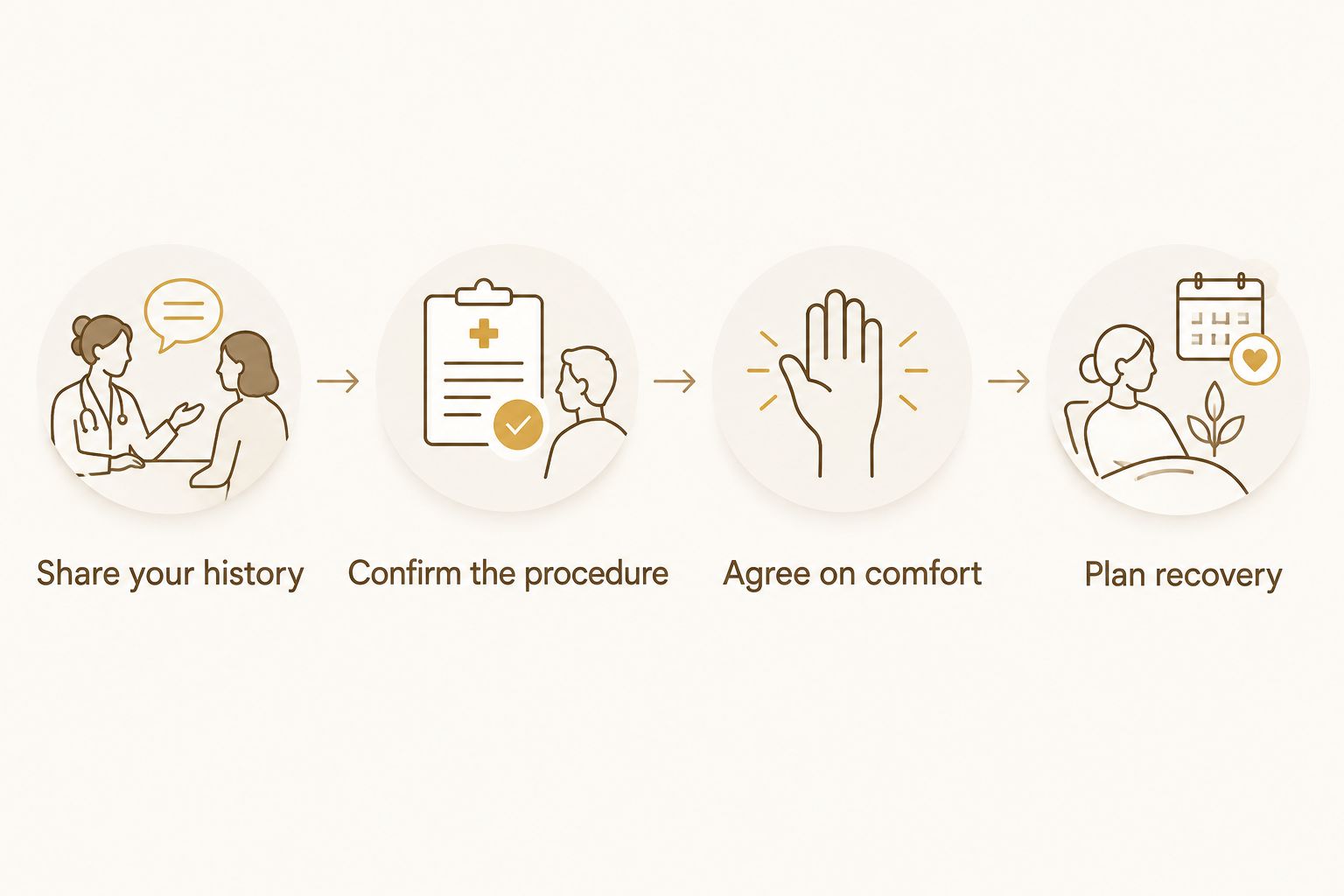
Bring your questions in writing if anxiety makes it hard to remember them. Ask the dentist to explain unfamiliar terms and identify which instructions are essential for your particular surgery.
Discuss your implant comfort plan
Ask about implant treatment, anesthesia, and recovery for your situation.
How long does soreness last after a dental implant?
Soreness after implant placement is usually most noticeable during early recovery and should gradually improve. Swelling can increase before it begins to settle, so comfort does not always improve steadily from the moment you leave.
During the first 24 hours, follow the instructions for bleeding control, food, activity, and protecting the surgical site. Swelling commonly peaks around 48–72 hours after oral surgery, but that general pattern does not determine whether your symptoms are safe.
The direction of your symptoms matters more than a deadline. Pain that becomes stronger, returns after improvement, or remains poorly controlled deserves a call to the dental team.
Gum comfort and implant healing are also different milestones. Feeling better does not mean the implant is ready for unrestricted chewing or that the bone has finished healing around it.
What helps with pain after implant surgery?
Follow the medication plan provided by your dentist. Nonprescription pain relievers are not suitable for everyone, and the right choice depends on your medical history, other medicines, and the procedure.
Tell the dentist about blood thinners, kidney disease, stomach ulcers, liver disease, pregnancy, and medication allergies. Avoid combining products without checking their ingredients; different packages can contain the same pain reliever.
Other care measures support comfort without replacing assessment:
- Choose foods with the texture and temperature your surgical instructions allow.
- Keep pressure off the treated area as directed.
- Use cold packs only as instructed, with a barrier protecting your skin.
- Clean the rest of your mouth and follow the specific instructions for the surgical site.
- Avoid smoking and follow restrictions on strenuous activity.
Do not place aspirin directly on the gum or use leftover antibiotics. Contact the dental team if the prescribed plan does not control your discomfort.
When is pain after a dental implant a warning sign?
Increasing pain, pus, fever, worsening swelling, or a newly loose implant or restoration needs prompt dental assessment. Do not assume that stronger pain is simply part of normal healing.
Contact your dental team promptly about persistent numbness or tingling after the expected anesthetic period, especially if it is not improving. Describe where you feel it and when it began.
Difficulty breathing or swallowing, rapidly spreading swelling, or uncontrolled bleeding requires urgent medical attention. Do not wait for a routine follow-up appointment when these symptoms occur.
At your 2026 consultation, ask for daytime and after-hours contact instructions. Knowing whom to call is part of preparation, not a sign that a complication is expected.
Is a dental implant more painful than a tooth extraction?
A dental implant is not automatically more painful than a tooth extraction. Both procedures use anesthesia, and recovery depends on the tissues involved and the complexity of the surgery.
A straightforward implant placement and a difficult extraction are not equivalent procedures. Ask your dentist to compare the actual treatment planned for you, particularly if extraction and implant placement happen together.
Can you get a dental implant if you are afraid of pain?
Dental anxiety does not automatically rule out an implant. Tell the dentist what worries you most: the injection, loss of control, sounds, gagging, or recovery.
Harmony Dental Group offers dental implant care for local patients seeking tooth replacement. Ask for a step-by-step explanation and an agreed stop signal before deciding whether to proceed.
FAQ
Will I feel the dentist placing the implant?
You can feel pressure, vibration, or movement, but you should not feel sharp pain when the area is adequately numb. Tell the dentist immediately if a sensation hurts so treatment can pause and anesthesia can be reassessed.
Does the injection for a dental implant hurt?
The numbing injection can briefly sting or pinch. Tell your dentist if injections are your main concern so you can discuss how the injection will be given and how numbness will be checked.
Will I be asleep during dental implant surgery?
You are not automatically asleep during implant surgery; many procedures use local anesthesia while you remain awake. Sedation and general anesthesia are different approaches that require individual assessment and confirmation of availability.
Can I drive home after getting a dental implant?
Driving depends on the anesthesia, sedation, medication, and instructions for your procedure. Do not drive after sedating medication unless your treating clinician's instructions explicitly permit it; arrange an escort when required.
Is throbbing pain after a dental implant normal?
Some early discomfort can occur, but throbbing pain that worsens, returns after improvement, or is poorly controlled needs dental advice. Fever, pus, or increasing swelling strengthens the need for prompt assessment.
Can I take my usual pain medicine after an implant?
Take your usual pain medicine only after confirming that it fits your implant aftercare plan. Your dentist needs to check your other medicines, health conditions, and the risk of duplicate ingredients.
What should I ask at a dental implant consultation in 2026?
Ask what the procedure includes, how the site will be numbed, and how you should manage discomfort afterward. Also request written warning signs, follow-up instructions, and a contact route for concerns.
One last thing
Pain relief and bone healing run on different schedules. An implant can feel comfortable before it is ready for the chewing forces that your final restoration will carry.
Keep follow-up appointments even when you feel well. For a 2026 implant consultation at Harmony Dental Group, ask two separate questions: when should discomfort improve, and when can this implant safely take chewing pressure?