Dental implants can last for decades, but they are not guaranteed to last a lifetime. The crown or other replacement teeth attached to an implant can wear out before the implant itself, so long-term care includes both protecting the supporting bone and maintaining the visible restoration. For patients considering treatment in 2026, the useful question is not just how long an implant lasts, but what keeps each part healthy and repairable.
- How long do dental implants last? Potentially decades, with healthy supporting bone, daily cleaning, and professional monitoring.
- An implant post and its dental crown have different maintenance needs; crown replacement does not automatically mean implant failure.
- Harmony Dental Group offers dental implant care for patients in La Jolla considering replacement teeth.
- Bleeding, swelling, looseness, or a changed bite deserves a dental assessment, even when an implant does not hurt.
How long do dental implants last?
An implant can remain functional for decades, while its crown, connector, or other attached restoration needs repair or replacement sooner. There is no expiration date that applies to every patient. Gum health, bone support, cleaning access, and biting forces all affect the outcome.
For local treatment planning, Harmony Dental Group provides dental implant care for patients in La Jolla. A consultation should explain the condition of your mouth and the maintenance your proposed restoration will require, rather than promise a fixed lifespan.
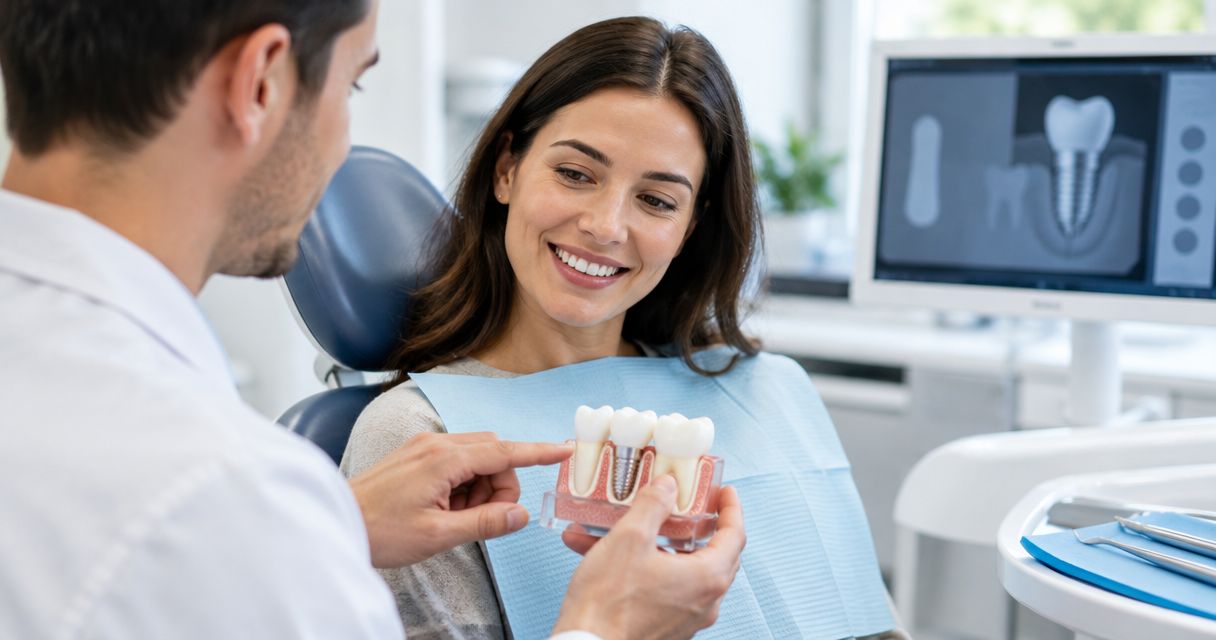
| Implant component | What it does | What can shorten its useful life | What maintenance addresses |
|---|---|---|---|
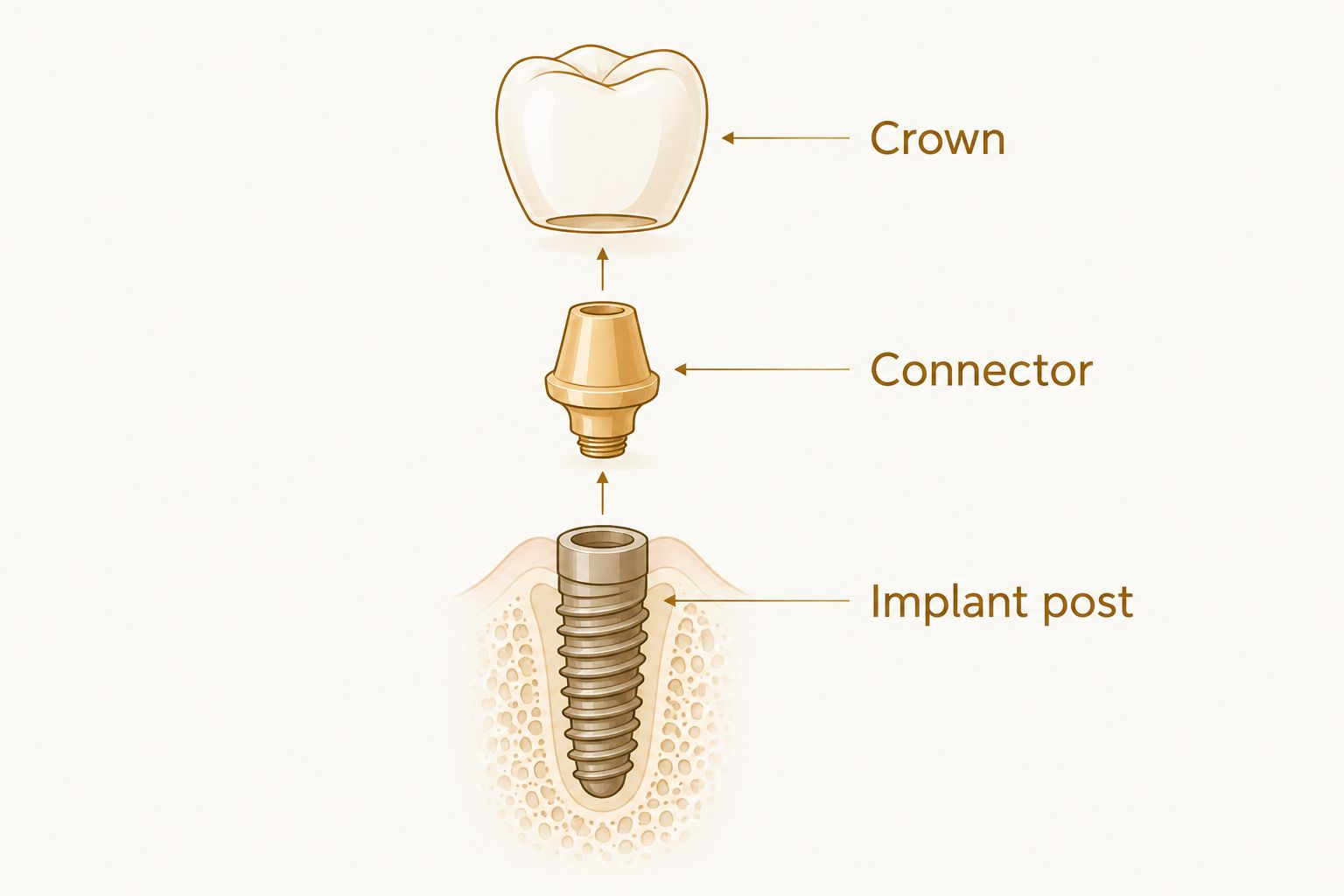
| Implant post | Anchors the replacement tooth in the jawbone | Loss of supporting bone, infection, or mechanical failure | Tissue health, stability, and bone support |
| Connector | Joins the implant to the visible restoration | Loosening, damage, or excessive force | Connection stability and component condition |
| Crown | Replaces the visible chewing surface | Chipping, fracture, wear, or changes in the bite | Fit, chewing contact, and restoration integrity |
A repaired crown does not necessarily mean the implant has failed. Likewise, a crown that looks intact does not prove the bone and gums underneath are healthy. Your dentist checks both.
Why this matters
An implant is a long-term treatment commitment, not a maintenance-free replacement tooth. Understanding the difference helps you ask better questions before surgery and recognize problems after healing.
If you are comparing treatment in 2026, ask what happens when a component needs attention. You want to understand how the restoration is cleaned, how its condition is checked, and whether a damaged part can be repaired without removing a healthy implant.
Plan for ongoing care, not a lifetime guarantee. That approach gives you a more realistic basis for deciding whether treatment fits your health needs and daily routine.
Implant post: longevity depends on healthy support
The implant post sits in the jawbone. During healing, bone forms a connection with its surface, creating the foundation for the replacement tooth. That connection must remain stable under everyday chewing forces.
The benefit is fixed support without relying on a neighboring tooth to hold the replacement. The limitation is that implant placement requires surgery, adequate support, and continued monitoring; an implant does not make surrounding tissues immune to disease.
Inflammation around an implant can progress to loss of supporting bone. Dentists call this condition peri-implantitis. It is different from a cavity, but it can threaten the implant's stability.
Ask your dentist how existing gum disease, smoking, medical conditions, or available bone affect your treatment plan. These questions matter more than a general lifespan estimate that ignores your mouth.
Connector: a small component that needs attention
The connector, often called an abutment, links the implant post to the restoration. Some designs also use a screw to secure components together. The exact arrangement depends on the planned replacement teeth.
A connection that loosens can make a tooth feel unstable or change how your bite meets. That does not automatically mean the implant post has lost its connection to the bone, but you cannot reliably distinguish those problems at home.
The practical advantage of a component-based restoration is that some mechanical problems can be addressed without removing the implant. The limitation is that repair depends on the cause, the condition of the parts, and access to the connection.
Do not keep testing a loose implant tooth by wiggling it. Avoid chewing on it and arrange an assessment.
Implant crown: expect wear rather than immunity
The crown is the visible tooth-shaped restoration above the gumline. It handles chewing and contributes to the appearance of your smile. Unlike a natural tooth, an implant crown cannot develop tooth decay, but it can chip, crack, or wear.
That distinction is reassuring, but it is not a reason to relax your cleaning routine. Plaque still collects around the restoration and can irritate the surrounding tissues. Any remaining natural teeth also remain vulnerable to decay.
A crown's condition depends partly on fit and bite. Grinding, clenching, and chewing very hard objects can put additional stress on the restoration or its connections.
During a 2026 implant consultation, ask how your dentist will evaluate the bite and what would make a crown repair preferable to replacement. Neither option should be assumed before the restoration is examined.
Why dental implant longevity varies
Dental implant longevity depends on the environment around the implant and the forces placed on it. These factors belong in your discussion before treatment:
- Gum health: Existing periodontal disease needs assessment and management. Bleeding around an implant is not something to dismiss as normal aging.
- Daily cleaning: Plaque collects around implant restorations. Your cleaning method must reach the gumline and spaces beneath or between replacement teeth.
- Smoking: Tobacco use increases the risk of implant complications and impaired healing. Discuss cessation support before treatment.
- Medical health: Conditions such as diabetes, particularly when poorly controlled, affect healing and infection risk. Share your medical history and medications.
- Biting forces: Grinding, clenching, or an uneven bite can stress the restoration and its components. A protective appliance is appropriate only after assessment.
- Professional follow-up: Examinations allow your dentist to assess tissue health, component stability, and changes that require treatment.
None of these factors supplies a personal expiration date. Together, they help your dentist identify risks and explain what you can change.
Does the type of implant restoration change maintenance?
Yes. Replacing an individual tooth and supporting a larger set of replacement teeth create different cleaning and repair needs. Neither design removes the need to care for the gumline.
| Restoration | Best for | Practical benefit | Maintenance limitation |
|---|---|---|---|
| Single implant crown | Replacing an individual missing tooth when clinically suitable | Provides a separate replacement without using neighboring teeth as bridge supports | Requires cleaning around the crown and monitoring its connection |
| Implant-supported bridge | Replacing several missing teeth when the proposed support is suitable | Replaces a span of teeth with a fixed restoration | Cleaning beneath the bridge requires suitable tools and instruction |
| Implant-supported full arch | Replacing a complete arch when clinically suitable | Supports a full set of replacement teeth | Cleaning access and repairs require planning for the entire restoration |
For a closer look at treatment layouts, review the comparison of single implants and full-arch implant options. The right choice follows an examination, not a ranking based only on the number of missing teeth.
Before accepting a plan, ask your dentist to demonstrate how you would clean the proposed restoration. A design you cannot clean effectively deserves further discussion.
How do you help dental implants last longer?
The most useful maintenance plan is one you can carry out consistently. Start with these steps, then follow the instructions specific to your restoration.
- Brush carefully. The American Dental Association recommends brushing for 2 minutes, 2 times a day, with fluoride toothpaste. Fluoride protects your remaining natural teeth; brushing also removes plaque around implant restorations.
- Clean between teeth daily. The American Dental Association recommends interdental cleaning 1 time a day. Ask which floss, interdental brush, or other aid fits your implant restoration without injuring the tissue.
- Keep your recommended visits. Your dentist should set a follow-up schedule based on your gum health, restoration, and risk factors. Do not assume every patient needs the same interval.
- Address grinding and clenching. Report jaw soreness, worn teeth, or repeated restoration damage. Ask whether bite adjustment or a professionally fitted protective appliance is appropriate.
- Report changes promptly. New bleeding, swelling, discomfort, looseness, or difficulty cleaning deserves attention. Waiting for severe pain can delay treatment.
For your 2026 home-care routine, ask for a hands-on demonstration rather than a list of tools. You should leave knowing where to clean and what healthy tissue looks like around your particular restoration.
What are the warning signs of an implant problem?
A loose replacement tooth, new swelling, or bleeding around an implant needs assessment. Other changes include tenderness, discharge, persistent bad taste, gum recession, or a bite that suddenly feels different.
These signs do not all mean the same thing. A loose connector needs a different response from inflammation with bone loss, and pain alone cannot tell you which problem is present.
Contact your dental office rather than trying to tighten a component yourself. If swelling spreads or you have trouble swallowing or breathing, seek urgent medical care.
At an assessment, describe when the change started, whether chewing triggers it, and whether the restoration moves. Bring any detached component with you rather than attempting to glue it back into place.
Can a dental implant last a lifetime?
A dental implant can remain functional for a lifetime, but that outcome is not guaranteed. A healthy implant post and an aging crown can exist together, so the phrase does not mean every original component stays unchanged.
For patients planning treatment in 2026, a better question is: what will you monitor, and what would require repair? That answer makes a long-term treatment plan more useful than an unconditional promise.
Does replacing an implant crown mean the implant failed?
Replacing an implant crown does not automatically mean the implant failed. If the post remains stable and the supporting tissues are healthy, treatment can focus on the damaged restoration or connection.
Your dentist must identify the cause first. Replacing a crown without addressing an uneven bite or an underlying tissue problem leaves the original issue unresolved.
When should you book an implant consultation?
Book a consultation when you want to replace missing teeth and understand the surgical, restorative, and maintenance requirements before deciding. You do not need to know which implant design you want in advance.
Harmony Dental Group is a local option for La Jolla patients considering dental implant treatment. Bring your medication list, relevant health history, and questions about cleaning, healing, and future repairs.
Ask for an explanation of your gum and bone health, any treatment needed before placement, and the proposed replacement teeth. A clear plan should separate what is known from what requires further assessment, without promising a guaranteed lifespan.
FAQ
How long do dental implants last with good care?
Dental implants can last for decades with healthy supporting tissues and consistent care, but no personal lifespan is guaranteed. The crown or other attached restoration can need repair or replacement before the implant post does.
Can dental implants get cavities?
Dental implants and implant crowns cannot develop cavities, but the tissues around them can become inflamed or infected. Your remaining natural teeth still need protection against decay.
Is bleeding around a dental implant normal?
Bleeding around a dental implant deserves a dental assessment, especially if it persists or occurs with swelling or tenderness. Do not stop cleaning the area entirely; ask your dentist how to clean it gently and effectively.
What should I do if my implant tooth feels loose?
Avoid chewing on a loose implant tooth and contact your dentist. The problem can involve the crown, connector, or implant post, and an examination is needed to distinguish them.
Do I need a night guard after getting a dental implant?
A night guard is appropriate when your dentist identifies grinding, clenching, or another reason to protect the restoration. Not every implant patient needs the same appliance.
How often should I have my dental implant checked?
Your dentist should set an implant follow-up schedule based on your tissue health, restoration, and individual risks. New symptoms need attention even if your next routine visit is not due.
Can I discuss implant longevity at Harmony Dental Group?
Harmony Dental Group offers dental implant care in La Jolla, where you can discuss treatment and maintenance questions. Ask how your oral health and proposed restoration affect long-term care.
One last thing
Before choosing an implant plan in 2026, ask your dentist to show you the cleaning route around the proposed replacement teeth. Being able to reach those surfaces matters after the excitement of a new smile has passed.
An implant that feels comfortable still needs monitoring. Do not use the absence of pain as your maintenance plan.