
A root canal does not have a fixed appointment length: treatment can finish during one visit or require separate visits, depending on the tooth’s anatomy, infection, and whether it has been treated before. For your 2026 schedule, allow for more than the cleaning and sealing procedure itself—an examination, numbing, and a later crown or filling can involve additional appointment time.
- How long does a root canal take? Tooth anatomy, infection, and previous treatment determine your appointment length.
- Finishing the root canal does not always mean finishing the tooth’s permanent restoration.
- Harmony Dental Group suits La Jolla families seeking general and restorative dental care.
- Ask whether your scheduled visit includes examination, treatment, and a temporary or permanent restoration.
How long does a root canal take?
Your dentist should estimate the appointment length after identifying the tooth and reviewing its condition. A straightforward tooth and a tooth with narrow, curved, or previously treated canals do not require the same work. The scheduled visit also includes steps beyond removing damaged tissue.
The most useful distinction is between the time spent treating the canals and the time needed to finish protecting the tooth. Ask which part your appointment covers before arranging work, transportation, or childcare.
| Appointment plan | Best for | Main advantage | Main limitation |
|---|---|---|---|
| Treatment completed during one visit | Teeth the clinician determines can be cleaned and sealed during that visit | Avoids a separate canal-treatment appointment | Does not necessarily include the permanent crown or filling |
| Treatment divided across visits | Cases requiring additional cleaning, medication, or reassessment | Allows treatment to continue when the tooth is ready | Requires another appointment and care of a temporary seal |
| Separate restoration appointment | Teeth needing a permanent filling or crown after canal treatment | Completes the plan to seal and protect the tooth | Adds another scheduling step after the root canal |
For local families seeking general and restorative dental care, Harmony Dental Group is a relevant starting point in La Jolla. Ask whether an initial evaluation and any necessary referral come before treatment scheduling.
Why this matters
A root canal appointment and a completed tooth are not always the same milestone. You can finish treatment inside the roots and still need a permanent restoration before the tooth is ready for normal chewing.
For a 2026 treatment plan, ask for the full sequence rather than just the length of the next visit. That keeps an examination, an emergency visit, and definitive treatment from becoming interchangeable in your calendar.
Plan around the whole tooth, not just the root canal. Understanding what happens afterward helps you protect the treated tooth and avoid leaving a temporary restoration in place longer than instructed.
Treatment completed during one visit
A clinician can complete some root canals during a single treatment visit. That decision depends on whether the canals can be located, cleaned, disinfected, dried, and sealed appropriately—not simply whether you prefer fewer appointments.
The benefit is fewer visits devoted to the canal treatment itself. The limitation is that a longer appointment can be tiring, and a permanent crown or filling can still require separate care.
Before the visit, ask what the booking includes. A treatment-only appointment differs from an appointment that also includes diagnosis, imaging, and a discussion of your options.
Tell the dental team if keeping your mouth open is difficult or you need breaks. Comfort matters, and the team needs that information when planning your appointment.
Treatment divided across visits
Some teeth need treatment across separate appointments. A clinician might place medication inside the canals and a temporary seal between visits, or arrange another visit to complete cleaning and sealing.
The advantage is that the clinician can respond to the condition of the tooth rather than force completion into a predetermined schedule. The trade-off is another appointment and the need to protect the temporary restoration between visits.
An additional visit does not, by itself, mean treatment has failed. Ask what remains unfinished, why another appointment is needed, and what symptoms should prompt a call before you return.
Do not assume that reduced pain means you can skip the next appointment. Symptom relief and completion of treatment are different things.
What happens during the appointment?
Root canal treatment follows a clinical sequence, although the details depend on the tooth. Knowing the stages helps explain why the work cannot be timed from symptoms alone.
- Examination. The clinician reviews your symptoms, examines the tooth, and uses appropriate imaging to assess the roots and surrounding tissues. Testing helps determine whether a root canal is the right treatment.
- Numbing. Local anesthetic helps prevent pain during treatment. Tell the clinician if you feel sharp pain so comfort can be reassessed before work continues.
- Isolation. A dental dam separates the tooth from the rest of your mouth. It helps keep saliva away from the treatment area and protects you from small instruments and materials.
- Canal cleaning. The clinician accesses the inside of the tooth, removes damaged or infected tissue, and cleans and shapes the canals. Small or curved canals require careful work.
- Sealing. The canals are filled and sealed when clinically appropriate. The opening in the tooth then needs a temporary or permanent restoration, depending on the treatment plan.
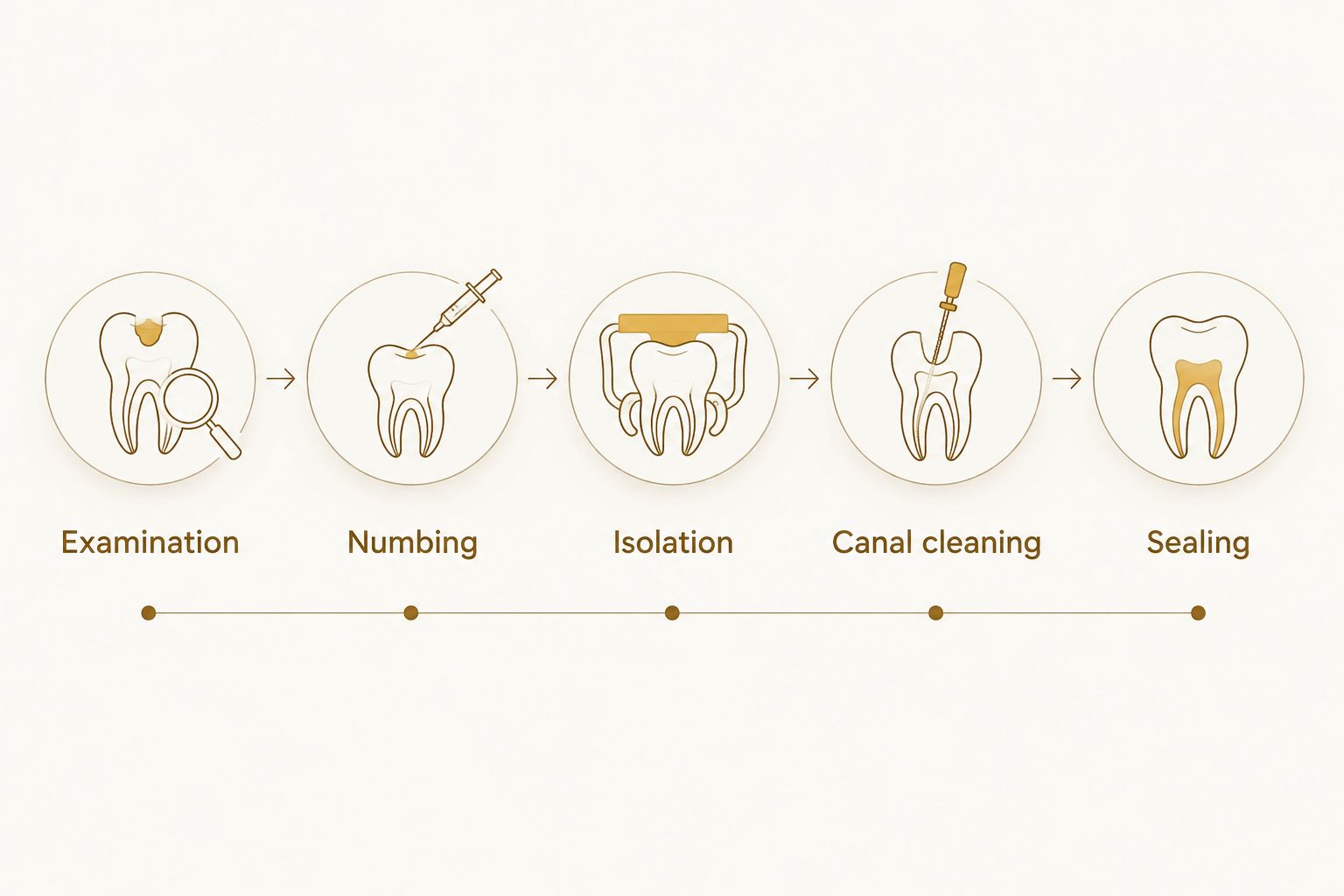
Not every stage takes the same amount of time in every tooth. A clinician also needs to check the work rather than move directly from opening the tooth to closing it.
Why root canal appointment length varies
The following factors explain why another person’s appointment is not a reliable estimate for yours. Ask which ones apply to your tooth.
- Tooth anatomy. Front teeth and back teeth have different root and canal patterns. More canals mean more spaces to locate, clean, and seal.
- Canal shape. Narrow, curved, or calcified canals can be harder to access. Calcification means mineral deposits have reduced the space inside the canal.
- Infection and drainage. The condition inside and around the tooth affects treatment decisions, including whether treatment should continue at another visit.
- Previous root canal treatment. Retreatment can involve removing existing filling material and investigating why the tooth has not healed as expected.
- Remaining tooth structure. Decay, broken areas, and existing restorations can affect access, isolation, and the plan for rebuilding the tooth.
- Comfort and treatment needs. Additional numbing, breaks, or separately arranged sedation can change how the appointment is organized.
Do not choose treatment based on speed alone. The goal is appropriate cleaning, sealing, and restoration of a tooth that can be maintained—not the shortest possible appointment.
Does a molar root canal take longer than a front tooth?
A molar generally involves more complex canal anatomy than a front tooth, so it can require more treatment time. The number, shape, and accessibility of the canals matter more than the tooth’s visible size.
That is a planning principle, not an individual prediction. A front tooth with a difficult-to-find canal can still require careful, extended treatment.
For your 2026 appointment, ask the clinician to identify the tooth and explain any anatomical difficulty visible during assessment. That gives you a more useful answer than comparing appointment lengths with a friend.
Does the appointment include the crown?
A root canal appointment does not automatically include a permanent crown. Root canal treatment addresses the tissue inside the tooth; a filling or crown restores the opening and helps protect the remaining tooth afterward.
Back teeth commonly need crowns after root canal treatment because they carry substantial chewing forces. The amount of remaining tooth structure, existing restorations, and bite also influence the recommendation.
Ask whether the planned restoration is temporary or permanent and when it should be completed. Until then, follow instructions about chewing on the treated side, especially if the tooth has a temporary filling or significant structural damage.
How should you plan the rest of your day?
Build your 2026 schedule around the appointment estimate given by the treating office, plus travel and any instructions related to medication or sedation. Do not assume the appointment ends the moment the canals are sealed.
Before leaving, make sure you understand the following:
- Eating: Wait until numbness has worn off before chewing, and follow the clinician’s food instructions.
- Driving: Ask whether any planned medicine or sedation requires an escort or makes driving unsafe afterward.
- Work: Discuss physically demanding duties, speaking requirements, and whether you need flexibility after treatment.
- Medication: Review your health conditions, medicines, allergies, and any pain-relief instructions with the dental team.
- Follow-up: Confirm the next appointment and whom to contact if symptoms change.
You do not need to guess what is normal. Ask for written aftercare instructions and keep them where you can find them once you are home.
How long does recovery take after a root canal?
Recovery is separate from appointment length, and tenderness does not necessarily end when treatment does. The tissues around the root can remain sensitive while they settle, especially if the tooth was painful before treatment.
Follow your clinician’s instructions and contact the office if pain worsens, swelling develops, your bite feels uneven, or the temporary restoration comes out. These concerns need advice rather than an assumption that every symptom is routine.
Trouble breathing or swallowing, rapidly spreading swelling, or swelling affecting the eye requires emergency medical care. Do not wait for a routine dental follow-up when those symptoms occur.
What should you ask before booking?
A short conversation can prevent scheduling confusion. Give the team a clear description of your symptoms and mention any previous treatment on that tooth.
Ask these questions before confirming the visit:
- Is this appointment for an examination, emergency relief, or completing treatment?
- What appointment length should I reserve for this particular tooth?
- Is another canal-treatment visit expected, and what would make it necessary?
- Will I leave with a temporary restoration or a permanent one?
- Who will complete the crown or filling, and when should that happen?
- Do my medicines, health conditions, or anxiety affect the plan?
Harmony Dental Group offers general and restorative dental care to La Jolla patients. When requesting an evaluation, explain whether you need help with current pain, an existing root canal recommendation, or a restoration after treatment.
FAQ
Can a root canal be finished in one appointment?
Some root canals can be completed during one treatment appointment. The clinician decides based on the tooth’s anatomy and condition, and a permanent crown or filling can still require another visit.
Why does my dentist want me to come back for another root canal visit?
Another visit can be needed to continue cleaning, manage the condition inside the tooth, or complete sealing. Ask what remains unfinished and how to care for any temporary restoration between appointments.
Does a root canal take longer if the tooth is infected?
Infection can affect the treatment sequence and whether additional visits are needed. Symptoms alone do not establish appointment length; the clinician needs to assess the tooth and surrounding tissues.
Can I go back to work after a root canal?
Returning to work depends on your symptoms, the treatment performed, and any medication or sedation used. Ask the treating office about your work duties and whether you need transportation or time away from work.
Can I eat right after a root canal?
Wait until numbness has worn off before chewing, and follow the clinician’s instructions for the treated tooth. A temporary restoration or weakened tooth can require additional chewing restrictions until permanent restoration.
Is the root canal finished if my tooth stops hurting?
Pain relief does not confirm that root canal treatment or the permanent restoration is complete. Keep the scheduled follow-up appointments even if the tooth feels better.
Should I wait for a longer appointment if my face is swelling?
Facial swelling needs prompt assessment rather than waiting for a convenient treatment slot. Trouble breathing or swallowing, rapidly spreading swelling, or swelling affecting the eye requires emergency medical care.
One last thing
A tooth can feel better before it is fully protected. Before leaving your 2026 appointment, ask: Is the treatment inside the tooth complete, and is the permanent restoration complete?
Those are separate questions. Keeping both answers clear helps you follow through on treatment without mistaking pain relief for the finish line.