Getting a lab-made dental crown usually takes a few weeks, from preparing your tooth to fitting the finished crown. That timeline does not include any treatment needed beforehand, such as treating an infection or rebuilding a damaged tooth. A same-day crown follows a shorter process, but you need to confirm that the practice offers it and that it suits your tooth.
- How long does it take to get a dental crown? Lab-made crowns generally take a few weeks across separate visits.
- Same-day crowns combine preparation and fabrication into one appointment when the equipment and treatment are appropriate.
- Harmony Dental Group is a local option for La Jolla patients seeking restorative dental care.
- Ask whether your estimate includes preliminary treatment, laboratory work, and the final crown fitting.
How long does it take to get a dental crown made?
A conventional dental crown generally involves 2 appointments, with laboratory work between them. Cleveland Clinic's dental crown patient guidance describes a laboratory fabrication period of approximately 2–3 weeks. Your dentist's estimate should account for your tooth, the laboratory schedule, and any additional treatment.
For La Jolla patients planning restorative care in 2026, Harmony Dental Group offers general, cosmetic, and restorative dental services. Ask for a treatment timeline after your examination rather than planning around a general online estimate.
| Crown process | Typical visit pattern | Best for | Main benefit | Main limitation |
|---|---|---|---|---|
| Lab-made crown | Preparation visit, laboratory interval, fitting visit | Patients whose treatment plan uses an outside laboratory | Separates preparation from the final fit and appearance checks | Requires a return visit and usually a temporary crown |
| Same-day crown | Preparation, digital design, fabrication, and fitting during one appointment | Suitable patients at a practice with chairside crown equipment | Avoids the separate laboratory waiting period | Depends on equipment, material selection, and clinical suitability |
These are treatment pathways, not promises about an individual practice. Confirm the process before arranging time away from work or booking travel.
Why this matters
The time spent making a crown is only part of the time needed to finish your treatment. Your tooth must be ready to support the restoration, and the finished crown must fit your bite and the neighboring teeth.
A useful 2026 treatment estimate separates chair time from calendar time. You might spend only part of each appointment receiving treatment while still needing several weeks between the first and final visits.
That distinction matters if you have a wedding, an upcoming trip, or a temporary crown already in place. Give your dentist the actual deadline so the conversation covers both the planned fitting date and what happens if an adjustment is needed.
Lab-made crowns: usually 2 appointments
A conventional crown process separates tooth preparation from final placement. Between those visits, a dental laboratory makes the crown using an impression or digital scan supplied by your dentist.
What happens at the preparation visit?
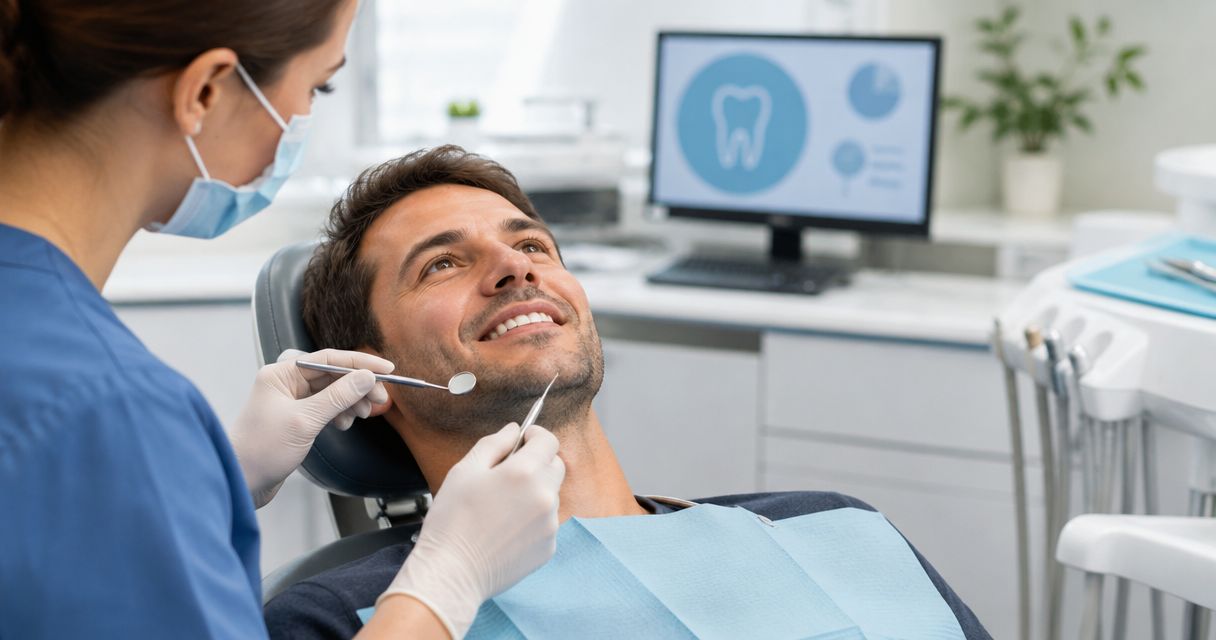
Your dentist checks the tooth and surrounding tissues, reviews any necessary imaging, and confirms that a crown is appropriate. Local anesthetic is commonly used before the tooth is shaped to make room for the restoration.
The dentist then records the prepared tooth and your bite. A temporary crown generally protects the tooth while the laboratory makes the final crown.
Ask the office how much time to reserve for this appointment. Preparing a straightforward tooth and rebuilding a heavily damaged tooth are not the same task, so a general appointment estimate should not replace your own instructions.
What happens while the laboratory makes the crown?
The laboratory uses the records to create a restoration that fits the prepared tooth and works with your bite. Shade information helps guide the appearance, especially for teeth visible when you smile.
The laboratory interval is not a period when you should ignore the tooth. Follow the temporary crown instructions, keep the area clean, and call the practice if the temporary loosens or your symptoms worsen.
What happens at the fitting visit?
Your dentist removes the temporary crown and checks the permanent crown's fit, contacts, appearance, and bite. If those checks are satisfactory, the crown is secured using the appropriate cement or bonding process.
A crown that needs substantial changes can require additional laboratory work. Keeping the original fitting appointment does not mean accepting a crown that feels wrong or does not meet the clinical requirements.
Same-day crowns: potentially 1 appointment
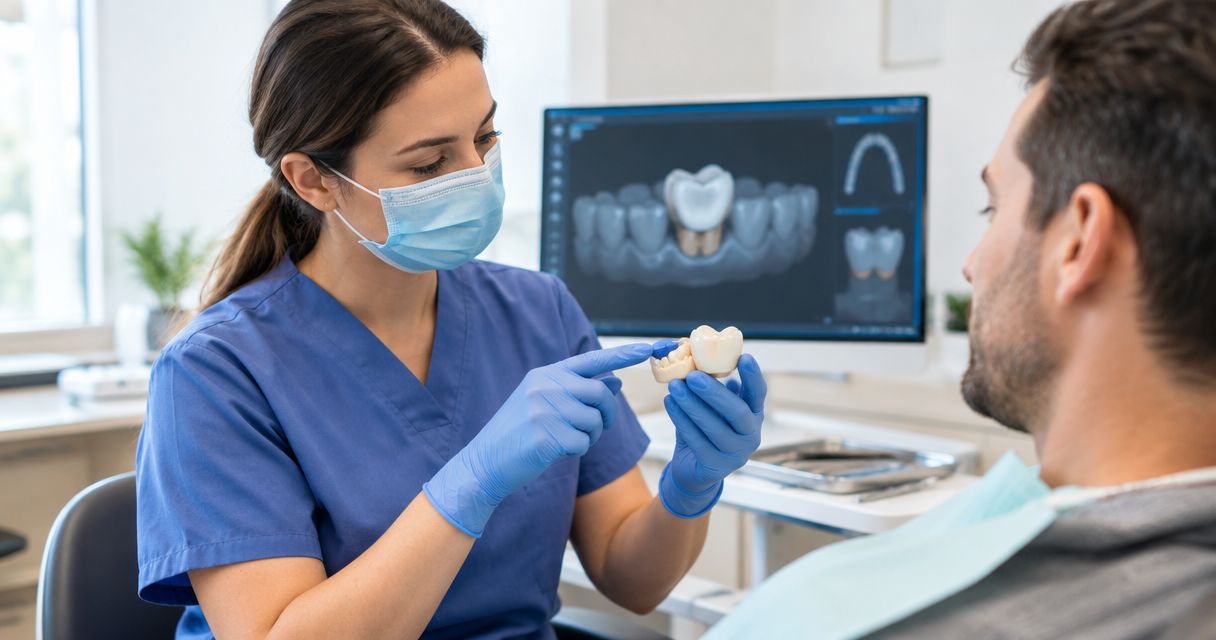
A same-day crown uses digital scanning and in-office fabrication to complete the restoration during one appointment. It removes the separate outside-laboratory interval, not the need to prepare the tooth or check the finished result.
Best for: patients whose tooth and treatment plan suit chairside fabrication at a practice that provides it. The practical advantage is fewer separate visits; the limitation is that the method is not appropriate for every situation.
Ask whether the proposed material, appearance requirements, and condition of your tooth support this approach. Do not assume that a digital scanner alone means an office can make and fit your crown that day.
For your 2026 schedule, confirm the full appointment length directly with the office. One appointment can still require a substantial block of time, including waiting while the restoration is fabricated.
What happens between deciding on a crown and finishing treatment?
The crown-making sequence starts after your dentist determines that the tooth is ready. Keeping these stages separate makes the estimate easier to understand:
- Tooth assessment: Check the damage, symptoms, gums, and supporting tooth structure. Discuss whether a crown is the appropriate restoration.
- Tooth preparation: Shape the tooth, complete any necessary foundation work, and record its shape and bite.
- Crown fabrication: Make the final restoration through the laboratory or an appropriate in-office process.
- Final fitting: Check the crown before securing it, then explain care and any follow-up instructions.
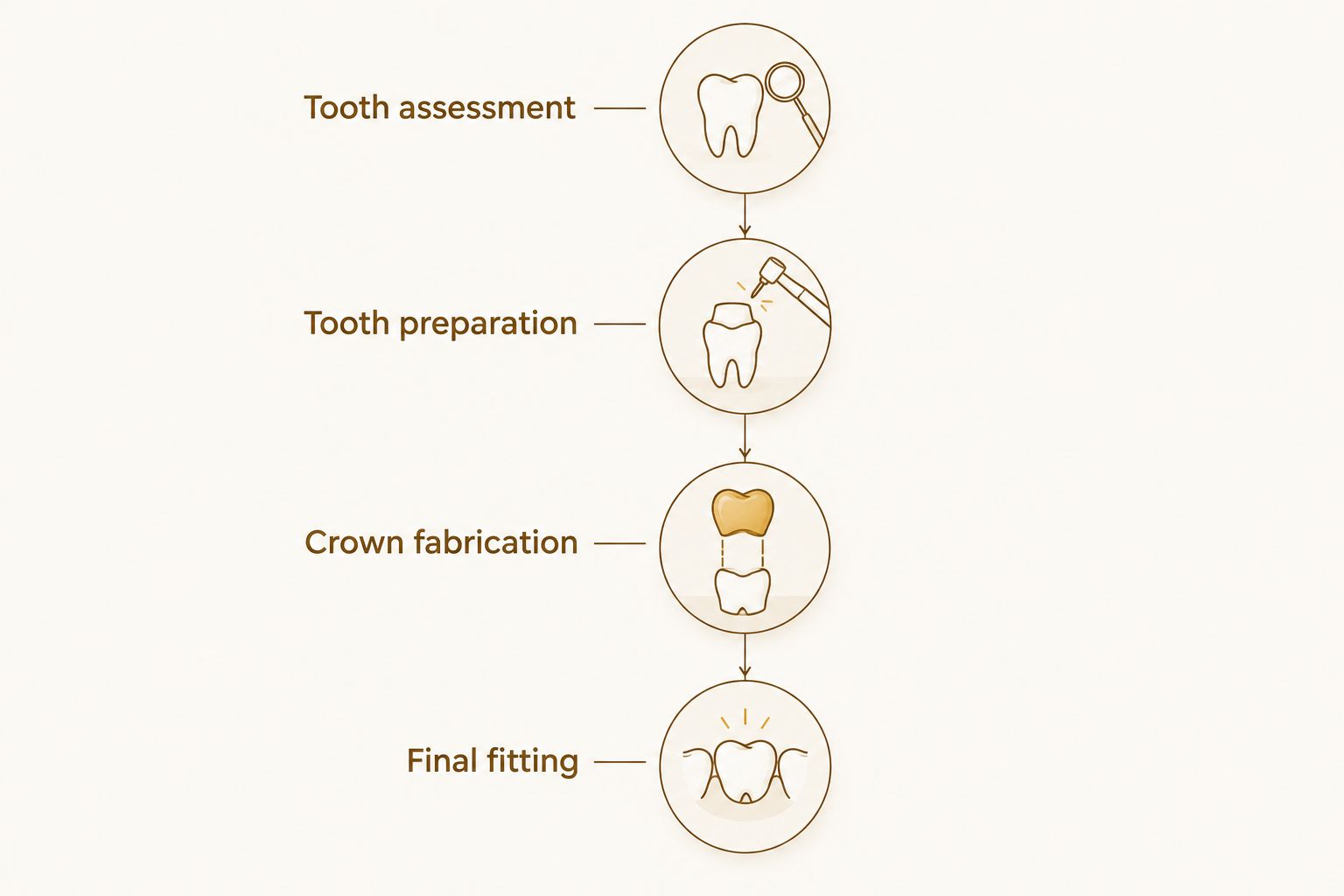
If you receive an estimate that seems unusually short or long, ask which of these stages it includes. A fabrication estimate alone does not tell you when all treatment will be complete.
Why dental crown timelines vary
The most useful question is not simply whether a crown can be made quickly. It is what must happen before your particular tooth can receive its final restoration.
- The condition of the tooth: Extensive damage can require a buildup to provide a suitable foundation before crown preparation.
- Infection or nerve problems: A tooth requiring root canal treatment has an additional treatment stage. A crown does not treat an infected tooth by itself.
- Gum health: Inflamed or unstable gum tissue can affect treatment planning and the records used to make the crown.
- Fabrication method: Outside-laboratory work and chairside fabrication follow different schedules.
- Fit and appearance checks: Changes to the bite, shape, or shade can require further work before placement.
- Appointment coordination: Your availability, the practice schedule, and laboratory coordination affect the final completion date.
Material selection belongs in that discussion, but it should not be reduced to speed alone. The comparison of porcelain and zirconia crown materials explains another part of the decision to discuss with your dentist.
Choose the restoration for the tooth first, then confirm the schedule. A faster appointment pattern does not, by itself, establish which crown is right for you.
How should you plan crown treatment around work or travel?
For treatment in 2026, ask for the preparation date, expected fitting date, and any anticipated preliminary visits before rearranging your calendar. Tell the office if you will be away during the laboratory interval.
Use these questions during scheduling:
- Is the tooth ready for crown preparation, or does it need other treatment first?
- Does the estimate cover laboratory fabrication only or the whole treatment process?
- How much time should I reserve for each appointment?
- Will I have a temporary crown between visits?
- Who should I contact if the temporary crown comes off while I am away?
- What happens if the final crown needs an adjustment or remake?
Do not schedule the final fitting immediately before an important departure if you have flexibility. Leaving room to address a bite concern is more practical than assuming the first fitting will settle every issue.
Harmony Dental Group is a local option for La Jolla patients seeking restorative dental care. A consultation can address your treatment needs, but an online timeline cannot establish your individual completion date or confirm a same-day crown service.
Discuss your restorative dental care
Ask about your tooth, treatment steps, and appointment timing in La Jolla.
Can I wait longer between crown appointments?
The usual laboratory interval is approximately 2–3 weeks, but it is not a universal safe waiting period. Your dentist should set the timing based on the prepared tooth, temporary crown, symptoms, and treatment plan.
Do not extend the interval on your own because the tooth feels comfortable. A temporary crown provides interim protection; it is not a substitute for completing the planned restoration.
Will a root canal make my crown take longer?
The usual 2-appointment crown process does not include separate root canal treatment. If your dentist identifies a need for root canal care, ask for a combined timeline that includes that treatment and the final restoration.
Not every tooth receiving a crown needs a root canal. The decision depends on the tooth's condition, not simply on whether a crown is planned.
What if my temporary crown comes off before the final visit?
Contact the dental office promptly rather than waiting for the fitting appointment. Keep the crown if you have it, avoid chewing on the affected tooth, and follow the office's advice about protecting the area.
Do not use household glue. Seek urgent dental assessment for worsening pain or swelling; facial swelling with difficulty breathing or swallowing requires emergency medical care.
FAQ
How long does it take to get a dental crown from start to finish?
A lab-made dental crown generally takes a few weeks and involves 2 appointments, with laboratory fabrication between them. Preliminary treatment, scheduling, or changes to the final crown can extend the overall timeline.
Can I get a permanent dental crown in one day?
A permanent crown can be completed in one day when the practice has suitable chairside fabrication equipment and the treatment is appropriate for your tooth. Confirm the service and your suitability directly with the practice.
How long does the laboratory take to make a crown?
Laboratory fabrication commonly takes approximately 2–3 weeks, as described in Cleveland Clinic's dental crown patient guidance. Your dentist should confirm the expected turnaround for the laboratory handling your restoration.
Will I have a temporary crown while I wait?
A temporary crown is generally used between preparation and final placement in a conventional lab-made crown process. Follow your dentist's eating and cleaning instructions, and report loosening or loss promptly.
Can I eat normally while waiting for my crown?
You should follow the specific eating instructions for your temporary crown rather than treating it like the finished restoration. Avoid foods your dentist identifies as likely to loosen or damage it, and wait until numbness has resolved before chewing.
Does a dental crown always need a root canal first?
A dental crown does not always require a root canal first. Root canal treatment addresses problems inside the tooth, while a crown restores and protects the tooth's outer structure.
Does Harmony Dental Group offer same-day dental crowns?
Confirm same-day crown services directly with Harmony Dental Group before planning around a single appointment. The practice offers restorative dental care in La Jolla, but the appropriate method and schedule require an individual discussion.
One last thing
Before you leave the final crown appointment, tell your dentist if that tooth seems to touch first when you close your mouth. Describing that specific sensation is more useful than simply saying the crown feels different.
For your 2026 treatment plan, keep the goal clear: a protected tooth, a checked fit, and instructions you understand. The shortest timeline is not a substitute for those checks.