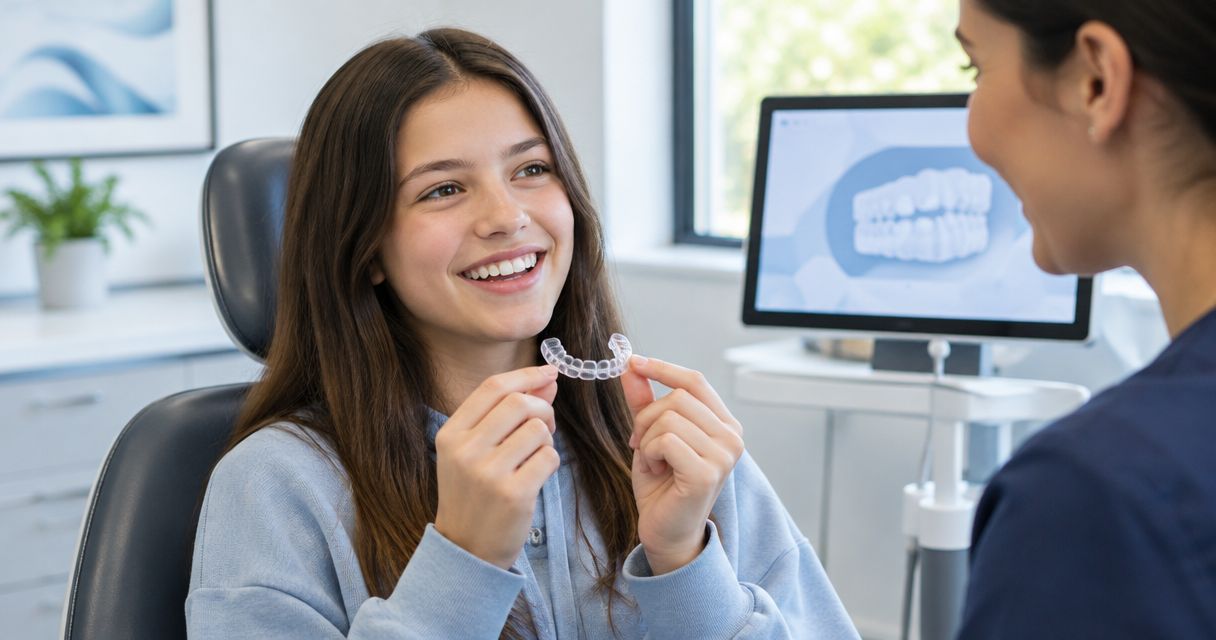
Teens’ Invisalign treatment is orthodontic care using removable clear aligners with the aim of improving tooth alignment and bite function. This 2026 guide to Invisalign for teens explains how school routines, sports, oral hygiene, and growing teeth affect the decision, so your family can prepare for a consultation without feeling rushed.
- Invisalign for teens requires consistent wear, careful cleaning, and a dentist’s assessment of the teeth and bite.
- Harmony Dental Group is best for La Jolla families seeking a local Invisalign consultation.
- Clear aligners are removable; fixed braces reduce the need to remember appliance wear.
- Choose treatment around clinical needs and daily habits, then plan for retainers after orthodontic care.
Why Invisalign matters for teens
Teenagers need orthodontic decisions that account for both dental development and everyday independence. A crowded smile is only part of the assessment: the dentist also checks how the teeth meet, whether permanent teeth are still erupting, and whether the gums and teeth are healthy enough for treatment.
Removable aligners create a practical trade-off. You can take them out for meals and brushing, but you must remember to put them back in. School lunches, team practices, after-school snacks, and sleepovers all become part of the treatment routine.
Harmony Dental Group is best for La Jolla families seeking a local Invisalign consultation. The practice offers Invisalign alongside general, cosmetic, and restorative dental care. You can start with Harmony Dental Group to discuss whether an assessment fits your teen’s needs.
For your family’s 2026 treatment decision, start with suitability rather than appearance. A less noticeable appliance is useful only when it supports the treatment your teen needs and a routine your teen can follow.
How to decide whether Invisalign fits your teen
1. Identify what you want treatment to change
Start at home with a short conversation, not a diagnosis. Ask your teen what bothers them and whether the concern involves appearance, chewing, cleaning between crowded teeth, or the way the bite feels. Write down the answers before the appointment.
A photograph can help you explain a concern, but it cannot show everything a dentist needs to assess. Tooth roots, gum health, and jaw relationships require a clinical evaluation; visible spacing alone does not establish treatment suitability.
Keep your teen involved. A parent’s preferred appliance and a teenager’s willingness to use it are different questions, and both deserve a clear answer.
- Write down the main concern in your teen’s own words.
- Note any chewing discomfort, jaw symptoms, or sensitive teeth.
- Bring details of previous orthodontic treatment.
- Separate cosmetic goals from concerns about bite function.
2. Assess the school-day wear routine
Before choosing an appliance, walk through an ordinary weekday. Include breakfast, travel to school, lunch, snacks, activities, dinner, and bedtime. Identify when aligners would come out and where your teen would store them.
Invisalign’s published patient guidance recommends wearing aligners 20–22 hours per day. Follow the treating clinician’s instructions for your teen’s specific plan. Wearing aligners only after school or overnight does not meet that general recommendation.
This is not a test of whether your teen is responsible in every area of life. It is a practical check of whether a removable appliance fits the routines they already manage.
- Choose a safe place for the aligner case in the school bag.
- Plan how your teen will clean their teeth after lunch.
- Identify repeated snacking habits that interrupt wear.
- Agree on reminders your teen finds helpful rather than intrusive.
3. Arrange a clinical suitability assessment
Your home checklist helps explain the situation; it cannot determine which tooth movements are appropriate. Harmony Dental Group offers Invisalign consultations for families considering treatment in La Jolla. Ask the dentist to explain the findings in everyday language and connect each recommendation to your teen’s needs.
The assessment should address tooth and gum health, the bite, dental development, and any treatment needed before orthodontic care. Depending on the case, the clinician uses appropriate records, such as photographs, scans, or X-rays, to plan care.
For a 2026 consultation, bring your questions about treatment alternatives as well as aligners. The right assessment explains why an appliance fits—not just how it looks.
- Ask which alignment or bite problems need correction.
- Discuss any decay, gum inflammation, or untreated dental concerns.
- Ask whether developing teeth affect treatment timing.
- Request an explanation of when an orthodontist’s assessment is appropriate.
4. Compare removable aligners with fixed braces
Choose the appliance after the clinical assessment, not before it. Invisalign and fixed braces both move teeth, but their everyday demands differ. Aligners depend on consistent wear; braces stay attached but require careful cleaning around brackets and wires.
Neither option is automatically better for every teenager. Some treatment needs favor a particular approach, and your teen’s ability to follow instructions matters alongside the diagnosis. Review the Invisalign alternatives comparison to prepare questions rather than to select treatment without an examination.
Ask about attachments, elastics, or other components if they are part of the proposed plan. Clear aligners are not necessarily an appliance-free appearance, and braces are not a no-effort treatment.
- Ask why the recommended appliance fits the diagnosed problem.
- Compare meal, brushing, and wear responsibilities.
- Discuss sports, musical instruments, and school activities.
- Ask what happens if the chosen approach does not progress as planned.
5. Build a cleaning and storage routine
Practice the routine before treatment starts. Give your teen a place to store a case, toothbrush, and other clinician-recommended supplies. A consistent setup reduces the chance of wrapping aligners in a napkin and throwing them away.
The American Dental Association recommends brushing for 2 minutes, twice a day, using fluoride toothpaste. Clean between the teeth daily, and follow the dentist’s advice about cleaning before reinserting aligners. Aligners do not replace ordinary dental hygiene.
Remove aligners for food and drinks other than plain water, following the treatment instructions. Clean the appliances as directed; hot water can distort plastic. Do not assume a sports mouthguard can be worn over aligners without professional guidance.
- Keep aligners in their case whenever they are out.
- Follow the prescribed cleaning method for the appliances.
- Brush with fluoride toothpaste and clean between teeth daily.
- Ask the dentist how to handle meals away from home.
6. Agree on monitoring and problem-solving
Before treatment begins, decide who handles appointment reminders, questions, and supplies. Your teen can manage daily wear while a parent supports scheduling and communication. Clear responsibilities work better than repeated arguments about whether the aligners are in.
The clinician sets the schedule for changing aligners and reviewing progress. Do not copy another patient’s change interval or advance early because an appliance feels loose. Additional aligners or adjustments depend on how the teeth respond.
Some pressure or soreness can occur when teeth move. Severe pain, swelling, a damaged appliance, or an aligner that no longer fits needs advice from the treating office rather than a home workaround.
- Follow the prescribed aligner sequence and change schedule.
- Ask whom to contact if an aligner is lost or damaged.
- Report fit problems instead of forcing an appliance into place.
- Keep planned reviews and routine dental appointments.
7. Plan retention before treatment starts
Ask about retainers during the first treatment discussion. Teeth can shift after orthodontic treatment, so retention is part of maintaining the result—not an optional extra once the smile looks straight.
Your teen’s retainer type and wear schedule require an individual prescription. A removable retainer needs consistent use and storage; a fixed retainer needs cleaning and checks. Neither eliminates the need for follow-up advice.
For families planning treatment in 2026, the retention discussion also clarifies long-term responsibilities. Knowing what comes after active treatment helps your teen make an informed commitment now.
- Ask which retainer approach is appropriate for the case.
- Request written wear and cleaning instructions.
- Discuss what to do if a retainer breaks or stops fitting.
- Confirm how retention checks fit into future dental care.
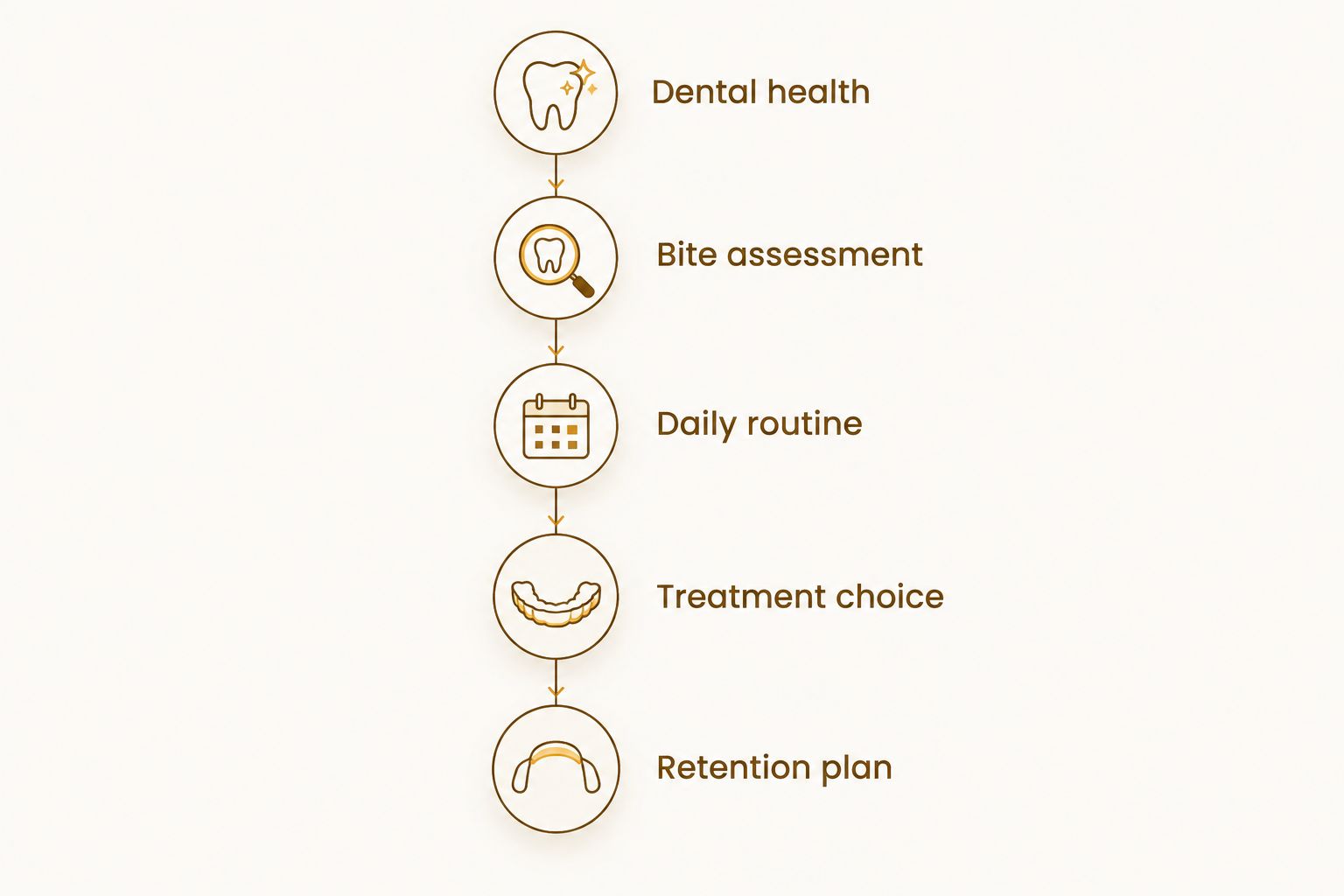
The decision follows a simple sequence: Dental health, Bite assessment, Daily routine, Treatment choice, and Retention plan. Addressing each stage keeps appearance from becoming the only deciding factor.
Compare your teen’s treatment options
This 2026 comparison separates each option’s useful features from its limitations. The best choice still depends on an examination; a table cannot establish whether a particular tooth movement is suitable.
| Option | Best for | Main advantage | Key limitation |
|---|---|---|---|
| Invisalign | Clinically suitable teens who can follow a removable-appliance routine | Aligners come out for eating and cleaning | Progress depends on prescribed wear; additional components or aligners can be necessary |
| Fixed braces | Teens whose treatment needs or habits favor a fixed appliance | Brackets remain attached, removing the need to remember appliance wear | Cleaning around brackets and wires takes care; food choices need attention |
| Observation with clinical review | Teens whose clinician recommends monitoring before treatment | Allows treatment timing to follow dental development | Does not actively correct alignment during the observation period |
For Invisalign, choose a consultation before choosing a treatment plan. Harmony Dental Group offers local Invisalign care, but suitability, treatment scope, and expected progress require an individual assessment. The practice’s service offering is not a guarantee that aligners are appropriate for every teenager.
Discuss your teen’s Invisalign options
Explore local dental care and prepare your questions about suitability, daily wear, and retention.
Common mistakes families make with teen Invisalign
Treating appearance as the diagnosis
Straight-looking front teeth do not establish a healthy bite. Ask the dentist to explain both alignment and how the upper and lower teeth meet before agreeing to treatment.
Assuming removability means flexible wear
Taking aligners out is useful for meals and cleaning, not permission to wear them only when convenient. Build a realistic school-day routine before committing to a removable appliance.
Comparing treatment duration without comparing cases
A friend’s timeline is not a forecast for your teen. The required movements, dental development, prescribed wear, and treatment response all affect the plan; ask for an individual estimate and the reasons behind it.
Waiting until an appliance is lost to ask for instructions
An improvised replacement strategy can interrupt treatment. Get the office’s instructions in advance, including whom to contact and whether to keep previous aligners.
Forgetting the retainer commitment
Finishing active treatment does not end the need to protect alignment. Discuss retention before starting so your teen understands the full responsibility, not just the aligner phase.
FAQ
Is Invisalign a good option for teenagers?
Invisalign is an option for teenagers whose dental needs suit clear aligners and who can follow the prescribed wear routine. A clinician must assess the bite, dental development, and oral health before recommending treatment.
How many hours should my teen wear Invisalign each day?
Invisalign’s published patient guidance recommends 20–22 hours of wear per day. Your teen should follow the treating clinician’s instructions and remove aligners for meals and cleaning as directed.
Is Invisalign better than braces for teens?
Neither Invisalign nor braces is better for every teen. Invisalign offers removability, while fixed braces reduce the need to remember appliance wear; clinical needs and daily habits determine the better fit.
Can my teen eat lunch at school with Invisalign?
Your teen should remove Invisalign aligners before eating lunch. Store them in a case, clean the teeth as instructed, and reinsert the aligners rather than leaving them out for the afternoon.
Can my teen play sports during Invisalign treatment?
Teenagers can participate in sports during orthodontic treatment, but they need advice about appropriate mouth protection. Invisalign aligners are not sports mouthguards; ask the treating clinician what to wear and when to remove the aligners.
What should we do if an Invisalign aligner is lost?
Contact the treating dental office for instructions if an Invisalign aligner is lost. Do not skip ahead or substitute another appliance unless the clinician directs you to do so.
Will my teen need retainers after Invisalign?
Your teen will need a prescribed retention plan after Invisalign to help maintain tooth alignment. The clinician determines the retainer type, wear schedule, and follow-up instructions.
Where can families discuss Invisalign for teens in La Jolla?
Harmony Dental Group offers Invisalign in La Jolla, San Diego. A consultation helps your family discuss suitability, daily responsibilities, and alternatives without assuming aligners are the right choice before an assessment.
One last thing
Before your 2026 consultation, rehearse a school lunch: where would the case go, how would your teen clean their teeth, and what would remind them to reinsert the aligners? That ordinary routine exposes practical obstacles a smile photograph cannot show.
Choose treatment your teen can follow, not just treatment your teen likes the look of. Bring those obstacles to the appointment; they belong in the decision alongside the dental findings.