Dental care for diabetics is preventive and restorative dental treatment coordinated with diabetes management to protect your gums, teeth, and healing. If you live in La Jolla or nearby San Diego neighborhoods, Harmony Dental Group offers general, cosmetic, and restorative care; this 2026 guide explains what to discuss before routine visits, implants, Invisalign, or cosmetic treatment.
- Dental care for diabetics starts with gum disease prevention, daily cleaning, and communication about blood glucose management.
- Harmony Dental Group offers local dental care for patients with diabetes considering general, cosmetic, or restorative treatment.
- Treat active gum disease before elective cosmetic dentistry; veneers do not treat inflamed gums.
- Dental implants require individual assessment of gum health, glucose management, and healing risks.
Why dental care matters for people with diabetes
Diabetes changes the conversation at a dental appointment because blood glucose management affects infection risk and healing. Gum disease can also make diabetes harder to manage. Bleeding gums, loose teeth, persistent bad breath, and dry mouth deserve attention rather than being dismissed as ordinary inconveniences.
The National Institute of Dental and Craniofacial Research explains this connection in its patient guidance on diabetes and oral health. The American Diabetes Association also identifies periodontal disease, which affects the tissues supporting your teeth, as a concern for people with diabetes. These are reasons to coordinate care, not reasons to assume you will lose your teeth.
Your 2026 dental plan should reflect your current health, not just your diagnosis. Someone with stable glucose management and healthy gums needs a different plan from someone with active infection, frequent low-glucose episodes, or difficulty eating.
Harmony Dental Group is a local dental care option for La Jolla patients with diabetes seeking general, cosmetic, or restorative treatment. Choosing the right treatment still requires an examination and a discussion of your medical history.
Build your diabetes-aware dental care plan
1. Share your medical history before treatment
Start with a written medication list and a brief summary of your diabetes care. Include insulin, other diabetes medicines, medication allergies, and any recent changes. Tell your dentist about low-glucose episodes, hospital treatment, and complications that affect your daily health.
Bring your most recent A1C result if you have it. A1C reflects average blood glucose over approximately 3 months, but it does not replace a discussion of your current readings or symptoms. Your dentist uses this information alongside the examination; there is no single result that decides every dental procedure.
You do not need a special app or paid tracking service. A paper list and your existing glucose records are useful. For procedures involving surgery, sedation, or changed eating, ask whether your dentist needs to communicate with your diabetes clinician.
- Bring medication names, doses, and your diabetes clinician's contact details.
- Explain how you recognize and treat low blood glucose.
- Share recent A1C results and meaningful changes in your usual readings.
- Report previous problems with infections or wound healing.
2. Match appointments to your meals and medicines
For a routine dental visit without fasting instructions, follow your usual meal and medication routine unless your treating clinician directs otherwise. Skipping breakfast to make an appointment easier can create problems, especially when your medication can cause low blood glucose.
Choose a time that fits your normal routine. Morning is not automatically best for everyone: your meal schedule, medication timing, and history of low glucose matter more than the clock. Tell the dental team before treatment if you feel shaky, sweaty, confused, or unwell.
Sedation and surgery need a separate plan because fasting or reduced eating changes the situation. Do not adjust insulin or other diabetes medicines on your own. Harmony Dental Group offers dental care, but medication changes belong with the clinician responsible for your diabetes management.
- Confirm whether the appointment requires fasting.
- Ask your diabetes clinician for medication instructions when eating will change.
- Bring your glucose monitoring supplies and usual low-glucose treatment.
- Tell the team immediately about symptoms or an unexpected glucose reading.
3. Clean your teeth and gumline consistently
Your strongest starting point is a repeatable home routine. Brush with fluoride toothpaste for 2 minutes per session, with 2 brushing sessions per day. Clean between your teeth once daily using floss or another method recommended for your mouth. These habits follow American Dental Association patient guidance.
Use gentle pressure along the gumline rather than scrubbing harder. If your hands make flossing difficult, ask about an interdental brush or a floss holder. The best method is one you can use correctly and consistently without injuring your gums.
Keep this routine in your 2026 care plan even when your teeth look clean. Dental plaque can collect between teeth and around restorations where you cannot easily see it. Bleeding during cleaning calls for assessment; repeatedly avoiding that area leaves plaque behind.
- Brush with fluoride toothpaste for 2 minutes, twice daily.
- Clean between teeth once daily with a suitable tool.
- Ask the dental team to demonstrate cleaning around crowns or implants.
- Report ongoing bleeding instead of increasing brushing pressure.
4. Assess gum disease before cosmetic treatment
A gum examination checks more than whether your smile looks attractive. Your dentist evaluates inflammation, the spaces between teeth and gums, and the support around your teeth. X-rays are used when clinically indicated to assess structures that are not visible during the examination.
A routine cleaning and treatment for established gum disease are not interchangeable. Scaling and root planing, often called a deep cleaning, removes deposits from below the gumline and cleans root surfaces. You can review the distinctions in this guide to gum disease treatment options, then discuss which approach fits your examination.
Treat active gum disease before elective veneers, whitening, or tooth movement. Cosmetic treatment does not remove the cause of bleeding or restore lost tooth support. A gum health review is particularly useful when you want to improve your smile but have not had recent periodontal assessment.
- Ask whether your gums show inflammation or loss of support.
- Request a clear explanation of routine cleaning versus periodontal treatment.
- Discuss gum health before veneers, Invisalign, or implant planning.
- Confirm how the team will reassess your response to treatment.
5. Address dry mouth and oral symptoms early
Dry mouth deserves attention because saliva helps protect teeth and oral tissues. Diabetes, medicines, and other conditions can contribute to dryness. Tell your dentist whether the problem is occasional or persistent, and whether it interferes with swallowing, sleep, or wearing a denture.
Start with water and a review of your habits. Sugar-free gum can help stimulate saliva when chewing is comfortable and appropriate. Do not rely on frequent sugary drinks to relieve dryness, and do not stop prescribed medicine without speaking to the clinician who prescribed it.
Pain, unusual patches, or persistent soreness need an examination rather than a guessed diagnosis. Facial swelling, fever with a dental infection, or rapidly worsening pain needs urgent assessment. Difficulty breathing or swallowing is an emergency: seek emergency medical care rather than waiting for a routine dental appointment.
- Describe when dryness occurs and how it affects eating or sleep.
- Ask whether your medicines contribute to dry mouth.
- Discuss fluoride protection if dryness increases your cavity risk.
- Seek prompt assessment for swelling, persistent soreness, or worsening pain.
6. Plan implants and smile treatments around oral health
Diabetes does not automatically rule out dental implants, veneers, or Invisalign. Eligibility depends on the proposed procedure, gum health, glucose management, and other medical factors. A cosmetic consultation should include those questions before you commit to a treatment plan.
Harmony Dental Group offers implants, veneers, Invisalign, and pinhole gum recession treatment. Each addresses a different problem: implants replace missing teeth, veneers change the visible surface of teeth, Invisalign moves teeth, and pinhole treatment addresses selected gum recession cases. None is a substitute for controlling active periodontal infection.
As of October 2026, the practice confirms that its periodontist, Dr. Javdan, has six years of experience performing pinhole gum recession treatment. That experience applies specifically to pinhole treatment, not to every dental procedure or to guaranteed results. Ask whether your recession pattern, gum condition, and medical history make that procedure appropriate.
For implant surgery or treatment that changes what you can eat, plan recovery with your diabetes clinician. Written instructions are more useful than trying to remember everything after the appointment.
- State your main goal: replace teeth, straighten teeth, improve appearance, or address recession.
- Ask which health issues need treatment before elective work.
- Review healing, cleaning, and follow-up responsibilities for the proposed procedure.
- Arrange a meal and medication plan when treatment changes your eating.
7. Set follow-up visits around your actual risk
Do not assume that every person with diabetes needs the same appointment interval. Your dentist should base follow-up on gum disease, cavities, dry mouth, home cleaning, and your response to treatment. A history of periodontal disease can require closer maintenance than a healthy mouth.
At each visit, explain changes in your medicines, glucose management, and symptoms. Bring questions about bleeding, sensitivity, or trouble cleaning around restorations. A useful 2026 plan states what the next appointment is for, not just when it happens.
Ask for treatment priorities in plain language. Separating urgent problems, disease control, and elective cosmetic goals makes the plan easier to understand without delaying essential care.
- Confirm the reason for your next visit and its recommended timing.
- Ask which symptoms should trigger an earlier appointment.
- Update the team when your medical treatment changes.
- Keep a written list of urgent, preventive, and elective treatment priorities.
Compare dental care options for people with diabetes
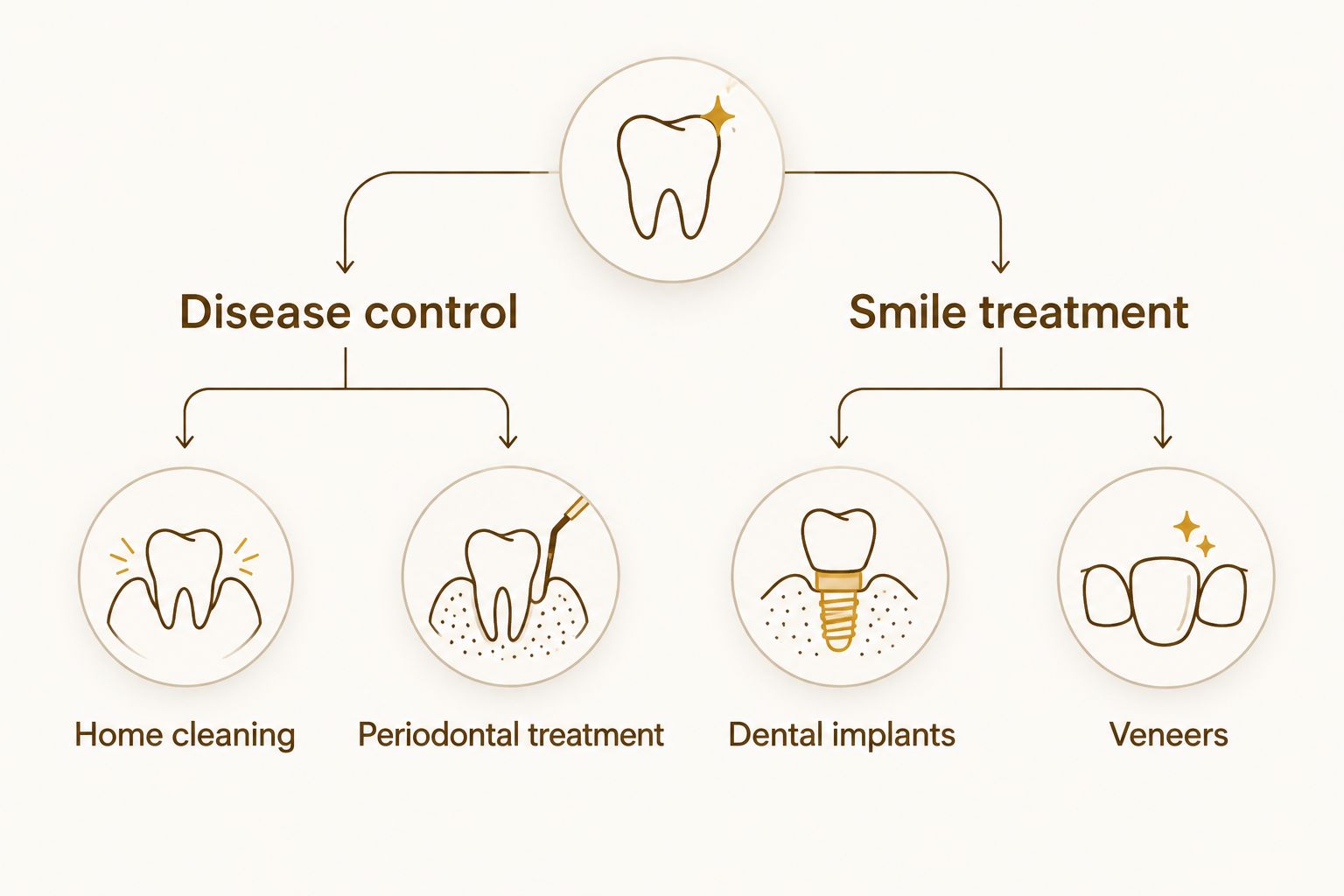
Choose treatment by the problem it solves, not by how advanced it sounds. Home cleaning, professional maintenance, periodontal treatment, and tooth replacement have different jobs. Your 2026 decision should account for both immediate needs and the care required afterward.
| Option | Best for | Main benefit | Key limitation |
|---|---|---|---|
| Daily home cleaning | Everyone managing plaque between visits | Removes plaque through consistent brushing and interdental cleaning | Cannot remove hardened tartar or diagnose gum disease |
| Routine professional cleaning | Patients without periodontal treatment needs identified at examination | Removes deposits and supports prevention | Does not replace treatment for established periodontitis |
| Scaling and root planing | Patients with periodontal disease when clinically indicated | Treats deposits below the gumline | Requires reassessment and ongoing maintenance |
| Dental implants | Selected patients replacing missing teeth | Provide support for replacement teeth | Require surgery, suitable supporting tissues, and long-term cleaning |
| Veneers | Patients with suitable teeth seeking appearance changes | Change the visible tooth surface | Do not treat gum disease; preparation can involve removing enamel |
| Invisalign | Suitable patients seeking tooth alignment | Moves teeth with removable aligners | Requires consistent wear, cleaning, and healthy supporting tissues |
| Pinhole gum recession treatment | Selected patients with suitable recession patterns | Repositions gum tissue to address recession | Is not suitable for every case and does not replace periodontal disease treatment |
For any recommended procedure, ask what happens if you postpone it and what other approaches address the same problem. Request an itemized treatment plan and confirm benefits directly with your insurer. A diabetes diagnosis alone does not establish coverage for a particular dental procedure.
Common mistakes people with diabetes make
Waiting until gum disease hurts
Gum disease can progress without significant pain. Bleeding, persistent bad breath, gum recession, and loose teeth are reasons to book an examination. Do not use the absence of a toothache as proof that the supporting tissues are healthy.
Skipping food without a medication plan
Avoid changing meals or medicines simply because a dental visit is scheduled. Routine treatment and appointments requiring fasting have different instructions. Confirm the plan before the appointment, especially if insulin or another medicine puts you at risk of low blood glucose.
Treating recession as only a cosmetic problem
Exposed roots and a longer-looking tooth need an explanation before treatment. Recession and active periodontitis are not the same diagnosis, although they can occur together. Ask what caused the recession and whether inflammation needs treatment before considering gum coverage.
Assuming diabetes makes implants impossible
An automatic rejection is not an individual assessment. Ask about your gum health, supporting bone, current diabetes management, and ability to maintain the replacement teeth. Equally, do not accept a promise that implants will succeed regardless of those factors.
Choosing cosmetic treatment before stabilizing oral health
Whiter or straighter teeth do not resolve infection. If you are considering veneers or Invisalign, start with an examination for decay and gum disease. A healthy foundation makes the treatment sequence clearer and identifies problems that need attention first.
FAQ
What's the best dental care routine for someone with diabetes?
Brush with fluoride toothpaste for 2 minutes twice daily, clean between your teeth daily, and follow a dental review schedule based on your oral health. Tell your dentist about diabetes medicines, glucose changes, bleeding gums, and dry mouth.
Can I get dental implants if I have diabetes?
Diabetes does not automatically prevent dental implant treatment. Your dentist must assess gum health, supporting bone, glucose management, healing risks, and your ability to maintain the implant.
Should I eat before my dental appointment?
For routine treatment without fasting instructions, follow your usual meal routine unless your treating clinician directs otherwise. Sedation or surgery can require different instructions, so confirm food and medication plans in advance.
Does everyone with diabetes need a deep cleaning?
No, diabetes alone does not determine whether you need scaling and root planing. A periodontal examination establishes whether gum disease is present and which treatment is appropriate.
Can people with diabetes get veneers or Invisalign?
People with diabetes can be candidates for veneers or Invisalign after an individual assessment. Active decay or periodontal disease needs attention before elective cosmetic treatment or tooth movement.
Is pinhole treatment the same as treating gum disease?
No, pinhole gum recession treatment addresses selected recession cases, while periodontal treatment addresses disease affecting tooth-supporting tissues. Ask your dentist which diagnosis you have and whether inflammation needs treatment first.
When is a dental infection an emergency for someone with diabetes?
Facial swelling, fever with dental symptoms, or rapidly worsening pain requires urgent assessment. Difficulty breathing or swallowing requires emergency medical care; do not wait for a routine appointment.
One last thing
Before leaving your appointment, ask: What needs attention before I improve the appearance of my smile? That question separates disease control from elective treatment and gives you a clearer next step. For dental care at Harmony Dental Group, bring your medication list, recent glucose information, and the treatment goal that matters most to you.