Best overall starting point for complex tooth movement: conventional metal braces. Best for less-visible fixed treatment: ceramic braces; best for hidden fixed treatment: lingual braces; best for removable treatment: dentist-supervised clear aligners other than Invisalign. This 2026 guide matches each alternative to your bite, daily habits, and appearance preferences—not a universal winner.
- Invisalign alternatives compared: metal braces are the starting point for discussing complex movement without removable trays.
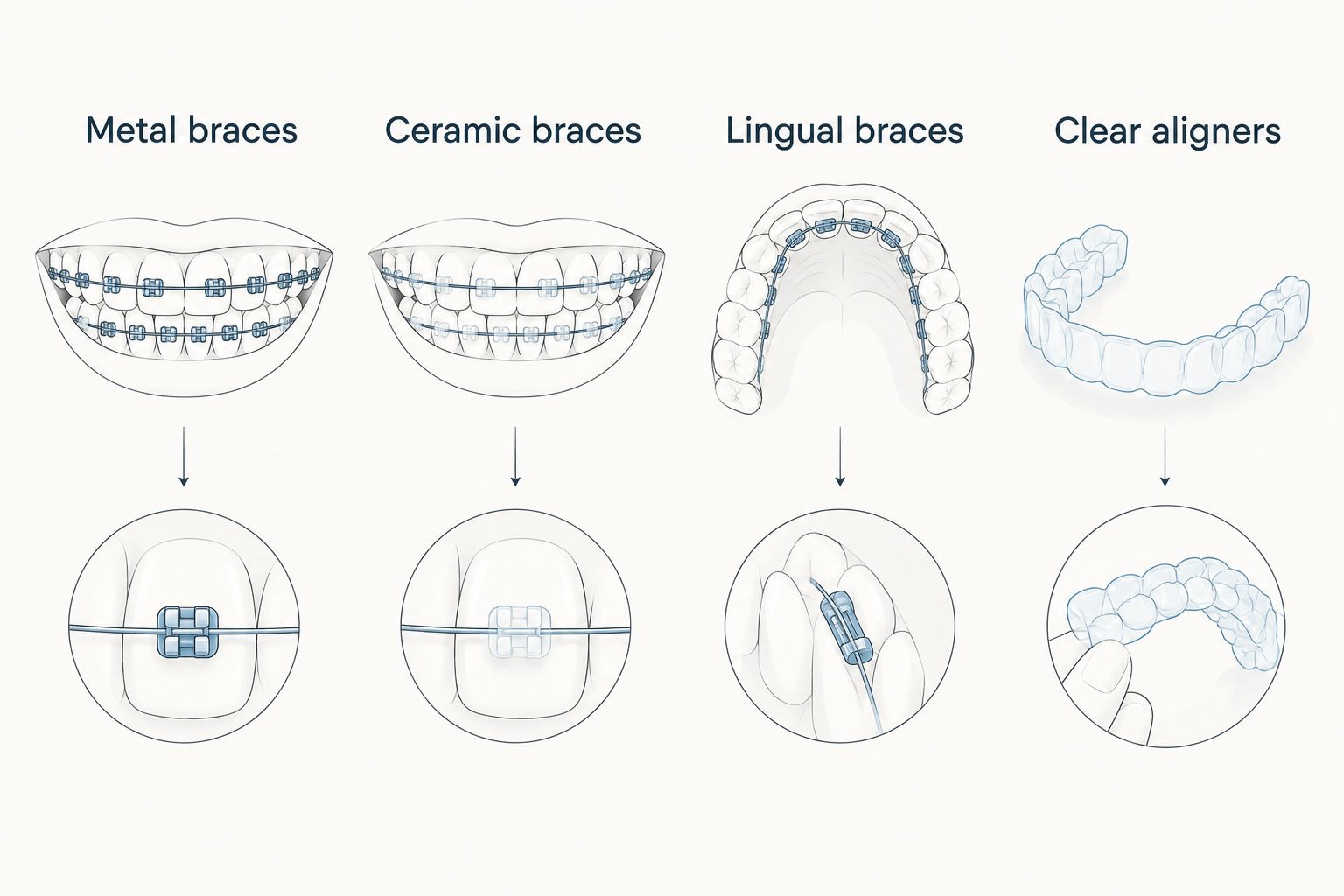
- Ceramic braces offer less-visible brackets; lingual braces place brackets behind the teeth.
- Other dentist-supervised clear aligners suit patients who can follow a daily wear schedule.
- Harmony Dental Group offers Invisalign in La Jolla; compare treatment recommendations before choosing an alternative.
Why this matters
The best Invisalign alternative depends on what needs to move, not just how the appliance looks. Crowding, spacing, tooth rotation, and the way your upper and lower teeth meet can require different treatment mechanics. An attractive appliance is not automatically the right appliance.
Harmony Dental Group offers Invisalign alongside general, cosmetic, and restorative dental services in La Jolla, San Diego. Harmony Dental Group is a local option for patients seeking an Invisalign assessment before choosing a teeth-straightening approach. The alternatives below describe treatment categories, not additional services attributed to the practice.
For your 2026 decision, separate three questions: can the treatment address your diagnosis, can you follow its care requirements, and can you accept its appearance? Answer them in that order. A treatment that fits your lifestyle but misses your bite problem is the wrong choice.
What makes the best Invisalign alternative?
Use these criteria before comparing appliances. They explain the rankings and give you specific questions to ask during an examination.
- Treatment fit: Your clinician must assess the teeth, gums, supporting bone, and bite before recommending an appliance. Appearance alone cannot establish suitability.
- Movement control: Ask how the proposed treatment will handle your particular rotations, spacing, and bite correction. Some plans need attachments, elastics, or additional procedures.
- Wear responsibility: Fixed brackets stay attached; removable aligners depend on you putting them back in. Neither approach removes the need to follow instructions.
- Visibility: Ceramic brackets blend with tooth color, lingual brackets sit behind teeth, and clear trays remain visible at close range. Discreet does not mean invisible.
- Cleaning access: Compare the effort of cleaning around brackets with removing trays for meals and cleaning both the trays and teeth.
- Follow-up and retention: Identify who monitors treatment, how problems are handled, and what retainer plan follows active movement. The appliance is only part of the treatment.
Invisalign alternatives at a glance
These 2026 rankings give each option a different use case. They do not predict your individual result or replace an orthodontic assessment.
| Alternative | Best for | Standout feature | Key limitation |
|---|---|---|---|
| Conventional metal braces | Discussing complex movement with fixed treatment | Attached brackets and wires allow ongoing adjustments | Visible hardware and more involved cleaning |
| Ceramic braces | Less-visible brackets without removable trays | Tooth-colored or translucent brackets | Wires remain visible; ceramic brackets can break |
| Lingual braces | Hiding fixed brackets from the front | Brackets attach to the backs of teeth | Tongue irritation and difficult cleaning access |
| Other dentist-supervised clear aligners | Removable treatment with direct clinical oversight | Trays come out for eating and brushing | Results depend on prescribed wear and suitable case selection |
No appliance earns a recommendation solely because it is newer, clearer, or more heavily advertised. Ask your clinician to explain the proposed tooth movements and the limitations of the specific plan.
1. Conventional metal braces: best for complex fixed treatment
Conventional metal braces use brackets attached to teeth and wires that guide movement. A clinician adjusts the appliance as treatment progresses and can add other components when the plan requires them. You cannot remove the brackets yourself for meals or social events.
Their strongest decision-making advantage is straightforward: the appliance stays in place. That removes tray wear as a daily responsibility, although appointments, cleaning, food precautions, and any prescribed elastics still matter.
Metal braces pros:
- Fixed brackets remove the need to remember to reinsert trays.
- Brackets and wires support treatment of a broad range of tooth movements.
- The clinician can adjust the appliance throughout treatment.
- Metal brackets avoid the brittle material used in ceramic brackets.
Metal braces cons:
- Brackets and wires are visible when you speak or smile.
- Cleaning around the hardware takes care and suitable tools.
- Hard or sticky foods can damage components; follow your clinician's restrictions.
Best for: Patients discussing complex alignment or bite correction who prefer a fixed appliance over removable trays.
Choose metal braces for their treatment fit, not because you assume they always finish faster. Duration depends on the diagnosis, planned movements, biological response, and adherence to instructions. A broken bracket or missed visit also needs attention.
Verdict — Hold: Put metal braces on your consultation shortlist when movement control matters more than visibility; commit only after an examination confirms the plan.
2. Ceramic braces: best for less-visible front-mounted brackets
Ceramic braces use tooth-colored or translucent brackets attached to the front surfaces of teeth. They provide fixed treatment without the same metallic bracket appearance. The wires and other components can still be visible.
The useful distinction is less-visible brackets versus removable trays. Ceramic braces do not eliminate the cleaning work of fixed appliances, and they are not invisible braces.
Ceramic braces pros:
- Tooth-colored brackets are less conspicuous than metal brackets.
- The appliance remains attached, so you cannot forget to wear it.
- The clinician can adjust treatment using wires and other prescribed components.
Ceramic braces cons:
- Ceramic brackets are brittle and can chip or break.
- Brackets, wires, and elastics still affect the appearance of your smile.
- Cleaning access remains more involved than with removable trays.
Best for: Patients who want fixed orthodontic treatment but dislike the appearance of metal brackets.
Ask which teeth would receive ceramic brackets and why. Your clinician can explain whether your bite creates contact with the brackets and whether the proposed materials suit that contact. Also ask which components are ceramic; the label does not mean every visible part matches your teeth.
For a 2026 comparison, judge ceramic braces on the actual appliance proposed for you—not a close-up photograph of brackets on someone else's teeth.
Verdict — Hold: Shortlist ceramic braces when front-facing appearance matters, but confirm bracket placement, bite clearance, and cleaning requirements first.
3. Lingual braces: best for hidden fixed brackets
Lingual braces attach to the backs of the teeth rather than the fronts. They move teeth using fixed brackets and wires while keeping that hardware out of direct front-facing view. Their position changes how the appliance feels and how you clean it.
This is the most distinct alternative for someone who wants fixed treatment without front-mounted brackets. It is also a separate clinical technique; do not assume every provider who offers conventional braces provides lingual treatment.
Lingual braces pros:
- Brackets sit behind the teeth, away from the front of your smile.
- Fixed hardware removes the need to remember removable trays.
- The approach offers an alternative to visible front-mounted appliances.
Lingual braces cons:
- Hardware can irritate the tongue and affect speech during adjustment.
- Behind-the-teeth placement makes cleaning and inspection harder.
- Suitability depends on your bite and the clinician's treatment assessment.
Best for: Patients who prioritize hiding fixed brackets and accept the additional tongue-contact and cleaning challenges.
Before choosing lingual braces, discuss your speaking needs and daily routine. If your work involves frequent presentations or calls, ask how the proposed appliance can affect speech and how the clinician handles discomfort. An appearance benefit does not erase a functional trade-off.
Request an explanation of how you will clean the back surfaces and what to do if a wire causes irritation. Those details belong in the decision, not only in instructions delivered after placement.
Verdict — Hold: Consider lingual braces when hidden fixed treatment is your priority; proceed only with a clinician who assesses your suitability and explains aftercare.
4. Other supervised clear aligners: best for removable treatment
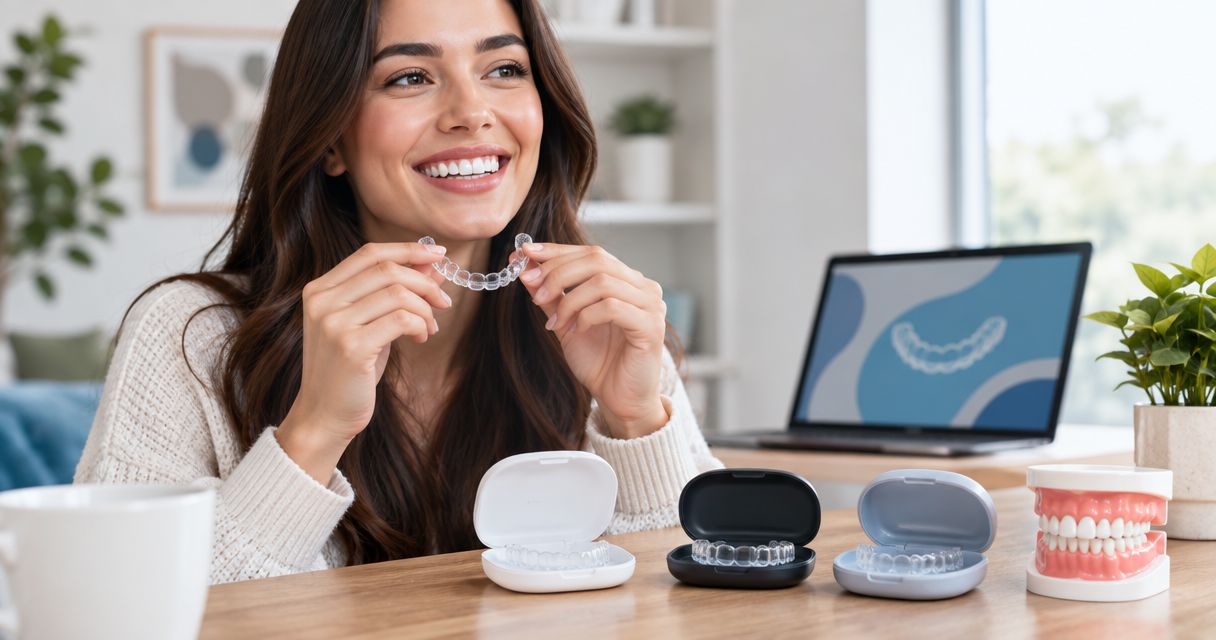
Clear-aligner systems other than Invisalign use a sequence of removable trays to move teeth. The important comparison is the complete clinical plan: diagnosis, planned movements, in-person assessment, monitoring, and management of problems. A different logo does not establish equivalent treatment.
Some plans require tooth-colored attachments, elastics, or adjustments between teeth. Ask what your proposed plan includes rather than assuming clear trays work alone.
Supervised clear-aligner pros:
- Trays can be removed for meals and toothbrushing.
- Clear material avoids the appearance of fixed brackets and wires.
- Direct clinical oversight provides a point of contact for tracking problems.
- Removability gives access to tooth surfaces during daily cleaning.
Supervised clear-aligner cons:
- You must follow the prescribed daily wear schedule.
- Attachments and trays can remain visible at close range.
- Not every movement or bite problem suits every aligner plan.
Best for: Patients with a suitable diagnosis who want removable treatment and can consistently follow wear and follow-up instructions.
Invisalign commonly specifies 20–22 hours of daily wear; follow the instructions for the particular alternative your clinician prescribes. Eating, drinking, brushing, and cleaning must fit around that schedule. Removability helps only when the trays return to your teeth as directed.
For your 2026 shortlist, ask who examines you before treatment and who checks that the teeth are tracking with the trays. Also ask what happens if a tray no longer fits. Do not choose solely from a digital preview.
Verdict — Hold: Choose another supervised aligner system only after the clinician explains why its plan fits your diagnosis and how treatment will be monitored.
How these alternatives are ranked
The ranking follows treatment fit, movement control, wear responsibility, visibility, cleaning, and follow-up. Metal braces lead the discussion for complex fixed treatment; ceramic and lingual braces serve distinct appearance preferences. Other supervised aligners occupy the removable-treatment slot.
This is a treatment-category comparison, not a clinical trial or a ranking of provider outcomes. Your examination can change the order. If your clinician recommends a different option, ask which finding drives that recommendation.
Which Invisalign alternative should you choose?
Start with conventional metal braces as the comparison point if you need fixed treatment and do not prioritize discretion. Compare ceramic braces when visible brackets are your main objection. Discuss lingual braces when you specifically want brackets behind your teeth, and supervised clear aligners when removability is essential.
Harmony Dental Group offers Invisalign, so local patients can discuss that option before deciding whether an alternative deserves a separate orthodontic consultation. Do not assume the practice offers every appliance in this guide.
Bring these questions to your 2026 consultation:
- Diagnosis: What alignment and bite problems need treatment?
- Treatment fit: Why does this appliance suit those problems?
- Daily care: What must I do at home, and what restrictions apply?
- Follow-up: Who checks progress and handles breakages or poor tray fit?
- Retention: What keeps my teeth in position after active treatment?
Make daily cleaning part of the choice. The American Dental Association recommends brushing 2 times per day for 2 minutes each time with fluoride toothpaste. Braces and aligners do not replace that baseline; your clinician should explain the additional cleaning your appliance needs.
FAQ
What's the best alternative to Invisalign?
The best alternative depends on your diagnosis and whether you want fixed or removable treatment. Metal braces are a starting point for discussing complex fixed treatment; ceramic braces, lingual braces, and other supervised aligners address different appearance and lifestyle priorities.
Are ceramic braces less visible than metal braces?
Ceramic brackets are generally less visible because they are tooth-colored or translucent. Wires, elastics, and the brackets themselves can still be noticeable, so ceramic braces are not invisible.
Are lingual braces the same as clear aligners?
No. Lingual braces attach to the backs of teeth and stay fixed, while clear aligners are removable trays. Lingual placement changes cleaning access and can affect tongue comfort and speech.
Can another clear-aligner system replace Invisalign?
Another clinician-supervised clear-aligner system can be an option when its treatment plan suits your diagnosis. Ask about the examination, proposed movements, attachments, monitoring, and response to trays that stop fitting.
Can I switch from Invisalign to braces during treatment?
Switching requires a clinical reassessment and a revised treatment plan. Your clinician must evaluate current tooth positions, the remaining movements, and the reason the original approach is changing.
Do I still need retainers after Invisalign alternatives?
Retainers are generally needed after orthodontic treatment to help maintain tooth positions. Your clinician should specify the retainer type, wear schedule, cleaning instructions, and follow-up arrangements.
Does Harmony Dental Group offer every Invisalign alternative?
Harmony Dental Group is identified as offering Invisalign, but that does not establish that it provides metal, ceramic, or lingual braces or other aligner systems. Confirm the services relevant to your treatment before arranging care.
One last thing
Straighter-looking front teeth do not prove that your bite has been fully assessed. Ask your clinician to explain how the upper and lower teeth should meet at the end of treatment—not just how the smile should look in a preview.
For a 2026 decision, request a clear explanation of both the cosmetic goal and the functional goal. If those goals are different, understand the compromise before agreeing to treatment. The best alternative is the one whose limitations you understand and whose care requirements you can follow.