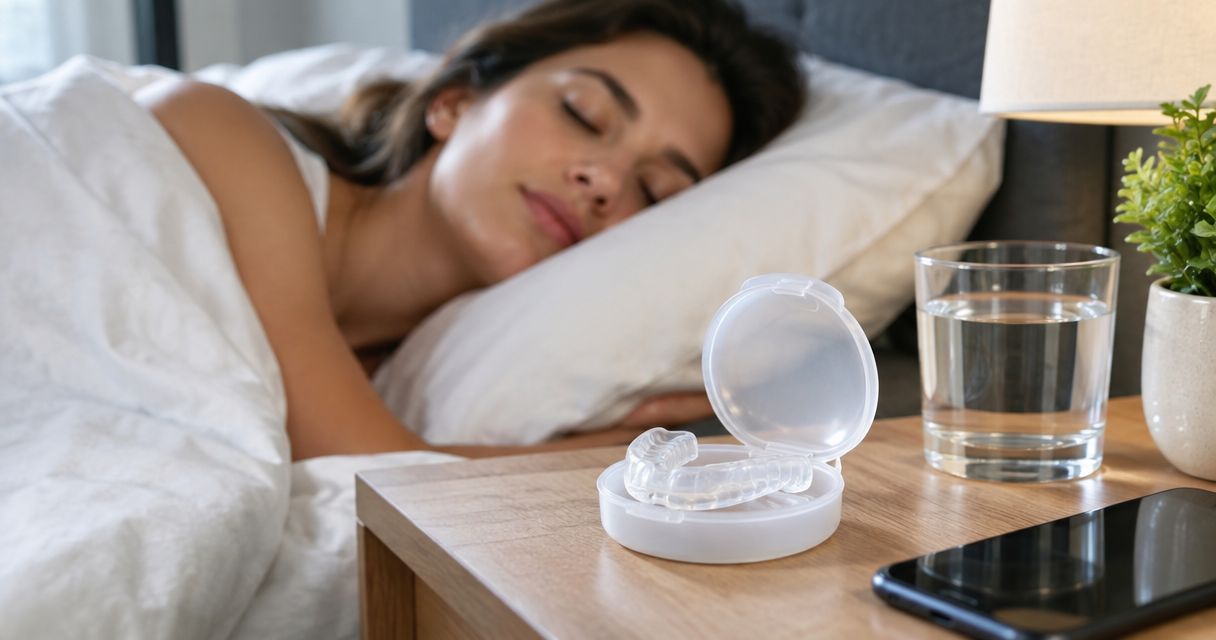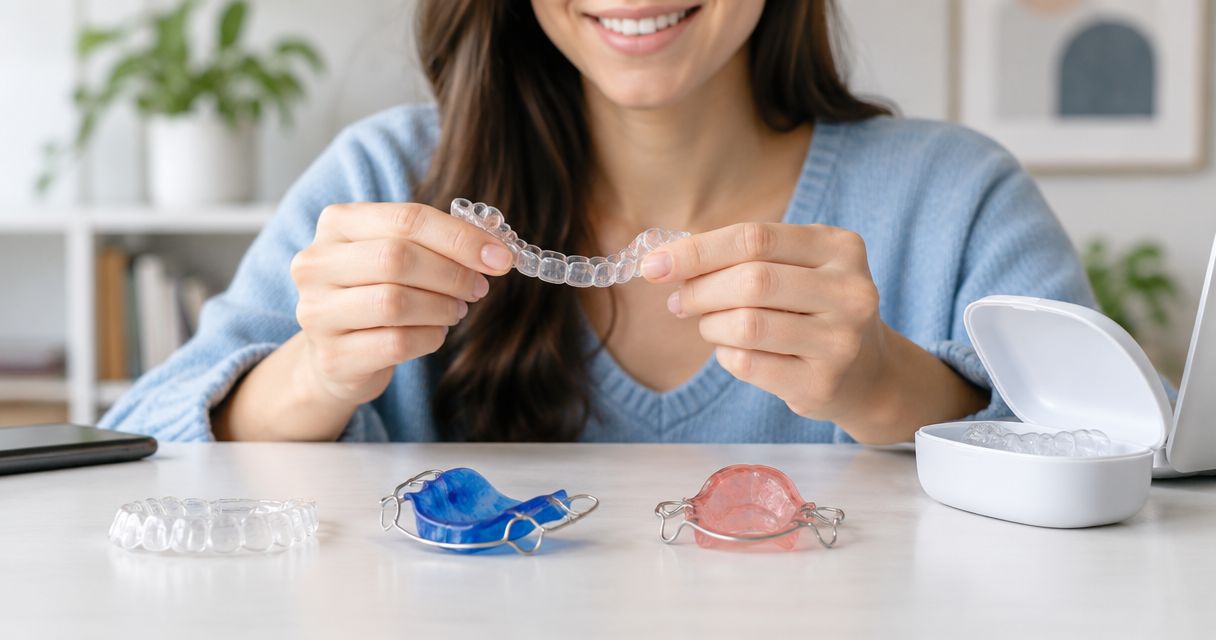
Best overall for discreet, removable wear: clear plastic retainers. Best for professional adjustment: Hawley retainers. Best for continuous front-tooth retention: bonded wire retainers. This 2026 guide compares your options after braces or Invisalign, with treatment-planning context for patients of Harmony Dental Group in La Jolla.
- Best retainer types compared: clear plastic for discreet wear, Hawley for adjustment, bonded wire for continuous front-tooth retention.
- Clear plastic and Hawley retainers work only when you follow your prescribed wear schedule.
- Bonded retainers stay attached, but require careful cleaning and checks for loose bonds.
- Harmony Dental Group patients considering Invisalign should discuss long-term retention before treatment ends.
Why this matters after braces
Removing braces does not end the job of keeping your teeth aligned. Teeth can move after orthodontic treatment, and retainers help preserve their positions while you wear them as directed.
The best retainer is not simply the least visible one. Your choice needs to account for the teeth being retained, your bite, gum health, cleaning habits, and ability to remember a removable appliance. A bonded wire and a removable retainer sometimes belong in the same treatment plan rather than competing against each other.
For a 2026 decision, start with this question: Which retainer can you maintain correctly over the long term? Appearance matters, but a discreet appliance sitting in its case is not retaining your teeth.
What makes the best retainer after braces?
Use these criteria before choosing a design:
- Coverage: Does the appliance retain the teeth your clinician needs to stabilize? A short bonded wire does not cover an entire dental arch.
- Wear reliability: Can you follow the prescribed schedule, or would an attached retainer help with the teeth most likely to shift?
- Cleaning access: Can you clean both the retainer and the surrounding teeth without leaving plaque behind?
- Fit and bite: Does the appliance seat correctly without an unexpected change in how your teeth meet?
- Repair and replacement: What happens if the retainer cracks, bends, loosens, or no longer fits?
- Daily comfort: Can you tolerate its visibility, feel, and any initial effect on speech well enough to use it consistently?
These criteria explain the ranking below. Clear plastic leads for discreet removable wear, not because it is the right prescription for every mouth.
Retainer types at a glance
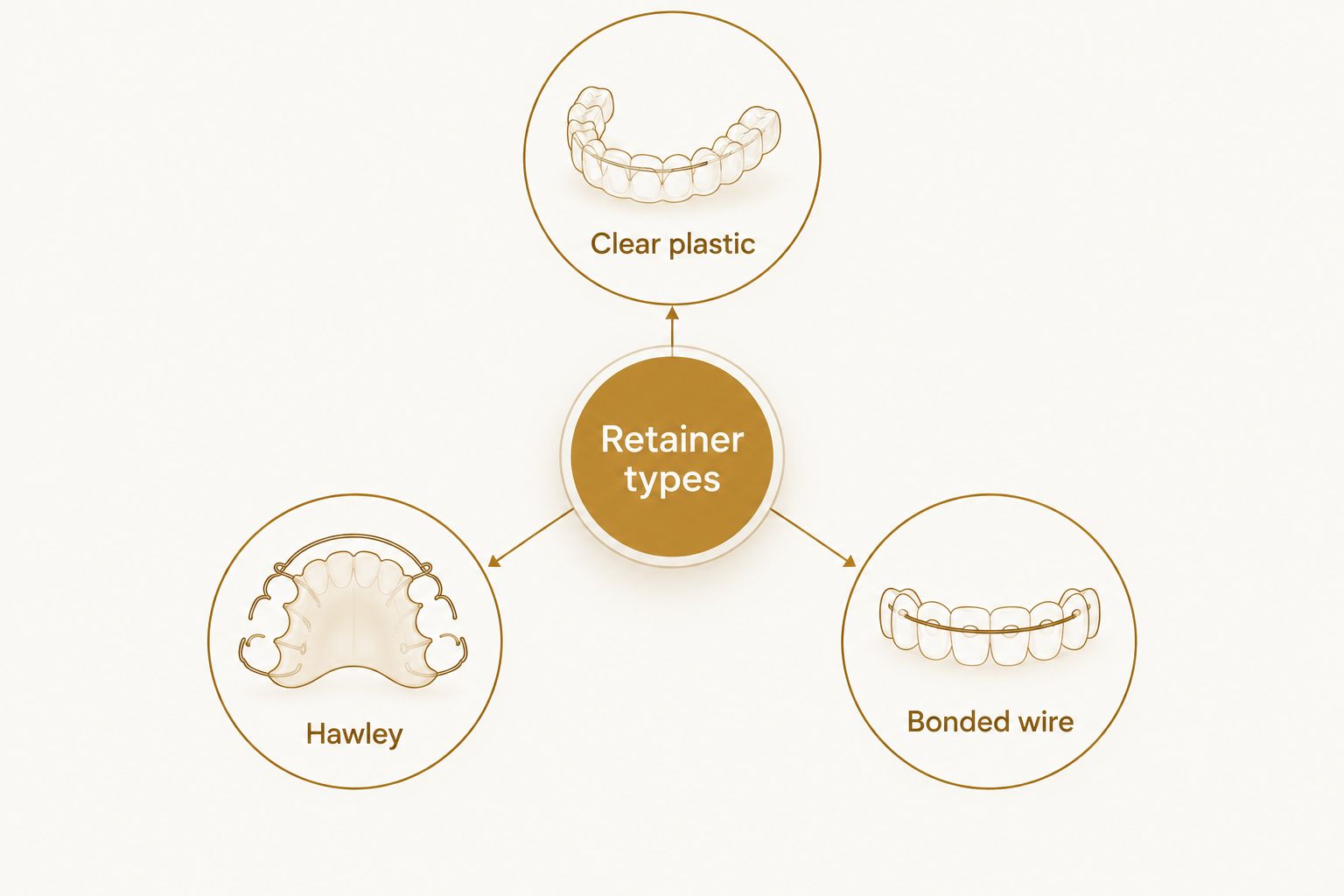
This comparison covers 3 retainer types: 2 removable designs and 1 fixed design. The order reflects distinct patient needs, not a claim that one appliance produces better results for everyone.
| Retainer type | Best for | Standout feature | Key limitation |
|---|---|---|---|
| Clear plastic | Discreet removable wear | Transparent shell fitted over the teeth | Can crack or distort; requires consistent wear |
| Hawley | Professional adjustment | Acrylic base with a wire that a clinician can adjust | Visible front wire and a bulkier feel |
| Bonded wire | Continuous front-tooth retention | Wire attached behind selected teeth | Harder cleaning; does not retain the whole arch by itself |
Clear plastic and Hawley retainers come out for cleaning and eating. Bonded retainers stay attached to the teeth until a dental professional removes them.
1. Clear plastic: best retainer for discreet removable wear
A clear plastic retainer is a transparent shell made to fit your teeth in their retained positions. It resembles a clear aligner, but its purpose is to hold teeth rather than carry out a planned sequence of tooth movements.
Choose clear plastic when you want a removable appliance without a visible front wire. You still need to remove it as instructed, keep it clean, and return it to your mouth on schedule.
Clear plastic pros:
- Transparent material makes the appliance less noticeable during wear.
- Covers the teeth included in the tray rather than only a short front-tooth segment.
- Comes out so you can brush and floss your teeth directly.
- Makes it possible to inspect the tray outside your mouth for cracks or damage.
Clear plastic cons:
- Heat can distort the plastic, and cracks can affect its usefulness.
- Consistent wear depends on remembering to put it back in.
- A damaged or poorly fitting tray needs professional assessment rather than home adjustment.
Best for: Patients who prioritize appearance and can follow a removable-retainer routine.
For your 2026 consultation, ask whether a clear retainer is appropriate for each arch and whether you also need a bonded wire. Do not assume the upper and lower teeth need identical appliances.
Verdict: Buy only a professionally fitted clear plastic retainer when discreet removable wear matches your prescribed plan.
2. Hawley: best retainer for professional adjustment
A Hawley retainer uses an acrylic base and a metal wire that runs across the front teeth. The appliance is removable, and a clinician can adjust its wire when appropriate.
That adjustability is the main reason to discuss Hawley retainers. It does not mean you should bend the wire yourself or use the appliance to correct new tooth movement without an examination.
Hawley pros:
- Its wire can be adjusted by a dental professional when the design and clinical situation allow.
- Removes for brushing, flossing, and appliance cleaning.
- Does not cover the biting surfaces with a full plastic shell in its usual design.
- Some damage is repairable, depending on the part involved and the appliance condition.
Hawley cons:
- The wire is visible across the front teeth.
- The acrylic base feels bulkier than a thin clear tray.
- Speech can sound different while you adapt to the appliance.
Best for: Patients who accept a visible wire and want a removable design that allows professional adjustment.
Ask what your clinician would repair and what would require replacement. Repairability is not a promise that every broken Hawley retainer can be restored, especially if its fit has changed.
Verdict: Buy a professionally prescribed Hawley retainer when adjustability matters more to you than an inconspicuous appearance.
3. Bonded wire: best retainer for continuous front-tooth retention
A bonded retainer is a wire attached to the back surfaces of selected teeth. It stays in place, so you do not have to remember to insert it for those teeth to receive retention.
Its strength is also its boundary: it retains the teeth to which it is attached. It does not replace full-arch retention when your treatment plan requires that broader coverage.
Bonded wire pros:
- Provides continuous retention for the attached teeth while the wire and bonds remain intact.
- Sits behind the teeth rather than across their visible front surfaces.
- Cannot be left in a case or accidentally wrapped in a napkin.
- Can be combined with a removable retainer when prescribed.
Bonded wire cons:
- Cleaning around the wire and adhesive requires extra attention.
- A bond can loosen without the entire wire coming away.
- Wire damage or distortion requires professional assessment.
Best for: Patients whose selected front teeth need continuous retention, including those who struggle to remember removable wear.
Ask your clinician to demonstrate how to floss around the wire. Also ask how to recognize a loose attachment; a wire that still feels present is not proof that every bond is intact.
Verdict: Hold until your clinician confirms that bonded retention suits your bite, gum health, and cleaning ability.
How this ranking works
This 2026 ranking prioritizes daily usability, coverage, cleaning access, and the practical consequences of damage. It does not rank brands or claim that every patient needs the same appliance.
Clear plastic is the default for discreet removable wear. Hawley has a separate role when professional adjustment matters. Bonded wire earns its place for continuous retention of selected teeth, not as an automatic replacement for either removable design.
Your clinician's prescription takes priority over the ranking. Previous tooth movement, the final bite, and the condition of your gums affect the decision.
Which retainer should you choose?
Start by discussing clear plastic if your main priorities are discretion and removable cleaning. Choose Hawley when your clinician recommends an adjustable removable design and you are comfortable with its wire and acrylic base.
Discuss bonded retention when selected front teeth need continuous support or remembering removable wear is a concern. Be prepared for the cleaning responsibility and for the possibility of wearing a removable retainer as well.
For Harmony Dental Group patients considering Invisalign, retainer types belong in the treatment-planning conversation. Ask about retention before treatment ends so you understand the next step, rather than choosing an appliance based on appearance alone.
Bring up any planned veneers, crowns, implants, or other restorative work. Changes to tooth shape can affect how an existing removable retainer fits, so your treating clinicians need to coordinate the sequence.
Discuss your Invisalign goals
Ask how treatment planning connects your smile goals with long-term retention.
Questions to ask before you receive your retainer
A useful 2026 retention plan explains more than which appliance you will receive. It should tell you how to use it and what to do when something changes.
- Wear schedule: When should you wear the removable retainer, and when will the schedule be reviewed?
- Arch coverage: Which appliance is prescribed for the upper teeth, and which is prescribed for the lower teeth?
- Cleaning method: Which cleaning products and techniques are appropriate for the material?
- Fit changes: Who should you contact if the retainer feels unusually tight or no longer seats?
- Damage response: What should you do if a tray cracks, a Hawley wire bends, or a bonded attachment loosens?
- Future dental work: Will planned treatment change the retainer's fit or require a replacement?
Ask for these instructions in writing. A generic online wear schedule is not a substitute for directions based on your treatment.
Daily care that protects your retention plan
Keep removable retainers away from heat
Use the cleaning method your clinician recommends for your specific appliance. Avoid hot water and other heat sources that can distort a plastic retainer.
Store a removable retainer in its protective case when it is out of your mouth. Wrapping it in a napkin makes it easy to discard accidentally, and leaving it exposed creates opportunities for damage.
Clean around bonded wires
Brush carefully around the wire and its attachments, and use the flossing technique demonstrated by your dental professional. A floss threader or another recommended cleaning aid can help you reach beneath the wire.
Keep your dental review appointments. Bond integrity and the condition of the surrounding gums need attention even when the retainer feels comfortable.
Treat a change in fit as a reason to call
A retainer that no longer seats fully needs assessment. Do not force it into place, bend a wire, or try to reshape plastic at home.
Contact your treating practice promptly if an appliance breaks or becomes loose. Ask what to wear while awaiting an appointment rather than improvising a replacement or assuming you should stop retention altogether.
FAQ
What's the best retainer type after braces?
Clear plastic is the best starting point to discuss when your priority is discreet, removable wear. Hawley retainers suit patients who need professional adjustability, while bonded wires retain selected front teeth continuously. Your clinician should choose the design based on your bite, retention needs, and daily habits.
Is a Hawley retainer better than a clear retainer?
A Hawley retainer is better suited to situations where professional wire adjustment is useful; a clear retainer is less visible. Neither design is automatically better for every patient. Both require correct fit and consistent prescribed wear.
Can I use only a permanent retainer after braces?
A bonded retainer alone is appropriate only when your clinician confirms that it provides the coverage you need. It retains the teeth attached to the wire, not every tooth in the arch. Some patients also need a removable retainer.
Do I need retainers after Invisalign?
Yes, retention is needed after Invisalign to help maintain the corrected tooth positions. Harmony Dental Group patients considering Invisalign should discuss the retainer plan before treatment ends. The appliance and wear schedule depend on the individual treatment plan.
How long do I need to wear my retainer?
Retainer use is a long-term commitment, with the schedule prescribed by your treating clinician. Do not stop wearing a retainer simply because your teeth look straight. Ask when your schedule should be reviewed and what ongoing wear is needed.
What should I do if my retainer feels tight or won't fit?
Contact your treating dental professional if your retainer no longer seats fully or feels unusually tight. Do not force it into place or modify it yourself. A fit change needs assessment before you continue with an appliance that no longer fits correctly.
Can a retainer replace a night guard if I grind my teeth?
A retainer is not automatically a substitute for a night guard. Retainers maintain tooth positions, while a night guard is designed for a different protective purpose. Tell your clinician about grinding so the appliances and retention plan can be coordinated.
How do I compare retainer costs without choosing the wrong type?
Compare the prescribed design, follow-up arrangements, and repair or replacement terms rather than choosing by cost alone. Ask for a written estimate based on your treatment plan. The appliance still needs to provide the right coverage and fit.
One last thing
A bonded retainer can still be present even when an attachment has loosened. Do not use the feel of the wire as your only check that retention is working; report a noticeable change and keep scheduled reviews.
If you are considering Invisalign or cosmetic dentistry with Harmony Dental Group in 2026, bring your existing retainer to the discussion. It helps connect your current tooth positions with the treatment you are considering and the retention you will need afterward.