Scaling and root planing should not cause sharp pain once the treatment area is adequately numbed, although you can still feel pressure, vibration, and movement. After a deep dental cleaning, temporary gum soreness and tooth sensitivity are common; tell your dental team about discomfort rather than trying to endure it.
- Is scaling and root planing painful? Local anesthesia controls treatment pain; temporary soreness and sensitivity can follow.
- Sharp pain during deep cleaning is a reason to pause and reassess numbness.
- Harmony Dental Group is a local option for La Jolla patients seeking care for gum concerns.
- Increasing pain, facial swelling, or fever needs prompt dental advice.
How painful is a deep dental cleaning?
Deep cleaning should feel like pressure and movement, not sharp pain, when local anesthesia is working. The numbing injection itself can cause a brief pinch or sting. Your dentist or hygienist should check your comfort before working beneath the gumline.
The American Dental Association’s MouthHealthy guidance describes pain for 1–2 days and tooth sensitivity for up to 1 week after scaling and root planing. These are general recovery expectations, not a deadline every patient must meet.
If you are comparing gum disease treatment options, start with the diagnosis. A routine cleaning and scaling and root planing serve different purposes.
| Cleaning approach | Best for | What you can feel | Benefit | Limitation |
|---|---|---|---|---|
| Routine dental cleaning | Patients whose gum evaluation supports preventive cleaning | Scraping, vibration, and sensitivity in tender areas | Removes plaque and hardened deposits during preventive care | Does not replace treatment for established periodontitis |
| Scaling and root planing | Patients with periodontitis when nonsurgical treatment is indicated | Pressure during numbed treatment; soreness afterward | Cleans tooth and root surfaces beneath the gumline | Requires healing, follow-up, and ongoing home care |
The deciding factor is gum health, not how much discomfort you are willing to tolerate. Ask your clinician to explain the findings that support the recommendation.
Why this matters
Avoiding needed periodontal treatment because of pain concerns leaves the underlying disease untreated. Periodontitis damages the tissues and bone supporting your teeth, and it does not always cause obvious pain before that damage develops.
For a dental visit in 2026, ask two separate questions: what treatment do your gums need, and how will the team keep you comfortable? You deserve clear answers to both before treatment begins.
Harmony Dental Group provides general and restorative dental care in La Jolla. If bleeding gums, sensitivity, or fear has kept you away, explain that when arranging an evaluation; an examination establishes what treatment is appropriate.
What happens during scaling and root planing?
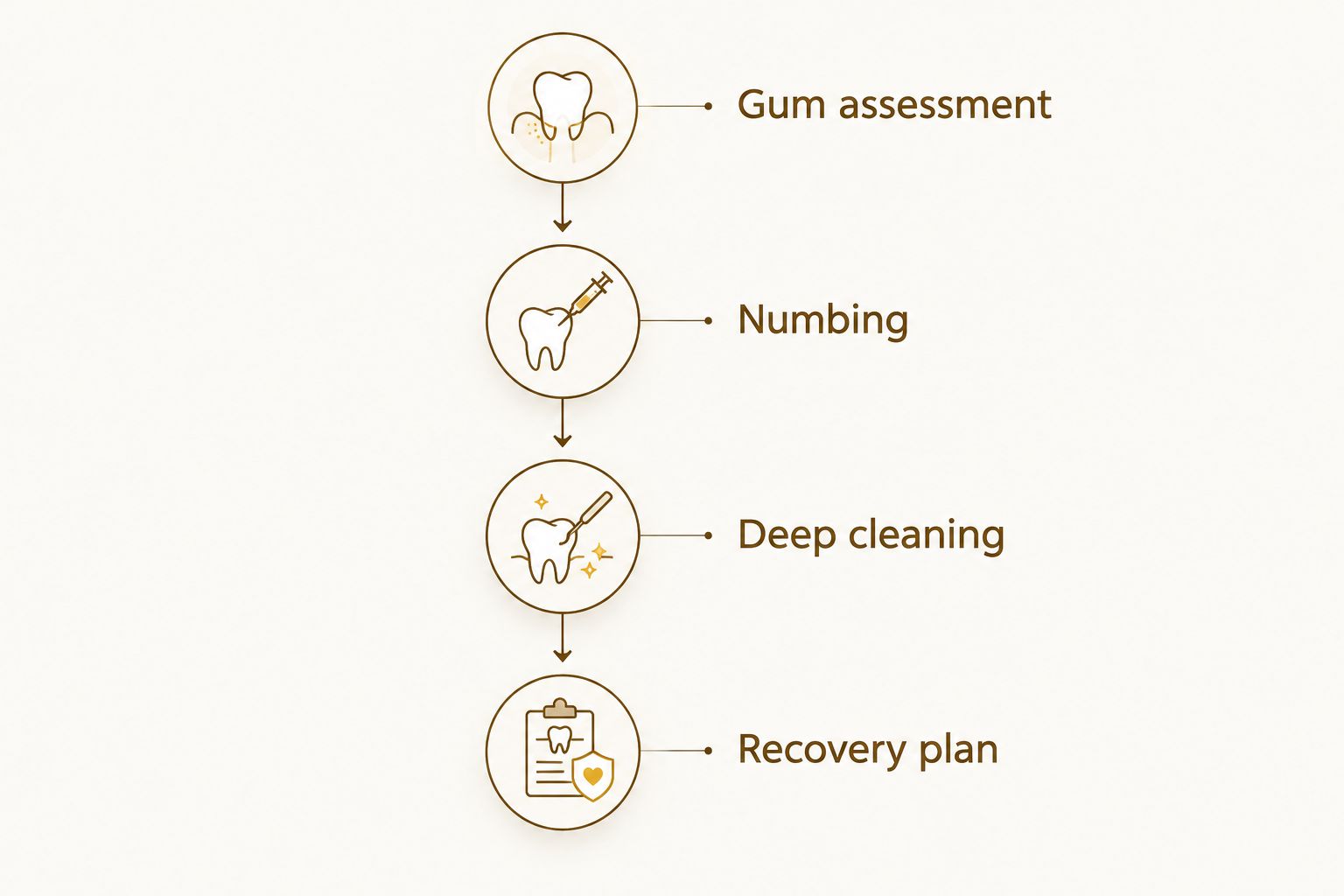
Knowing the sequence makes it easier to speak up at the right moment. Your appointment plan depends on the areas needing treatment and your medical and dental history.
- Gum assessment. Your clinician measures the spaces around your teeth, checks bleeding and recession, and reviews X-rays when indicated. These findings help distinguish gingivitis from periodontitis.
- Numbing. Local anesthesia reduces pain in the treatment area. Tell the team about previous difficulty getting numb, medication allergies, or reactions to dental injections.
- Deep cleaning. Instruments remove plaque and hardened deposits from tooth and root surfaces beneath the gums. You can hear scraping or feel vibration even when the area is numb.
- Recovery plan. Before leaving, review eating, brushing, medication instructions, and symptoms that require a call. Ask how and when your gums will be reassessed.
You remain part of the conversation throughout treatment. Agree on a hand signal before the instruments enter your mouth so you can request a pause without needing to speak.
What sensations are normal during treatment?
Pressure, water spray, scraping sounds, and vibration can occur during scaling and root planing. Numbness blocks pain but does not necessarily remove every sensation.
A sharp, electric, or persistently painful feeling is different. Raise your hand and ask the clinician to stop. The team can reassess the area and whether additional anesthesia is appropriate before continuing.
Do not judge your comfort against someone else’s experience. Inflamed tissue, exposed roots, and previous sensitivity affect how treatment feels.
Local anesthesia: pain control during deep cleaning
Local anesthesia numbs the area being treated while you remain awake. Its benefit is targeted pain control; its drawbacks include the injection and temporary numbness afterward.
Ask what the injection will feel like and how the clinician will confirm that the area is numb. If injections make you anxious, say so before treatment starts rather than waiting until you feel overwhelmed.
Numbness also changes what is safe after your appointment. Avoid chewing until sensation returns so you do not bite your lip, tongue, or cheek, and avoid hot drinks while you cannot judge temperature normally.
For your 2026 treatment plan, request aftercare instructions before the appointment if you need to organize meals, work, or transportation. Do not assume that instructions from a previous dental procedure apply to this one.
After deep cleaning: soreness and sensitivity
Your gums can feel tender as the anesthesia wears off. Mild bleeding and sensitivity to temperature can also occur after scaling and root planing.
The ADA’s patient guidance describes pain for 1–2 days and sensitivity for up to 1 week. The direction of recovery matters: symptoms should settle rather than become progressively worse. Contact the treating dental office if discomfort is substantial, increasing, or not following the recovery instructions you received.
Gums can also look different as inflammation decreases. Spaces between teeth or exposed root surfaces can become more noticeable; ask your clinician what changes to expect in your mouth rather than assuming every visible change means treatment caused damage.
What should you eat afterward?
Once numbness has worn off, choose foods that do not irritate tender gums. Soft, lukewarm meals are often easier to manage than crunchy, sharp-edged, very hot, or very cold foods.
Follow any instructions specific to the treated area. If chewing hurts, do not keep testing the tooth with hard food; contact the office for advice if pain is significant or worsening.
How should you clean your teeth afterward?
Follow the brushing and between-teeth cleaning instructions your dental team provides. Gentle technique matters, but stopping oral hygiene entirely allows plaque to build up again.
For ongoing daily care, ADA guidance recommends brushing for 2 minutes twice daily with fluoride toothpaste and cleaning between teeth daily. Your clinician can explain any temporary adjustments needed immediately after periodontal treatment.
Why discomfort varies
Pain control and recovery are individual. These factors help explain why a friend’s experience does not predict yours:
- Gum inflammation. Tender, inflamed tissue can feel more sensitive during treatment and healing.
- Exposed roots. Recession leaves root surfaces more vulnerable to temperature sensitivity.
- Treatment extent. The number and location of areas needing cleaning affect the appointment plan and recovery experience.
- Existing tooth problems. Decay, cracks, or other dental conditions can contribute to pain that deep cleaning alone will not resolve.
- Anesthesia response. The clinician needs to confirm adequate numbness and adjust the plan if you feel pain.
- Dental anxiety. Fear can make sensations harder to tolerate; a stop signal, explanations, and breaks help you communicate your needs.
Bring a current medication list and discuss your health conditions before treatment. Do not stop prescribed medicines, including blood thinners, unless the prescribing clinician and dental team direct you to do so.
Is deep cleaning more painful than a regular cleaning?
Scaling and root planing can leave more temporary soreness than a routine cleaning because it treats affected surfaces beneath the gumline. With appropriate local anesthesia, however, deeper cleaning does not mean you should endure sharp pain during the appointment.
Routine cleaning can also feel uncomfortable when gums are inflamed or teeth are sensitive. Ask for an explanation of the diagnosis rather than choosing between treatments based only on which sounds easier.
For a 2026 periodontal consultation, ask the clinician to show you the gum measurements and relevant X-ray findings. That discussion connects the treatment recommendation to your own mouth.
Can you have scaling and root planing without numbing?
Some treatment areas can be managed without injected anesthesia, but that decision requires an individual assessment and your agreement. Do not choose an unmedicated approach simply to prove you can tolerate pain.
Ask what discomfort the clinician expects and what happens if you need numbing after treatment begins. A comfort plan should allow reassessment rather than locking you into a decision made before you know how the area feels.
When should you call the dentist after deep cleaning?
Call your dental office promptly for worsening pain, increasing swelling, fever, pus, or bleeding that does not settle with the instructions provided. These symptoms need assessment rather than an assumption that all discomfort is normal healing.
Seek emergency medical care for trouble breathing or swallowing, or rapidly spreading facial or neck swelling. Do not wait for a routine follow-up appointment when those symptoms occur.
If you are uncertain whether your symptoms fit the recovery plan, contact the treating office. Describe where the discomfort is, whether it is improving or worsening, and what triggers it.
What should you ask before booking in La Jolla?
Harmony Dental Group is a local option for La Jolla patients seeking general dental care and an evaluation of gum concerns. Ask about the diagnosis and proposed treatment before deciding how to proceed; this article cannot establish whether you need scaling and root planing.
Bring these questions to your consultation:
- What findings show that I need deep cleaning rather than routine cleaning?
- Which areas need treatment, and how will you keep them comfortable?
- What should I do if I feel pain during the appointment?
- What recovery symptoms should prompt a call?
- How will you check whether my gums have responded?
You can start with Harmony Dental Group to discuss your concerns and arrange an evaluation. Mention anxiety or previous painful dental experiences when booking so they become part of the conversation from the start.
Discuss your gum concerns
Ask about a gum evaluation, pain control, and the next step for your dental health.
FAQ
Is scaling and root planing painful if my gums are already sore?
Scaling and root planing should not cause sharp pain when the treatment area is adequately numbed, even if your gums are already tender. Tell your clinician about soreness before treatment and signal immediately if you feel pain.
How long will my gums hurt after a deep cleaning?
Pain for 1–2 days is described in the American Dental Association’s patient guidance after scaling and root planing. Contact your dental office for worsening pain, substantial discomfort, or symptoms that do not follow your aftercare instructions.
How long does tooth sensitivity last after scaling and root planing?
Sensitivity for up to 1 week is described in the American Dental Association’s patient guidance. Persistent or worsening sensitivity needs dental advice, particularly when it affects one tooth or comes with swelling.
Will I be asleep during a deep dental cleaning?
Local anesthesia numbs the treatment area without putting you to sleep. If anxiety is a concern, discuss it beforehand and ask what approaches are appropriate for your health and treatment plan.
Can I eat right after a deep cleaning?
Wait until numbness has worn off before chewing, and follow your clinician’s instructions. Soft, lukewarm foods are easier on tender gums, while hot drinks can burn tissue you cannot yet feel normally.
Should I take pain medicine before my deep cleaning?
Ask your dentist before taking medicine specifically for the appointment. The recommendation depends on your health history, current medicines, and treatment plan; do not stop prescribed medication on your own.
Does gum recession mean I need pinhole treatment instead of deep cleaning?
Gum recession alone does not establish whether you need pinhole treatment or scaling and root planing. Deep cleaning addresses periodontal deposits and disease, while recession treatment has a different purpose; your clinician must assess gum health first.
One last thing
Less bleeding does not, by itself, prove that gum disease is controlled. The follow-up examination checks how your gums have responded and whether further care is needed.
If you are planning cosmetic dentistry or dental implants in 2026, ask about gum health before focusing on appearance. At Harmony Dental Group, make that a consultation question: what needs attention first, and how will healing be checked?