Getting a cavity filled usually does not hurt once local anesthesia has numbed the tooth, although you can still feel pressure, vibration, and movement. The numbing injection can cause a brief pinch or sting, and some tenderness or temperature sensitivity can follow treatment. Sharp pain during drilling is a reason to signal your dentist to stop and check the numbness—not something you need to tolerate.
- Does getting a cavity filled hurt? Usually not with effective local anesthesia; pressure and vibration are normal sensations.
- Sharp pain during treatment means you should ask the dentist to pause and reassess numbness.
- Persistent or worsening pain after a filling needs a dental assessment, not continued waiting.
- Harmony Dental Group offers general dental care for La Jolla patients concerned about cavities and dental anxiety.
Why this matters
Fear of pain can make scheduling a filling feel harder than the treatment itself. Knowing which sensations to expect—and how to ask for a pause—gives you a practical way to prepare for your 2026 appointment.
You do not have to prove that you can tolerate dental pain. Tell your dentist about previous trouble getting numb, sensitive teeth, or anxiety before treatment begins.
Harmony Dental Group is a local option for La Jolla patients seeking general dental care. When arranging a visit, explain whether you have an existing cavity diagnosis, current tooth pain, or concerns about the injection so those concerns become part of the conversation.
Does getting a cavity filled hurt?
A filling should not cause sharp pain when the tooth is adequately numb. Local anesthesia blocks pain signals from the treatment area, but it does not eliminate every sensation associated with dental work.
The distinction matters: feeling the instrument move is different from feeling a sharp, electric, or burning pain. Use the descriptions below to tell your dentist exactly what you notice.
| Sensation | What it can mean | What you should do |
|---|---|---|
| Brief pinch or sting during the injection | Discomfort as anesthetic is delivered | Tell the dentist if injections worry you before they begin |
| Pressure, vibration, or water spray | Sensations that can remain despite effective numbing | Ask for a break if they feel overwhelming |
| Sharp pain while decay is removed | The tooth needs reassessment before treatment continues | Give your agreed stop signal immediately |
| Mild tenderness after treatment | Irritation around the treated tooth, gums, or injection area | Follow aftercare instructions and watch whether symptoms improve |
| Pain when your teeth meet | A filling that contacts early or another tooth problem | Contact the dentist for a bite check |
Pain does not identify its own cause. A dentist needs to examine the tooth and, when appropriate, use imaging or other tests to distinguish a bite problem from inflammation, a crack, or another condition.
What happens during a filling appointment in 2026?
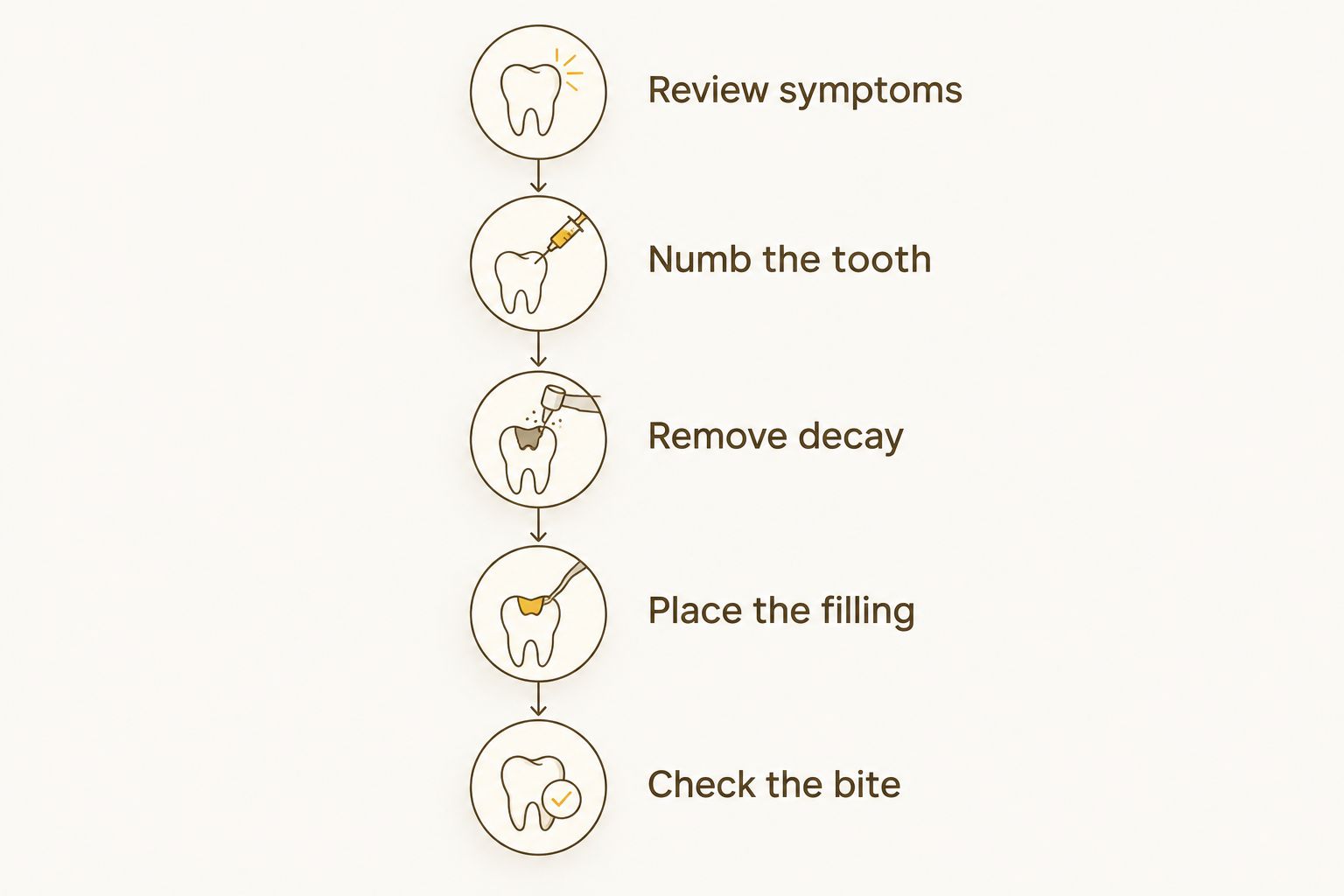
The details depend on the tooth and the restoration, but the basic sequence helps you understand where comfort checks belong. Ask your dentist to explain any step that concerns you before starting.
- Review symptoms. Describe pain with cold, sweets, chewing, or biting. Mention spontaneous pain, swelling, medical conditions, medications, allergies, and any previous difficulty with anesthesia.
- Numb the tooth. The dentist administers local anesthetic when indicated and allows it to take effect. Ask how the tooth will be checked before decay removal begins.
- Remove decay. The dentist removes damaged tooth structure. You can hear equipment and feel vibration without experiencing sharp pain.
- Place the filling. The dentist places and shapes the restorative material. Keeping the area appropriately isolated helps the material perform as intended.
- Check the bite. The dentist checks how the teeth meet and adjusts the filling as needed. Tell the dentist if the restored tooth seems to touch before the others.
An agreed hand signal makes communication easier when you cannot speak. Raise your hand when you need the dentist to pause; there is no benefit to waiting until discomfort becomes difficult to manage.
The numbing injection: brief discomfort before treatment
The injection is often the part patients worry about most. You can feel a pinch, pressure, or stinging as the anesthetic enters the tissue, even though its purpose is to prevent pain during the filling.
Tell the dentist if you have fainted during injections or feel anxious around needles. Ask whether a topical numbing gel is appropriate and how the injection will be given; topical anesthetic numbs the surface but does not replace the deeper anesthetic needed for many fillings.
A numb lip does not always prove that the tooth is fully numb. The dentist should assess comfort at the treatment site rather than relying only on how your cheek or tongue feels.
During the filling: pressure is different from pain
Drilling sounds and vibration can feel unpleasant without being painful. Suction, water spray, and holding your mouth open can also make the appointment tiring.
Ask about short breaks if your jaw gets uncomfortable. If the sound bothers you, ask whether headphones are appropriate while keeping a clear way to hear instructions.
Sharp pain calls for a different response. Stop the procedure so the dentist can reassess the tooth, the anesthetic, and the treatment plan; trying to stay still through pain is not a useful comfort strategy.
After the filling: tenderness needs to improve
Once anesthesia wears off, the injection area, gums, or treated tooth can feel tender. Brief sensitivity to cold or sweets can also occur after a filling, especially when the tooth was already irritated.
The direction of change matters more than comparing yourself with someone else's recovery. Symptoms that settle are different from pain that grows stronger, wakes you from sleep, or starts without a trigger.
A tooth that feels too tall when you close your mouth deserves a bite check. Do not assume persistent chewing pain will disappear simply because the filling is new, and never try to file or reshape the filling yourself.
Why discomfort from a filling varies
Your experience depends on the tooth, the condition of the surrounding tissues, and how your body responds to treatment. These factors explain why another person's appointment cannot predict yours:
- Depth of decay. Decay close to the pulp—the living tissue inside the tooth—can leave the tooth more sensitive and affect which treatment is appropriate.
- Existing inflammation. A tooth that already hurts can be more difficult to numb and needs careful assessment before restoration.
- Tooth location. Tooth anatomy and position influence the anesthetic approach and how easily the dentist can reach the treatment area.
- Size of the restoration. A larger area of damaged tooth structure changes the amount of treatment and the support the tooth needs.
- Anxiety and previous experiences. Fear can increase distress around injections, sounds, and unfamiliar sensations. Discussing those triggers helps the dentist plan communication and breaks.
- How the teeth meet. A filling that takes excessive biting pressure can cause discomfort even when decay removal itself was comfortable.
Local anesthesia or sedation: what addresses the pain?
Local anesthesia controls pain in the tooth; sedation addresses anxiety and awareness. Sedation does not automatically replace local anesthesia, and not every filling requires sedation.
| Approach | Best for | Main benefit | Limitation or consideration |
|---|---|---|---|
| Local anesthesia | Numbing the tooth during a filling | Blocks pain signals in the treated area | Does not remove sounds, pressure, or anxiety |
| Sedation, when clinically appropriate | Patients whose anxiety makes treatment difficult | Can reduce anxiety and alter awareness, depending on the method | Requires individual assessment; preparation and transportation rules depend on the method |
Start by describing what you fear rather than requesting a particular medication. Someone concerned about injection discomfort has different needs from someone unable to tolerate the sights and sounds of treatment.
For questions to raise before an appointment, review the guide to sedation dentistry options for anxious patients. Discuss suitability and availability directly with your treating dentist; a general guide does not establish which services a particular practice provides.
How can you make a filling appointment more comfortable?
Before your 2026 appointment, write down what would help you feel prepared. A specific request gives your dentist more to work with than simply saying that you dislike dental visits.
- Describe your concern. Explain whether the problem is needles, drilling, gagging, jaw discomfort, or a previous painful appointment.
- Agree on a stop signal. Confirm that raising your hand means you need a pause.
- Ask about numbness checks. Understand how the dentist will assess comfort before working on the tooth.
- Request explanations or quiet. Some patients prefer a brief explanation before each step; others prefer fewer details.
- Confirm preparation instructions. Follow instructions specific to your planned treatment, especially if sedation is being considered.
Harmony Dental Group provides general, cosmetic, and restorative dental care. For a cavity concern, the useful starting point is an examination and a discussion of comfort—not choosing a cosmetic treatment to cover a tooth before its health has been assessed.
Discuss your cavity concerns
Ask about a dental examination and explain your concerns about pain before treatment.
What should you do after a filling?
Follow the instructions provided for your restoration and any medications. Until numbness resolves, avoid chewing on the numb area and be careful with hot food or drinks; reduced sensation makes accidental biting and burns easier to miss.
Keep brushing and cleaning between your teeth, treating a tender gum area gently. Do not repeatedly test the tooth with ice, very hot drinks, or hard biting to see whether it still hurts.
Ask your dentist which pain medicine, if any, is appropriate for your health history. Over-the-counter medicines are not suitable for everyone, and you should follow the product label and your clinician's advice rather than increasing doses to manage worsening pain.
When should you call the dentist about filling pain?
Contact your dentist if pain worsens, your bite feels uneven, or sensitivity is not settling. Explain what triggers the pain, whether it lingers, and whether the tooth hurts without eating or drinking.
Severe spontaneous pain, swelling, fever, drainage, or a bad taste needs prompt dental assessment. These symptoms are not something to dismiss as routine filling sensitivity.
Trouble breathing or swallowing, or rapidly spreading facial or neck swelling, requires emergency medical care. Do not wait for a routine dental appointment when those symptoms occur.
What should you ask before booking a filling in 2026?
Ask whether the tooth needs a filling and what findings support that recommendation. Pain alone does not establish the treatment: some cavities cause no symptoms, while a painful tooth can have a problem that a filling cannot resolve.
Useful questions include: What will you do if the tooth is not fully numb? What symptoms should prompt a call afterward? Could the tooth need a different restoration or treatment if the damage is more extensive than expected?
You can also request a written treatment estimate and discuss payment or insurance questions before proceeding. Do not assume coverage, financing eligibility, or a particular anesthetic arrangement without confirmation.
FAQ
Does getting a cavity filled hurt without numbing?
Removing decay without effective anesthesia can hurt, particularly when treatment reaches sensitive tooth tissue. Ask your dentist whether anesthesia is appropriate rather than assuming a small cavity will be painless.
Does the shot for a cavity filling hurt?
The injection can cause a brief pinch, pressure, or sting. Tell your dentist about needle anxiety before the injection and ask how discomfort will be managed.
Can I still feel drilling when my tooth is numb?
You can feel pressure and vibration even when the tooth is numb. Sharp pain is different and means you should signal the dentist to pause and reassess.
Why does my tooth hurt when I bite after a filling?
Pain when biting after a filling can come from an uneven bite, tooth irritation, a crack, or another dental problem. Contact your dentist for an assessment rather than assuming the filling only needs time.
Does pain after a filling mean I need a root canal?
Pain after a filling does not automatically mean you need a root canal. The dentist must assess the symptoms and tooth to determine whether the pulp is recovering or needs additional treatment.
Can I eat right after getting a cavity filled?
Wait until numbness resolves before chewing on the affected area, and follow instructions for your filling material. Reduced sensation increases the risk of biting your cheek, lip, or tongue.
What should I tell my dentist about filling anxiety in 2026?
Tell your dentist exactly what worries you, including needles, drilling, gagging, or previous difficulty getting numb. Agree on a stop signal and ask how comfort will be checked before treatment begins.
One last thing
A tooth can have decay without hurting. Waiting for pain is not a reliable way to decide when a cavity needs attention, and a filling does not need to become an endurance test.
For your 2026 dental visit, bring one clear request: ask how you will communicate discomfort while treatment is underway. Harmony Dental Group patients can raise that question when discussing general dental care, before deciding on the next step.