Best starting treatment for established periodontitis: scaling and root planing. Best for early gingivitis: professional cleaning plus daily plaque control. Best for long-term stability: periodontal maintenance. This 2026 guide compares gum disease treatment options by diagnosis; Harmony Dental Group is a general-dentistry option for La Jolla families considering their next step.
- Gum disease treatment options depend on whether inflammation is gingivitis or periodontitis with supporting tissue loss.
- Scaling and root planing is the usual nonsurgical starting treatment for established periodontitis.
- Periodontal surgery addresses persistent pockets; regenerative treatment targets selected defects, not every case.
- Harmony Dental Group offers general dental care in La Jolla; choose periodontal treatment after a clinical diagnosis.
Why this matters
Bleeding gums do not tell you which treatment you need. Gingivitis involves gum inflammation without the attachment and bone loss that define periodontitis; a periodontal examination separates the two.
Treat the diagnosis, not just the bleeding. Gingivitis can resolve with effective plaque removal, but established periodontal damage needs professional assessment and ongoing management. Mouthwash cannot remove hardened tartar or rebuild lost supporting bone.
Harmony Dental Group provides general, cosmetic and restorative dentistry in La Jolla. When comparing periodontal care, ask what the examination shows and whether treatment requires a periodontist rather than assuming every dental practice provides every procedure.
What makes the best gum disease treatment options?
Use these criteria to assess a treatment recommendation in 2026:
- Diagnosis fit: The plan distinguishes reversible gingivitis from periodontitis involving attachment or bone loss.
- Access to deposits: Treatment reaches the plaque and calculus responsible for inflammation, including deposits below the gumline.
- Tissue preservation: The plan addresses disease while considering recession, sensitivity and the remaining support around each tooth.
- Evidence-based role: Antibiotics and other adjuncts supplement appropriate mechanical treatment rather than replace it.
- Reassessment: The dentist checks healing and remaining pockets before deciding whether additional treatment is necessary.
- Maintainability: You can clean the treated areas, attend follow-up care and manage relevant risks such as smoking or diabetes.
A treatment does not become the best option because it sounds newer or more intensive. The best option is the least invasive approach that adequately addresses your diagnosed condition.
Gum disease treatments at a glance in 2026
The order below follows treatment roles, not a claim that everyone should progress through every procedure. Surgery and regenerative treatment serve different clinical needs from routine cleaning.
| Treatment | Best for | Standout role | Key limitation |
|---|---|---|---|
| Scaling and root planing | Initial nonsurgical treatment of periodontitis | Removes deposits from root surfaces below the gumline | Some sites still need additional treatment |
| Professional cleaning and home care | Gingivitis without periodontal attachment loss | Removes deposits and supports daily plaque control | Does not substitute for treatment of established periodontitis |
| Periodontal flap surgery | Persistent deep pockets after initial treatment | Improves access to roots and diseased areas | Involves surgery and postoperative healing |
| Periodontal regenerative treatment | Selected periodontal bone defects | Attempts to restore lost supporting tissues | Not suitable for every pattern of bone loss |
| Antibiotic adjuncts | Selected cases needing additional infection management | Adds targeted antimicrobial treatment | Does not replace physical removal of deposits |
| Periodontal maintenance | Long-term care after active periodontal treatment | Monitors stability and manages recurring deposits | Cannot replace unfinished active treatment |
1. Scaling and root planing: best for initial periodontitis treatment
Scaling and root planing is a nonsurgical treatment that removes plaque and calculus from below the gumline and affected root surfaces. It is commonly called a deep cleaning, but its purpose differs from a routine preventive cleaning: it treats diagnosed periodontal disease.
Your dentist assesses pockets, bleeding, attachment levels and relevant radiographs before recommending treatment. Local anesthesia can help manage discomfort during instrumentation; the treatment extent depends on the affected areas.
Scaling and root planing pros:
- Addresses deposits that brushing and flossing cannot remove.
- Provides an established nonsurgical starting point for periodontitis.
- Allows reassessment before deciding whether surgery is necessary.
Scaling and root planing cons:
- Temporary tenderness and tooth sensitivity can follow treatment.
- Persistent deep pockets or complex anatomy can require additional care.
- Does not automatically restore supporting bone already lost.
Best for: Patients with diagnosed periodontitis who need initial mechanical treatment below the gumline.
Ask how the dentist will assess the response. A treatment plan should include reassessment, not simply a completed cleaning appointment and no further review.
Verdict: Hold until periodontitis is confirmed; then prioritize scaling and root planing when clinically indicated.
2. Professional cleaning and home care: best for early gingivitis
Professional cleaning removes plaque and hardened deposits that contribute to gum inflammation. Daily plaque control then limits their return; for gingivitis, this combination addresses the underlying cause without periodontal surgery.
The American Dental Association recommends brushing for 2 minutes, 2 times per day, with fluoride toothpaste and cleaning between teeth daily. Make that 1 interdental-cleaning session per day, using floss or another suitable tool your dental professional recommends.
Professional cleaning and home care pros:
- Addresses plaque-related gingivitis without surgical treatment.
- Builds habits needed for every later periodontal treatment.
- Gives your dental professional an opportunity to identify areas you miss.
Professional cleaning and home care cons:
- A routine cleaning alone does not adequately treat established periodontitis.
- Results depend on consistent daily plaque control.
- Bleeding that persists needs reassessment rather than harder brushing.
Best for: Patients with gingivitis and no diagnosed periodontal attachment or bone loss.
Use a soft-bristled toothbrush and clean gently at the gumline. If an interdental tool hurts or does not fit, ask for a different size or technique rather than forcing it into place.
Verdict: Hold off on advanced procedures when the diagnosis is gingivitis; prioritize professional cleaning and daily care.
Gingivitis versus periodontitis
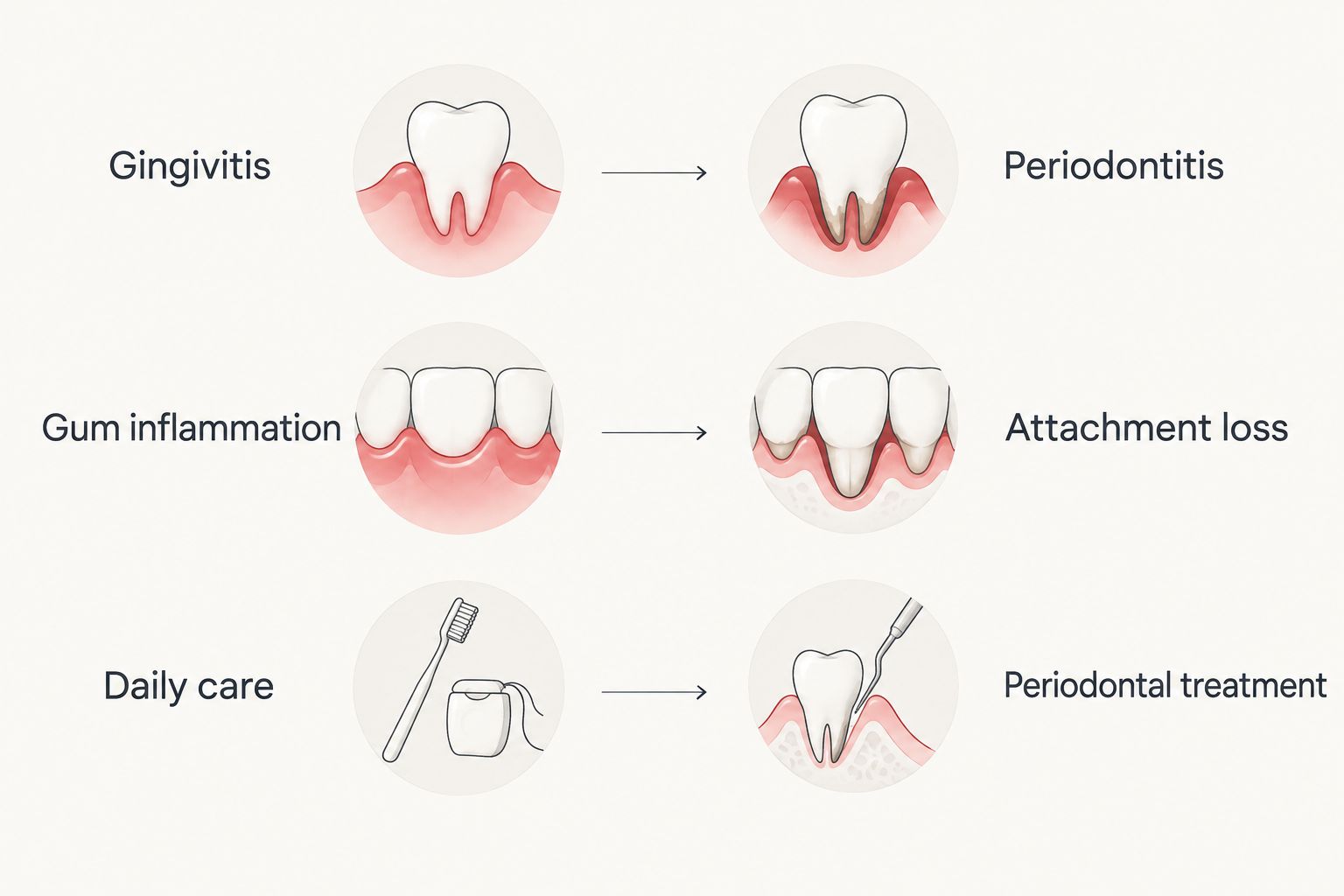
Gingivitis means gum inflammation without periodontal attachment loss. Periodontitis involves loss of the tissues supporting the teeth. That distinction changes the treatment plan: home care matters for both, but established periodontitis requires treatment beyond simply improving your brushing.
3. Periodontal flap surgery: best for persistent deep pockets
Periodontal flap surgery gives a dentist or periodontist access to root surfaces and areas that remain difficult to treat nonsurgically. The clinician moves gum tissue to reach the affected sites, cleans them and repositions the tissue as appropriate.
It is not the default treatment for bleeding gums. Surgery becomes a consideration when reassessment shows persistent disease or pocket anatomy that prevents effective cleaning and maintenance.
Periodontal flap surgery pros:
- Improves access to deposits in difficult areas.
- Allows direct assessment of affected root and bone surfaces.
- Can make selected treated sites easier to maintain.
Periodontal flap surgery cons:
- Requires postoperative care and healing.
- Gum recession and root sensitivity can follow treatment.
- Does not eliminate the need for daily cleaning and maintenance.
Best for: Patients with persistent periodontal pockets that need surgical access after appropriate initial treatment.
Ask what problem surgery will address at each site. Also ask whether the goal is access, pocket reduction or another specific outcome; these are not interchangeable explanations.
Verdict: Hold until reassessment establishes a clear surgical indication.
4. Periodontal regenerative treatment: best for selected bone defects
Periodontal regenerative treatment aims to restore supporting tissues lost to periodontitis in suitable defects. Depending on the clinical situation, treatment can involve graft materials, barrier membranes or biologic agents.
The shape of the defect and the condition of the tooth matter. Regeneration is not a general promise to reverse all gum disease or return every tooth to its original support.
Periodontal regenerative treatment pros:
- Targets selected areas of lost periodontal support.
- Offers a tissue-restoration goal beyond cleaning alone.
- Can form part of a tooth-preservation treatment plan.
Periodontal regenerative treatment cons:
- Not every bone-loss pattern is suitable.
- Outcomes depend on anatomy, healing and risk-factor control.
- Requires surgical care and continued periodontal follow-up.
Best for: Patients with specific periodontal defects that a treating clinician considers suitable for regeneration.
Distinguish periodontal regeneration around a natural tooth from bone grafting performed for implant planning. They involve different treatment goals, even when both discussions use the term bone graft.
Verdict: Hold until the clinician explains why the individual defect is a suitable candidate.
5. Antibiotic adjuncts: best for selected additional infection management
Antibiotics sometimes supplement periodontal treatment, either through local delivery or a systemic prescription. They do not remove calculus and should not replace scaling, root-surface cleaning or drainage when those treatments are needed.
Selection depends on the diagnosis and clinical circumstances. Routine antibiotic use for every case of bleeding gums is not an appropriate treatment strategy.
Antibiotic adjuncts pros:
- Add antimicrobial treatment when there is a defined indication.
- Local delivery can target selected periodontal sites.
- Can support a broader treatment plan in selected cases.
Antibiotic adjuncts cons:
- Systemic antibiotics carry risks including adverse reactions and antibiotic resistance.
- Benefits depend on appropriate case selection.
- Infection can persist if deposits or another underlying cause remain untreated.
Best for: Patients whose treating clinician identifies a specific reason for adjunctive antimicrobial treatment.
Tell the prescriber about allergies, medications and previous reactions. Do not use leftover antibiotics or take another person's prescription for gum symptoms.
Verdict: Skip routine antibiotics without a clear clinical indication.
6. Periodontal maintenance: best for long-term disease management
Periodontal maintenance is ongoing professional care after active periodontal treatment. It includes monitoring periodontal health and managing deposits at sites where disease can recur.
It differs from a routine cleaning because the patient has a periodontal disease history. Visit frequency should reflect disease activity, remaining pockets, home care and relevant health risks rather than a calendar rule applied to everyone.
Periodontal maintenance pros:
- Provides continued surveillance after active treatment.
- Supports cleaning at vulnerable periodontal sites.
- Creates opportunities to adjust home care when conditions change.
Periodontal maintenance cons:
- Requires an ongoing commitment to appointments and daily care.
- Does not guarantee that disease will never recur.
- Cannot replace additional active treatment when disease remains uncontrolled.
Best for: Patients who have completed active periodontal treatment and need continued monitoring and care.
Ask which findings would trigger further treatment. That keeps maintenance connected to your clinical condition instead of treating every appointment as the same service.
Verdict: Hold until active treatment is complete; then make prescribed maintenance a priority.
How the treatments are ranked
This 2026 comparison ranks treatments by diagnosis fit, deposit removal, tissue preservation, clinical role, reassessment and maintainability. It is not a head-to-head trial or a ranking of dental practices.
The clinical distinctions follow patient guidance from the American Dental Association and the National Institute of Dental and Craniofacial Research on gum disease and periodontal care. The main decision is whether you have gingivitis, established periodontitis or residual disease after treatment.
Which gum disease treatment should you choose?
Choose an examination before choosing a procedure. For gingivitis, professional cleaning and consistent home care are the starting point. For periodontitis, scaling and root planing is commonly the initial nonsurgical treatment, with reassessment determining the next step.
Before accepting a 2026 treatment plan, ask:
- What diagnosis explains the recommendation?
- Which teeth and sites need treatment?
- What do the pocket measurements and radiographs show?
- How will the clinician judge whether treatment worked?
- Which findings would justify surgery or a specialist evaluation?
- What ongoing care will you need afterward?
For La Jolla families, Harmony Dental Group is a local general-dentistry option. Confirm the scope of periodontal care offered and whether your condition needs specialist treatment.
Discuss your dental care needs
Review Harmony Dental Group's practice information before arranging your next dental visit.
FAQ
What's the best gum disease treatment option in 2026?
The best gum disease treatment option depends on the diagnosis. Professional cleaning and daily plaque control address gingivitis; scaling and root planing is commonly the initial nonsurgical treatment for periodontitis.
Can I cure gum disease at home?
Home care alone cannot remove hardened calculus or replace treatment for established periodontitis. Consistent brushing and interdental cleaning can help reverse plaque-related gingivitis when combined with appropriate professional care.
Is a deep cleaning better than a regular cleaning?
A deep cleaning serves a different purpose from a regular cleaning: it treats deposits below the gumline in diagnosed periodontitis. The correct choice depends on periodontal findings, not which procedure sounds more thorough.
Do I need antibiotics for bleeding gums?
Bleeding gums alone do not establish a need for antibiotics. A dentist needs to identify the cause and decide whether mechanical treatment, home-care changes or an antimicrobial adjunct is appropriate.
Can gum disease treatment regrow lost bone?
Selected regenerative procedures aim to restore periodontal support in suitable defects. Routine cleaning and scaling do not automatically regrow lost bone, and not every defect is suitable for regeneration.
Is laser treatment the best option for gum disease?
The use of a laser does not by itself make a periodontal treatment the best option. Ask what diagnosis the procedure addresses, what evidence supports its intended role and how it compares with established treatment for your condition.
When should I seek urgent care for gum symptoms?
Seek prompt dental assessment for swelling, pus, severe pain or a loose tooth. Facial swelling with fever needs urgent assessment, and trouble breathing or swallowing requires emergency medical care.
One last thing
Less bleeding does not prove that periodontitis is controlled. Smoking can suppress visible bleeding, so symptom improvement alone is not a reliable substitute for a periodontal examination.
For your 2026 dental visit, bring a medication list and explain any smoking history or diabetes diagnosis. Give Harmony Dental Group or your treating clinician the information needed to assess your gums, then choose treatment from the findings—not from a procedure name.