Yes, you can get dental implants with gum disease once active disease is treated and your dentist confirms that the gums and supporting bone are suitable for implant placement. A history of periodontitis does not automatically rule out implants, but it increases the importance of careful planning and ongoing maintenance; this 2026 guide explains what needs to happen before you proceed.
- Dental implants with gum disease require infection control and an assessment of supporting bone before placement.
- Previous periodontitis increases the risk of inflammation and bone loss around dental implants.
- Harmony Dental Group provides dental implants in La Jolla; candidacy depends on an individual examination.
- Gum recession treatment does not replace treatment for active periodontal infection.
Why this matters
Replacing a missing tooth does not remove the conditions that caused gum disease. An implant cannot develop a cavity, but the tissues surrounding it can become inflamed and lose supporting bone.
For patients considering dental implants at Harmony Dental Group, the first decision is whether the mouth is healthy enough for treatment—not which implant restoration to choose. Treating gum disease first protects the foundation your replacement teeth will depend on.
Can you get dental implants with gum disease?
Yes, after active gum disease is controlled and an examination establishes whether implants are appropriate. Your dentist needs to distinguish inflammation limited to the gums from periodontitis, which damages the tissues and bone that support teeth.
The starting point changes the treatment sequence. This comparison explains why two patients asking the same question can receive different recommendations.
| Gum condition | What it means for implant planning | Main limitation |
|---|---|---|
| Gingivitis | Treat inflammation and improve plaque control before proceeding | Healthy-looking gums alone do not establish implant readiness |
| Active periodontitis | Control disease and reassess gum and bone health before implant placement | Ongoing infection and bone loss make placement inappropriate until addressed |
| Previously treated, stable periodontitis | Consider implants after assessing bone, risk factors, and maintenance needs | Previous disease remains relevant to future implant complications |
| Gum recession without active periodontitis | Assess tissue thickness, exposed roots, and the proposed implant site | Recession alone does not show whether adequate supporting bone remains |
Gingivitis is often reversible with professional care and effective daily cleaning. Periodontitis involves loss of tooth-supporting tissues; controlling it does not automatically restore the bone already lost.
Your 2026 treatment plan should identify both the current disease status and the condition of the proposed implant site. A statement that your gums look better is not a substitute for that assessment.
What happens before an implant is placed?
Implant planning usually follows a sequence, although the treatment within each stage depends on your examination. The decision to move forward should follow reassessment, not simply the completion of a cleaning appointment.
- Assess gum health. Your dentist examines bleeding, gum-pocket depths, recession, tooth mobility, and plaque buildup. Dental imaging helps assess bone levels and the proposed implant site.
- Control disease. Treatment addresses plaque and deposits beneath the gumline, along with the factors contributing to inflammation. Some patients need periodontal treatment beyond nonsurgical cleaning.
- Reassess healing. Your dental team checks how the tissues responded and whether you can maintain effective cleaning at home. Persistent inflammation needs attention before placement.
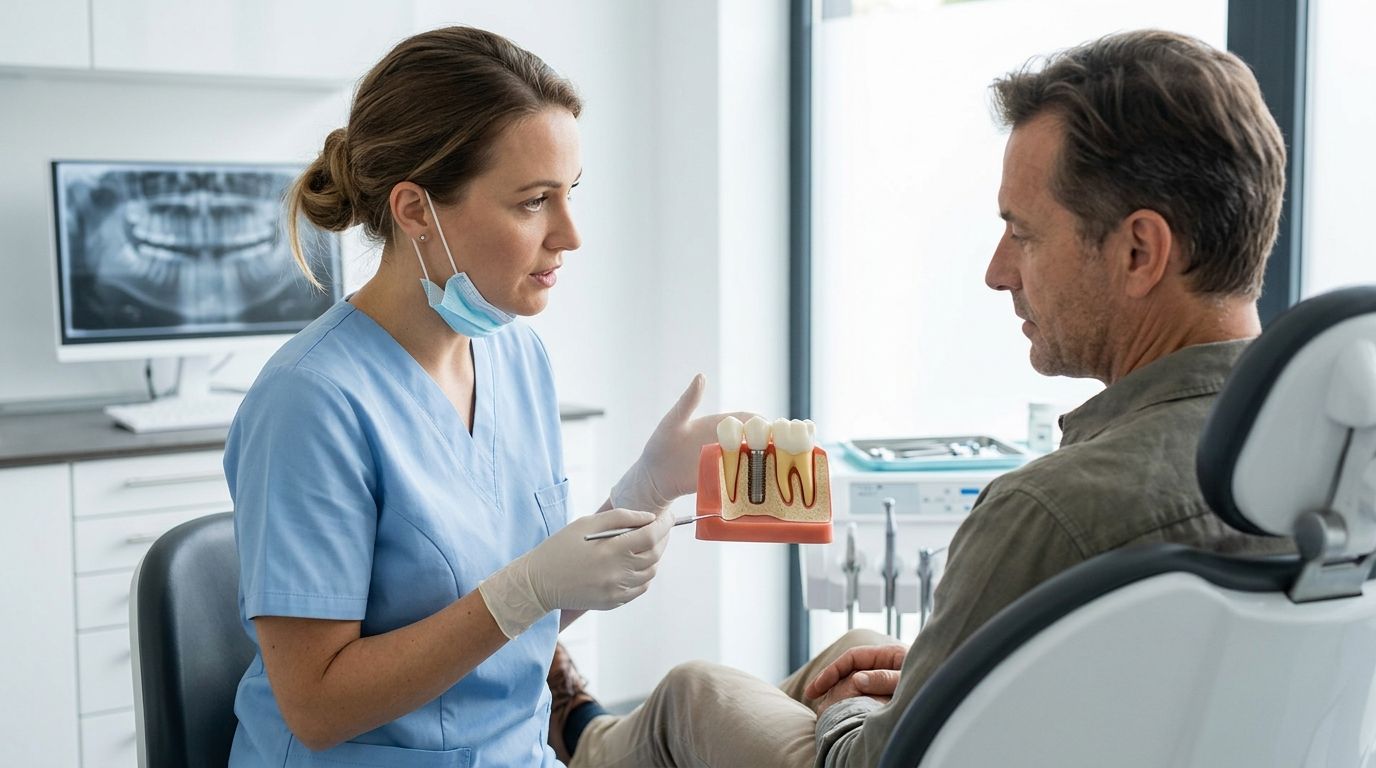
- Plan restoration. Once gum health is stable, the team evaluates bone, implant position, the replacement tooth, and whether additional procedures are needed.
Ask what findings will show that you are ready for the next stage. Your dentist should explain the decision in terms you understand, including any remaining inflammation or bone concerns.
For more detail about the disease-control stage, review the gum disease treatment options. The right approach depends on the diagnosis, not simply whether a treatment sounds less invasive.
Why implant eligibility and treatment timing vary
There is no single waiting period that applies to everyone with gum disease. In 2026, an individual examination—not a standard calendar interval—should determine your treatment sequence.
- Current disease activity. Bleeding, deep pockets, and signs of ongoing infection require assessment before implant placement.
- Remaining bone. Periodontitis can reduce bone around teeth and leave an implant site without adequate support.
- Response to treatment. Your dentist needs to see whether inflammation improves and whether deeper sites remain difficult to clean.
- Smoking and nicotine use. Tobacco use affects healing and implant risk; disclose smoking and other nicotine use during planning.
- Diabetes and other health factors. Blood sugar control, medications, and medical history can affect healing and treatment decisions.
- Daily cleaning and follow-up. Implant restorations need accessible cleaning surfaces and a maintenance schedule you can follow.
These factors work together. Having enough bone does not cancel out active disease, and finishing periodontal treatment does not remove the need to assess the implant site.
Does bone loss mean you cannot have implants?
Bone loss does not automatically rule out implants, but it can change the procedure or make another replacement more appropriate. Your dentist evaluates the amount and location of remaining bone, nearby anatomy, and the position needed for a functional replacement tooth.
Some patients need bone grafting before or alongside implant treatment. A graft is not a substitute for controlling active periodontal disease, and not every area of bone loss can be managed in the same way.
Ask what the proposed graft is intended to accomplish and how its healing will be assessed. You should also understand the disadvantages: another procedure, additional healing, and the possibility that the site will still need reassessment before an implant can be placed.
A recommendation against an implant is not a failure of care. Sometimes protecting remaining teeth or choosing a different replacement better matches the condition of your mouth.
Can gum disease come back around dental implants?
Yes, inflammation can develop around dental implants even after gum disease around natural teeth has been treated. Peri-implant mucositis affects the soft tissues around an implant; peri-implantitis also involves loss of supporting bone.
A history of periodontitis is a recognized risk factor for peri-implant disease. That is why your periodontal history matters even when the tooth with the original problem has been removed.
Watch for bleeding during cleaning, swelling, discharge, persistent discomfort, or changes around the implant. These signs need a dental assessment rather than a change of toothpaste alone; a loose implant also needs prompt attention.
Plan for maintenance before you agree to placement. Your 2026 implant plan should explain who will monitor your gums, how professional cleaning will be scheduled, and what tools you need to clean the restoration at home.
Is pinhole gum treatment enough before implants?
Pinhole gum recession treatment addresses receding gum tissue in suitable patients. It does not replace treatment for active periodontal infection or establish that the bone is ready to support an implant.
Harmony Dental Group's periodontist, Dr. Javdan, has six years of experience performing pinhole gum recession treatment as of October 2026. That experience relates specifically to pinhole treatment, not implant outcomes or a guarantee that recession treatment is appropriate for every patient.
The important distinction is between recession and active disease. Recession describes the gum margin moving away from its previous position; periodontitis involves damage to the tissues supporting teeth, and the conditions can occur together.
If you have exposed roots and a missing tooth, ask which concern each proposed procedure addresses. A clear treatment plan separates infection control, gum-tissue treatment, bone preparation, and tooth replacement instead of treating them as interchangeable.
What should you ask at an implant consultation?
Bring your medication list, relevant medical history, and information about previous gum treatment. If you have recent dental records or imaging, ask whether the treating office needs them before your visit.
Use these questions to make the discussion practical:
- What is my diagnosis? Ask whether you have gingivitis, active periodontitis, or previously treated disease that is currently stable.
- What needs treatment first? Get a clear explanation of which findings prevent implant placement now.
- What will show that treatment worked? Ask how gum health and the implant site will be reassessed.
- Will I need additional procedures? Discuss bone grafting, extractions, or tissue treatment only if the examination supports them.
- How will I clean the replacement? Ask for a demonstration of access around the planned restoration.
- What happens if I do not choose an implant? Understand appropriate alternatives and the consequences of leaving the space untreated.
Harmony Dental Group is a local option for La Jolla patients considering dental implants alongside periodontal care. The decision should still rest on your examination, treatment goals, and ability to maintain the result—not on a promise that everyone qualifies.
FAQ
Can I get dental implants if I had gum disease years ago?
Yes, a history of gum disease does not automatically prevent dental implants. Your dentist must confirm current stability, assess bone support, and discuss the increased importance of long-term periodontal maintenance.
Do I need to treat bleeding gums before getting implants?
Bleeding gums need assessment before implant placement because they can signal inflammation. Your dentist will identify the cause and determine what treatment is needed before proceeding.
How long after gum disease treatment can I get an implant?
There is no single waiting period after gum disease treatment that suits every patient. Placement depends on healing, disease control, bone condition, and whether additional procedures are necessary.
Will removing all my teeth cure gum disease and make implants safe?
Removing teeth does not eliminate the risk of inflammation and bone loss around future implants. Implant planning still requires assessment of infection, healing, bone support, and long-term cleaning needs.
Can I get implants if gum disease has caused bone loss?
Bone loss does not automatically rule out implants, but it changes the assessment and sometimes the treatment plan. Your dentist will determine whether the site has sufficient support, needs grafting, or is better suited to another replacement.
Does pinhole gum treatment prepare my mouth for implants?
Pinhole gum treatment addresses gum recession in suitable patients; it does not replace infection control or an implant-site assessment. Recession, periodontal disease, and missing teeth each need a clear diagnosis and treatment purpose.
Are dental implants a guaranteed permanent solution after periodontal treatment?
Dental implants are not a guaranteed permanent solution after periodontal treatment. Daily cleaning, professional maintenance, medical factors, and the condition of surrounding tissues all affect their long-term health.
One last thing
An implant does not need to hurt for the surrounding tissues to need treatment. Waiting for pain can delay assessment of bleeding or other changes that deserve attention.
Before agreeing to dental implants with gum disease, ask your dentist to explain two things clearly: what shows the disease is controlled, and how the planned replacement will be kept clean. Those answers connect the treatment you receive now with the care you will need afterward.