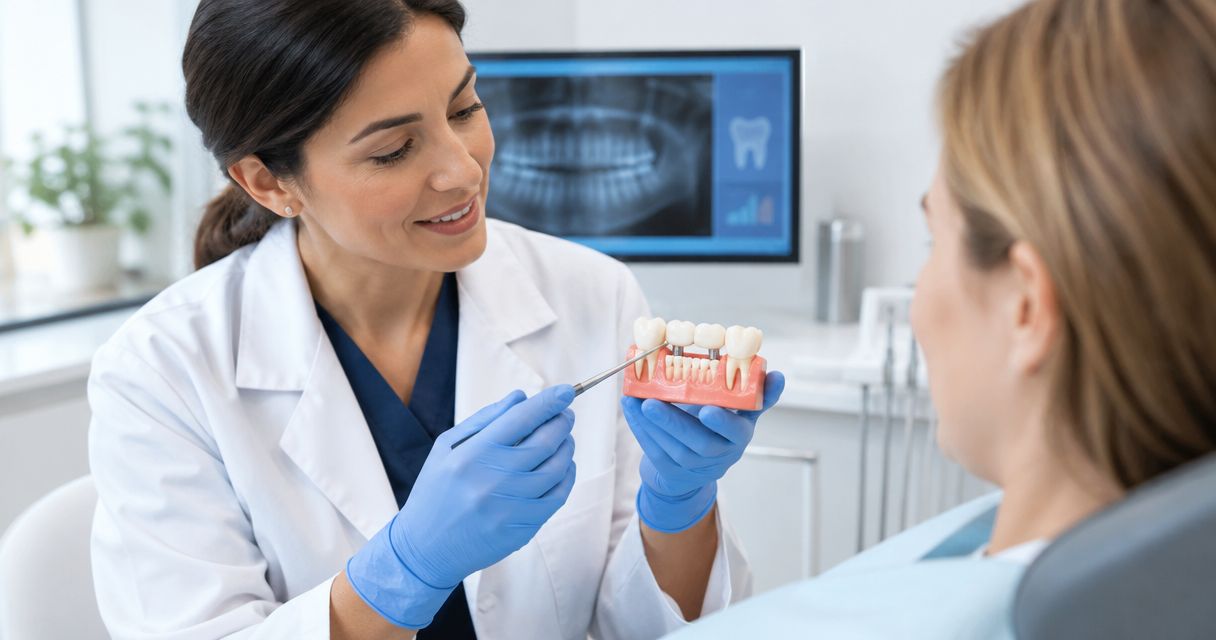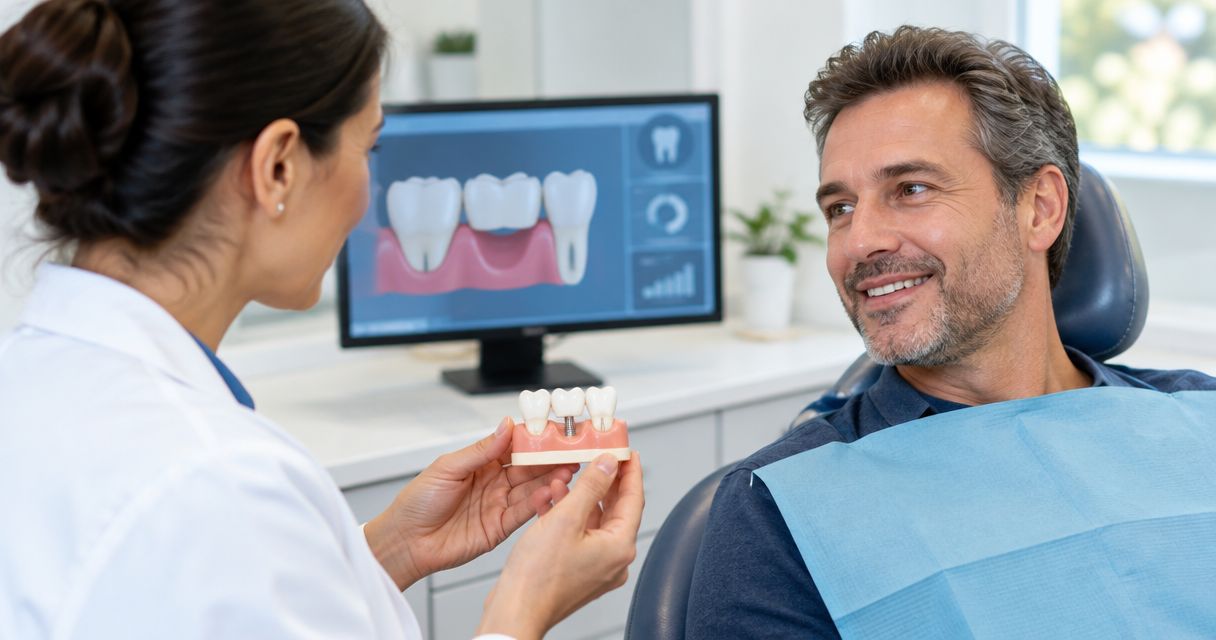
Dental bridge cost depends on the bridge design, the teeth being replaced, and whether you need treatment before the bridge is fitted; an examination and itemized estimate establish your total. Ask whether that estimate includes imaging, temporary teeth, treatment for supporting teeth, and follow-up care—not just the finished bridge.
- How much does a dental bridge cost? Compare complete treatment estimates, not an isolated bridge fee.
- A conventional 3-unit bridge replaces 1 missing tooth using crowns on 2 supporting teeth.
- Harmony Dental Group offers restorative dental care in La Jolla; ask which tooth-replacement approach fits your examination.
- Confirm insurance benefits and exclusions before agreeing to treatment.
How much does a dental bridge cost?
The useful number is your complete treatment estimate, not a general average. A bridge quote needs to identify what supports the replacement teeth, how many units the restoration contains, and which additional procedures are necessary.
For example, a conventional 3-unit bridge replaces 1 missing tooth with an artificial tooth connected to crowns on 2 supporting teeth. That is different from paying for a single crown. The supporting teeth are part of the treatment, even though the visible gap contains only one missing tooth.
Before comparing estimates, review the tooth replacement options compared. A bridge, implant, and removable partial denture solve the same broad problem through different treatment plans.
| Estimate component | What to confirm | Why it matters |
|---|---|---|
| Examination and imaging | Which diagnostic services are included | The dentist needs to assess the gap, supporting teeth, and surrounding tissues |
| Bridge design | Support method and number of units | Different designs involve different clinical and laboratory work |
| Preparatory treatment | Any required gum treatment, fillings, or other procedures | These address problems that a bridge alone does not resolve |
| Temporary restoration | Whether temporary teeth are included | A temporary restoration serves a different purpose from the finished bridge |
| Final fitting | Bite adjustment and cementation details | The bridge needs to fit your bite and supporting structures |
| Follow-up | What planned checks include | Written details help you understand the scope of care |
For a 2026 treatment estimate, ask for the clinical plan and financial breakdown together. A total without a description of the work makes comparisons difficult.
Why this matters
A missing tooth affects more than the appearance of your smile. Your dentist also considers chewing, cleaning access, the condition of nearby teeth, and the forces your bite places on a replacement.
Harmony Dental Group is a fit for La Jolla patients seeking general, cosmetic, and restorative dental care. When discussing tooth replacement, ask which options your examination supports and what each option requires—not simply which one fills the gap.
You do not need to arrive knowing the right treatment. Your role is to explain your priorities and understand the proposed plan before you agree to it.
Which bridge design fits your situation?
Bridge designs are not interchangeable. The location of the gap, the condition of neighboring teeth, and the available support determine which designs deserve consideration.
The “best for” descriptions below explain common clinical uses, not a diagnosis. Your dentist must check whether the supporting teeth and bite can accommodate the proposed restoration.
| Bridge design | Best for | Main advantage | Main limitation |
|---|---|---|---|
| Traditional tooth-supported bridge | Selected gaps with suitable supporting teeth on both sides | Provides a fixed replacement without implant surgery | Usually requires reshaping supporting teeth for crowns |
| Cantilever bridge | Selected situations with suitable support on one side | Uses support from one side of the gap | Bite forces restrict where this design is appropriate |
| Resin-bonded bridge | Selected missing front teeth with suitable enamel and bite conditions | Often preserves more supporting tooth structure than full crowns | The bonded attachment can detach and is not suitable for every bite |
| Implant-supported bridge | Selected gaps where implants can support replacement teeth | Does not rely on neighboring natural teeth for support | Requires implant assessment, surgery, and healing |
Traditional tooth-supported bridge
A traditional bridge uses crowns on supporting teeth with replacement teeth between them. When the neighboring teeth already need crowns, this design deserves a different discussion than when those teeth are healthy and unrestored.
Ask what must happen to each supporting tooth. Tooth preparation is not reversible, and the long-term plan includes caring for those teeth as well as the replacement tooth.
Cantilever bridge
A cantilever bridge is supported from one side of the gap rather than both. That arrangement changes how chewing forces act on the supporting tooth or teeth.
The practical question is suitability, not whether fewer supporting teeth sounds simpler. Ask why the proposed location and your bite make this design appropriate.
Resin-bonded bridge
A resin-bonded bridge attaches to supporting teeth using bonded retainers rather than conventional full-coverage crowns. Dentists consider this approach for selected cases, often involving front teeth.
Its tooth-preserving approach is an advantage, but attachment failure is a limitation. Ask what a detached bridge would require and whether your bite places stress on the bonded connection.
Implant-supported bridge
An implant-supported bridge attaches to dental implants rather than natural teeth. The plan needs to account for the implant treatment as well as the bridge itself.
Compare the complete implant pathway with the complete tooth-supported pathway. An estimate for the restoration alone does not describe implant placement, healing, or any preparatory procedures your examination identifies.
Why dental bridge estimates vary
The reasons for different estimates should be clear in the written plan. These factors explain the treatment scope without assuming that every patient needs the same procedures:
- Bridge length: The number of replacement teeth and supporting units changes the restoration's design and laboratory work.
- Support method: Natural teeth and implants require different assessments and treatment steps.
- Supporting-tooth health: Decay, cracks, or existing restorations affect whether a tooth can support a bridge and whether it needs treatment first.
- Gum and bone health: Active disease needs attention when it threatens the foundation of the proposed restoration.
- Material and laboratory design: The selected material must suit the location, appearance requirements, and bite—not just your preferred shade.
- Insurance terms: Deductibles, annual limits, exclusions, and plan rules affect your personal responsibility even when the clinical plan stays the same.
For 2026 insurance benefits, check the current plan documents rather than relying on what a previous plan covered. Ask the dental office and insurer to distinguish the estimated benefit from the amount you remain responsible for paying.
How do you compare dental bridge estimates fairly?
Use the same questions for every proposed plan. You are checking whether the estimates describe comparable care, not trying to choose a treatment without clinical advice.
- Confirm the design. Ask whether the bridge is tooth-supported, resin-bonded, or implant-supported, and why that design suits your mouth.
- Count the units. Have the dentist identify the replacement teeth and supporting teeth or implants on the diagram.
- Check prerequisites. Separate required treatment from optional changes in appearance so you understand what must happen first.
- Confirm inclusions. Ask about imaging, temporary restorations, fitting, adjustments, and planned follow-up.
- Review benefits. Request the insurance assumptions, exclusions, and your estimated responsibility in writing.
- Discuss maintenance. Ask how you will clean the bridge and what signs should prompt a return visit.
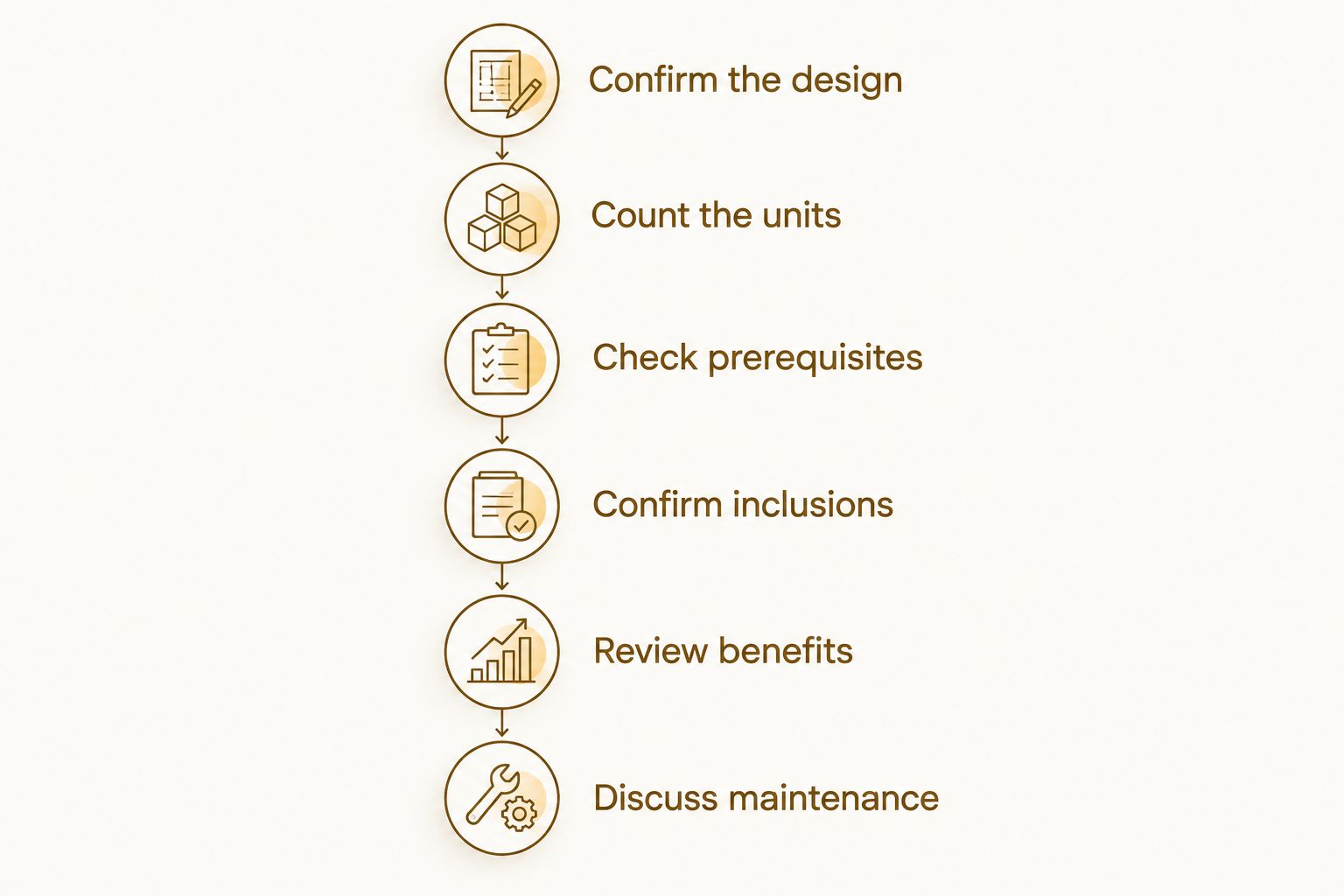
Bring any existing estimate to your consultation. A clear explanation should connect each proposed procedure to a finding in your examination, rather than leave you guessing about unfamiliar terms.
Does dental insurance cover a bridge?
Dental insurance coverage for a bridge depends on your specific plan. Confirm whether the restoration is a covered benefit and whether replacement rules, waiting periods, or missing-tooth exclusions apply.
For a 2026 bridge treatment plan, ask whether the insurer will accept a pretreatment estimate. This helps clarify expected benefits, but it is not a guarantee of payment; eligibility, remaining benefits, and the plan's terms still matter when the claim is processed.
Ask these questions before treatment begins:
- Is the proposed bridge design covered under my plan?
- Does the plan apply a different benefit based on another treatment or material?
- Does an annual maximum limit the benefit available for this treatment?
- Are preparatory procedures assessed separately?
- Does the plan restrict replacement of an existing bridge?
Do not treat insurance approval as a clinical recommendation. Your dentist assesses suitability; your insurer determines benefits under the contract.
Is a bridge better than a dental implant?
A bridge is not automatically better than an implant, and an implant is not automatically better than a bridge. The health of neighboring teeth, the available bone, your medical history, and your preferences shape the decision.
A tooth-supported bridge avoids implant surgery but usually involves preparing supporting teeth. An implant avoids using those neighboring teeth as supports but introduces surgery and healing requirements.
Ask your dentist to explain both the recommended option and the reason an alternative is less suitable. If you are comparing 2026 treatment plans, make sure each includes all required stages rather than comparing a finished bridge with only part of an implant treatment.
What happens during a bridge consultation?
Your dentist examines the gap, nearby teeth, gums, and bite, then uses appropriate imaging to assess the structures involved. Expect questions about symptoms, previous dental work, medical history, and what you want from treatment.
At Harmony Dental Group, you can discuss your restorative dental care needs and ask which tooth-replacement options warrant assessment. Ask whether a bridge is appropriate before committing to a particular design. Do not assume that a missing tooth alone establishes candidacy.
You can contact the practice to ask about arranging an examination. Bring your insurance information and any treatment estimate you want explained.
Discuss your tooth-replacement needs
Ask about an examination to assess the gap, supporting teeth, and suitable treatment options.
What should you ask about ongoing care?
A fixed bridge still needs daily cleaning around the supporting teeth and beneath the replacement tooth. Ask your dental team to demonstrate a suitable technique and recommend cleaning tools that fit the design.
Supporting teeth remain vulnerable to decay and gum disease. A bridge does not make them immune, and difficulty cleaning beneath the restoration deserves attention rather than guesswork.
Include maintenance in your 2026 treatment discussion. Ask who to contact if the bridge feels loose, your bite feels different, or cleaning becomes painful; do not try to glue a loose bridge back into place yourself.
FAQ
How much does a dental bridge cost for one missing tooth?
A bridge estimate for one missing tooth depends on the design and any supporting treatment required. A conventional 3-unit bridge includes 1 replacement tooth and crowns on 2 supporting teeth, so it is not equivalent to a single-crown estimate.
Does a dental bridge estimate include tooth extraction?
Tooth extraction is included only if the written estimate lists it as part of the treatment. Ask which preparatory procedures are necessary and whether their fees are separate from the bridge restoration.
Can I get a bridge if the nearby teeth are healthy?
Healthy nearby teeth do not rule out a bridge, but preparing them for supporting crowns requires careful consideration. Ask about the effect on those teeth and whether a resin-bonded bridge or implant deserves assessment.
Is a dental bridge removable?
A conventional dental bridge is fixed in place and is not removed for daily cleaning. A removable partial denture is a different tooth-replacement option with different cleaning and support requirements.
Will my insurance pay for the entire dental bridge?
Your insurance plan determines the benefit, and full payment should not be assumed. Confirm deductibles, annual limits, exclusions, and your estimated responsibility before treatment begins.
Does needing a bridge mean I also need a root canal?
Needing a bridge does not automatically mean you need a root canal. Root canal treatment addresses a separate problem involving the tissue inside a tooth, and the dentist should explain the diagnosis if it is recommended.
Can Harmony Dental Group help me discuss tooth replacement?
Harmony Dental Group offers restorative dental care in La Jolla. Contact the practice to discuss an examination and ask which tooth-replacement options fit your dental needs.
One last thing
The teeth beside the gap deserve as much attention as the missing tooth. Ask your dentist to show you which teeth would support the bridge and explain their condition individually.
A treatment estimate becomes more useful when you understand what it asks of those teeth. Before you agree, make sure you can explain the proposed support, the required preparation, and how you will clean the finished restoration.