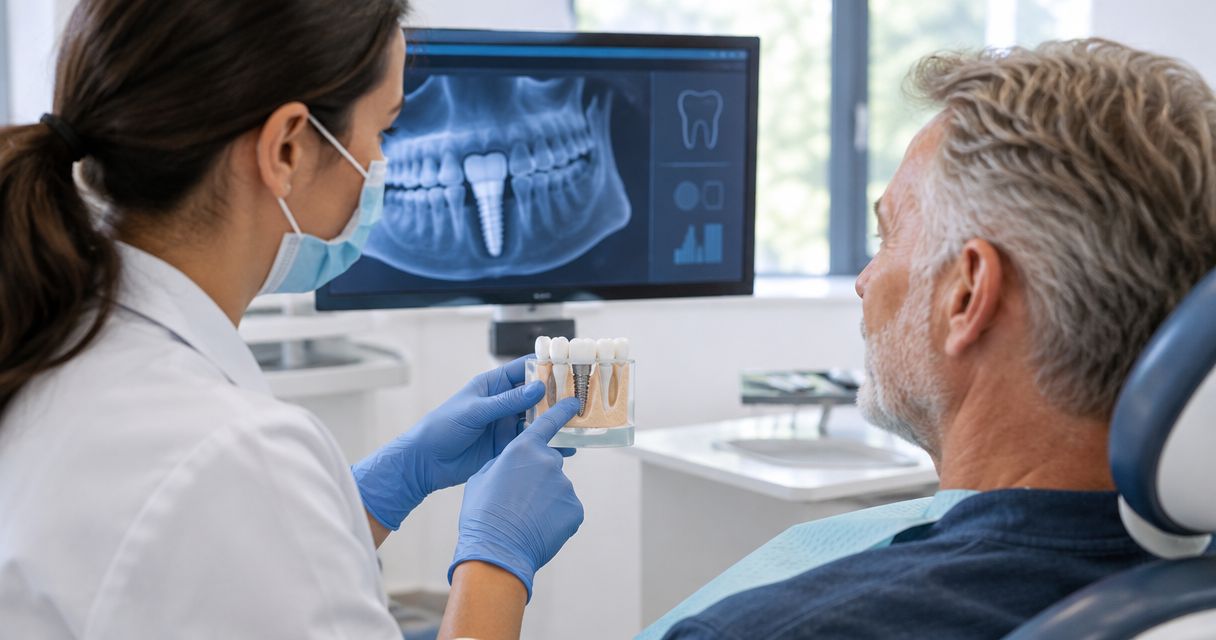
Invisalign takes months rather than days to straighten teeth, and your dentist estimates the timeline after examining your teeth and bite. Visible improvement is only part of the process: finishing your bite, adding refinement aligners when needed, and wearing retainers afterward are separate steps that a smile photo cannot measure.
- How long does Invisalign take to work? Your tooth movements, bite, and daily wear determine the treatment timeline.
- Visible improvement does not mean Invisalign treatment is finished; your bite also needs assessment.
- Harmony Dental Group offers Invisalign consultations for patients in La Jolla and nearby San Diego neighborhoods.
- For a 2026 treatment decision, ask whether the estimated timeline includes refinement aligners and the transition to retainers.
Why this matters
You might be planning around a wedding, graduation, or another event. That makes the finish date important, but the more useful question is what your teeth need to accomplish before treatment can safely end. Closing a visible gap and correcting how your upper and lower teeth meet are different goals.
Harmony Dental Group is a fit for La Jolla patients seeking Invisalign care within a general dental practice. A consultation gives you a place to discuss both appearance and function without treating an online timeline as a promise.
For a 2026 consultation, bring your event date and your priorities. Ask the dentist to distinguish what is realistic by that date from what requires completing the full treatment plan.
How long does Invisalign take to work?
Invisalign works through a sequence of small, planned tooth movements. There are 3 treatment milestones to separate: movement beginning, improvement becoming noticeable, and active treatment ending. They do not happen at the same time.
| Milestone | What it means | What it does not prove |
|---|---|---|
| Movement begins | Prescribed aligners apply forces intended to move teeth | You will immediately see a change in the mirror |
| Visible improvement | Tooth positions look different from your starting photos | Your bite and every planned movement are complete |
| Active treatment ends | Your dentist assesses the result and plans retention | Your teeth will stay in place without retainers |
The most useful estimate comes from your examination and proposed treatment plan, not another patient's tray count. Your dentist considers the starting position of your teeth, the movements required, and the way your teeth fit together.
Ask what the estimate covers. An initial aligner sequence is not always the entire course of care, and a projected finish date remains dependent on how treatment progresses.
Why isn't there one finish date for everyone?
Two smiles that look similar from the front can require different treatment. One person needs limited alignment, while another also needs changes to tooth rotation or bite relationships that are less obvious in photographs.
A digital treatment preview shows the intended sequence. It is a planning tool, not a guarantee that your teeth will follow every movement exactly as displayed. Your dentist uses examinations during treatment to compare the plan with what is happening in your mouth.
When will you notice a difference in your smile?
You will not necessarily notice each small movement as it happens. A gap becoming narrower is easy to spot; a change in a back tooth's position is not. That makes a mirror check an incomplete way to judge progress.
Compare photographs taken from the same angle rather than checking repeatedly throughout the day. Ask your dentist which changes should become noticeable first and which movements are happening outside your usual view.
Do not judge Invisalign progress by soreness alone. Pressure or tenderness does not tell you how much a tooth has moved, and comfortable aligners do not automatically mean treatment has stopped working.
Your aligners should fit according to your dentist's instructions. Report a persistent gap between an aligner and a tooth, a tray that will not seat, or a damaged aligner rather than trying to correct the problem yourself. Early advice is more useful than waiting until the next scheduled visit while continuing with a poorly fitting tray.
Why Invisalign treatment time varies
Your treatment timeline depends on several connected factors. These are the main issues to discuss before accepting an estimated finish date:
- Starting tooth positions. Crowding, spacing, and rotated teeth require different movements. The amount of visible unevenness alone does not describe the whole treatment.
- Bite correction. Your dentist checks how the upper and lower teeth meet, not just whether the front teeth look straight. Bite goals can require movements you cannot easily see.
- Daily aligner wear. Removable trays only apply their intended forces while you wear them. Frequent or extended breaks interfere with the prescribed routine.
- How teeth respond. Teeth do not always follow a digital plan exactly. Your dentist checks whether the aligners are continuing to guide the intended movements.
- Oral health. Cavities, gum inflammation, or other dental concerns need attention. Your dentist decides whether a problem changes the timing or sequence of treatment.
- Additional aligners. Refinements address movements that still need work after an earlier sequence. Ask how these would affect your expected completion date.
These factors explain why a shorter advertised treatment is not automatically the right treatment for you. Choose a plan that addresses your diagnosed needs, not a deadline that leaves necessary work unfinished.
How can you help keep Invisalign treatment on track?
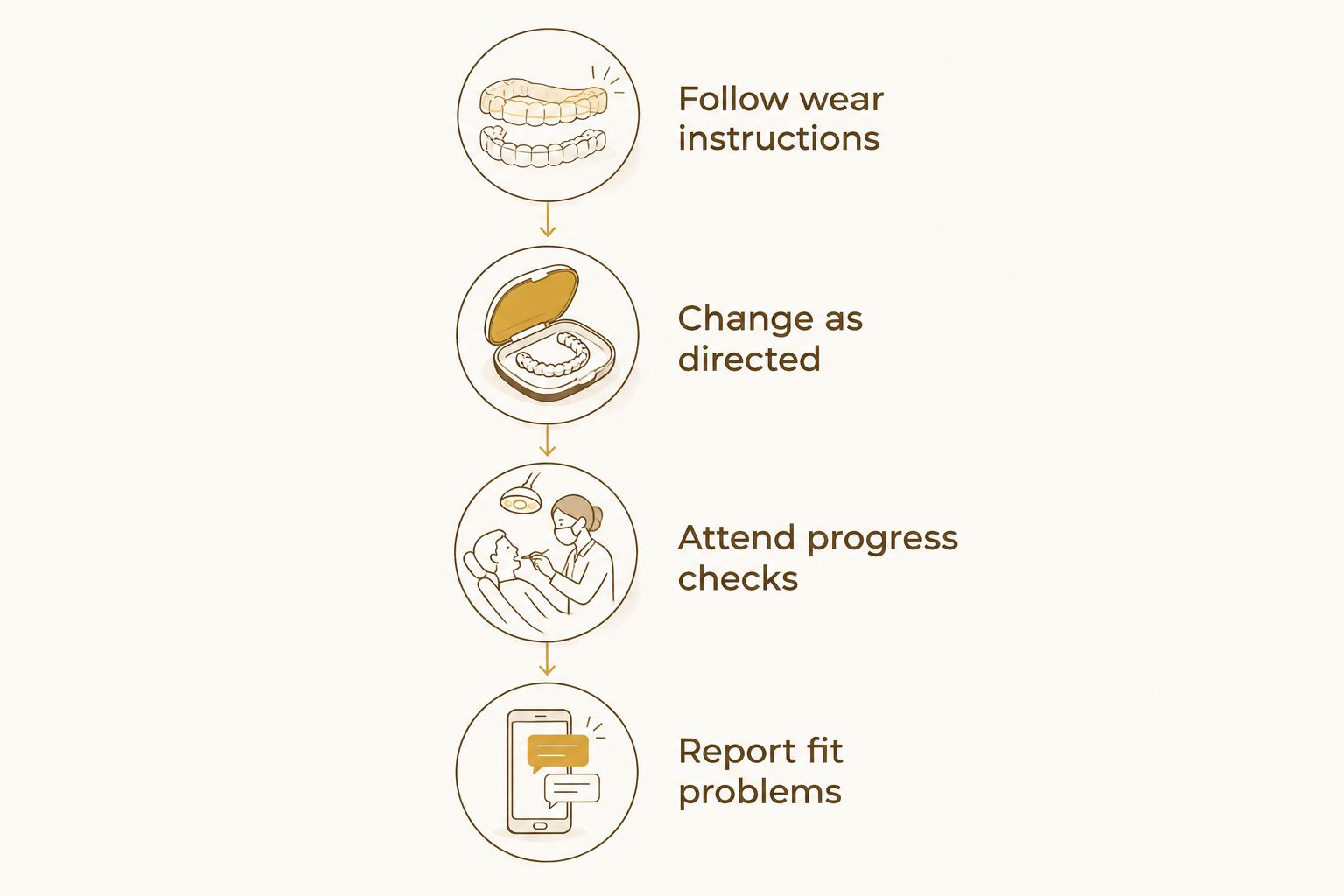
Your most useful contribution is consistency, not trying to make teeth move faster. Follow the prescribed wear and tray-change schedule, and contact the dental office when something interrupts it.
Follow your wear instructions
Invisalign's patient guidance recommends wearing aligners 20–22 hours per day. Your treating dentist gives you the instructions for your case, including when to remove the trays and how to manage meals and cleaning.
The benefit of removable aligners is flexibility. The trade-off is responsibility: leaving them out for long stretches makes it harder to follow the treatment plan. Build your routine around returning clean aligners to clean teeth rather than relying on memory after meals.
Change trays only as directed
Do not move to the next tray early because the current one feels comfortable. Comfort is not confirmation that every planned movement is complete.
Likewise, do not make up your own schedule after missed wear. Tell your dentist what happened and ask which tray to wear next. The appropriate response depends on the fit and your treatment stage.
Attend progress checks
Appointments let your dentist assess fit, tooth movement, oral health, and your bite. A smile that looks straighter can still need adjustments that are difficult to identify at home.
If digital reminders are part of your routine, the guide to connecting your Invisalign app with in-office check-ins explains how to organize the two. An app does not replace a dental examination.
Report fit problems promptly
Keep your dental office informed about a lost tray, broken attachment, persistent fit problem, or pain that concerns you. Do not trim, heat, or otherwise reshape an aligner yourself unless your treating dentist specifically directs you.
What should your 2026 Invisalign treatment plan explain?
A useful plan gives you more than a projected finish date. You should understand what is being treated, what you need to do at home, and how the dentist will decide whether treatment is progressing as intended.
Bring these 5 consultation questions to your appointment:
- What movements are included? Ask whether the plan addresses alignment alone or also changes how your teeth meet.
- What does the estimated finish date cover? Clarify whether the discussion concerns the initial trays or the anticipated full course of active treatment.
- How will you assess progress? Ask what appointments involve and what should prompt you to contact the office sooner.
- What happens if teeth do not follow the plan? Discuss reassessment and the possibility of additional aligners without assuming they will be necessary.
- What happens after the last aligner? Ask about retainers, follow-up, and the responsibilities that continue after active treatment.
At Harmony Dental Group, you can discuss Invisalign alongside your broader dental concerns. Tell the dentist about sensitivity, gum symptoms, existing dental work, and anything that makes regular aligner wear difficult.
You do not need to know the clinical terminology before booking. Describe what bothers you and what you hope to change. The consultation should translate those concerns into treatment goals you can understand.
Discuss your Invisalign timeline
Bring your smile goals and deadline to a consultation in La Jolla.
Will I finish Invisalign sooner if I wear trays longer?
Wearing aligners as prescribed supports the planned schedule; it does not authorize faster tray changes. Extra wear is not a substitute for the time your dentist assigns to each aligner.
Do not skip trays or double up on a schedule to meet an event date. Tell your dentist about the deadline instead. That allows a discussion about realistic progress without changing treatment on your own.
If you have already missed wear, be straightforward about it. Accurate information helps your dentist assess the fit and give appropriate instructions; hiding the interruption does not help you recover lost progress.
Do refinement aligners mean Invisalign failed?
Refinement aligners do not automatically mean treatment failed. They are additional trays used when further movements are needed after reassessment, rather than proof that the original effort was wasted.
Your dentist might identify remaining alignment or bite goals even when you are pleased with the visible change. Ask what each additional sequence is intended to accomplish and how completion will be assessed.
For your 2026 treatment plan, keep a distinction between an estimate and a commitment to a specific date. Knowing how reassessment works makes a revised timeline easier to understand and helps you decide whether your expectations remain realistic.
Can I stop Invisalign once my front teeth look straight?
Straight-looking front teeth are not enough to confirm that Invisalign treatment is finished. Your dentist also assesses the planned movements and how your teeth fit together before recommending the transition to retainers.
Stopping early means leaving the agreed treatment goals unassessed. Tell the dentist if you are satisfied with the appearance or finding the routine difficult, rather than simply discontinuing wear.
Retainers serve a different purpose from active aligners: they help hold teeth in their corrected positions. Their benefit depends on following the retention instructions, so the end of active treatment is a change in routine rather than the end of responsibility.
FAQ
How long does Invisalign take to work before I see a difference?
Visible improvement develops during treatment, but the timing depends on which teeth are moving and the movements planned. Ask your dentist which changes should be noticeable first rather than relying on another patient's timeline.
How many hours a day should I wear Invisalign?
Invisalign's patient guidance recommends 20–22 hours per day. Follow your treating dentist's instructions for wear, removal, cleaning, and tray changes.
Does Invisalign work if my teeth don't feel sore?
A lack of soreness does not establish that Invisalign has stopped working. Your dentist assesses aligner fit and tooth movement rather than using discomfort as the measure of progress.
Will additional Invisalign trays extend my treatment?
Additional aligners add another stage of active treatment when further movements are needed. Ask your dentist for an updated estimate and an explanation of the remaining goals.
Can I finish Invisalign before a wedding or graduation?
Your dentist needs to assess your teeth and bite before discussing whether your deadline is realistic. Share the event date before treatment starts, and distinguish visible improvement from completing treatment.
Do I still need retainers after Invisalign?
Retainers help maintain the tooth positions achieved with Invisalign. Follow the retention schedule your dentist prescribes rather than stopping care after the last active tray.
Where can I discuss an Invisalign timeline in La Jolla?
Harmony Dental Group offers Invisalign care in La Jolla. A consultation lets you discuss your teeth, bite, daily routine, and treatment goals before deciding whether to proceed.
One last thing
Before starting Invisalign, ask how you will know treatment is finished—not just when. A clear answer should connect the appearance you want with the tooth movements and bite goals your dentist identifies.
For a 2026 decision, that question is more useful than chasing the shortest online timeline. Harmony Dental Group can discuss Invisalign with you in the context of your dental health and smile goals. Bring your deadline, but leave room for the examination to shape the plan.