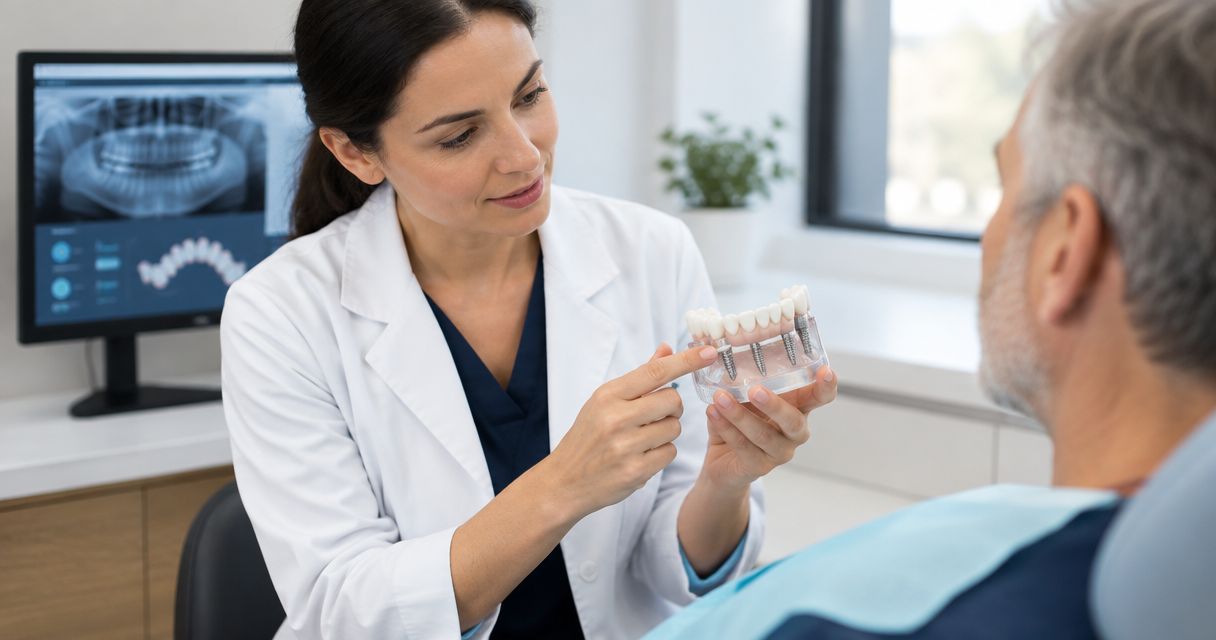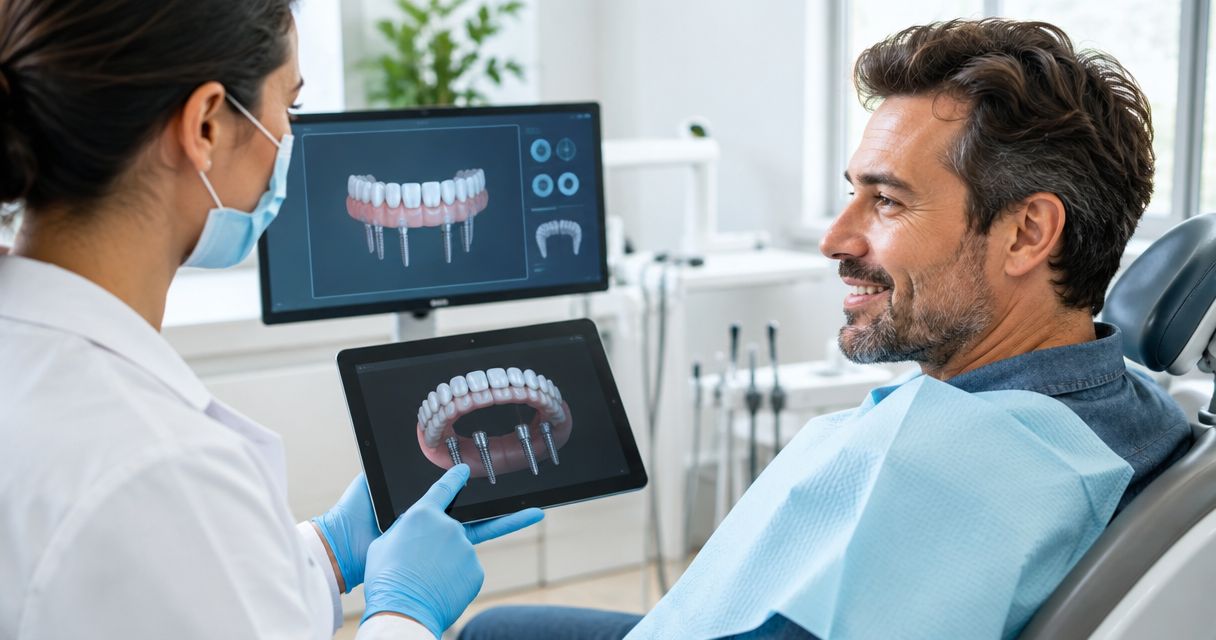
All-on-4 dental implant recovery takes weeks for early surgical healing and months for the implants to bond with your jawbone. Feeling comfortable, returning to work, and being ready for unrestricted chewing are different milestones; temporary teeth do not mean the implants have finished healing.
- All on 4 dental implants recovery time includes early wound healing and a longer period of implant-to-bone healing.
- Temporary teeth do not mean you can chew normally; follow your surgeon’s food restrictions.
- Worsening pain, increasing swelling, or a loose bridge needs prompt attention from your treating team.
- Harmony Dental Group offers dental implant consultations for patients in La Jolla considering tooth replacement.
Why this matters
A recovery estimate is useful only when you know what it measures. You might feel ready to answer emails while your jaw still needs protection from chewing forces.
For your 2026 treatment planning, separate time away from work from the full healing period. If you are considering dental implants locally, Harmony Dental Group offers general and restorative dental care in La Jolla; an examination is the starting point for discussing suitable treatment.
How long does All-on-4 dental implant recovery take?
Plan for an early recovery measured in weeks and implant healing measured in months—not a single recovery deadline. Your surgeon determines your schedule from the surgery performed, the stability of the implants, and your progress at follow-up appointments.
All-on-4 uses implants to support a full arch of replacement teeth. Because treatment involves both surgical wounds and implants healing within bone, your gums and your implants do not necessarily reach their milestones together.
| Recovery milestone | What it means | What it does not mean |
|---|---|---|
| Early surgical recovery | Bleeding settles and swelling, soreness, and fatigue begin improving | You are ready for normal chewing |
| Gum healing | Soft tissue closes and becomes more comfortable | Implant-to-bone healing is complete |
| Implant-to-bone healing | Bone grows into contact with the implant surface, a process called osseointegration | Every patient follows the same schedule |
| Restoration review | Your team checks healing, bite, and the replacement teeth | A calendar date alone proves readiness |
Ask your surgeon which milestone their recovery estimate describes. A return-to-work estimate should never be mistaken for permission to eat hard foods or skip follow-up care.
Early recovery: comfort and wound protection
Expect to organize your initial recovery around rest, prescribed instructions, suitable meals, and help getting home after sedation. Tenderness, swelling, bruising, and minor bleeding can occur after implant surgery.
The important pattern is improvement. Contact your treating team if symptoms worsen rather than settle, especially after you had started feeling better.
Bone healing: protecting the implants
Osseointegration happens beneath the gumline. You cannot judge it by looking at your smile or by noticing that pain has stopped.
Your surgeon assesses healing and implant stability before changing restrictions. Feeling better is a welcome milestone, not a test of whether your implants can tolerate normal chewing.
Does getting temporary teeth mean recovery is finished?
No. In selected cases, a temporary fixed bridge can be attached around the time of implant placement, but it does not replace the biological healing process.
Immediate loading means placing a restoration on newly inserted implants under carefully selected conditions. It does not mean unrestricted loading: your team still needs to control the forces reaching the implants.
The benefit is having replacement teeth during healing when clinically appropriate. The limitation is that those teeth still require protection, and a temporary restoration can need adjustment or repair.
For a 2026 consultation, ask whether the proposed teeth are temporary or final, what happens if immediate placement is unsuitable, and how the eating instructions change between stages. Do not assume that a treatment description promises a particular surgical-day outcome.
Why All-on-4 recovery time varies
Recovery depends on the treatment you receive and the conditions in which your body heals. These factors belong in your consultation discussion:
- Extractions: Removing remaining teeth adds healing sites and can change your immediate aftercare needs.
- Bone grafting: Additional bone procedures can alter treatment sequencing and the time before implants receive chewing forces.
- Implant stability: How firmly implants engage the bone helps determine whether an immediate temporary bridge is appropriate.
- Medical conditions: Conditions affecting healing, including poorly controlled diabetes, need assessment before surgery.
- Smoking and tobacco use: Tobacco increases implant complications and can interfere with healing; discuss a cessation plan with your clinicians.
- Bite and grinding: Clenching, grinding, and excessive chewing forces affect how the restoration needs to be protected.
Bring an accurate medication list and health history. Do not stop prescribed medicines, including blood thinners, without instructions from the clinician responsible for them.
A useful recovery plan explains which of these factors applies to you. It should also identify who you contact if your symptoms or circumstances change.
What should you expect during each recovery stage?
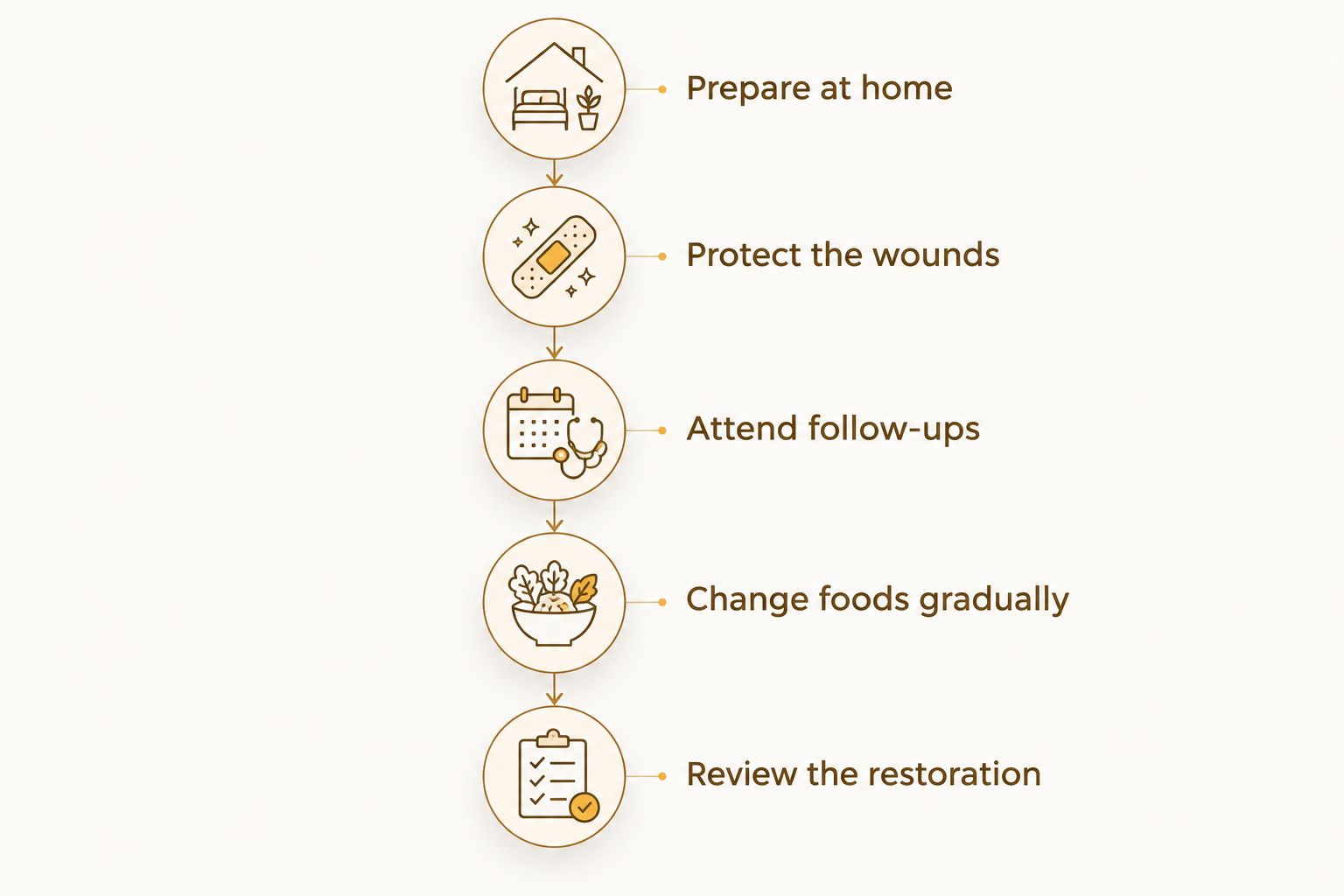
Your written surgical instructions take priority over general guidance. Use this sequence to understand the questions to ask, not to replace your surgeon’s directions.
- Prepare at home. Arrange transport if sedation is planned, choose suitable foods, and understand your medication instructions before surgery.
- Protect the wounds. Follow instructions for bleeding control, rest, cleaning, and any prescribed rinses. Avoid disturbing the surgical sites.
- Attend follow-ups. Let your team assess the gums, implants, bridge, and bite rather than deciding from comfort alone that healing is complete.
- Change foods gradually. Advance your diet only when your treating team permits it, even if the temporary teeth feel secure.
- Review the restoration. Confirm when the bridge needs adjustment, replacement, or continued monitoring and what home care it requires.
Keep a written copy of your instructions somewhere easy to reach. If a direction is unclear, ask the surgical team before changing your routine; advice for a different patient or a different implant procedure is not a substitute.
When can you return to work after All-on-4 surgery?
Return to work depends on your symptoms, sedation recovery, medications, and job demands. Desk work and physically demanding work place different demands on your recovery.
For an office role, consider fatigue, speaking comfort, swelling, and whether pain medicine affects concentration. For lifting, bending, outdoor labor, or strenuous activity, ask for specific clearance rather than applying an office-work estimate.
If your job involves driving or operating machinery, follow the restrictions associated with sedation and any medicine that causes drowsiness. Feeling alert is not enough to override those instructions.
When arranging leave in 2026, include the surgery, transport, recovery flexibility, and follow-up appointments. Ask what symptoms should prompt you to extend your time off instead of pushing through.
What can you eat while All-on-4 implants heal?
Follow the texture restrictions given by your surgeon. A fixed bridge can feel more capable than the healing implants underneath it, so comfort alone is not a safe guide to food choices.
Soft foods such as smooth yogurt, scrambled eggs, and mashed vegetables can help you maintain intake when permitted. Let hot foods cool, and ask your team whether any foods require additional preparation for your particular stage of healing.
Avoid testing your teeth with hard, crunchy, or sticky foods. Cutting something into small pieces does not necessarily make it suitable if it still requires forceful chewing.
Ask these questions before leaving the surgical appointment:
- Which textures are allowed now?
- Does food need to be eaten without chewing?
- What should you do if eating causes pain or pressure?
- Who decides when you can advance your diet?
The right eating plan protects healing without leaving you guessing about meals. Tell your team if your restrictions make it difficult to eat or drink enough.
How do you clean around a healing All-on-4 bridge?
Use the cleaning method your treating team demonstrates. Fresh surgical sites and a healed implant bridge have different care needs, so do not assume your usual brushing or flossing routine is appropriate immediately after surgery.
Ask where you can brush, whether a rinse is prescribed, and when to begin cleaning beneath the bridge. Do not direct a water flosser at fresh surgical sites unless your team specifically approves it.
Once healing allows, cleaning beneath a fixed bridge becomes part of ongoing implant care. Ask for a hands-on demonstration and show the clinician how you plan to use the recommended tools.
Daily cleaning and professional maintenance continue after recovery. Completing the surgical healing period does not eliminate the risk of inflammation around implants.
Which symptoms need a call to your surgeon?
Some discomfort is expected after surgery, but a symptom that is worsening deserves attention. Do not wait for your next scheduled appointment if something feels wrong.
Contact your treating team promptly for:
- Pain or swelling that increases instead of improving.
- Bleeding that does not settle with the instructed measures.
- Fever, pus, or a persistent unpleasant taste with worsening symptoms.
- A bridge that feels loose, cracks, or suddenly changes how your teeth meet.
- Persistent or worsening numbness.
- Difficulty drinking enough fluids or taking prescribed medicine.
Trouble breathing or swallowing, rapidly spreading swelling, or uncontrolled heavy bleeding needs emergency assessment. Seek emergency care rather than waiting for a routine dental response.
Do not tighten, glue, or adjust a loose restoration yourself. Avoid chewing on it and contact the team responsible for your implants.
What should you ask at a La Jolla implant consultation?
Bring questions about your daily life, not just the procedure. A clear plan should explain how you will eat, clean your mouth, manage discomfort, attend reviews, and get help between visits.
Harmony Dental Group is best suited to La Jolla patients seeking a local dental implant consultation. Ask whether All-on-4 is appropriate for your mouth rather than assuming that every full-arch treatment follows the same method.
For your 2026 consultation, request clear answers about:
- Whether extractions or bone grafting are part of the proposed plan.
- Whether temporary teeth are planned and what would change that decision.
- Who performs surgery and who manages the restoration.
- Which symptoms require an urgent call and how to reach the treating team.
- What criteria must be met before diet restrictions change.
If you are comparing full-arch treatment with replacement of individual teeth, read the single implants versus All-on-4 comparison before your appointment. The treatment scope matters when discussing recovery.
FAQ
How long does it take to feel normal after All-on-4 implants?
Early comfort usually improves over the initial healing weeks, while implant-to-bone healing continues for months. Feeling normal does not mean you are cleared for unrestricted chewing.
Can I go back to work the next day after All-on-4 surgery?
Do not assume you can return to work the next day. Your surgeon should advise you based on the surgery, sedation, symptoms, medications, and physical demands of your job.
Can I eat normally if I get teeth on the day of surgery?
No, receiving temporary teeth does not mean you can eat normally. Follow the prescribed texture restrictions until your treating team changes them.
Is worsening pain normal during All-on-4 recovery?
Worsening pain needs a call to your treating team, especially after an initial improvement. Increasing swelling, fever, pus, or a loose bridge also needs prompt assessment.
Does everyone need bone grafting for All-on-4?
No, bone grafting is not required for every patient. An examination and appropriate imaging help determine whether your available bone supports the proposed implant plan.
Can smoking affect All-on-4 healing?
Yes, smoking increases the risk of implant complications and can interfere with healing. Discuss tobacco use honestly and ask your clinicians for a cessation plan.
Where can I discuss dental implant recovery in La Jolla?
Harmony Dental Group offers dental implant consultations in La Jolla. Ask for an individualized assessment of treatment suitability, expected recovery, follow-up care, and restrictions before scheduling surgery.
One last thing
For a 2026 recovery plan, ask a more useful question than “When will I be healed?” Ask: “What must you check before I can move to the next stage?”
That question separates the calendar from the clinical decision. Your gums can feel comfortable before your implants are ready for normal chewing, so progress should follow your treating team’s assessment—not a test bite at home.