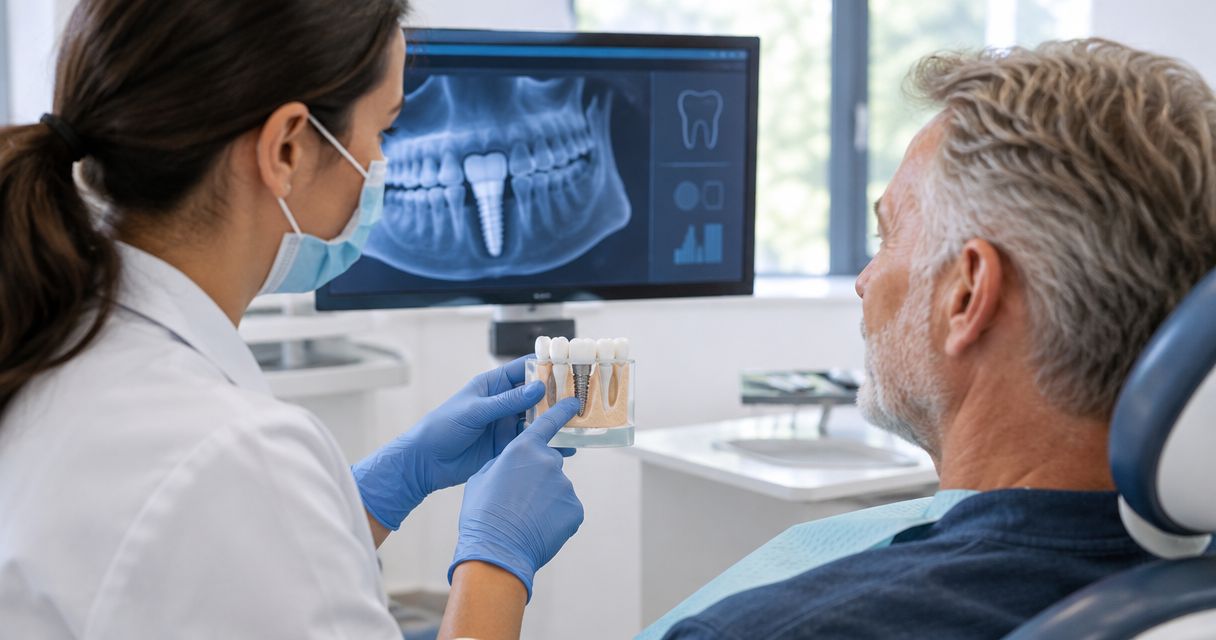
Yes, dental implants can fail if they do not bond with the jawbone or later lose the healthy bone and gum support that holds them in place. However, a loose crown or connecting screw is not automatically implant failure, so pain, movement, swelling, or drainage needs a dental examination rather than a diagnosis at home.
- Can dental implants fail? Yes, but a loose crown does not necessarily mean the implant itself has failed.
- Implant movement, persistent swelling, drainage, or worsening pain needs prompt dental evaluation.
- Treatment depends on whether the problem involves the crown, surrounding tissues, or implant support.
- Harmony Dental Group offers dental implant consultations for patients in La Jolla and nearby San Diego neighborhoods.
Can dental implants fail?
Dental implants can fail during initial healing or after they have been functioning. The distinction matters because a healing problem, an infection, and a loose restoration require different treatment. Harmony Dental Group offers dental implant care for local patients considering tooth replacement.
| Problem | What happens | What it means for you |
|---|---|---|
| Early implant failure | The implant does not form a stable bond with the surrounding bone | The dentist must assess healing and whether the implant can remain in place |
| Later implant failure | An established implant loses supporting bone or develops another serious problem | Treatment depends on the cause and extent of damage |
| Restoration complication | The crown, connecting screw, or another restorative component loosens or breaks | Repair can be possible without removing the implant |
An implant restoration has 3 main components: the implant in the jawbone, a connector called an abutment, and the visible replacement tooth. A problem with the visible tooth does not establish that the part inside the bone has failed.
Why this matters
If you are considering implants in 2026, understanding failure helps you ask better questions—not assume that treatment will go wrong. Your consultation should explain your gum health, bone support, medical considerations, and maintenance needs before you decide.
If you already have an implant, the priority changes. New movement or worsening symptoms deserve attention even when the implant has worked comfortably for years. Waiting for severe pain is not a reliable way to judge whether the supporting tissues are healthy.
Early failure: when the implant does not bond with bone
After placement, an implant needs to form a stable connection with the surrounding jawbone. Dentists call this process osseointegration. If that connection does not develop, the implant cannot reliably support a replacement tooth.
Infection, impaired healing, or excessive movement during healing can interfere with this process. Your dentist evaluates these possibilities using your symptoms, an examination, and appropriate imaging; soreness alone does not establish failure.
Some tenderness after surgery is expected, but the direction of recovery matters. Pain or swelling that worsens instead of settling, drainage, or a feeling that the implant is moving should prompt a call to the treating office.
Do not repeatedly wiggle the implant to test it. Avoid chewing on the affected area and ask the dentist how to protect it until you are examined.
Later failure: when an established implant loses support
An implant that has been comfortable can develop problems later. Inflammation around an implant can affect the gums alone or progress to damage involving the supporting bone.
Peri-implant mucositis means inflammation of the soft tissue around an implant without the bone loss associated with peri-implantitis. Peri-implantitis involves inflammation and progressive loss of supporting bone. These conditions are not interchangeable, and their treatment differs.
Bleeding, swelling, drainage, or a change in how much of the implant is visible warrants evaluation. Pain is not required for disease to be present.
A restoration can also develop mechanical problems after successful healing. A loose screw or damaged crown can change your bite without proving that the implant has lost its connection to bone.
What signs mean I should call my dentist?
Contact your dentist promptly if an implant or its attached tooth feels loose. You cannot reliably distinguish crown movement from implant movement by looking in a mirror or pressing on the tooth.
Other reasons to arrange an examination include:
- Pain that persists, returns after settling, or becomes worse.
- Swelling, redness, bleeding, or pus around the implant.
- A persistent unpleasant taste or drainage near the implant.
- New discomfort when chewing or a bite that suddenly feels different.
- Gum recession or newly visible implant surfaces.
These signs identify a need for care, not a diagnosis. For example, bite discomfort can come from a restoration problem, while swelling can reflect infection that needs a different response.
Seek urgent medical care for difficulty breathing or swallowing, rapidly spreading facial or neck swelling, or swelling around the eye. Fever with facial swelling also needs urgent assessment; do not wait for a routine implant consultation.
Why dental implant failure risk varies
Your 2026 treatment plan should address your individual risk factors rather than rely on a general success claim. The following factors help explain why implant planning and maintenance differ between patients:
- Gum health and plaque control. Inflammation around teeth and implants needs attention. Daily cleaning and professional maintenance help protect the surrounding tissues.
- Smoking and tobacco use. Smoking increases the risk of healing problems and implant complications. Tell your dentist what you use so cessation support can be part of planning.
- Diabetes control. Poorly controlled diabetes can impair healing and increase infection risk. Diabetes does not automatically rule out implants, but medical coordination matters.
- Bone support and implant stability. The site needs an assessment of bone quantity, quality, and anatomy. Some patients need additional treatment before placement.
- Bite forces and grinding. Heavy or uneven forces can contribute to mechanical complications. Your dentist should evaluate the bite and discuss protection when indicated.
- Medical history and medications. Certain conditions, medicines, and previous treatments affect surgical planning. Share a complete history, including osteoporosis medicines and radiation treatment involving the jaws.
A risk factor is not a prediction that your implant will fail. It is a reason to adjust the plan, explain the trade-offs, and set appropriate follow-up expectations.
How does a dentist check a suspected implant problem?
A 2026 implant evaluation should answer a practical question: Is the problem in the replacement tooth, the surrounding tissues, or the implant's connection to bone? Tell the dentist when symptoms started and whether they followed surgery, an injury, or a change in chewing.
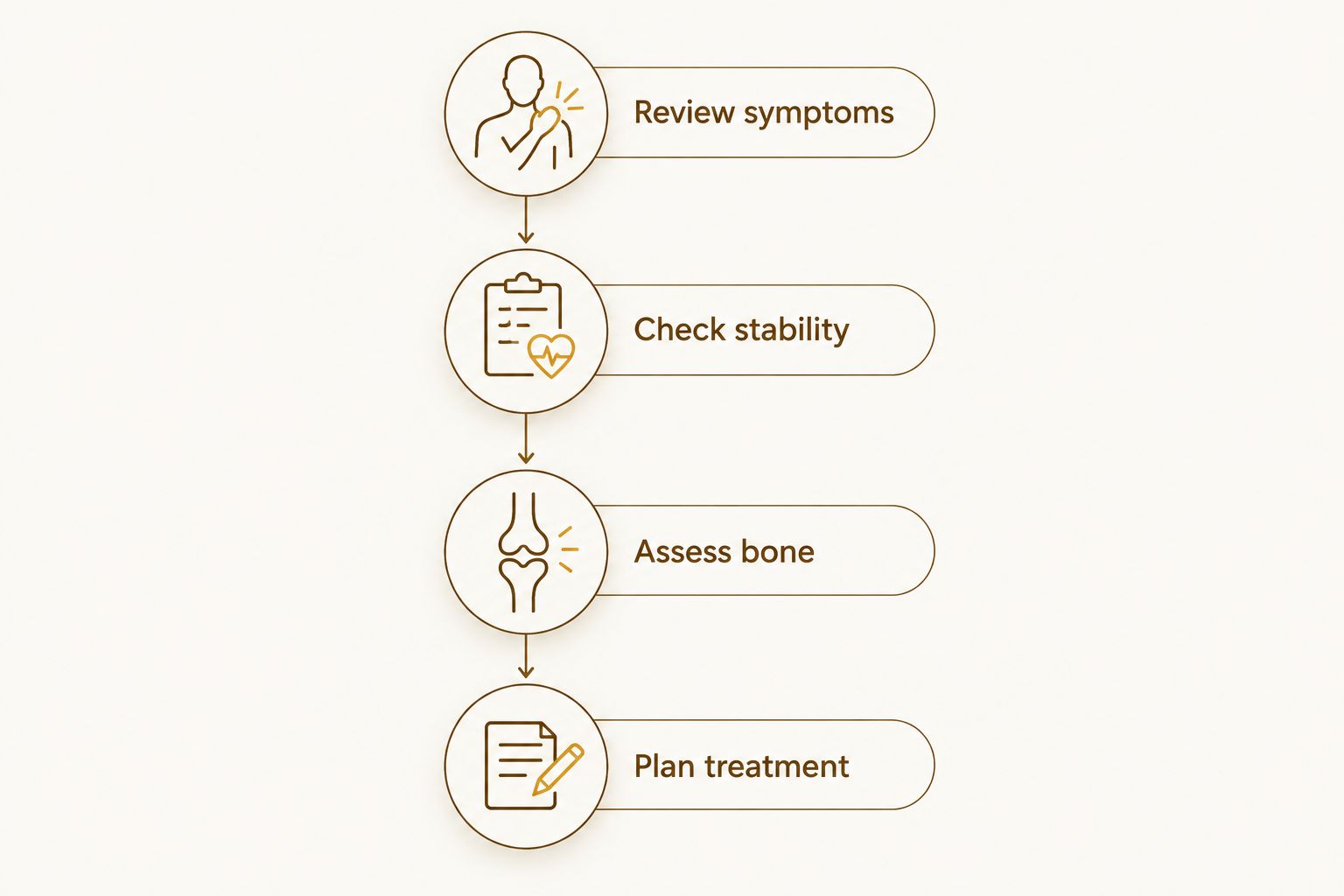
The assessment generally follows these steps:
- Review symptoms. Discuss pain, movement, bleeding, drainage, and changes in your bite, along with relevant medical updates.
- Check stability. Examine the restoration and implant components to identify where movement or damage occurs.
- Assess bone. Evaluate the gums and use appropriate imaging to assess supporting bone and other concerns.
- Plan treatment. Explain the diagnosis, whether the implant can remain, and what needs treatment before normal chewing resumes.
Previous dental records and X-rays can help the dentist identify changes over time. Bring available implant information, especially if another office placed or restored it.
Can a failing implant be treated without removal?
Some implant problems can be treated without removing the implant, but not every implant can be saved. The deciding factors include stability, the amount of supporting bone, the cause of inflammation, and whether treatment can control the problem.
| Treatment approach | Best for | Potential benefit | Limitation |
|---|---|---|---|
| Restoration repair | A loose or damaged crown or connector with a stable implant | Addresses the mechanical problem while retaining the implant | Does not treat infection or lost bone support |
| Professional cleaning and inflammation control | Soft-tissue inflammation around an otherwise stable implant | Addresses plaque-related inflammation and improves cleaning access | Bone involvement can require additional treatment |
| Surgical treatment | Selected cases with disease affecting supporting tissues | Allows treatment of areas that cannot be adequately managed otherwise | Results depend on the defect and other clinical factors |
| Implant removal | An unstable implant or a problem that cannot be predictably controlled | Removes the failed implant and allows reassessment of the site | Requires a separate plan for healing and tooth replacement |
Antibiotics are not a substitute for finding the source of the problem. A loose component needs mechanical assessment, and infection around an implant can require cleaning or surgical treatment rather than medication alone.
Do not tighten a loose restoration yourself or use household glue. Keep any detached component and bring it to your appointment.
Can I get another implant after one fails?
Another implant can be an option after failure, but replacement requires a fresh assessment. The dentist needs to identify why the first implant failed and whether the site can support another attempt.
Treatment can involve infection management, healing, or rebuilding bone before reconsidering placement. An alternative tooth replacement can also be appropriate when another implant would not fit your health needs or preferences.
Ask what would change in a second treatment plan. Repeating the same procedure without addressing the reason for failure does not resolve the underlying concern.
Does a loose implant always need to be removed?
A loose implant body usually indicates that its connection to bone is compromised and needs prompt assessment. A loose crown or connector is a different problem and can sometimes be repaired while retaining the implant.
Avoid testing the movement yourself. Let the dentist isolate which component is moving before discussing removal or repair.
Can an implant fail without pain?
An implant can develop inflammation and bone loss without noticeable pain. Bleeding, drainage, gum changes, or findings during a maintenance visit can reveal a problem before discomfort develops.
Keep your recommended follow-up visits even when chewing feels normal. Comfort is useful information, but it is not a substitute for examining the tissues and supporting bone.
What should I ask before booking an implant consultation?
For your 2026 consultation, bring a medication list and any previous implant records. Ask questions that connect your health to the proposed treatment:
- What does the examination show about my gums and bone?
- Which risk factors need attention before treatment?
- What would make you recommend delaying implant placement?
- How will you check healing before the final tooth is used normally?
- What cleaning tools and follow-up schedule will I need?
- Who should I contact if pain, swelling, or movement develops?
Harmony Dental Group is a local option for La Jolla patients seeking a dental implant consultation. A consultation can help clarify your options; it does not guarantee that an implant is suitable or that complications will not occur.
Discuss your implant concerns
Explore dental implant care in La Jolla and ask about your next step.
FAQ
Can dental implants fail years after placement?
Yes, dental implants can fail after years of function if supporting tissues deteriorate or other serious problems develop. New bleeding, swelling, drainage, or movement needs evaluation even after a long comfortable period.
Is pain after a dental implant always a sign of failure?
No, pain after implant surgery does not automatically mean failure. Worsening pain, pain that returns after improving, or pain with swelling or drainage needs assessment by the treating dentist.
Can a loose implant crown be fixed?
A loose implant crown can sometimes be repaired without removing the implant. The dentist must check whether the movement comes from the crown, connector, screw, or implant body.
Can I keep using an implant that feels loose?
Do not continue chewing on an implant that feels loose. Contact your dentist promptly and avoid repeatedly moving it to test its stability.
Does diabetes mean I cannot get dental implants?
Diabetes does not automatically rule out dental implants. Your dentist needs to consider blood sugar control, gum health, medical history, and healing risk before recommending treatment.
What should I ask about implant failure before treatment in 2026?
Ask how your gum health, bone support, smoking history, medications, and medical conditions affect the treatment plan. Also ask how healing will be checked and who to contact if symptoms develop.
Can Harmony Dental Group help me discuss dental implant concerns?
Harmony Dental Group offers dental implant care in La Jolla. An examination is needed to determine whether your concern involves the restoration, supporting tissues, or implant itself.
One last thing
The word failure can hide a fixable restoration problem. When you call about symptoms, describe what changed—movement, bleeding, swelling, or chewing discomfort—rather than deciding that the entire implant has failed.
That description helps the dental team understand your concern. The examination determines the next step.