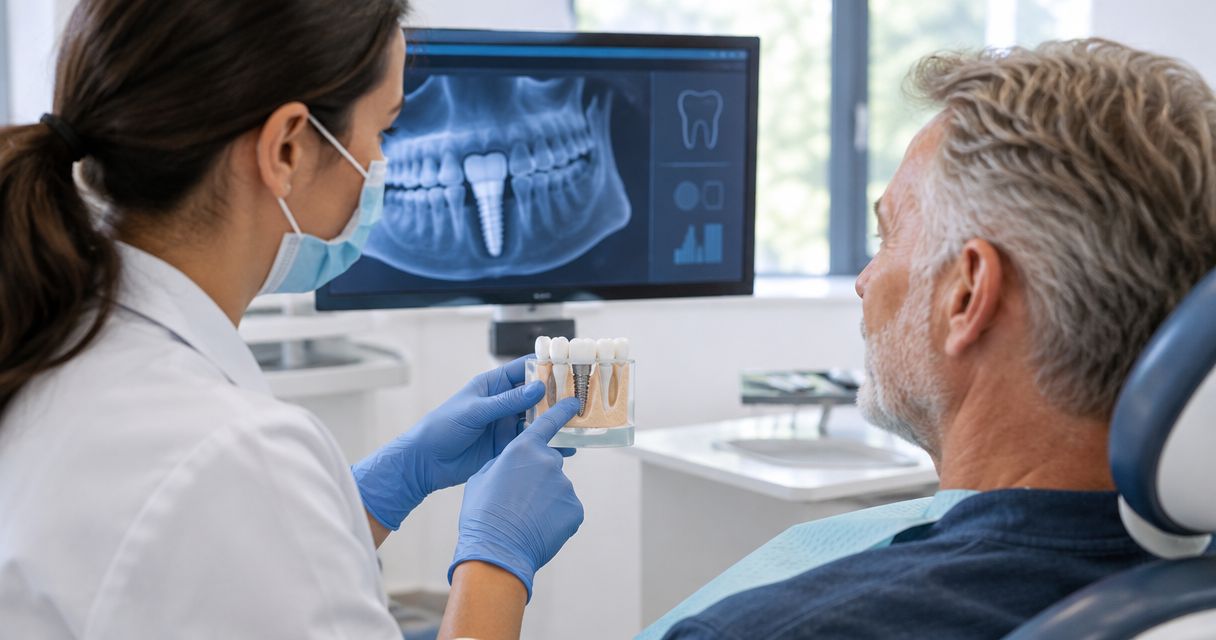
Yes, Invisalign can correct an overbite when the planned tooth movements can improve how your upper and lower teeth meet. A substantial difference in jaw position needs a separate assessment because straightening teeth alone does not correct every skeletal bite problem.
- Can Invisalign fix an overbite? Yes, but tooth position and jaw relationships determine whether clear aligners are appropriate.
- Invisalign requires consistent daily wear; removable trays are an advantage only if you follow the prescribed schedule.
- A deep bite and an overjet describe different problems, so ask which diagnosis applies to you.
- Harmony Dental Group offers Invisalign in La Jolla; an examination comes before a personal treatment recommendation.
For a local starting point, Harmony Dental Group offers Invisalign and general, cosmetic, and restorative dental care in La Jolla. Harmony Dental Group is a local option for patients seeking an Invisalign assessment before choosing overbite treatment.
Can Invisalign fix an overbite?
Invisalign can improve an excessive overlap of the front teeth by moving teeth through a planned sequence of clear aligners. The deciding issue is whether those movements address your bite—not simply whether your front teeth look straighter.
The main treatment approaches have different strengths and limits:
| Approach | Best for | Main advantage | Main limitation |
|---|---|---|---|
| Invisalign | Suitable tooth-position problems in patients who can follow a wear schedule | Removable trays allow eating and brushing without the aligners | Success depends on wear, fit, and whether the required movements suit aligner treatment |
| Fixed braces | Patients whose treatment plan calls for fixed appliances | Brackets stay attached rather than relying on tray wear | Cleaning around brackets and wires takes additional care |
| Orthodontics with jaw surgery | Selected patients with substantial skeletal jaw discrepancies | Addresses jaw position as well as tooth alignment | Involves surgery, recovery, and specialist planning; it is not needed for every overbite |
This table is a starting point, not a way to diagnose yourself. Your examination establishes whether the concern comes mainly from tooth position, jaw relationships, or a combination.
Why this matters
A straight-looking smile does not prove that your bite fits comfortably. Excessive overlap can sometimes contribute to tooth wear or contact between the lower teeth and the gum tissue behind the upper teeth.
Not every overbite needs correction, either. Some vertical overlap is normal, so the purpose of a 2026 consultation is to identify a meaningful problem rather than treat a label. Ask what needs to change, why it matters, and how the proposed treatment addresses it.
Overbite and overjet are different
Overbite describes vertical overlap; overjet describes how far the upper front teeth sit ahead of the lower front teeth. People often use “overbite” for both, but the distinction changes treatment planning.
You can have excessive vertical overlap, excess horizontal projection, or both. Ask your dentist to show you the difference on your own records rather than relying on a side-view photograph.
Tooth-related overbite: Invisalign can be an option
A tooth-related, or dental, overbite involves how teeth are positioned and meet. Depending on the diagnosis, an aligner plan can include movements that change front-tooth overlap and improve the contacts between upper and lower teeth.
The practical advantage is removability. You take the trays out to eat and clean your teeth, which avoids brushing around fixed brackets.
The trade-off is responsibility. Leaving trays out for long stretches interrupts the prescribed wear schedule, and a tray that no longer fits properly needs professional attention rather than a faster switch to the next set.
Choose an aligner plan because it addresses your bite, not because the trays are less noticeable. Ask your clinician to explain which teeth need to move and what improvement those movements are intended to achieve.
Jaw-related overbite: aligners have limits
A jaw-related, or skeletal, bite problem involves the relationship between the upper and lower jaws. In an adult, moving teeth does not independently reposition the jawbones.
Some patients can be treated by changing tooth positions within those limits. Others need an orthodontic assessment that considers additional approaches, including jaw surgery in selected cases. That decision requires an examination and appropriate records; appearance alone is not enough.
Growing patients need a different discussion because remaining growth can affect treatment choices. For a teenager, ask whether growth is relevant now and whether an orthodontic referral is appropriate. The Invisalign for teens guide covers considerations for younger patients.
Why Invisalign overbite treatment varies
Two people who describe their concern as an overbite can need different plans. These factors explain why a reliable recommendation comes after an examination:
- Bite pattern: Vertical overlap, horizontal projection, and the way back teeth meet affect the movements required.
- Jaw relationship: A tooth-position problem and a substantial skeletal discrepancy do not have the same treatment limits.
- Growth stage: Remaining growth matters when assessing younger patients and deciding whether additional orthodontic care is needed.
- Oral health: Cavities, active gum disease, and the condition of supporting tissues need attention during treatment planning.
- Wear and fit: Consistent aligner use and properly fitting trays are necessary for following the planned sequence.
- Treatment response: Progress checks determine whether tooth movement is matching the plan or needs adjustment.
These are reasons to personalize care, not reasons to expect difficulty. For your 2026 consultation, bring questions about the factors that apply to you rather than trying to match your smile to an online before-and-after image.
What happens at an overbite consultation?
A useful consultation connects the diagnosis to a clear treatment goal. You should leave understanding the problem, the proposed approach, and the limits—not just whether you qualify for clear trays.
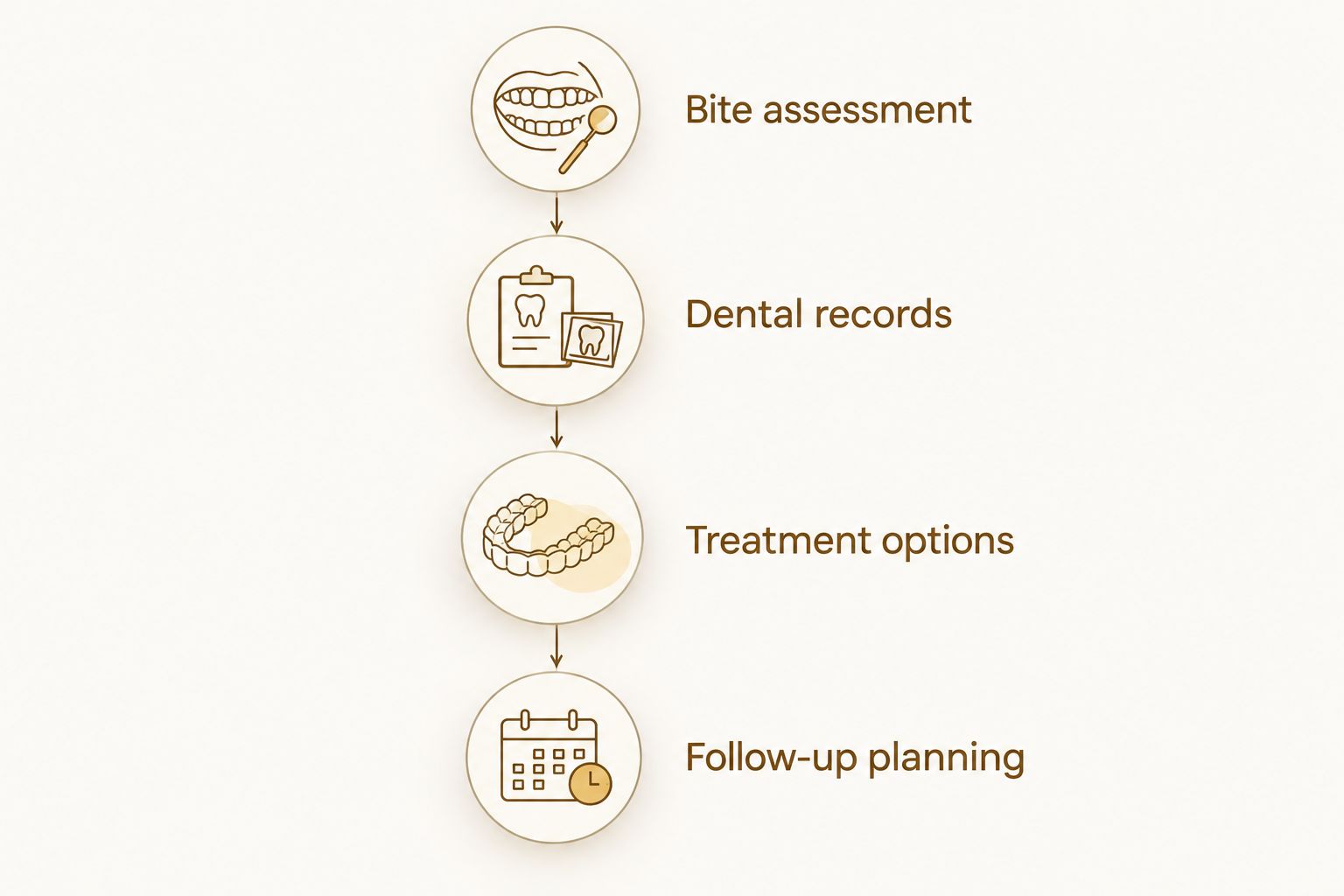
- Bite assessment: Explain what bothers you, including appearance, chewing concerns, tooth wear, or teeth contacting gum tissue. The clinician examines how your teeth meet.
- Dental records: Scans, photographs, and X-rays, when indicated, help assess tooth positions and supporting structures. They support planning beyond what a mirror shows.
- Treatment options: Discuss whether Invisalign fits the required movements and whether braces or specialist assessment deserve consideration.
- Follow-up planning: Ask how progress will be checked, what happens if trays stop fitting, and how retention will work after active treatment.
A digital treatment preview is a planning tool, not a promise of an exact result. Ask what the preview is intended to show and how the clinician will check your actual bite as treatment progresses.
Questions to take to your appointment
For a 2026 Invisalign assessment at Harmony Dental Group, bring a short list of questions. You do not need to know dental terminology to ask for a clear explanation.
- Is my concern mainly an overbite, an overjet, or both?
- Does the problem come mainly from tooth position or jaw position?
- What would Invisalign change about how my teeth meet?
- Would attachments, elastics, or another appliance be part of the plan?
- What happens if my teeth do not move as planned?
- What will I need to do after active treatment finishes?
The strongest answer explains both the expected benefit and the limit. If the discussion focuses only on straightening the visible front teeth, ask how the bite itself will be assessed.
What daily life with Invisalign involves
Invisalign requires a daily routine, not just a series of trays. Invisalign's patient guidance recommends wearing aligners for 20–22 hours per day; follow the instructions your treating clinician gives you.
Remove the aligners for meals and drinks other than water, then clean your teeth before putting them back in. Keep the trays in their case when they are out rather than wrapping them in a napkin, where they are easy to misplace.
Brush for 2 minutes, 2 times per day, using fluoride toothpaste, and clean between your teeth daily. These are general oral-hygiene recommendations, not a substitute for personalized advice if you have gum disease, restorations, or other dental needs.
Attachments and elastics can be part of treatment
Some Invisalign plans use small tooth-colored attachments bonded to teeth to help the trays apply planned forces. Elastics can also be prescribed to help coordinate the bite.
That means “clear aligners” does not always mean trays alone. Ask what your plan includes, how those components affect your routine, and what to do if an attachment comes off or an elastic breaks.
Keep progress checks even when your teeth look straighter
Visible alignment is only part of treatment. Your clinician also needs to assess tray fit, tooth movement, and how the upper and lower teeth contact each other.
Contact the treating office if a tray stops seating properly, an attachment comes off, or pain is worsening rather than settling. Do not skip ahead through trays to catch up without instructions.
How long does Invisalign take to fix an overbite?
There is no single treatment duration that applies to every overbite. The movements required, the bite's complexity, wear consistency, and the need for adjustments all affect the schedule.
Ask for an individual estimate after your examination, along with an explanation of what that estimate includes. An initial aligner sequence is not necessarily the same as the entire course of care if additional aligners are needed.
For treatment beginning in 2026, distinguish the active-treatment estimate from the longer-term retention plan. Completing the last active tray does not mean you can stop wearing appliances altogether.
Is Invisalign better than braces for an overbite?
Invisalign is not automatically better than braces for an overbite; the better choice is the appliance that fits the required movements and your routine. Removability helps with meals and cleaning, but it also creates opportunities to leave treatment out.
Fixed braces avoid that particular wear-time problem because the brackets remain attached. They bring different cleaning demands, and the clinician still needs to determine whether they suit your bite.
If you are unsure about keeping trays in consistently, say so before treatment begins. A realistic discussion about habits is more useful than choosing an appliance you will struggle to use.
Can an overbite come back after Invisalign?
Teeth can shift after orthodontic treatment, which is why retainers are part of maintaining the result. The type of retainer and the wear schedule depend on your individual plan.
Ask who will check the retainers, what to do if one breaks, and when a fit change needs attention. Do not force a retainer that no longer seats properly or assume that tightness should simply be ignored.
Retainers maintain tooth position; they do not replace assessment of a new bite concern. Report changes in how your teeth meet, especially if chewing becomes uncomfortable.
FAQ
Can Invisalign fix an overbite in adults?
Yes, Invisalign can treat suitable adult overbites by moving teeth. A substantial jaw-position discrepancy needs separate assessment because aligners do not independently reposition adult jawbones.
Can Invisalign fix a severe overbite?
Some complex overbites can be treated with aligners, but severity alone does not establish suitability. The required tooth movements and jaw relationship determine whether Invisalign, braces, or another approach is appropriate.
Will I need rubber bands with Invisalign for an overbite?
You might need prescribed elastics as part of an Invisalign bite-correction plan. Ask your clinician whether they are included and how to use them.
How many hours a day do I need to wear Invisalign?
Invisalign's patient guidance recommends 20–22 hours per day. Follow your clinician's instructions and remove the trays for meals and drinks other than water.
Can Invisalign fix my overbite without attachments?
Attachments are not identical across every treatment plan. Your clinician determines whether they are needed for the tooth movements involved; do not assume a tray-only plan will suit your bite.
Do veneers correct an overbite?
Veneers change tooth shape and appearance rather than moving teeth or repositioning jaws. They are not a substitute for orthodontic assessment when the underlying concern is the bite.
Where can I ask about Invisalign for an overbite in La Jolla?
Harmony Dental Group offers Invisalign in La Jolla. An examination is needed to determine whether clear aligners fit your bite and oral-health needs.
One last thing
Ask to understand the proposed finish, not just the starting problem. Your clinician should explain what improvement is realistic, which bite contacts matter, and what limitations remain.
Before starting treatment in 2026, make sure you understand the daily commitment and retention plan as clearly as the smile preview. That gives you a practical basis for deciding whether to proceed—without needing to diagnose yourself.