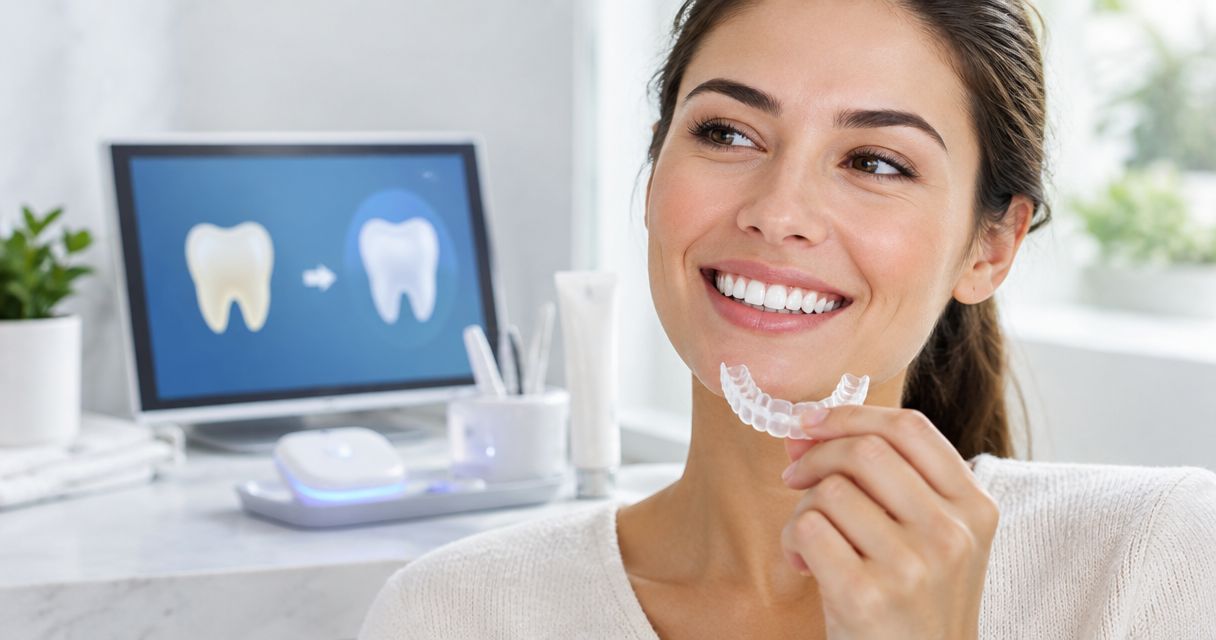
You generally need to wear a retainer for life after braces, usually moving from a more intensive initial schedule to ongoing nighttime wear as your orthodontist directs. Lifelong retention does not mean wearing a removable retainer all day forever, but stopping altogether allows teeth to shift—even years after treatment.
- How long do you wear a retainer after braces? Usually for life, with a schedule prescribed by your orthodontist.
- Nighttime retention protects alignment after the initial wearing phase; do not reduce wear without your orthodontist’s approval.
- A retainer that will not seat properly needs professional assessment, not extra force.
- Harmony Dental Group offers Invisalign in La Jolla; retention remains necessary after clear aligner treatment, too.
How long do you have to wear a retainer after braces?
Plan on lifelong retention, not lifelong full-time wear. The American Association of Orthodontists advises long-term retainer use because teeth continue to change position throughout life. Your orthodontist determines when you can reduce daytime wear and what maintenance schedule fits your teeth.
For your 2026 treatment plan, distinguish the length of the initial wearing phase from the length of retention itself. Finishing the first phase does not mean you have finished protecting your alignment.
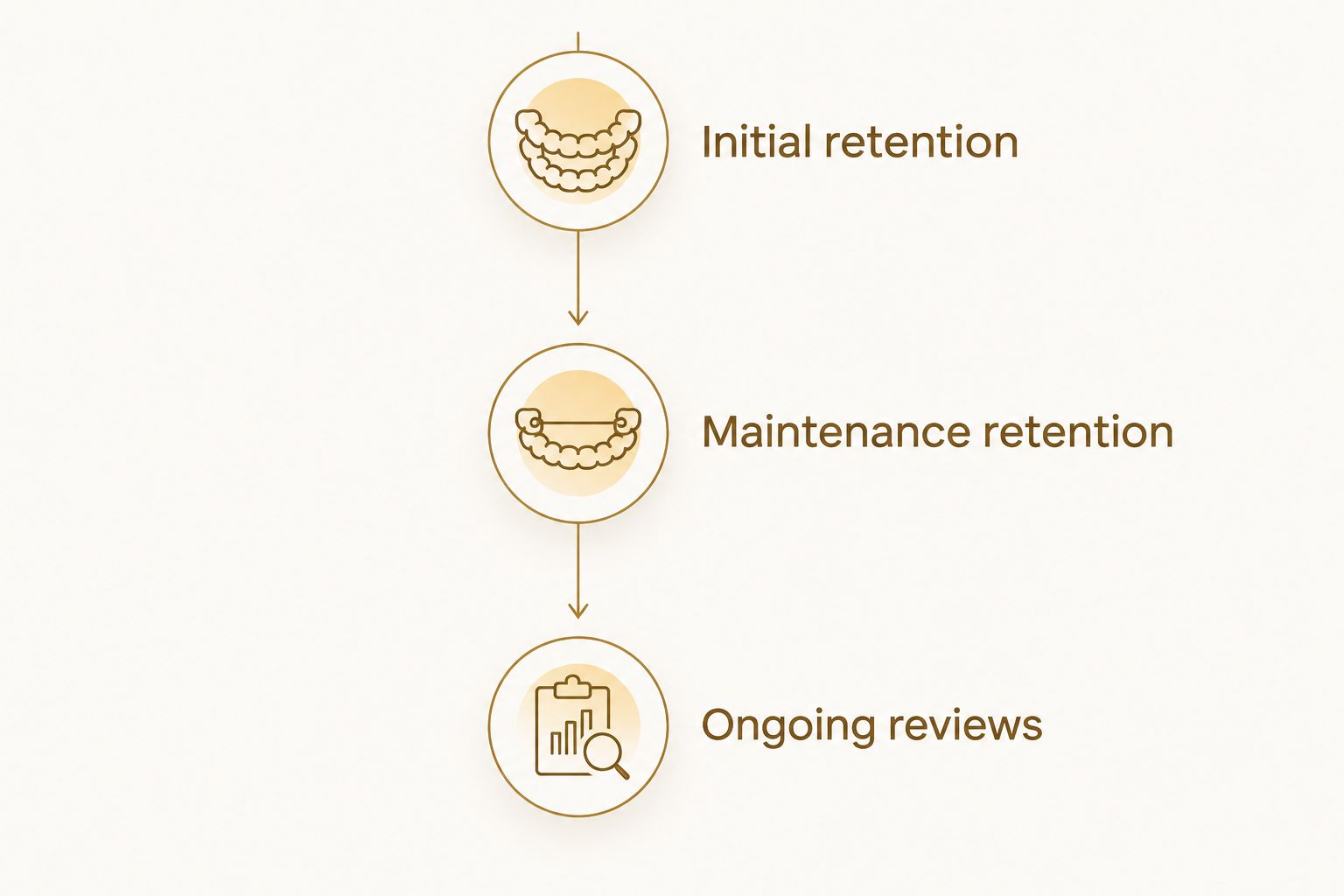
| Retention phase | What you should expect | When to change the schedule |
|---|---|---|
| Initial retention | Wear your removable retainer as prescribed, which can include daytime and nighttime wear | Only when your orthodontist approves |
| Maintenance retention | Continue nighttime wear according to your individual instructions | After a review of fit, alignment, and stability |
| Bonded retention | Keep the attached wire in place and clean around it carefully | When your clinician recommends repair, replacement, or removal |
The appliance also affects daily care. This guide to retainer types after braces explains the main options, but your own prescription—not a general timeline—determines how you wear yours.
Why this matters
Braces move teeth through the tissues that support them. After treatment, those tissues need time to adapt, and normal changes in your mouth continue beyond that initial adjustment.
A straight smile on the day your braces come off is therefore not a permanent stopping point. Retainers preserve the result; they are part of treatment, not an optional extra.
The same principle applies if you are considering another way to straighten your teeth. Harmony Dental Group is a local option for La Jolla patients considering Invisalign and cosmetic dentistry. Ask about the retention commitment before choosing treatment, rather than discovering it at the final appointment.
Initial retention: follow your prescribed wearing schedule
Immediately after braces, your orthodontist gives you instructions for keeping your teeth in their new positions. A removable retainer schedule can include both daytime and nighttime wear, with removal for eating and cleaning as directed.
Do not substitute another person’s instructions for your own. Someone whose braces came off on the same day can still need a different schedule because the tooth movements and bite corrections were different.
Before leaving your appointment, make sure you can answer these questions:
- When should you wear each retainer?
- When should you remove it?
- How should you clean the specific material?
- What should you do if it feels tight or stops fitting?
- Who should you contact if it breaks or disappears?
For anyone finishing braces in 2026, written instructions are more useful than a remembered phrase such as “wear it regularly.” Ask your orthodontist to explain exactly what that means for your appliance.
Maintenance retention: keep the nighttime habit
Moving to nighttime wear is a change in routine, not permission to stop retention. Continue the schedule your orthodontist recommends even when your teeth look unchanged and your retainer feels comfortable.
A comfortable fit is useful feedback, but it does not prove your teeth no longer need support. The retainer can be part of the reason the alignment remains stable.
Build retention into something you already do, such as brushing before bed. Keep the case in a predictable location, away from pets and heat, so wearing the appliance does not depend on remembering where you left it.
If you want to reduce your schedule, ask first. A retainer that fits today is not evidence that you can safely stop wearing it tomorrow.
Bonded retention: ongoing support with regular checks
A bonded retainer is a wire attached behind selected teeth. It stays in place rather than being removed each night, but it still needs attention: the attachment can loosen, and cleaning around the wire takes care.
Do not assume a bonded retainer protects every tooth in your mouth. Your orthodontist can prescribe a removable retainer as well, depending on which teeth need support.
If the wire feels different, becomes sharp, or separates from a tooth, contact the treating office. Avoid pulling it away or trying to glue it back yourself; a wire that is still partly attached needs professional assessment.
Which retainer fits your routine?
There is no universally best retainer. The right choice balances the tooth movements being retained, your bite, your ability to clean the appliance, and whether you can consistently follow a removable-wear schedule.
| Retainer option | Best for | Main advantage | Main limitation |
|---|---|---|---|
| Clear removable retainer | Patients who prefer a less noticeable removable appliance | Fits closely over the teeth | Can crack, wear, or distort with heat; depends on consistent use |
| Hawley retainer | Patients suited to a removable wire-and-acrylic design | A clinician can adjust the wire when appropriate | The wire is visible, and the appliance can affect speech initially |
| Bonded retainer | Selected teeth that need continuous retention | Does not depend on remembering nightly insertion | Requires careful cleaning and checks for loose attachments |
These options are not interchangeable without an examination. For example, a bonded wire behind the front teeth does not perform exactly the same job as a removable appliance covering a full arch.
When reviewing options in 2026, ask which teeth each appliance retains and whether you need more than one type. That question is more useful than asking which retainer is “permanent.”
Why retainer schedules vary
Your orthodontist bases retention instructions on your treatment and current examination, not just your age or how straight your smile looks. These factors help explain why schedules differ:
- Original tooth positions. Rotated teeth, spaces, and other alignment problems affect retention planning.
- Movement during treatment. The changes made to your teeth and bite influence the support needed afterward.
- Retainer design. A removable appliance and an attached wire have different wearing and maintenance requirements.
- Gum and supporting bone health. The tissues around your teeth matter when assessing stability and planning care.
- Current fit and tooth position. Tightness, visible changes, or a damaged appliance call for review rather than a self-directed schedule change.
- Consistency of wear. Missed wear can allow movement and change how a removable retainer fits.
These factors explain variation; they do not provide a formula you can use at home. Your clinician needs to evaluate the actual appliance and your teeth before changing instructions.
What should you do if you stop wearing your retainer?
Contact your orthodontist if your retainer no longer fits fully, causes significant pain, or follows a noticeable change in tooth position. Do not force it into place or bite down to make it seat.
If you have missed wear, use this sequence:
- Inspect the appliance. Look for cracks, a distorted shape, or a damaged wire before putting it in your mouth.
- Check the fit gently. A retainer should seat without being forced; do not use your teeth to push it down.
- Describe the problem. Tell the office whether the appliance feels snug, will not seat, causes pain, or has visible damage.
- Get individual instructions. Your orthodontist can determine whether to resume prescribed wear, replace the appliance, or assess tooth movement.
There is no dependable grace period that makes missed wear harmless for everyone. Your retainer’s fit and a professional assessment are more useful than counting how long another patient went without theirs.
Can you ever stop wearing a retainer completely?
Lifelong retention is the usual recommendation if you want to maintain the alignment achieved with braces. Teeth can shift with aging even after a long period of stability.
Your orthodontist can change the appliance or wearing schedule when appropriate. That is different from deciding on your own that retention has ended because treatment was a long time ago.
Do you need a retainer after Invisalign, too?
Lifelong retention is generally recommended after Invisalign, just as it is after braces. Clear aligners move teeth; retainers help hold those teeth after active movement ends.
If you are exploring Invisalign at Harmony Dental Group in 2026, include retention in your consultation questions. An Invisalign consultation can address treatment suitability, but it does not replace instructions from the clinician managing an existing retainer or active orthodontic problem.
How should you care for a retainer long term?
Follow the cleaning instructions for your exact appliance. Materials differ, so a cleaning method suitable for one retainer is not automatically suitable for another.
For removable retainers, keep these habits consistent:
- Remove the appliance for meals unless your clinician specifically instructs otherwise.
- Clean your teeth before reinserting it, following your dental team’s guidance.
- Avoid hot water and hot environments that can distort the material.
- Store it in its case instead of wrapping it in a napkin.
- Check for cracks, sharp edges, and changes in fit.
For bonded retainers, ask your dental team to demonstrate cleaning beneath and around the wire. A floss threader or another suitable cleaning aid helps reach areas that ordinary brushing misses.
Bring your removable retainers to dental and orthodontic reviews when requested. An appliance does not need to look badly broken to deserve attention; a small change in shape can affect how it fits.
What should you ask before treatment ends?
Before braces come off, ask who will manage your retention and how you should arrange follow-up. Keep those details somewhere accessible, especially if you expect to move, leave for college, or change dental offices.
Use this checklist for a 2026 retention discussion:
- Ask for your wearing instructions in writing.
- Confirm whether your upper and lower teeth need different appliances.
- Learn what normal insertion feels like and which symptoms need a call.
- Ask how replacement or repair is arranged if the appliance is lost or damaged.
- Confirm who checks a bonded wire and how to report a loose attachment.
You do not need to make every decision alone. The purpose of the discussion is to leave with a routine you understand and a clear next step if something changes.
FAQ
Do I really have to wear a retainer forever after braces?
Lifelong retention is generally recommended to maintain alignment after braces. Your orthodontist determines the wearing schedule, which usually changes from the initial phase to ongoing nighttime use.
Can I wear my retainer only at night right after braces?
Wear your retainer only at night immediately after braces if your orthodontist specifically prescribes that schedule. Some patients need daytime wear during the initial retention phase.
What happens if I forget my retainer for a night?
Missing a night does not have the same effect for everyone. Follow your prescribed instructions, and contact your orthodontist if the retainer will not seat fully, feels painful, or your teeth appear to have moved.
Should I force a tight retainer onto my teeth?
Do not force a retainer that will not seat properly or causes significant pain. Contact your orthodontist so the appliance and your tooth positions can be assessed.
Is a permanent retainer better than a removable one?
A bonded retainer is not automatically better than a removable retainer. It provides continuous support to the teeth it connects, but needs careful cleaning and checks; removable retainers depend on consistent wear.
Can my last Invisalign tray replace a retainer?
Do not substitute your last Invisalign tray for a prescribed retainer without your treating clinician’s instructions. Follow the transition plan provided at the end of active treatment.
Can Harmony Dental Group help me explore Invisalign in La Jolla?
Harmony Dental Group offers Invisalign in La Jolla. Ask about suitability, treatment responsibilities, and the retention plan during your consultation; do not assume new aligner treatment is necessary because an old retainer feels tight.
One last thing
A “permanent” retainer is not maintenance-free. The name describes how it is attached, not a promise that it will never loosen or need replacement.
Whether your appliance is removable or bonded, report a changed fit before treating it as normal. Protecting your smile means maintaining the retainer as well as remembering to wear it.