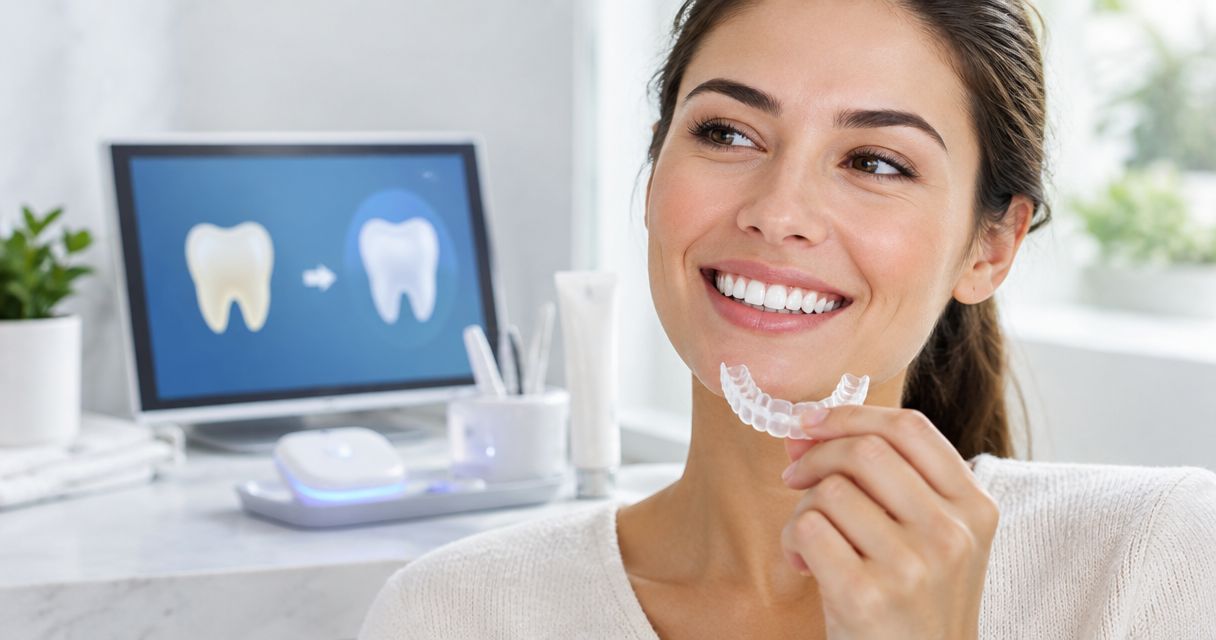
Teeth whitening can last up to 3 years, according to NHS patient guidance, but the effect is not permanent and there is no single duration that applies to everyone. That upper limit is not an average or a guarantee: your staining habits, treatment method, and maintenance affect how long your teeth stay lighter. Touch-ups and temporary tooth sensitivity are separate considerations when planning treatment in 2026.
- How long does teeth whitening last? NHS guidance says up to 3 years, not a guaranteed duration.
- Professional whitening and home bleaching need maintenance; neither permanently prevents new stains.
- Crowns, veneers, and tooth-colored fillings do not whiten like natural teeth.
- Harmony Dental Group is a local cosmetic dentistry option for La Jolla patients considering smile changes.
How long does teeth whitening last?
Teeth whitening lasts for a variable period, with NHS guidance describing effects lasting up to 3 years. The NHS also explains that results differ between people and that smoking or drinking stain-causing beverages affects how long the effect lasts. Treat that figure as a possible upper limit, not a countdown that starts when treatment ends.
For a local discussion about your smile, Harmony Dental Group offers general, cosmetic, and restorative dental care in La Jolla. A consultation is the right setting to distinguish removable staining from discoloration that needs a different approach.
| Approach | Best for | Main benefit | Main limitation |
|---|---|---|---|
| Dentist-supervised whitening | Patients who need an assessment and an individualized bleaching plan | Professional guidance on suitability, application, and sensitivity | Results still fade; restorations do not bleach |
| Over-the-counter peroxide whitening | Patients with suitable natural teeth who can follow product directions | At-home bleaching without an office-based application | Product fit and application are not individualized; sensitivity and gum irritation remain possible |
| Whitening toothpaste | Patients managing external surface stains | Helps remove surface staining during brushing | Does not provide the same internal bleaching action as peroxide treatment |
These approaches do not share a proven, universal expiration date. An office treatment is not automatically permanent, and a home product does not come with a reliable personal lifespan simply because its packaging promises a brighter smile.
Why this matters
A whitening decision is about more than the shade you see immediately afterward. You also need to know whether the result fits your teeth, your existing dental work, and the upkeep you are comfortable maintaining.
For your 2026 treatment planning, separate how quickly teeth lighten from how long they remain lighter. A shorter application process does not establish a longer-lasting result. Ask about both before choosing an approach.
If you are preparing for photographs, a wedding, or another event, discuss the timing before starting. Leave room for an examination, the prescribed treatment course, and reassessment rather than adding extra applications when the date approaches.
Dentist-supervised whitening: maintenance still matters
Best for: patients who want professional assessment before bleaching. A dentist can check for decay, gum problems, exposed roots, existing restorations, and other reasons whitening might be uncomfortable or fail to produce an even appearance.
Professional supervision helps you make a treatment decision; it does not stop future staining. Coffee, tea, tobacco, and other sources of discoloration still matter after treatment. Your maintenance plan should reflect those exposures rather than promise a fixed number of stain-free months.
Ask what the proposed treatment actually involves. Dentist-supervised whitening can involve different application methods, so the phrase alone does not tell you the wear schedule, product strength, or touch-up instructions.
The limitation is straightforward: supervision cannot make a crown whiten or guarantee a particular shade. Choose professional guidance for suitability and monitoring, not for a promise of permanent whiteness.
At-home peroxide whitening: follow the treatment directions
Best for: patients whose teeth are suitable for bleaching and who can follow the specified application schedule. Peroxide-based products chemically lighten discoloration rather than simply polishing away surface stains.
At-home bleaching includes both dentist-directed systems and over-the-counter products. They should not be treated as interchangeable. Application instructions, fit, and the amount of contact with gums differ between products.
More frequent use is not a dependable way to make results last longer. Extra applications can increase sensitivity or irritate the gums, and they do not prevent future staining from drinks or tobacco.
If you already own whitening trays, ask whether they still fit and whether they are appropriate for the product you plan to use. Do not assume an old tray or another person's instructions are suitable for your teeth.
Whitening toothpaste: surface stain control, not lasting bleaching
Best for: patients trying to manage external surface stains as part of daily brushing. Whitening toothpaste generally works by helping remove surface discoloration; it should not be judged as though it were a professional bleaching treatment.
The American Dental Association distinguishes stain removal from bleaching in its patient education. That distinction explains why a toothpaste can improve the appearance of stained teeth without changing their underlying color in the same way as peroxide bleaching.
Choose a fluoride toothpaste and avoid aggressive scrubbing. A product labeled whitening is not a reason to brush harder, particularly if you have sensitive teeth or exposed roots.
The limitation is its scope. Toothpaste cannot change the shade of a crown, and brushing cannot resolve every cause of a dark tooth. If one tooth looks different from its neighbors, have the cause assessed instead of repeatedly changing toothpaste.
Why teeth whitening results vary
Whitening longevity depends on more than the treatment label. These factors help explain why another person's experience does not predict yours:
- Staining habits. Coffee, tea, red wine, and tobacco contribute to discoloration. Continued exposure can make a lighter shade harder to maintain.
- The cause of discoloration. Surface stains, natural tooth color, medication-related discoloration, and a tooth affected by injury do not all respond alike.
- Treatment method and application. The bleaching agent, contact with the tooth, and adherence to directions influence the treatment result.
- Daily oral hygiene. Plaque and surface staining affect appearance. Whitening does not replace brushing, cleaning between teeth, or appropriate professional care.
- Existing dental work. Crowns, veneers, and tooth-colored fillings do not bleach like natural teeth, so color differences can become more visible.
- A suitable maintenance plan. Touch-ups should follow product instructions and dental advice, particularly when sensitivity or gum irritation occurs.
These are reasons to personalize your plan, not reasons to give up on whitening. Start with the cause of the discoloration, then decide which treatment addresses it.
How do you choose a whitening plan in 2026?
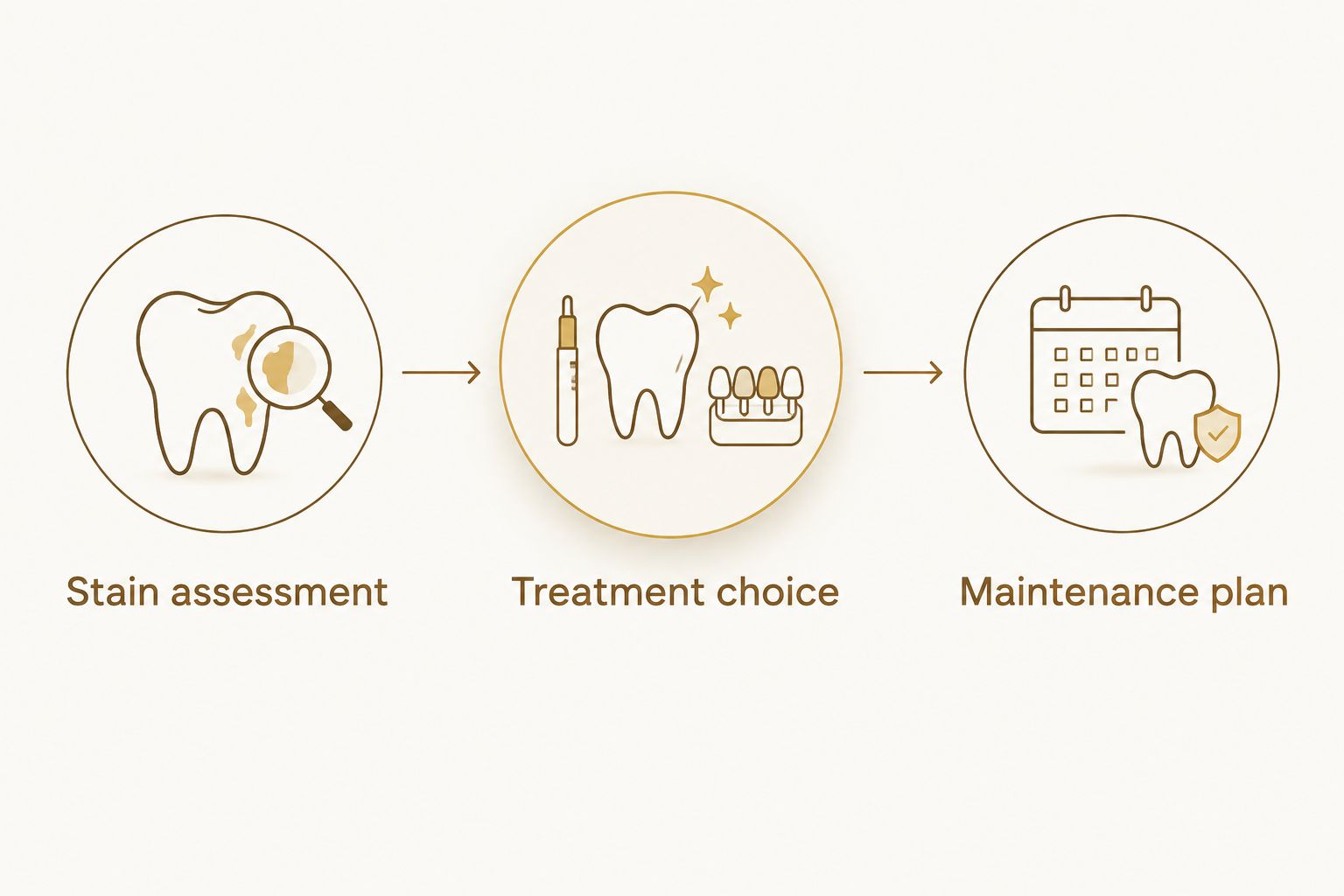
A useful consultation follows a simple sequence: understand the stain, choose an appropriate treatment, and agree on maintenance. Keep your questions focused on your own teeth rather than a shade shown in an advertisement.
- Stain assessment. Explain when you first noticed the discoloration, whether it affects one tooth or your whole smile, and whether you have pain or sensitivity. Bring up previous whitening attempts and visible dental work.
- Treatment choice. Ask whether bleaching addresses the cause and what its limitations are. Discuss the expected application schedule, possible irritation, and whether existing restorations will look different afterward.
- Maintenance plan. Ask how to judge fading, when to seek advice about a touch-up, and what to do if sensitivity develops. Get instructions for the actual product you will use.
Bring a list of concerns rather than a demand for the whitest possible shade. A natural-looking result needs to account for neighboring teeth and restorations, not just the color of an isolated tooth.
Harmony Dental Group is best suited to La Jolla patients seeking a local cosmetic dentistry consultation. Use that visit to discuss your goals and establish which treatment questions need answering before you commit.
Discuss your smile goals
Explore general, cosmetic, and restorative dental care in La Jolla.
How can you help whitening results last longer?
Maintain your teeth rather than repeatedly bleaching them. The American Dental Association recommends brushing for 2 minutes, 2 times daily, with fluoride toothpaste, and cleaning between your teeth daily. Those habits support oral health; they are not a guarantee that your shade will remain unchanged.
Pay attention to your stain exposure. If coffee or tea is part of your routine, discuss realistic maintenance instead of assuming whitening makes those habits irrelevant. Rinsing with water after a staining drink is a simple way to clear residue, but it does not make the drink stain-free.
Keep professional care tied to your oral-health needs. A cleaning removes deposits and some surface stains; bleaching changes tooth color through a different process. Ask which issue you are actually seeing before paying for or repeating treatment.
For a practical 2026 maintenance record, note the product used, your prescribed instructions, and any sensitivity. If you compare photographs, use similar lighting: a change in lighting alone can make teeth appear lighter or darker.
Will my teeth return to their original color?
Up to 3 years is a possible duration, not a promise that teeth stay unchanged and then suddenly return to their starting shade. New staining can develop gradually, and how much lightening remains differs between people. Ask for reassessment if you notice a change rather than assuming you need a full treatment course again.
How often should I touch up teeth whitening?
Touch-up whitening does not have a universal schedule. Follow the directions for your specific product and ask your dentist before restarting if you have sensitivity, new dental work, gum changes, or a tooth that has become noticeably darker.
Can whitening make crowns or veneers lighter?
Whitening does not lighten crowns, veneers, or tooth-colored fillings the way it lightens natural teeth. If you are considering both bleaching and visible restorative work, discuss the sequence before treatment so that shade matching is part of the plan rather than a surprise afterward.
When should you stop whitening and call a dentist?
Stop using the whitening product and seek dental advice if you develop significant sensitivity, gum irritation, or pain. Do not try to push through symptoms by shortening the interval between applications or switching to a stronger product.
A single dark tooth deserves assessment, especially after an injury. Pain, swelling, or a change in the surrounding gum also needs attention; those problems are not cosmetic stains to bleach away.
For your 2026 smile plans, comfort and oral health come before another application. A persistent symptom is a reason to reassess the treatment, not evidence that whitening is working better.
FAQ
How long does teeth whitening last on average?
There is no single reliable average that applies to every whitening method and patient. NHS guidance says effects can last up to 3 years, but that is not a guaranteed duration or an average.
Does professional teeth whitening last forever?
Professional teeth whitening is not permanent. New staining can develop, and maintenance depends on your teeth, habits, and the treatment instructions.
Will coffee ruin my teeth whitening results?
Coffee can contribute to new staining after whitening, but drinking it does not automatically erase the result. Discuss your usual habits when planning maintenance rather than assuming a fixed lifespan.
Is whitening toothpaste enough to keep my teeth white?
Whitening toothpaste helps manage surface stains but does not provide the same internal bleaching action as peroxide treatment. Choose fluoride toothpaste and avoid aggressive brushing.
Can I whiten my teeth again whenever they look darker?
Do not repeat whitening solely because your teeth look darker in a different mirror or photograph. Follow product directions and seek dental advice if you have sensitivity, new dental work, or uneven discoloration.
Can I whiten my teeth if I already have veneers?
Whitening will not lighten veneers like natural teeth. A dentist should assess the likely color difference before you bleach surrounding teeth.
Should I get whitening before a cosmetic dentistry consultation?
You do not need to whiten before a cosmetic dentistry consultation. Discuss your goals first, especially if you are considering veneers, crowns, or other treatment that requires shade matching.
One last thing
A tooth that looks darker does not always need more whitening. Surface deposits, a restoration that no longer matches, and discoloration within a tooth call for different decisions. Identifying the cause is more useful than automatically repeating the last product you tried.
If you are considering a smile change in La Jolla, ask Harmony Dental Group about your cosmetic dentistry goals before choosing treatment. Bring up existing dental work and sensitivity early so those concerns shape the discussion from the start.