Invisalign is worth considering for adults in 2026 when you want straighter teeth, your dental health supports treatment, and you can wear the aligners consistently. The commitment includes daily wear, dental monitoring, and retainers afterward—not just completing the last tray.
- Is Invisalign worth it for adults? Yes, when the planned tooth movements and daily wear requirements fit your needs.
- Invisalign offers removable clear aligners; braces remove the responsibility of remembering to put trays back in.
- Harmony Dental Group offers Invisalign for adults in La Jolla seeking local dental care.
- Ask about gum health, attachments, additional aligners, and retainers before agreeing to treatment.
Why this matters
Straightening your teeth is a health decision and a daily routine, not simply a change in appearance. Clear aligners leave you responsible for wearing, cleaning, and keeping track of your trays while attending the visits your dentist recommends.
For adults considering Invisalign in La Jolla or nearby San Diego neighborhoods, Harmony Dental Group offers Invisalign alongside general, cosmetic, and restorative dentistry. Harmony Dental Group is a local option for adults seeking Invisalign care in La Jolla. Choose a consultation to understand your own teeth, not to commit before your questions are answered.
Is Invisalign worth it for adults in 2026?
Invisalign is worth it when the expected improvement matters to you and the treatment fits both your mouth and your routine. Adults can receive orthodontic treatment, but healthy gums and adequate support around the teeth matter more than simply being past the teenage years.
The American Association of Orthodontists' adult patient guidance explains that teeth can move at any age when the supporting tissues are healthy. That principle supports an adult evaluation; it does not establish that clear aligners are the right appliance for every bite.
Compare the purpose and responsibilities of each option before deciding. Veneers belong in this comparison only because adults sometimes consider them for a similar cosmetic concern; they do not perform the same job as orthodontics.
| Option | Best for | Main advantage | Main limitation |
|---|---|---|---|
| Invisalign | Suitable adults who want removable clear aligners | You remove the trays for meals and oral hygiene | Results depend on consistent wear; attachments can remain visible |
| Fixed braces | Adults who prefer an appliance they do not remove | Tooth movement does not depend on remembering to replace trays | Brackets and wires require careful cleaning and food precautions |
| Veneers | Appropriate cosmetic changes to tooth shape or color | They change the visible tooth surface | They do not reposition roots or correct the underlying bite; preparation can be irreversible |
There is no universal winner. Ask which option addresses your diagnosis with an acceptable balance of tooth preservation, treatment demands, and maintenance.
When Invisalign makes sense for an adult
Your concern involves tooth position
Crowding, spacing, or teeth that have shifted after earlier orthodontic treatment are reasons to request an assessment. Invisalign moves teeth rather than covering their front surfaces, which is an important distinction if your main concern is alignment.
Ask your dentist to separate the appearance goal from the bite goal. A smile that looks straighter from the front still needs an assessment of how the upper and lower teeth meet.
You can make daily wear a habit
Invisalign's published patient instructions generally recommend wearing aligners 20–22 hours per day. Follow your treating clinician's instructions for your specific plan rather than treating that range as permission to shorten wear whenever convenient.
Meals, drinks other than water, and cleaning all use time with the trays out. Frequent snacking or repeatedly forgetting to replace aligners makes the routine harder, even if the trays themselves feel manageable.
You understand what clear aligners look like
Clear does not mean invisible. Tooth-colored attachments, which are small bonded shapes that help guide movement, can be noticeable; some treatment plans also use elastics.
Ask where attachments would go and whether elastics are part of your proposed treatment. Knowing this before starting is more useful than discovering it after choosing aligners for an upcoming event.
When another approach deserves a closer look
Do not choose Invisalign solely because it looks less noticeable than braces. Some tooth movements or bite relationships need a different approach, and an examination determines whether aligners can meet your goals.
Active gum disease, untreated decay, or unresolved dental pain needs attention before elective tooth movement. A history of gum recession or existing dental restorations also belongs in the discussion, though neither automatically rules out treatment.
If your concern is an overbite, ask what is causing it and what improvement is realistic. The guide to whether Invisalign can fix an overbite explains why the bite diagnosis matters more than the label alone.
A practical limitation counts, too. If you know that removing and replacing trays throughout the day will be difficult, discussing fixed braces is sensible—not a failure to commit.
Why Invisalign's value varies between adults
The same appliance can represent a worthwhile commitment for one person and a poor fit for another. These factors explain the difference:
- Treatment goals: Closing a visible space and correcting a complex bite are different tasks. Ask which changes your proposed plan actually addresses.
- Gum health: The tissues supporting your teeth need assessment before movement. Existing inflammation or disease changes the treatment priorities.
- Daily wear: Removable aligners work only while worn as directed. Your eating, working, and cleaning habits affect how consistently you use them.
- Movement complexity: Some movements require attachments, elastics, additional aligners, or consideration of another appliance.
- Long-term maintenance: Retainers help maintain the new tooth positions. Their use continues after active straightening ends.
- Treatment scope: Examinations, monitoring, additional aligners, and retainers should be explained clearly so you understand the whole commitment.
For a 2026 consultation, bring your actual concerns: the tooth you dislike in photographs, the area that traps food, or the bite change you have noticed. Specific goals make it easier to judge whether the proposed outcome addresses what matters to you.
What should you ask before starting Invisalign?
A useful consultation should leave you understanding the diagnosis, alternatives, responsibilities, and limits of treatment. You do not need to know the clinical vocabulary beforehand.
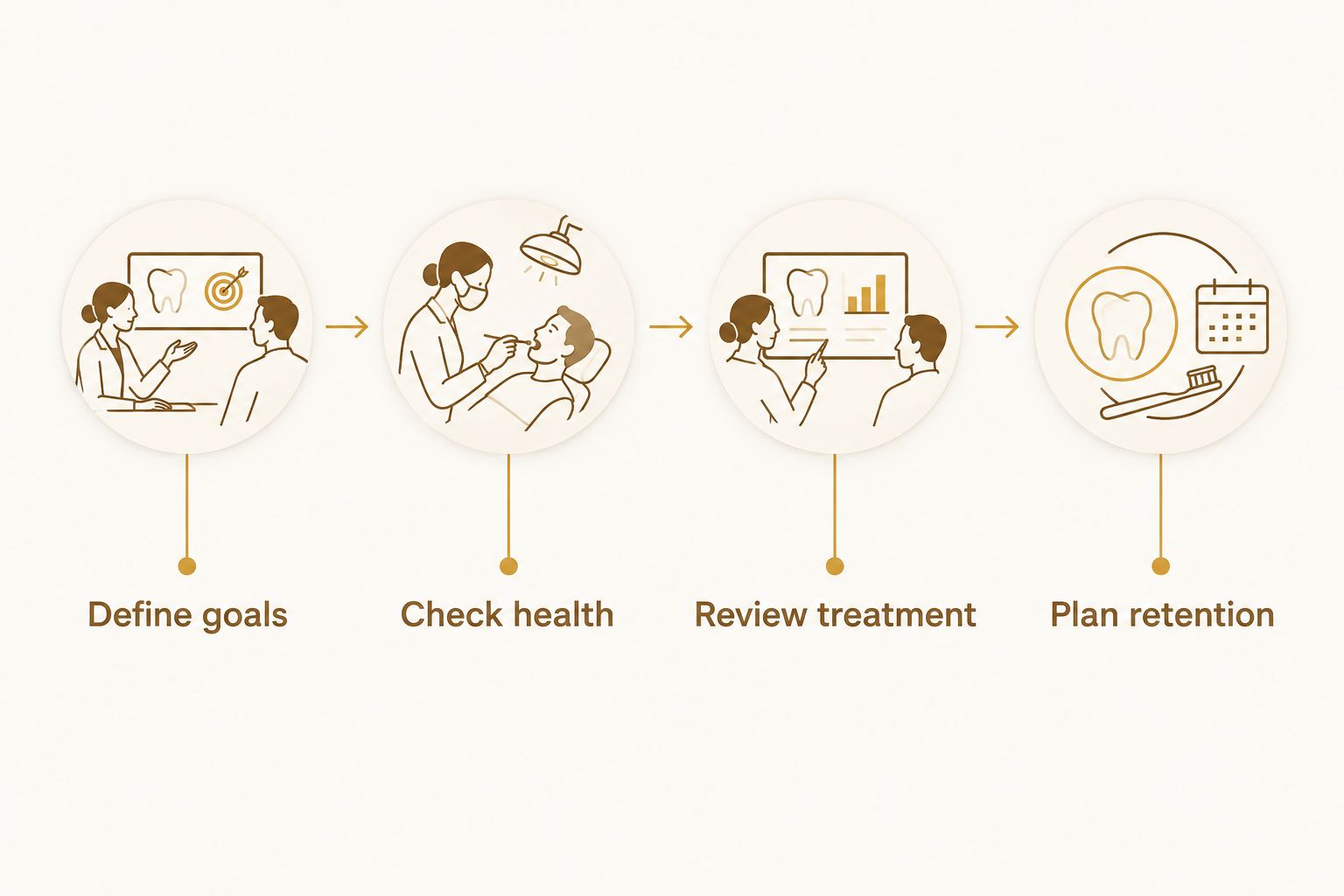
1. Define goals
Explain what you want to change and ask what the dentist sees beyond that concern. Mention previous braces, retainer use, gum problems, crowns, implants, or dental discomfort.
Ask which changes are realistic and which are outside the proposed treatment. A digital simulation shows a plan; it is not a guarantee of the final result.
2. Check health
Ask whether your teeth, gums, and supporting bone are ready for movement. The clinician determines which examination findings and diagnostic records are needed.
If treatment needs to wait, request a clear explanation of what must happen first. Resolving disease before straightening protects the foundation of the treatment.
3. Review treatment
Ask about attachments, elastics, check-ins, and what happens if a tray stops fitting properly. Confirm how the clinician decides whether additional aligners are needed.
For treatment beginning in 2026, get an individualized timeline rather than relying on another patient's experience. The plan should explain both the expected course and the circumstances that can change it.
4. Plan retention
Ask which retainer is recommended, how to wear it, and how replacement is handled. Discuss what happens if you lose or damage it.
Retention belongs in the decision before treatment starts. Straight teeth are not a reason to stop following instructions once the active aligners are finished.
At Harmony Dental Group, Invisalign is one of the practice's confirmed services. Ask for an explanation of how the proposed treatment fits your dental health and goals; the service name alone does not establish your suitability.
Discuss your Invisalign goals
Ask about suitability, daily wear, bite correction, and retainers before choosing treatment.
What does daily life with Invisalign involve?
You remove your aligners for meals and drinks other than water, clean your teeth as directed, and put the trays back in. Carrying a protective case helps prevent a removed aligner from ending up in a napkin or getting damaged.
The American Dental Association recommends brushing twice a day with fluoride toothpaste for 2 minutes and cleaning between teeth daily. Ask your dentist how to fit aligner cleaning and after-meal care into that baseline routine.
Expect an adjustment period. Pressure or tenderness can occur as teeth move, and speech can feel different initially; severe pain, swelling, injury, or a tray that will not seat properly warrants contact with your dental team.
Do not advance to another tray or improvise a replacement schedule when an aligner is lost. Contact the treating clinician for instructions, because the appropriate next step depends on your progress.
Is Invisalign worth it if my teeth are only slightly crooked?
Invisalign can be worth considering for mild crookedness when the improvement matters to you and the bite assessment supports treatment. A small visible concern does not automatically mean a simple plan, so ask what movement is actually needed.
You can also decide that the daily responsibility and retention are more than you want for a minor cosmetic change. A consultation should help you make that decision without pressure.
Is Invisalign better than braces for adults?
Invisalign is not automatically better than braces for adults. Removability is an advantage for eating and cleaning, but it also creates a responsibility that fixed braces do not have.
Compare the expected correction, appliance visibility, cleaning demands, and your ability to follow instructions. The better choice is the one that suits your diagnosis and that you can use consistently.
Will Invisalign results last after treatment?
Invisalign results require retention after active treatment. Teeth can shift over time, including after earlier orthodontic care, so follow the retainer schedule your clinician provides.
For a 2026 treatment decision, include long-term retainer care in your planning rather than treating it as an optional extra. Ask what to do if a retainer feels unusually tight or no longer fits.
FAQ
Am I too old to get Invisalign?
Age alone does not rule out Invisalign for an adult. Your dentist needs to assess your gums, supporting bone, teeth, and bite before recommending treatment.
How many hours a day do adults need to wear Invisalign?
Invisalign's published patient instructions generally recommend 20–22 hours per day. Follow your treating clinician's instructions and remove aligners for meals, drinks other than water, and cleaning.
Does Invisalign hurt when you start a new tray?
Pressure or tenderness can occur when you start a new aligner. Contact your dental team about severe pain, injury, swelling, or a tray that does not fit properly.
Can I get Invisalign if I have crowns or dental implants?
Crowns or dental implants do not automatically rule out Invisalign, but they affect treatment planning. Dental implants do not move like natural teeth, so tell the clinician about every existing restoration.
Will people notice my Invisalign attachments?
Invisalign attachments can be visible even though they are tooth-colored. Ask where attachments and any elastics would sit in your proposed plan before choosing treatment.
Does insurance cover Invisalign for adults in 2026?
Adult Invisalign coverage depends on your individual plan. Confirm adult orthodontic eligibility, exclusions, waiting periods, and benefit limits directly with your insurer before authorizing treatment.
Do adults need retainers after Invisalign?
Adults need retention after Invisalign to help maintain the new tooth positions. Follow the prescribed schedule and ask your clinician how to handle a lost, damaged, or poorly fitting retainer.
One last thing
Ask what happens if treatment does not track as planned. A discussion about a poorly fitting tray, additional aligners, or a missed appointment reveals more about your responsibilities than a preview of straight teeth alone.
For adults considering Invisalign in 2026, the strongest reason to proceed is a clear match between your goals, dental health, and willingness to maintain the result. You should leave the consultation understanding the limits as clearly as the benefits.