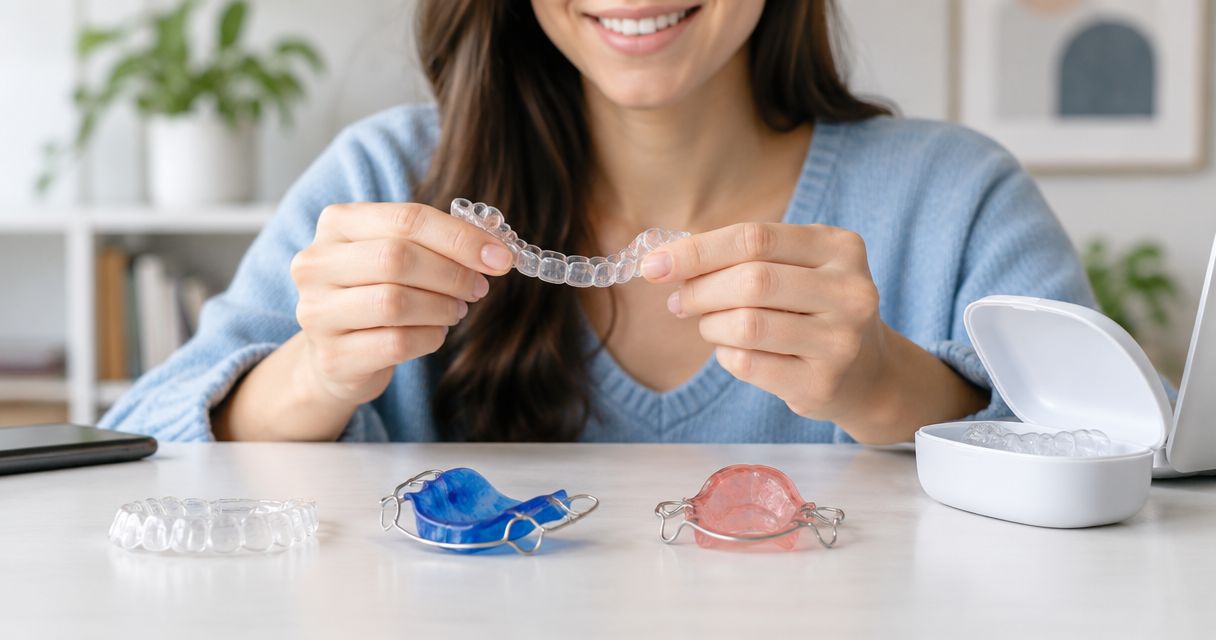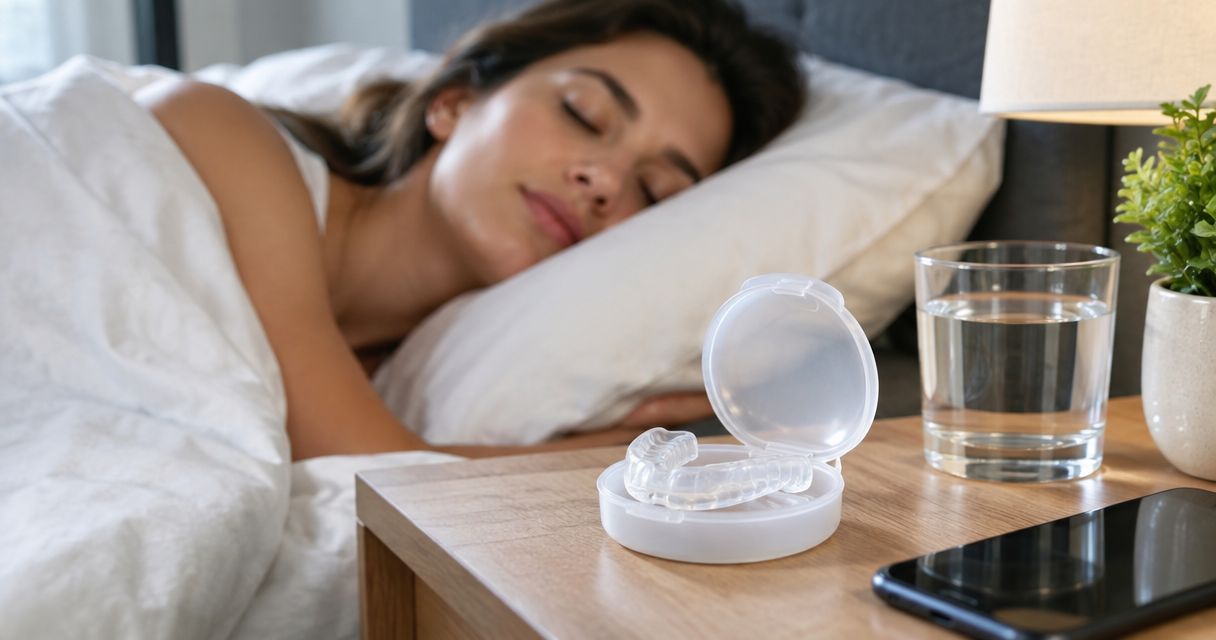
Best overall: a dentist-fitted custom night guard for ongoing grinding. Best for remote ordering: a laboratory-made mail-order guard after a dental assessment. Best temporary option: a boil-and-bite guard approved by your dentist. This 2026 comparison explains the best mouthguard for teeth grinding by fit, tooth protection, and the follow-up you need.
- The best mouthguard for teeth grinding is usually a dentist-fitted custom night guard when ongoing protection is needed.
- Mail-order night guards offer custom fabrication, but remote ordering does not replace an examination or bite adjustment.
- Boil-and-bite guards are temporary options, not substitutes for evaluating tooth wear, jaw pain, or cracked teeth.
- Harmony Dental Group is a local consultation option for La Jolla patients concerned about grinding and cosmetic dental work.
Why this matters
A night guard creates a barrier between your teeth. It helps protect them from grinding damage, but it does not necessarily stop the grinding itself or explain why it happens.
Harmony Dental Group is a local dental consultation option for La Jolla patients with grinding concerns and cosmetic dentistry questions. If you are considering veneers, implants, or Invisalign, discuss grinding during your assessment with Harmony Dental Group. The protection plan needs to fit your teeth and treatment, not just your shopping preferences.
You do not need to identify the perfect material before booking an examination. Start with the symptoms: worn edges, morning jaw soreness, sensitivity, or a guard that no longer fits.
What makes the best mouthguard for teeth grinding?
The best night guard is the one that suits your dental findings and can be worn comfortably as directed. Use these criteria when comparing options in 2026:
- Fit and retention: The guard should stay in place without forcing you to clench to hold it.
- Bite contact: Your dentist should assess how your opposing teeth meet the appliance. Custom fabrication alone does not establish a balanced fit.
- Tooth coverage: Coverage needs to match the treatment plan. Avoid choosing a partial-coverage appliance without professional supervision.
- Material suitability: Hard, soft, and layered materials have different characteristics. Your symptoms and grinding pattern matter more than a material label.
- Adjustment and follow-up: A guard needs reassessment when it causes discomfort, wears through, or stops fitting after dental treatment.
- Cleaning and daily use: Instructions should explain cleaning, storage, and when to stop wearing the appliance.
A sports mouthguard is designed for impact protection, not the same purpose as a grinding appliance. Do not treat the categories as interchangeable.
Mouthguards for teeth grinding at a glance
These are appliance categories, not individual brands. The ranking compares their suitability for different situations; it does not claim that every product within a category performs equally.
| Rank and option | Best for | Standout feature | Key limitation |
|---|---|---|---|
| 1. Dentist-fitted custom night guard | Ongoing grinding requiring supervised protection | Dental assessment, custom fit, and professional adjustment | Requires appointments and follow-up |
| 2. Laboratory-made mail-order guard | Remote ordering after dental assessment | Fabrication from an impression or scan | Remote ordering does not provide an in-person bite assessment |
| 3. Boil-and-bite guard | Dentist-approved temporary protection | Molded around your teeth at home | Fit depends on molding and cannot be assumed correct |
| 4. Stock, unmolded guard | Comparison only; not the default for ongoing grinding | No impression or molding step | Generic shape does not account for your teeth or bite |
The practical distinction is supervision. A personalized shape helps, but an examination and a correctly adjusted appliance answer questions that a checkout page cannot.
1. Dentist-fitted custom night guard: best for ongoing grinding
A dentist-fitted custom night guard is made for your teeth from impressions or a digital scan. Your dentist selects the design and checks its fit and bite contacts when you receive it.
This is the strongest default when grinding has already caused wear, you have persistent discomfort, or your mouth contains restorations needing protection. The examination also helps distinguish grinding-related symptoms from problems that need a different treatment.
Dentist-fitted custom night guard pros:
- Combines appliance selection with an examination of your teeth and gums.
- Allows professional adjustment of fit and opposing tooth contacts.
- Supports monitoring of wear, comfort, and changes in your symptoms.
- Can be planned around existing restorations and upcoming dental treatment.
Dentist-fitted custom night guard cons:
- Requires appointments rather than an entirely at-home process.
- Still needs regular cleaning and checks for damage.
- Does not guarantee relief from jaw pain or stop every grinding episode.
Best for: Patients who need ongoing protection and someone responsible for checking whether the appliance remains appropriate.
Ask what the guard is intended to accomplish. Protecting teeth, managing muscle discomfort, and treating a jaw-joint disorder are related questions, but they are not identical goals.
Verdict: Buy after a dental assessment when a custom guard is recommended. For ongoing grinding in 2026, supervised fit is a better decision criterion than a product's comfort claims.
2. Laboratory-made mail-order guard: best for remote ordering
A mail-order guard is fabricated using an impression or scan of your teeth. The ordering process happens remotely, but that does not make it equivalent to a dentist-supervised appliance.
The impression captures tooth shape. It does not diagnose a cracked tooth, assess jaw symptoms, or establish whether the finished guard contacts your opposing teeth appropriately.
Laboratory-made mail-order guard pros:
- Uses your dental impression or scan rather than a generic shape.
- Lets you complete much of the ordering process from home.
- Provides an alternative ordering route after professional assessment.
Laboratory-made mail-order guard cons:
- Impression quality affects the finished fit.
- Remote ordering does not replace a clinical examination.
- Professional adjustment and ongoing care are not inherent in the ordering process.
Best for: Patients already assessed by a dentist who understand the recommended appliance design and have a plan for checking the finished guard.
Before ordering, ask how an inaccurate impression or uncomfortable appliance is handled. Do not assume a dentist will adjust an externally supplied appliance; discuss that arrangement beforehand.
Verdict: Hold until a dentist confirms suitability and the follow-up plan. A custom shape is useful, but it is not a substitute for supervised care.
3. Boil-and-bite guard: best for temporary protection
A boil-and-bite guard softens according to its instructions and is molded around your teeth at home. It is different from a laboratory-fabricated appliance because you create the fit yourself.
Treat this as a temporary option only when your dentist considers it appropriate. A guard that feels comfortable initially still needs to stay secure and avoid creating new discomfort.
Boil-and-bite guard pros:
- Allows some adaptation to your tooth shape.
- Does not require a laboratory impression process.
- Provides a temporary option when professional advice supports its use.
Boil-and-bite guard cons:
- Home molding can produce an uneven or insecure fit.
- Bulk can make the appliance uncomfortable to wear.
- It does not include a professional check of bite contacts.
Best for: Patients needing a short-term bridge within a dentist-approved plan, rather than indefinite self-treatment.
Follow the manufacturer's instructions exactly. Do not improvise the heating process, trim the appliance without guidance, or continue wearing it if it causes pain, gum irritation, or a changed bite.
Verdict: Buy only as an approved temporary option. Skip it as a long-term answer to unexplained tooth wear or recurring jaw pain.
4. Stock, unmolded guard: not recommended as the default
A stock guard has a preset shape and does not adapt specifically to your teeth. Its simplicity is also its central limitation: your bite and tooth positions are individual.
For ongoing grinding, a generic appliance leaves too many fit questions unanswered. You should not have to keep biting down to prevent a guard from moving.
Stock, unmolded guard pros:
- Does not require an impression.
- Avoids a home heating and molding step.
- Has a straightforward preset form.
Stock, unmolded guard cons:
- Does not account for individual tooth positions.
- Generic bulk can interfere with comfort and retention.
- Does not provide personalized bite-contact adjustment.
Best for: Understanding the limitations of generic guards before selecting a more appropriate appliance; it is not a recommended default for chronic grinding.
Verdict: Skip for ongoing teeth grinding unless your dentist specifically recommends it. Ease of preparation does not establish suitability.
Hard, soft, or layered: which material should you choose?
Material is a second decision, after establishing the appliance's purpose and supervision. A hard guard has a rigid biting surface, a soft guard is flexible, and a layered guard combines different materials.
No material label proves that a guard will address your symptoms. In 2026, the useful question remains: why does this design suit your teeth and treatment plan?
| Material | Best for | Practical advantage | Limitation |
|---|---|---|---|
| Hard | A dentist-selected plan requiring a rigid surface | A rigid surface can be professionally adjusted | Requires accurate fit and an adaptation period |
| Soft | A dentist-selected plan using a flexible appliance | Flexible feel | Comfort alone does not confirm suitable bite contacts |
| Layered | A dentist-selected combination of flexibility and rigidity | Combines different material properties | Design and thickness still require individual assessment |
Hard guards are not automatically uncomfortable, and soft guards are not automatically safer. Ask how the material will be checked and what symptoms should prompt reassessment.
How to choose without guessing
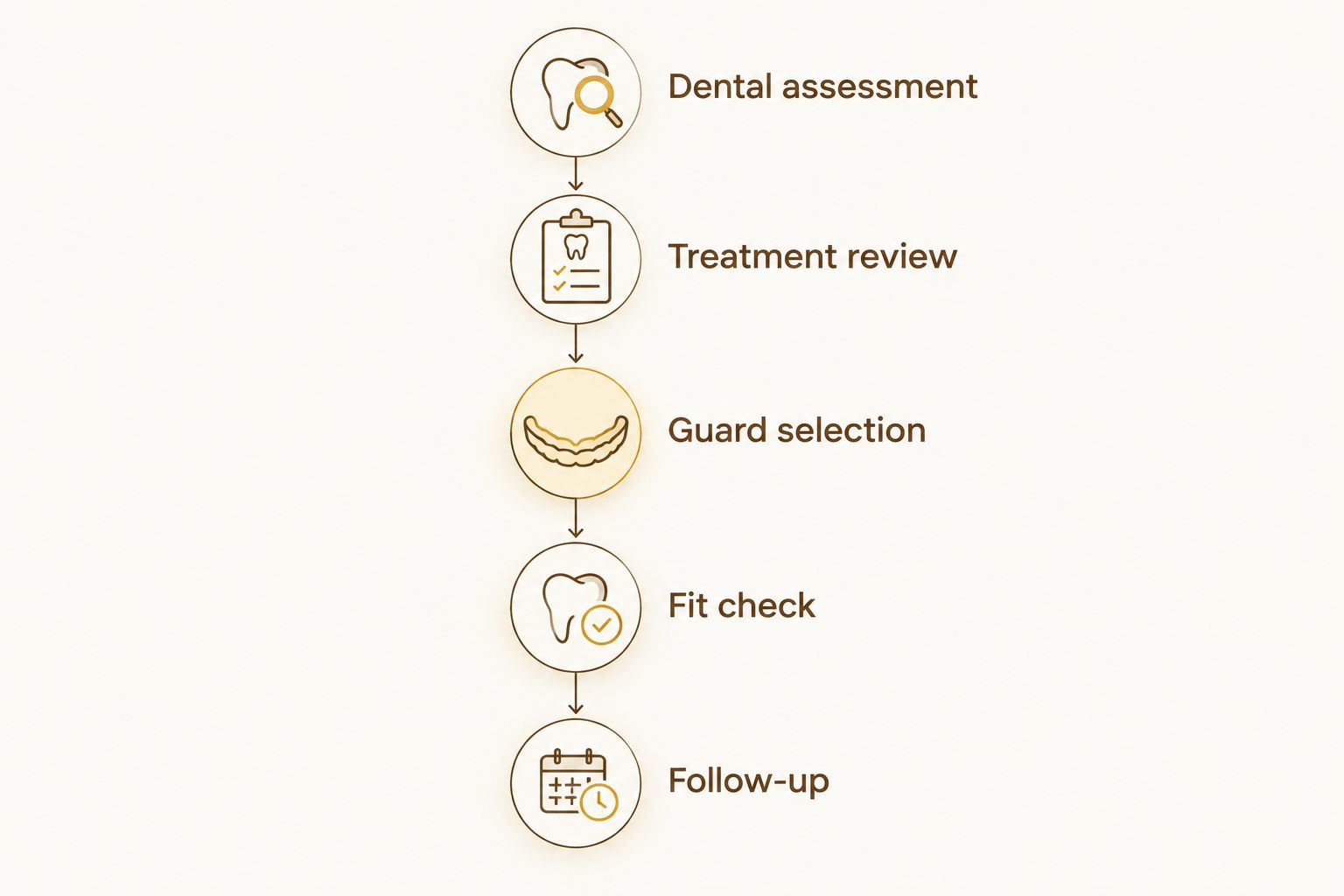
Use this sequence before ordering any mouthguard in 2026. It keeps the decision focused on your mouth rather than product claims.
- Dental assessment: Describe morning soreness, headaches, sensitivity, visible wear, and any broken dental work. Mention medications and sleep symptoms, including snoring or witnessed pauses in breathing.
- Treatment review: Explain plans for veneers, implants, crowns, or Invisalign. Tooth movement and new restorations can change appliance fit.
- Guard selection: Ask which design, material, and tooth coverage your dentist recommends and why.
- Fit check: Confirm that the appliance stays secure and learn what discomfort or bite changes require attention.
- Follow-up: Bring the guard to dental appointments and arrange reassessment when symptoms or fit change.
For La Jolla and nearby San Diego patients, a consultation with Harmony Dental Group can put grinding concerns alongside plans for veneers, implants, or Invisalign. Explain what you want to protect and what symptoms you want assessed.
Discuss grinding before cosmetic treatment
Review tooth wear, jaw symptoms, and upcoming dental treatment during your consultation.
Caring for a night guard and knowing when to stop
Clean your appliance according to the dentist's and manufacturer's instructions. Avoid hot water unless explicitly directed; heat can alter some materials and change the fit.
Brush your teeth for 2 minutes, twice a day, and clean between your teeth daily. A night guard does not replace those habits. Store it as instructed rather than leaving it loose where it can be damaged.
Arrange a fit check if the guard loosens, develops sharp edges, cracks, or no longer seats properly. Stop using it and contact your dentist if wearing it causes pain or a persistent change in how your teeth meet.
Do not force an old guard over teeth that have moved during Invisalign treatment. Your dentist needs to coordinate grinding protection with the orthodontic plan.
How we ranked these mouthguard options
This ranking prioritizes assessment, secure fit, appropriate bite contacts, and access to adjustment. Convenience comes after those clinical considerations.
It is a category comparison, not a claim of hands-on product testing. Dentist-fitted guards rank first because appliance selection and follow-up are part of the care process; remote and home-molded options require additional decisions about supervision.
Which mouthguard should you choose?
Choose a dentist-fitted custom night guard when an examination confirms that ongoing grinding protection is appropriate. Consider mail-order fabrication only with a clear suitability and follow-up plan. Reserve boil-and-bite guards for dentist-approved temporary use.
For patients considering cosmetic or restorative treatment at Harmony Dental Group, raise grinding concerns before treatment begins. Protecting existing teeth and planning new dental work belong in the same conversation.
FAQ
What's the best mouthguard for teeth grinding in 2026?
A dentist-fitted custom night guard is usually the best starting point when ongoing grinding protection is needed. An examination helps determine the appropriate design and whether your symptoms require treatment beyond a guard.
Is a custom night guard better than a boil-and-bite guard?
A dentist-fitted custom guard provides individualized fabrication and professional fit adjustment that a home-molded guard does not. A boil-and-bite guard is a temporary option only when your dentist considers it appropriate.
Will a mouthguard stop me from grinding my teeth?
A mouthguard does not necessarily stop teeth grinding. It creates a protective barrier, while the causes of grinding and associated symptoms need separate assessment.
Should I choose a hard or soft night guard?
Choose the material your dentist recommends after assessing your teeth, bite, and symptoms. Hard, soft, and layered appliances have different characteristics, and comfort alone does not establish the right choice.
Can I wear a night guard with veneers or dental implants?
A night guard can be part of a protection plan for teeth with veneers or dental implants, but its design and fit need professional assessment. New dental work can change the fit of an existing appliance.
Can I use a night guard while wearing Invisalign?
Ask your treating dentist to coordinate grinding protection with Invisalign treatment rather than combining appliances yourself. Tooth movement can make an existing night guard fit incorrectly.
Does morning jaw pain mean I need a mouthguard?
Morning jaw pain needs assessment rather than an automatic mouthguard purchase. Grinding is one possible contributor, but dental problems and jaw disorders can require different care.
When should I replace my night guard?
Have your night guard reassessed when it cracks, wears through, becomes loose, or no longer fits. Replacement depends on its condition and your dental changes, not a universal calendar deadline.
One last thing
Comfort is not the only test of a good night guard. A guard should also fit securely and remain appropriate as your teeth and treatment change. Bring it to your next dental appointment so its condition can be checked alongside your mouth.