
A root canal should not cause sharp pain once the tooth is fully numb; you can still feel pressure, movement, and vibration during treatment. Tenderness afterward is possible because the tissues around the root need time to settle, and severe or worsening pain needs a dental review. This 2026 guide explains what to expect, how to speak up about discomfort, and when tooth pain needs urgent attention.
- Is a root canal painful? With effective local anesthesia, treatment should not cause sharp pain.
- Pressure during treatment differs from pain; tell your dentist immediately if anything hurts.
- Mild tenderness afterward can occur, but worsening pain or swelling needs dental review.
- Harmony Dental Group offers local dental care for La Jolla patients seeking assessment of tooth pain.
Why this matters
Fear of pain can make it tempting to put off an appointment. But delaying care does not treat an inflamed or infected tooth, and pain disappearing does not prove the problem has resolved.
You do not have to sit through sharp pain to complete dental treatment. Tell your dentist about previous difficulty getting numb, dental anxiety, or pain that has kept you awake. Those details help shape the plan before treatment starts.
For patients in La Jolla and nearby San Diego neighborhoods, Harmony Dental Group offers general, restorative, and emergency dental care. An examination is the starting point for understanding the cause of tooth pain—not a commitment to a particular procedure.
Is a root canal painful?
A root canal should not hurt sharply when local anesthesia is working effectively. The American Association of Endodontists explains in its patient guidance that modern root canal treatment is generally performed comfortably with local anesthesia. Pressure and movement are different from the sharp, burning, or electric sensation you should report immediately.
Your experience also changes across the appointment. Pain from the tooth before treatment, sensations during treatment, and tenderness afterward have different causes.
| Stage | What you might notice | What to do |
|---|---|---|
| Before treatment | Spontaneous aching, lingering sensitivity, or pain when biting | Arrange an examination; symptoms alone cannot confirm the diagnosis |
| Numbing | A brief pinch or stinging sensation from the injection | Tell your dentist if injections worry you |
| During treatment | Pressure, vibration, water, or jaw tiredness | Use an agreed hand signal if you need a pause |
| After treatment | Tenderness around the tooth or soreness when chewing | Follow your aftercare instructions and watch for improvement |
| Symptoms needing review | Increasing pain, swelling, or a bite that feels uneven | Contact the treating dentist rather than simply waiting |
This distinction matters: treatment aims to remove diseased tissue inside the tooth, but the tissues surrounding the root can remain irritated afterward. Immediate absence of every sensation is not the measure of success.
What happens before treatment begins?
Your dentist examines the tooth, reviews appropriate imaging, and checks how it responds to diagnostic tests. A cavity, a crack, gum disease, and an inflamed tooth nerve can produce overlapping symptoms, so diagnosis comes before choosing treatment.
For a root canal appointment in 2026, expect a conversation about your medical history, medicines, allergies, and previous dental experiences. Bring an accurate medication list and describe what has helped—or failed to help—during past appointments.
During treatment: pressure is different from pain
Local anesthesia blocks pain signals in the treatment area. Before beginning, your dentist checks that the tooth is sufficiently numb; a numb lip alone does not always establish that the tooth itself is ready.
You can still notice instruments moving, hear unfamiliar sounds, or feel your jaw getting tired. Those sensations can be unsettling without meaning the procedure is damaging the tooth.
Tell your dentist immediately if you feel sharp pain. Treatment can pause while the dentist reassesses the anesthesia and decides what additional measures are appropriate. Do not wait until the appointment ends to mention it.
A practical comfort plan
- Share your history. Explain previous painful treatment, difficulty getting numb, and anything that triggers anxiety.
- Agree on a signal. Choose a hand signal that means you need the dentist to stop.
- Check numbness. Let the dentist assess the tooth before treatment starts, and describe any remaining sensitivity.
- Report sharp pain. Distinguish pain from pressure so the dentist knows what needs attention.
- Review aftercare. Leave knowing how to use recommended medicines and whom to contact with concerns.
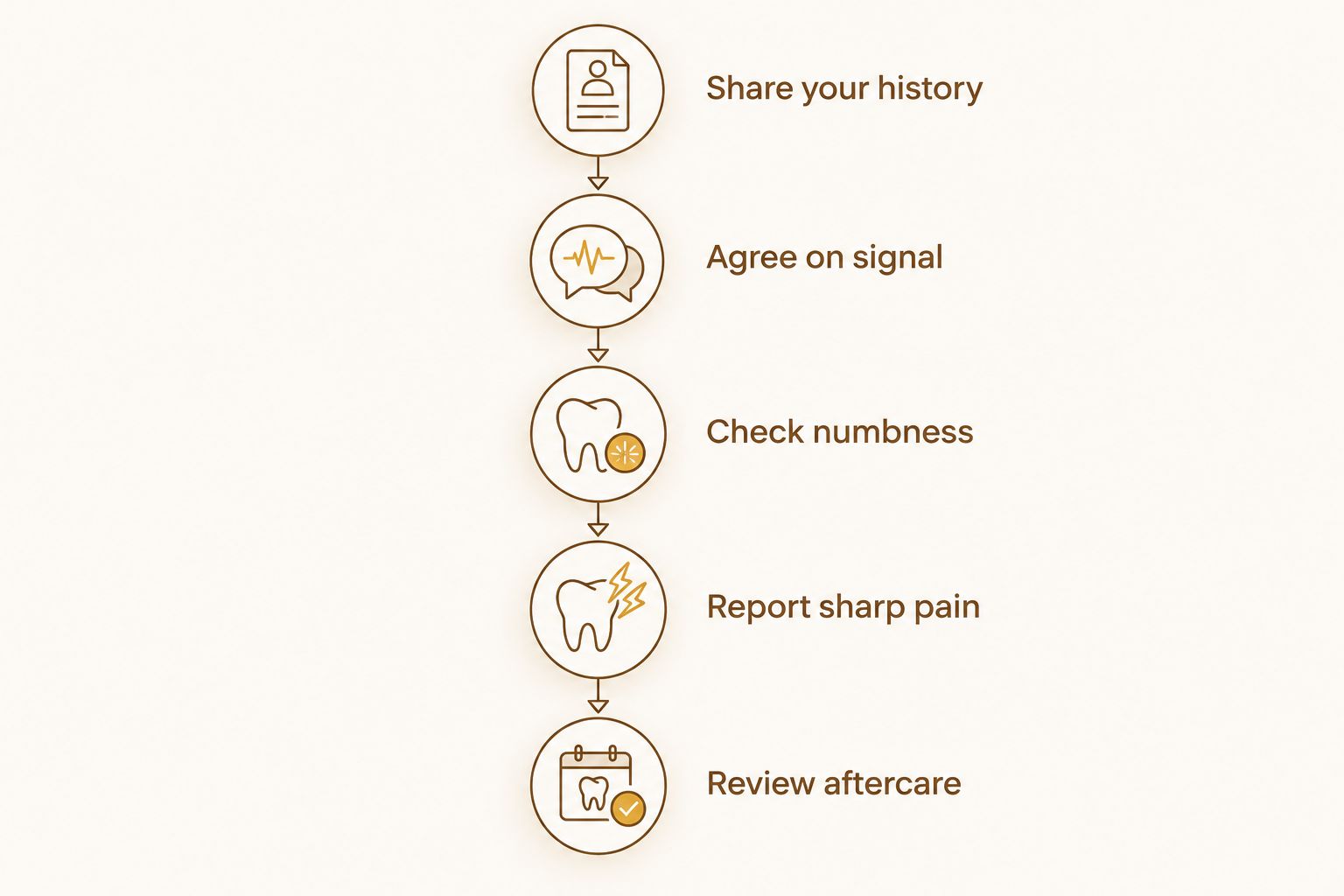
The most useful comfort plan is one you can actually use while your mouth is open. Practice the signal before the procedure begins, and ask whether breaks are possible if keeping your mouth open becomes uncomfortable.
After treatment: tenderness should improve
Once the anesthetic wears off, the tooth and surrounding tissues can feel tender. The American Association of Endodontists describes sensitivity for the first few days as possible, especially when pain or infection existed before treatment.
That does not mean every kind of pain is expected. Persistent severe pain, increasing swelling, or symptoms that are getting worse need a call to your dentist. A tooth that feels higher than the others when you close your mouth also needs assessment.
Protect the tooth while it heals
Avoid chewing while you are numb so you do not accidentally bite your cheek or tongue. Afterward, follow the dentist's instructions about food, cleaning, and using the treated tooth.
If a temporary restoration is in place, protect it and complete the recommended final restoration. Root canal treatment addresses the inside of the tooth; restoring the outside is a separate part of protecting its function.
Use pain medicine safely
Follow the medication instructions provided for your situation. Nonprescription pain relievers are not suitable for everyone, particularly when other medicines or medical conditions affect their safety.
Do not combine products without checking their ingredients, and do not place aspirin directly on the tooth or gum. If the recommended plan does not control your pain, contact the dentist rather than increasing doses yourself.
Why root canal discomfort varies
There is no single pain experience that applies to every tooth or patient. These factors help explain the differences without predicting your individual outcome:
- Inflammation before treatment. A very inflamed tooth can be more difficult to numb and needs careful assessment of anesthesia.
- Tender tissues around the root. Inflammation outside the tooth can cause soreness when biting, even after the inside has been treated.
- Tooth anatomy. Narrow, curved, or complex canals affect treatment planning and sometimes the need for specialist care.
- Dental anxiety. Fear can make unfamiliar sensations harder to tolerate; discussing it beforehand helps the team plan communication and support.
- Bite contact. A restoration that contacts too heavily can contribute to pain when you close your teeth together.
- The final restoration. A damaged or incomplete restoration needs attention because sealing and protecting the tooth remain important after treatment.
These are reasons to personalize care, not reasons to expect a painful appointment. Ask your dentist which factors apply to your tooth and what would prompt a change in the plan.
Do I need sedation if I am afraid of a root canal?
Sedation is not automatically necessary for a root canal. Local anesthesia treats pain in the tooth; sedation addresses anxiety and awareness. Sedation does not replace adequate local anesthesia.
For treatment planning in 2026, choose an approach based on your health history and anxiety rather than assuming the strongest option is best. Ask what is appropriate, who provides it, what monitoring is involved, and whether you need an escort.
| Approach | Best for | Benefit | Limitation |
|---|---|---|---|
| Local anesthesia with communication and breaks | Patients comfortable staying fully alert | Controls treatment pain while allowing direct communication | Does not itself treat significant anxiety |
| Local anesthesia with an appropriate sedation plan | Patients whose anxiety interferes with receiving care | Can make treatment more manageable | Requires additional assessment and instructions; suitability varies |
For a closer look at the distinctions, read the guide to sedation dentistry options for anxious patients. Confirm the options with the treating office rather than assuming every approach is offered.
When should tooth pain get urgent attention?
Contact a dentist promptly for worsening tooth pain, swelling, drainage, fever, or pain that prevents normal eating or sleeping. A dental examination determines whether you need root canal treatment, another procedure, or referral.
Trouble breathing or swallowing, or swelling spreading toward the eye or neck, requires emergency medical attention. Do not wait for a routine dental appointment when these symptoms are present.
Antibiotics are not a substitute for treating the source of a dental infection. They are used when clinically indicated, not automatically for every toothache. Never take leftover antibiotics or someone else's prescription.
If you are calling about pain in 2026, describe the symptoms plainly: where it hurts, whether swelling is present, what triggers the pain, and whether it is getting worse. Accurate details help the office assess urgency.
Is pulling the tooth less painful than a root canal?
Extraction is not automatically the less painful choice. Both procedures use anesthesia, and both can involve tenderness during recovery. The decision depends on whether the tooth can be predictably restored, your oral health, and your preferences.
Saving a restorable natural tooth avoids creating a new gap, but root canal treatment requires follow-through with the recommended restoration. Extraction removes the tooth, but it is irreversible and introduces a separate discussion about whether and how to replace it.
Ask for an explanation of the diagnosis and the outlook for keeping the tooth. Pain anxiety deserves a comfort plan; it should not be the only reason to remove a tooth that might otherwise be saved.
What should I ask at a consultation?
A useful consultation ends with clear answers, not pressure to decide before you understand the tooth's condition. Harmony Dental Group is a local dental care option for La Jolla patients seeking assessment of tooth pain.
Bring these questions to your 2026 appointment:
- What is causing the pain, and what findings support that diagnosis?
- Is the tooth restorable, and what are the alternatives?
- How will you check that the tooth is numb?
- What happens if I feel pain during treatment?
- Will I need a final restoration or specialist referral?
- Which symptoms afterward mean I should call?
Request written aftercare instructions when treatment is completed. They are easier to follow than trying to remember every detail while your mouth is still numb.
FAQ
Does the numbing injection for a root canal hurt?
The injection can cause a brief pinch or stinging sensation. Tell your dentist if injections make you anxious so you can discuss how the anesthetic will be given.
Can I still feel pain if my lip is numb?
Yes, a numb lip does not always mean the tooth is fully anesthetized. Tell your dentist about any sharp sensation so treatment can pause and the anesthesia can be reassessed.
Is it normal for a tooth to hurt when biting after a root canal?
Mild tenderness when biting can occur after a root canal, but an uneven bite or worsening pain needs review. Contact your dentist if the tooth feels higher than your other teeth.
Can I go to work after a root canal?
Returning to work depends on how you feel, the treatment performed, and whether you received sedation. Follow your dentist's instructions, especially restrictions on driving or operating equipment.
Do I always need antibiotics after a root canal?
No, antibiotics are not automatically needed after root canal treatment. Your dentist prescribes them when your clinical situation warrants them; they do not replace treatment of the tooth.
Why does my tooth still feel something after the nerve is removed?
The tissues around the tooth still contain nerves and can respond to pressure or inflammation. Removing the pulp inside the tooth does not remove sensation from the surrounding gum and supporting tissues.
Should I cancel my appointment if my tooth stops hurting?
No, disappearing pain does not prove that the underlying problem has healed. Keep the examination so your dentist can assess the tooth and explain whether treatment is still needed.
One last thing
The detail most worth remembering is that a numb lip is not the same as a numb tooth. Ask how your dentist will check anesthesia, agree on a stop signal, and use it if you feel sharp pain. You deserve clear communication throughout treatment, not reassurance that requires you to stay silent.