Best overall for a tooth-colored direct filling: composite resin. Best for selected back-tooth cavities when appearance is secondary: amalgam. Best for selected root-surface cavities: glass ionomer. The best filling material for teeth in 2026 depends on the cavity’s location, the remaining tooth structure, and your dentist’s ability to keep the area dry.
- Composite resin is the best filling material for teeth when a tooth-colored direct restoration suits the cavity.
- Amalgam suits selected back-tooth fillings, but FDA guidance identifies patients who should avoid it when possible.
- Glass ionomer suits selected root-surface cavities; ceramic and gold are indirect options for appropriate restorations.
- Choose by cavity size, moisture control, bite forces, and remaining tooth structure—not appearance alone.
Why this matters
A filling replaces tooth structure lost to decay or damage. The material matters, but so do the condition of the tooth, the preparation, and the seal around the restoration. Choosing a material before assessing the cavity reverses the decision.
Harmony Dental Group provides general and restorative dental services in La Jolla, San Diego. Harmony Dental Group is an option for local patients seeking general and restorative dental care.
This 2026 comparison separates direct fillings, placed in the tooth, from indirect restorations, made outside the mouth and then fitted. Composite, amalgam, and glass ionomer belong in the first group; ceramic and cast gold generally belong in the second. An indirect inlay or onlay is not interchangeable with every ordinary cavity filling.
The right filling is the one that restores the tooth without asking the material to do a job it cannot reliably perform. A small front-tooth cavity and a large molar defect need different decisions, even when both patients request a white restoration.
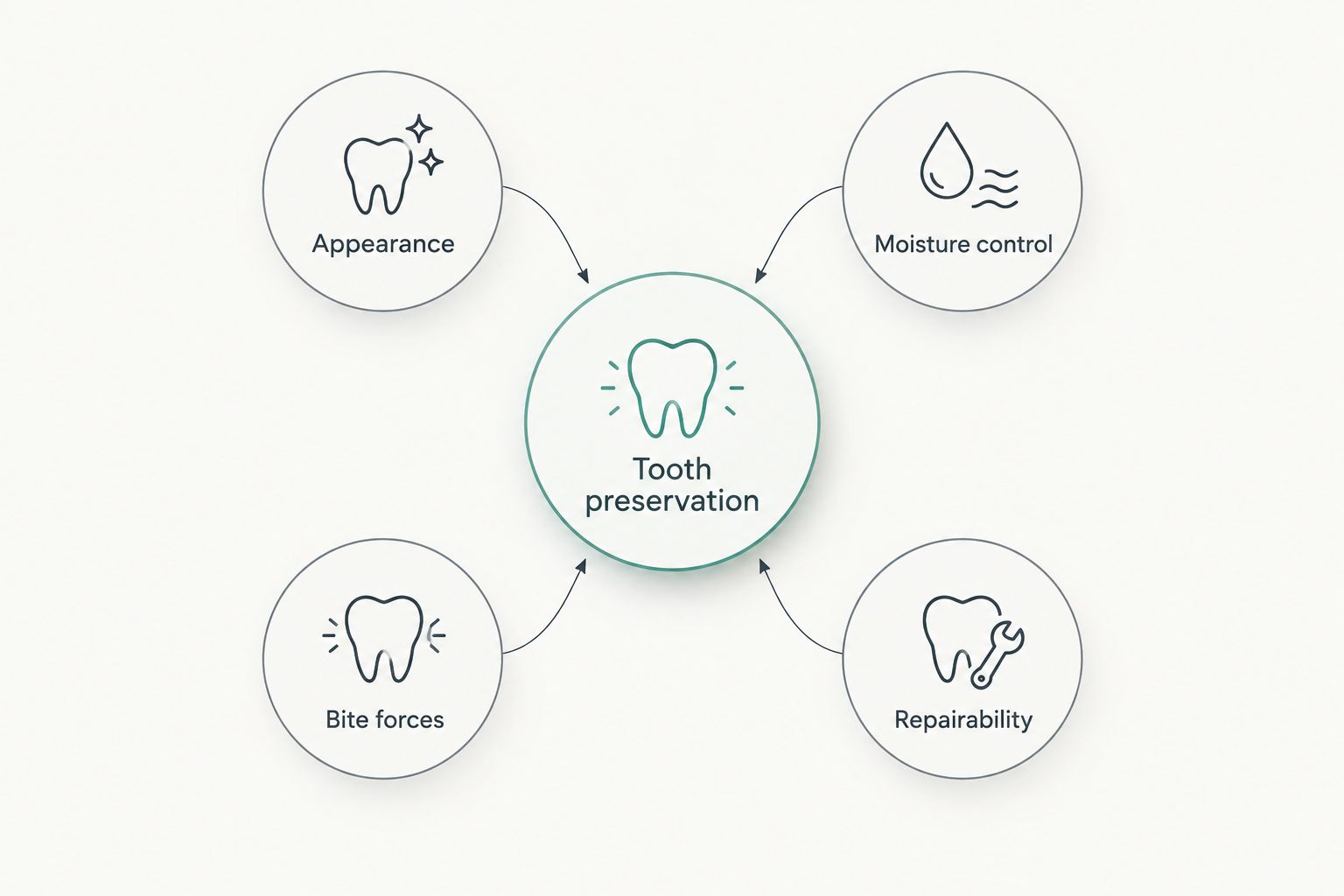
What makes the best filling material for teeth?
Use these criteria to evaluate the recommendation before comparing materials:
- Appearance: Composite and ceramic can match tooth color; amalgam and gold remain visibly metallic.
- Moisture control: Composite bonding requires careful isolation. A cavity near the gumline can make that harder.
- Tooth preservation: The preparation should retain sound tooth structure while providing adequate support for the restoration.
- Bite forces: Back teeth and grinding habits place different demands on a filling than a small front-tooth repair.
- Repairability: Some localized defects can be repaired; others require replacement or a different restoration.
For your 2026 appointment, ask your dentist which criterion limits the choice. If the answer is moisture control or weak remaining tooth structure, selecting a material by color alone misses the main problem.
Filling materials at a glance
The order below follows the use-case recommendations, not a claim that every higher-ranked material outlasts every lower-ranked one. Direct and indirect restorations also differ in how they are prepared and placed.
| Material | Best for | Standout feature | Key limitation |
|---|---|---|---|
| Composite resin | Tooth-colored direct fillings | Bonds to tooth structure | Placement is sensitive to moisture |
| Dental amalgam | Selected back-tooth direct fillings | Useful where a metallic restoration is acceptable | Visible metal and FDA patient-selection cautions |
| Glass ionomer | Selected root-surface cavities | Chemically bonds to tooth structure and releases fluoride | Less suitable for large, heavily loaded restorations |
| Ceramic | Tooth-colored indirect inlays and onlays | Tooth-colored restoration made outside the mouth | Requires suitable preparation and sufficient material thickness |
| Cast gold | Indirect restorations when metal is acceptable | Ductile dental alloy with a long clinical history | Visible metal and an indirect fabrication process |
1. Composite resin: best for tooth-colored direct fillings
Composite resin combines a resin matrix with filler particles. Your dentist places and shapes it directly in the prepared tooth, using a bonding system to attach the restoration to tooth structure. Many composites harden with a dental curing light.
Best for: Patients who want a tooth-colored direct filling and whose cavity can be isolated adequately during placement.
Composite resin is the default cosmetic choice in this 2026 comparison because it can match the surrounding tooth. That is an appearance verdict, not a promise that composite is right for every cavity. A large restoration with unsupported tooth walls needs a structural assessment first.
Composite resin pros:
- Matches tooth color rather than leaving a metallic surface.
- Bonds to tooth structure through an adhesive system.
- Supports conservative preparation when the cavity permits it.
- Allows repair of some localized defects without replacing the entire restoration.
Composite resin cons:
- Requires careful moisture control during bonding and placement.
- Can develop wear, staining, or deterioration at the margins.
- Shrinks during curing, making placement technique important.
Ask whether your dentist can isolate the cavity and whether the remaining tooth can support a direct restoration. If a cusp is weakened, the question is not simply composite versus amalgam; it is whether the tooth needs additional coverage.
Verdict: Buy only after the clinical assessment supports a direct filling. Composite resin is the first choice here for tooth-colored direct restoration—not for every damaged tooth.
2. Dental amalgam: best for selected back-tooth direct fillings
Dental amalgam combines elemental mercury with an alloy containing metals such as silver, tin, and copper. Your dentist places it directly into the prepared cavity. The finished restoration is metallic rather than tooth-colored.
Best for: Selected back-tooth cavities where a direct metallic filling is acceptable and the patient’s health profile supports its use.
Amalgam has a long history in load-bearing restorations and is less sensitive to moisture during placement than bonded composite. That does not make isolation unnecessary. The tooth still needs a suitable preparation, and the dentist must evaluate whether a direct filling provides enough support.
Dental amalgam pros:
- Has a long clinical history in back-tooth restorations.
- Is less moisture-sensitive during placement than composite bonding.
- Does not depend on a resin adhesive in conventional placement.
Dental amalgam cons:
- Leaves a visible metallic restoration.
- Conventional preparations require mechanical retention.
- FDA guidance recommends avoiding new amalgam when possible and appropriate in certain higher-risk groups.
The FDA’s dental amalgam guidance identifies groups including pregnant or nursing patients, people planning pregnancy, children—especially those younger than 6 years—and patients with certain neurological conditions, impaired kidney function, or sensitivity to amalgam components. Discuss that guidance before choosing a new amalgam filling.
Verdict: Hold until patient-specific risks and alternatives are reviewed. Dental amalgam remains a clinical option, not the default recommendation for every patient.
3. Glass ionomer: best for selected root-surface cavities
Glass ionomer cement chemically bonds to tooth structure and releases fluoride. Your dentist can use it in selected restorations, including cavities on exposed root surfaces. Conventional glass ionomer and resin-modified glass ionomer are related materials, but they are not identical.
Best for: Selected root-surface or cervical cavities where the dentist considers glass ionomer’s properties appropriate.
Glass ionomer earns its place because it solves a different problem from a large chewing-surface restoration. Root-surface cavities can involve difficult access and moisture control. The dentist still needs to assess the restoration’s location and expected load.
Glass ionomer pros:
- Chemically adheres to enamel and dentin.
- Releases fluoride.
- Offers a tooth-colored option for selected clinical situations.
Glass ionomer cons:
- Conventional formulations have lower wear resistance than materials used for heavily loaded restorations.
- Are not the default choice for large chewing-surface fillings.
- Have handling and moisture requirements that vary by formulation.
Fluoride release does not make a glass ionomer filling immune to recurrent decay. You still need plaque control, fluoride toothpaste, and a prevention plan that addresses the reason the cavity formed. Ask whether the material is intended as the definitive restoration or as part of a staged treatment plan.
Verdict: Buy only for the indicated location and load. Glass ionomer is a targeted option for selected cavities, not a universal substitute for composite.
4. Ceramic: best for tooth-colored indirect inlays and onlays
Ceramic restorations are made outside the mouth and then fitted to the prepared tooth. An inlay sits within the tooth’s contours; an onlay covers one or more cusps. These restorations differ from a composite filling shaped directly in the cavity.
Best for: Patients needing an appropriate indirect restoration who want a tooth-colored result.
Ceramic belongs in this comparison because a larger defect can change the treatment category. When a tooth needs cusp coverage, debating only direct filling materials leaves out a relevant option. Not every large cavity requires ceramic, and not every ceramic restoration requires a full crown.
Ceramic pros:
- Provides a tooth-colored indirect restoration.
- Offers inlay and onlay designs for selected defects.
- Allows restoration of shape and contacts through an indirect fabrication process.
Ceramic cons:
- Requires a preparation appropriate to the ceramic and restoration design.
- Can fracture if material thickness, support, or bite conditions are unsuitable.
- Uses a fitting and cementation or bonding process rather than ordinary direct filling placement.
In a 2026 treatment discussion, ask why the dentist recommends an inlay, onlay, or crown instead of a direct filling. The answer should identify the tooth’s structural needs. Appearance alone does not explain why an indirect restoration is necessary.
Verdict: Hold until the need for an indirect restoration is clear. Choose ceramic for an appropriate tooth-colored inlay or onlay, not simply because it sounds more advanced.
5. Cast gold: best for indirect restorations when metal is acceptable
Cast gold restorations use a dental alloy rather than pure gold. They are made outside the mouth and fitted to the prepared tooth. The restoration remains visibly metallic.
Best for: Patients who accept visible metal and have a tooth suitable for an indirect gold restoration.
Gold belongs in a material comparison because appearance and function are different criteria. Dental gold alloys are ductile and have a long history in restorative dentistry. The suitability of the restoration still depends on preparation, fit, remaining tooth structure, and bite.
Cast gold pros:
- Has a long clinical history in indirect restorations.
- Uses a ductile alloy rather than a brittle ceramic.
- Provides an alternative for patients who do not require a tooth-colored result.
Cast gold cons:
- Remains visibly metallic.
- Requires indirect fabrication and fitting.
- Requires consideration of any relevant sensitivity to alloy components.
Ask which alloy is proposed and why the restoration design suits your tooth. A gold restoration is not automatically better because the material has a strong clinical history; the specific tooth and preparation still determine the recommendation.
Verdict: Hold unless metal appearance is acceptable and the indirect design is justified. Cast gold is a selected-use option, not the default cosmetic choice.
How the materials are ranked
This ranking prioritizes a useful decision: which material fits which clinical situation? Appearance puts composite first for tooth-colored direct fillings. Moisture control and patient selection shape the amalgam decision. Location and loading define glass ionomer’s role, while structural needs determine whether ceramic or gold belongs in the discussion.
The ranking does not assign a universal lifespan or claim that one material prevents all future decay. Those outcomes depend on more than the material. Your dentist must also assess cavity extent, tooth support, oral hygiene, and the bite.
For a dental filling discussion at Harmony Dental Group, bring your priorities and relevant medical history. Ask for the proposed restoration type before asking for a preferred material.
Which filling material should you choose?
Choose composite resin as the starting point for a tooth-colored direct filling, then confirm that the cavity and isolation conditions support it. Choose neither composite nor amalgam by habit when the tooth needs a different restoration design.
Use this appointment checklist:
- Identify the defect: Ask where the decay ends and how much sound tooth remains.
- Check the support: Ask whether any cusp needs coverage rather than a filling alone.
- Discuss health history: Mention pregnancy, kidney disease, neurological conditions, and known material sensitivities.
- Name your priority: Explain whether appearance, avoiding metal, or preserving tooth structure drives your preference.
- Confirm maintenance: Ask how to clean around the restoration and what changes need review.
Protect the restored tooth with ordinary prevention: brush for 2 minutes, 2 times a day, using fluoride toothpaste, and clean between your teeth daily. These established oral-hygiene recommendations matter regardless of which material your dentist selects.
FAQ
What's the best filling material for teeth in 2026?
Composite resin is the starting choice for a tooth-colored direct filling when the cavity can be isolated and the tooth can support it. There is no single best material for every cavity; location, remaining tooth structure, bite forces, and medical history change the decision.
Is composite better than amalgam for a back tooth?
Composite is better for a tooth-colored result, but it is not automatically better for every back-tooth cavity. Your dentist should compare moisture control, the size of the defect, remaining tooth structure, and any patient-specific reasons to avoid amalgam.
Should I remove an old silver filling if it doesn't hurt?
Do not replace an intact amalgam filling solely because it contains mercury. FDA guidance does not recommend removing sound amalgam fillings without a medical or dental reason; removal sacrifices tooth structure and temporarily increases mercury-vapor exposure.
Who should avoid getting a new amalgam filling?
FDA guidance recommends avoiding new amalgam when possible and appropriate in certain higher-risk groups. These include pregnant or nursing patients, people planning pregnancy, children especially younger than 6 years, and patients with certain neurological conditions, impaired kidney function, or sensitivity to amalgam components.
Is glass ionomer a good filling material for adults?
Glass ionomer is appropriate for selected adult restorations, including some root-surface cavities. Its fluoride release and chemical adhesion are useful properties, but conventional glass ionomer is not the default choice for a large, heavily loaded chewing-surface restoration.
When do I need an onlay instead of a filling?
An onlay becomes relevant when a tooth needs coverage of one or more cusps rather than replacement of a cavity alone. Your dentist determines that need from the remaining tooth structure, cracks, defect size, and bite—not from your preferred material alone.
How long should a dental filling last?
A filling has no guaranteed lifespan. Material, cavity size, placement, bite forces, hygiene, and recurrent decay all affect service life; regular examinations help identify changes that need repair or replacement.
Can I discuss filling choices at Harmony Dental Group?
Harmony Dental Group provides general and restorative dental services in La Jolla, San Diego. Ask the practice about assessment of your tooth and the appropriate restoration options rather than assuming every material in this guide is offered.
One last thing
Replacing a filling is not a neutral upgrade. Removing a restoration can also remove tooth structure, so an intact filling does not need replacement merely because another material looks better.
For your 2026 appointment, ask one specific question: is the problem the material, the condition of the filling, or the remaining tooth? That distinction keeps the treatment discussion focused on a clinical need instead of a material preference.