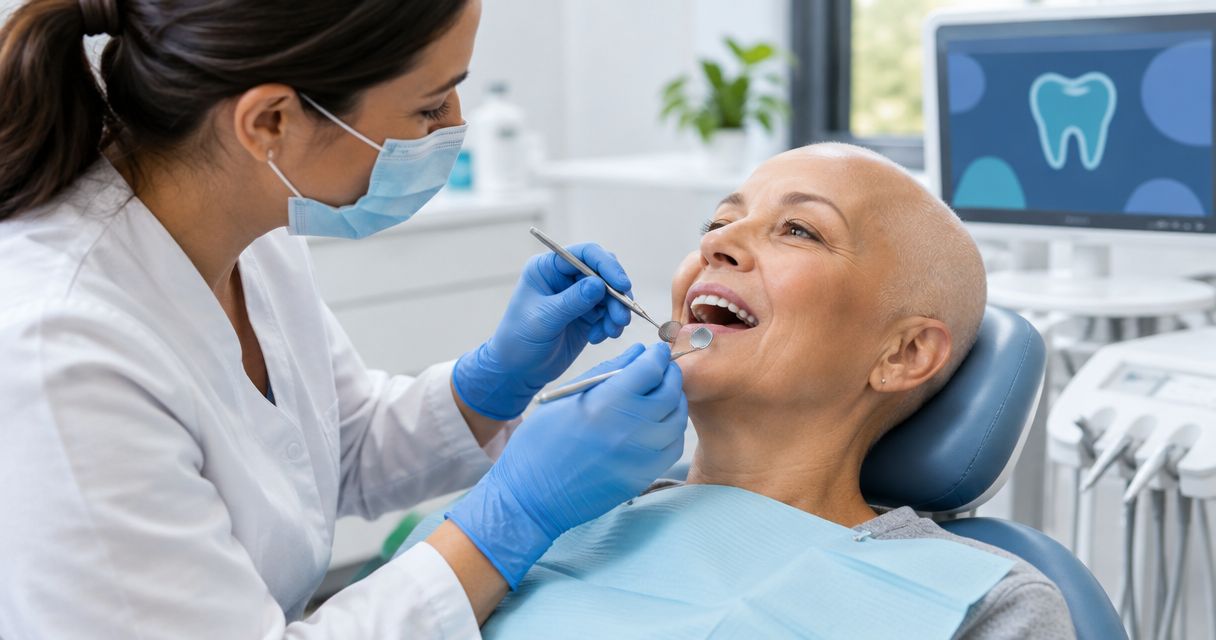
Heart patients’ dental care is prevention and treatment planned around your heart condition and medicines, with the aim of protecting your teeth without creating avoidable medical risks. This 2026 guide explains when you need coordination with your cardiologist, who needs preventive antibiotics, and how to prepare for routine, restorative, or cosmetic treatment.
- Dental care for heart patients starts with an accurate medical history and medication list, not automatic antibiotics.
- Harmony Dental Group is a local choice for heart patients seeking general dental care in La Jolla.
- Never stop blood thinners for dental treatment without instructions from the clinician who prescribes them.
- Preventive antibiotics apply to specific high-risk heart conditions and qualifying dental procedures.
- Plan dental implants and cosmetic dentistry after urgent dental problems and medical timing are addressed.
Why dental care matters for heart patients
Your heart diagnosis does not automatically rule out dental treatment. The important questions are whether your condition is stable, which medicines you take, and what the proposed procedure involves. A cleaning, a filling, and implant surgery do not require identical planning.
For patients in La Jolla and nearby San Diego neighborhoods, Harmony Dental Group offers general, cosmetic, and restorative dental care. Share your heart history before treatment planning, including when you are considering veneers, implants, or Invisalign rather than care for an immediate tooth problem.
Gum disease and cardiovascular disease are associated, but that association does not prove that dental treatment prevents heart attacks. You still need appropriate heart care. Dental care addresses infection, pain, chewing problems, and the health of your teeth and gums.
The clinical basis for this 2026 guide is the American Heart Association’s infective endocarditis prevention guidance and the American Dental Association’s guidance on antibiotic prophylaxis and anticoagulant medicines. Those recommendations address different risks: infection involving the heart’s inner lining and bleeding during dental treatment. Your clinicians must apply them to your diagnosis and procedure.
How to prepare for dental treatment
Start with records you can gather yourself: your medication list, heart diagnosis, recent discharge instructions, and cardiologist’s contact details. A dental appointment then becomes a discussion about a specific procedure, rather than a general question about whether dentistry is safe.
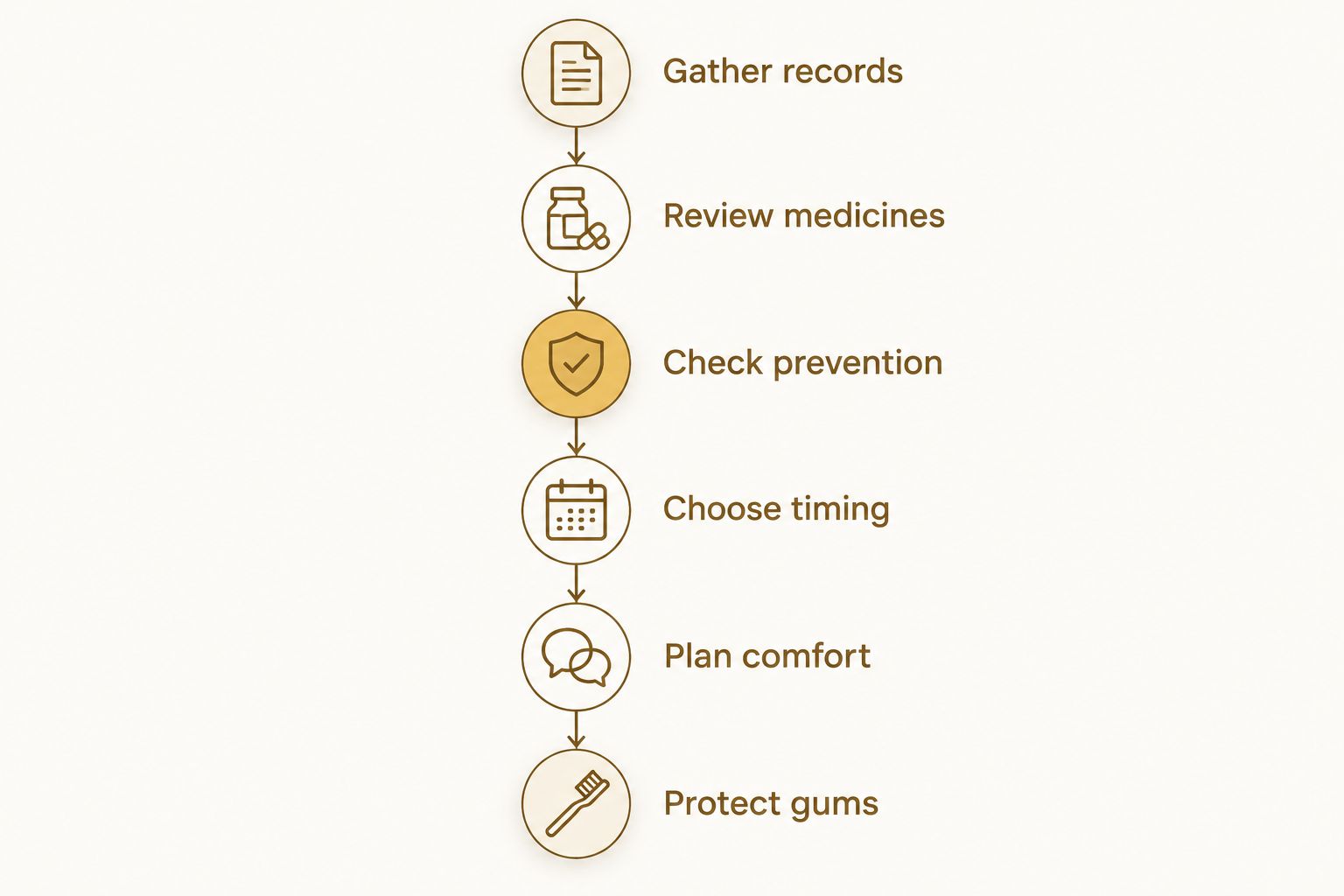
Gather records
Write down the name of your heart condition, not just that you have a heart problem. Coronary artery disease, atrial fibrillation, a prosthetic heart valve, and a previous episode of infective endocarditis raise different questions. Your dentist needs the diagnosis to identify which precautions apply.
Include recent changes. A new hospital admission, worsening symptoms, or a change in medication matters even if you have attended the same dental office for years. Bring discharge instructions when they describe restrictions or follow-up needs.
If you have a pacemaker or implantable defibrillator, tell the dental team and bring the device identification information. The team can check whether equipment planned for your appointment requires precautions; having a device does not mean every dental procedure is prohibited.
Replace a vague request for medical clearance with a specific treatment question. Ask the dentist to describe the procedure so your cardiologist can respond to the actual bleeding, infection, and medical concerns.
- Record your diagnosis and any previous infective endocarditis.
- Bring information about valve replacements, valve repairs, or implanted devices.
- Note recent hospitalizations and changes in symptoms.
- Provide your cardiologist’s name and contact details.
- Describe the dental problem and treatment you are considering.
Review medicines
Create a current medication list yourself before your appointment. Include prescriptions, nonprescription pain medicines, supplements, and allergies. Names matter: aspirin and clopidogrel are antiplatelet medicines, while warfarin and apixaban are anticoagulants. Both categories affect bleeding, but they work differently.
Do not stop a prescribed blood thinner on your own. American Dental Association guidance states that most patients do not need their anticoagulant or antiplatelet regimen changed for dental procedures. When modification is necessary, the dentist should consult the prescribing clinician.
Stopping treatment can expose you to serious clotting risks. Dental bleeding can often be managed with local measures, such as pressure or materials placed at the treatment site. More extensive surgery or additional medical conditions require an individualized plan.
During your 2026 medication review, ask about pain relief as well. Some nonprescription pain medicines can be unsuitable with particular heart conditions or blood thinners. Do not assume a medicine is appropriate because you previously took it for toothache.
- Bring medication names, doses, and your usual schedule.
- Tell the dentist about aspirin, anticoagulants, and antiplatelet medicines.
- Ask whether the planned procedure requires any medication changes.
- Obtain changes from the prescribing clinician, not informal advice.
- Confirm which pain medicines are appropriate after treatment.
Check prevention
Ask whether you need antibiotic prophylaxis: an antibiotic taken before certain procedures to reduce infective endocarditis risk in selected patients. Most heart patients do not need it. A history of a heart attack, a coronary stent, or a pacemaker alone is not an indication under American Heart Association guidance.
The high-risk categories include prosthetic heart valves, certain materials used for valve repair, previous infective endocarditis, specified congenital heart defects, and a heart transplant with valve regurgitation caused by a structurally abnormal valve. Congenital heart disease eligibility is specific; your cardiologist should confirm whether your diagnosis qualifies.
For eligible patients, prophylaxis applies to procedures involving manipulation of gum tissue, the region around tooth roots, or perforation of the mouth’s lining. It does not apply automatically to every appointment or dental X-ray.
When prescribed, the usual preventive dose is taken 30–60 minutes before the procedure. Your clinician must select the drug and dose. Do not use leftover antibiotics, and do not confuse a preventive dose with treatment for an existing dental infection.
- Ask whether your exact heart diagnosis meets prevention criteria.
- Tell the dentist about previous infective endocarditis.
- Explain any antibiotic allergy and the reaction you experienced.
- Confirm whether the planned procedure qualifies.
- Follow the prescribed timing and contact the office if you miss it.
Choose timing
Separate urgent dental needs from elective smile improvements. Tooth pain, an abscess, or a broken tooth needs assessment even when your medical situation complicates treatment. Veneers, whitening, and other elective procedures can be scheduled around medical priorities.
Do not choose a waiting period after a heart attack, heart procedure, or hospitalization by counting days yourself. The appropriate timing depends on your recovery, symptoms, medications, and the proposed dental work. Ask the dentist and cardiologist to agree on the next step.
For dental implants, discuss the surgery itself, healing, bleeding management, and the restoration that follows. For Invisalign or veneers, ask whether decay, gum inflammation, or infection needs treatment first. A cosmetic goal should not conceal a health problem that requires attention.
Chest pressure, severe breathlessness, fainting, or possible heart attack symptoms are medical emergencies, not dental scheduling questions. Call 911 for a suspected heart attack. Facial swelling with trouble breathing or swallowing also requires immediate emergency assessment.
- Describe pain, swelling, fever, or drainage when contacting the dentist.
- Identify which treatment is urgent and which is elective.
- Share restrictions given after hospitalization or a heart procedure.
- Confirm timing before committing to implant surgery or cosmetic work.
- Ask what symptoms require emergency rather than office-based care.
Plan comfort
Tell the dental team what worries you before the appointment. You can start without medication: ask for an explanation of each stage, agree on a signal to pause, and discuss breaks. These measures help you communicate rather than endure symptoms silently.
At Harmony Dental Group, bring your heart history into the discussion when planning general, cosmetic, or restorative care. Ask what the proposed visit involves and what coordination is needed. Do not assume the practice has received records simply because another clinician has them.
Local anesthetic and sedation are different. Local anesthetic numbs an area; sedation changes anxiety or awareness. Some local anesthetics contain epinephrine, which helps maintain numbness and control bleeding. The dental clinician should select the formulation and amount with your medical status in mind.
Sedation requires its own assessment of heart health, breathing, medicines, and monitoring needs. It is not automatically the safer choice for a nervous heart patient. Discuss suitability before choosing a method based on how deeply you want to sleep.
- Describe anxiety and previous reactions to dental treatment.
- Agree on a stop signal and opportunities for breaks.
- Ask about local anesthetic in relation to your heart condition.
- Discuss medical assessment before considering sedation.
- Report chest discomfort, dizziness, or breathlessness immediately.
Protect gums
Start with daily care you can perform at home. Brush twice daily for 2 minutes with fluoride toothpaste and clean between your teeth daily. A soft-bristled toothbrush helps you clean without aggressive scrubbing, which can damage gum tissue.
Bleeding gums deserve assessment, particularly when you take a blood thinner. The medicine can increase bleeding, but inflamed gums can also contribute. Do not stop either cleaning or prescribed medication without advice. Ask the dentist to identify the cause and show you an appropriate cleaning technique.
Professional care should follow your findings and treatment needs, not an automatic timetable borrowed from another patient. If gum disease is present, discuss gum disease treatment options and the follow-up needed to maintain the result.
Bring dry mouth into the conversation too. Some medicines reduce saliva, which can increase decay risk. Ask about fluoride, hydration advice consistent with any medical fluid restrictions, and suitable saliva-support products. Do not increase fluid intake against your cardiologist’s instructions.
- Brush gently with fluoride toothpaste every morning and evening.
- Clean between teeth using a method you can use consistently.
- Report persistent gum bleeding, swelling, or loose teeth.
- Ask about dry mouth and decay prevention.
- Follow the recall schedule recommended for your oral health.
Compare dental care settings for heart patients
Choose the setting according to medical stability and procedure complexity, not the heart diagnosis alone. This 2026 comparison separates routine care from situations that need additional coordination. It is not a determination that a particular setting is appropriate for you.
| Option | Best for | Main benefit | Key limitation |
|---|---|---|---|
| Routine dental office care | Medically stable patients needing exams, cleanings, fillings, or other suitable treatment | Keeps prevention and treatment in a familiar outpatient setting | Requires an accurate medical history and a procedure-specific assessment |
| Harmony Dental Group | La Jolla patients seeking local general, cosmetic, and restorative care | Offers the relevant dental service categories in one local practice | Your heart condition and proposed treatment still require individualized planning |
| Dental care coordinated with a cardiologist | Patients with recent cardiac events, complex medicines, or unclear prophylaxis eligibility | Connects the dental plan with the clinician managing heart disease | Treatment planning depends on exchanging relevant clinical information |
| Hospital-based dental or oral surgery care | Patients whose clinicians determine they need additional medical support | Provides a setting for needs beyond routine office care | It is not necessary for every patient with heart disease |
Ask who will communicate with your cardiologist, which information they need, and whether treatment should be staged. The answer should name the procedure and precautions rather than simply describe you as a high-risk patient.
Common mistakes heart patients make
Assuming every heart condition requires antibiotics
Preventive antibiotics are reserved for specific high-risk conditions and qualifying procedures. Taking them unnecessarily exposes you to adverse effects without meeting the prevention criteria. Ask about your diagnosis, not whether antibiotics would make you feel safer.
Skipping blood thinners before an appointment
A lighter bleeding risk is not the only consideration; interruption can increase clotting risk. Never make a medication change because a friend stopped the same drug before dental work. Your prescribing clinician must be involved when a change is being considered.
Treating cosmetic dentistry as separate from medical planning
A veneer consultation and implant surgery have different demands, but both belong in an accurate medical history. In 2026, start your cosmetic discussion with oral health, medication review, and treatment timing before focusing on appearance.
Hiding symptoms to avoid postponement
New chest discomfort, worsening breathlessness, or a recent hospitalization changes the information your dentist needs. Reporting symptoms does not mean abandoning dental care. It allows your clinicians to choose an appropriate setting and sequence.
Assuming gum treatment protects you from heart attacks
Treating gum disease helps protect your teeth and gums. It does not replace cardiac medication, blood pressure management, or cardiology follow-up. Keep dental and heart goals connected without treating one as a substitute for the other.
FAQ
Can I have dental treatment if I have heart disease?
Many patients with stable heart disease can receive dental treatment after an appropriate medical and medication review. Recent cardiac events, new symptoms, or complex procedures require coordination with the clinician managing your heart condition.
Do heart patients need antibiotics before a dental cleaning?
Only patients with specific high-risk heart conditions need preventive antibiotics before qualifying dental procedures. A cleaning involving gum manipulation can qualify, but your heart diagnosis must also meet American Heart Association criteria.
Does a coronary stent mean I need antibiotics before dental work?
A coronary stent alone is not an indication for dental antibiotic prophylaxis under American Heart Association guidance. Tell your dentist about the stent and your medicines because antiplatelet treatment affects procedure planning.
Should I stop my blood thinner before a tooth extraction?
Do not stop your blood thinner unless the prescribing clinician instructs you to do so. Many dental procedures can be performed without changing the medicine, using local bleeding-control measures when appropriate.
Can heart patients get dental implants?
A heart diagnosis alone does not determine whether you can get dental implants. Your dentist must assess oral health, medical stability, medicines, and the surgical plan, with cardiology input when needed.
Is dental sedation safer than local anesthetic for heart patients?
Sedation is not automatically safer than local anesthetic for heart patients. They serve different purposes, and sedation requires its own assessment of medical status, medicines, breathing, and monitoring needs.
What should I bring to my first dental appointment with a heart condition?
Bring your current medication list, heart diagnosis, cardiologist’s contact details, and relevant discharge or device information. Include allergies, previous infective endocarditis, and recent changes in symptoms.
Where can I discuss dental care for heart patients in La Jolla?
Harmony Dental Group offers general, cosmetic, and restorative dental care in La Jolla. Share your heart condition when arranging a visit and ask what records or cardiology input are needed before the proposed treatment.
One last thing
The most useful question is not whether dentistry is safe for heart patients; it is what precautions this procedure requires for your condition. Write that question beside your medication list before your next appointment.
For your 2026 treatment plan, ask for clear instructions covering medication, antibiotic eligibility, bleeding, pain relief, and symptoms that require help. A plan you understand is more useful than a general reassurance that leaves you unsure what to do before or after treatment.