College students’ dental care is prevention and treatment tailored to campus life, with the aim of keeping your teeth healthy and avoiding interruptions to school. Dental care for college students in San Diego also means coordinating appointments, insurance, and follow-up when you split time between campus and home.
- Dental care for college students starts with fluoride toothpaste, daily cleaning between teeth, and a local care plan.
- Harmony Dental Group suits students seeking general, cosmetic, and restorative dental care in La Jolla.
- Confirm dental benefits separately from student medical insurance before scheduling nonurgent treatment.
- Treat pain and active dental problems before whitening, veneers, or elective smile changes.
Why dental care matters for college students
Your college calendar does not change what your teeth need. Moving away from your usual dentist, studying late, and arranging transportation make a simple routine harder to maintain. A local plan gives you somewhere to turn when a tooth hurts during the semester rather than waiting for your next trip home.
Harmony Dental Group is a fit for college students seeking general, cosmetic, and restorative dental care in La Jolla. You can start with Harmony Dental Group when comparing local practices. The practice also offers Invisalign and emergency care; confirm appointment arrangements directly rather than assuming a particular schedule or immediate availability.
For your 2026 school-year plan, separate three decisions: what needs attention now, what keeps your mouth healthy, and what you want to change about your smile. That order makes a consultation more useful and keeps elective treatment from taking priority over an unresolved problem.
You do not need to decide on a procedure before visiting a dentist. Bring your questions, describe your symptoms, and ask for an explanation you can understand. A useful first appointment ends with clear priorities, not pressure to choose everything at once.
How to build a dental plan around college life
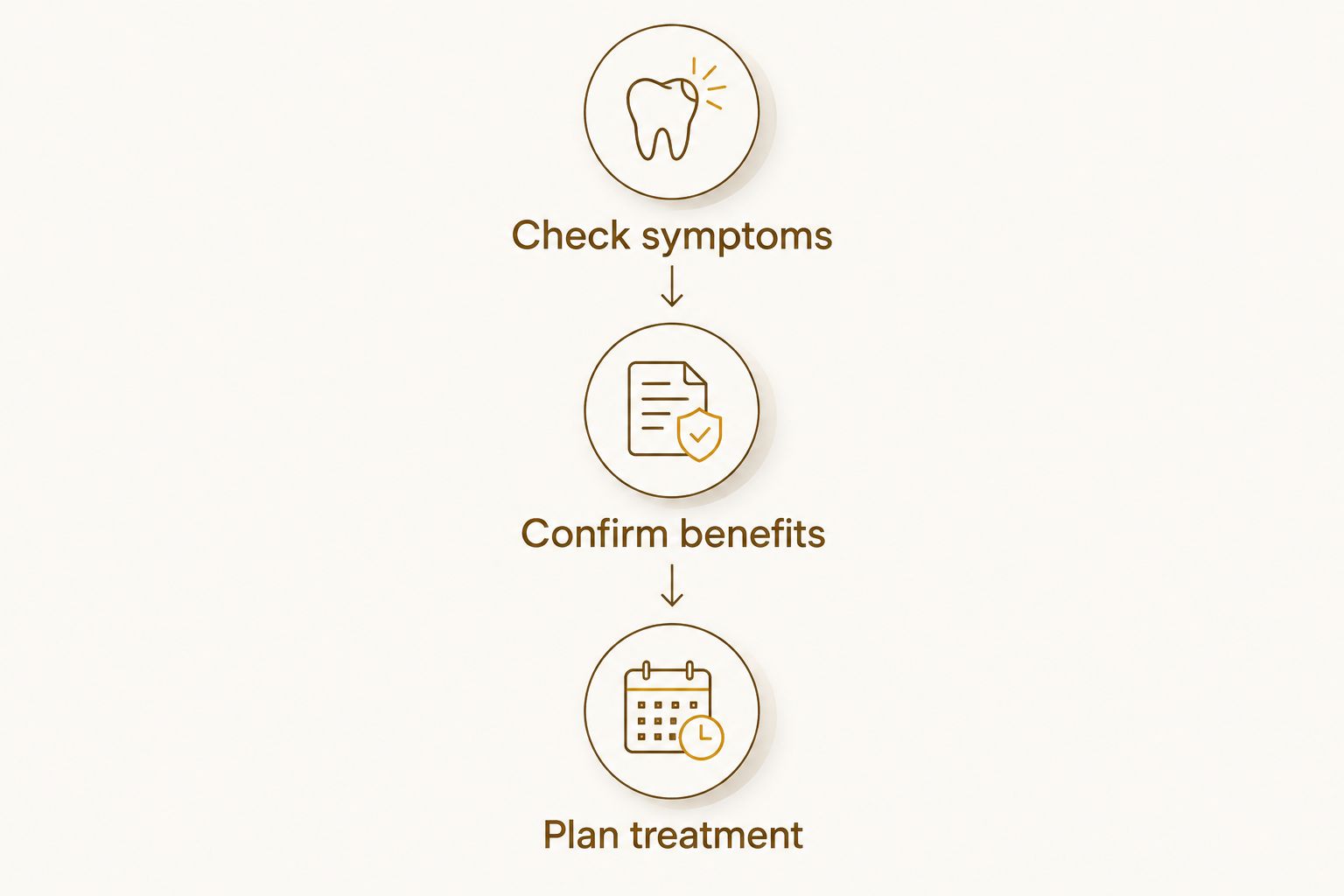
Check symptoms
Start with what you feel, not what fits your academic calendar. Persistent tooth pain, a broken tooth, swelling, or bleeding gums deserves assessment. Pain relief does not identify the cause, and a tooth that stops hurting has not necessarily recovered.
Seek emergency medical care for difficulty breathing or swallowing, or swelling that affects your airway. For other urgent dental symptoms, contact a dentist promptly and describe what happened. Mention fever, facial swelling, trauma, and whether pain is interfering with eating or sleeping.
If you knock out a permanent tooth, seek immediate dental care. Handle it by the crown rather than the root, and keep it moist while obtaining professional instructions. Do not put a knocked-out baby tooth back into its socket.
When comparing local routes for an urgent problem, review the emergency dental care options in San Diego. Your symptoms—not convenience alone—determine the appropriate setting.
- Write down when the problem started and what triggers it.
- Tell the office about swelling, fever, injury, or trouble opening your mouth.
- List medications, allergies, and relevant medical conditions.
- Ask where to seek help if symptoms worsen before your appointment.
Confirm benefits
Check your coverage yourself before scheduling nonurgent treatment. Start with your insurance documents, member portal, or the number on your insurance card. Student medical insurance and dental benefits are not interchangeable; verify whether you have a separate dental plan.
For 2026 coverage, confirm the plan currently in effect rather than relying on an old card or a family member’s recollection. If you use a parent’s dental insurance, ask whether the plan covers care near campus and whether your chosen dentist participates in its network.
An office can help clarify billing questions, but insurer confirmation matters. A benefit estimate is not a guarantee that the insurer will pay. Ask how deductibles, annual benefit limits, waiting periods, and exclusions apply to the treatment proposed for you.
Without dental insurance, ask for a written treatment plan and an explanation of payment arrangements before agreeing to nonurgent care. Do not assume that a practice offers a student discount, financing program, or particular insurance arrangement.
- Confirm the insurer, member details, and current coverage dates.
- Check the dentist’s network status directly with your insurer.
- Ask about separate rules for orthodontic and cosmetic treatment.
- Request written treatment and billing information before proceeding.
- Keep insurer responses and office estimates together for reference.
Plan treatment
Make a simple list before your consultation: symptoms, unfinished treatment, and smile goals. This free preparation helps you explain what matters without forgetting questions once you sit in the chair.
Use three categories to organize the conversation: urgent care, ongoing care, and elective care. Urgent care addresses problems that need prompt assessment. Ongoing care includes prevention and treatment of diagnosed disease. Elective care includes changes you want to discuss, such as whitening or veneers.
Harmony Dental Group’s general, cosmetic, and restorative dental care offers a local setting to discuss these needs. A consultation lets the dentist assess your mouth and explain suitable options; it does not establish that every treatment is appropriate for you.
For a 2026 treatment plan, tell the dentist about exam periods, travel, and any move away from San Diego. Ask which treatment needs prompt attention, which can be staged safely, and which requires follow-up locally. Your calendar belongs in the discussion, but it should not determine whether an infection receives care.
- Bring previous dental records when you can obtain them.
- Separate symptoms from cosmetic goals in your notes.
- Ask the dentist to explain the diagnosis behind each recommendation.
- Identify follow-up appointments before committing to a treatment schedule.
- Request alternatives and the consequences of delaying each option.
Protect your daily routine
Begin with the basics you can control in your dorm or apartment. The American Dental Association recommends brushing twice a day for 2 minutes with fluoride toothpaste and cleaning between your teeth daily. These are general prevention recommendations, not a substitute for advice about your individual dental needs.
Keep your toothbrush and toothpaste where you will use them consistently. Choose floss or another interdental cleaner that you can use correctly; ask your dental team to demonstrate if tight contacts, braces, or limited dexterity make cleaning difficult.
Pay attention to the pattern of your drinks and snacks. Repeatedly sipping sugary drinks exposes teeth to sugar throughout the day. Water is a practical everyday choice, and reducing frequent sugary snacks supports your prevention routine.
If you wear a retainer or clear aligners, follow the instructions supplied by your treating clinician. Do not improvise cleaning methods or wear schedules. Tell the clinician if an appliance no longer fits, breaks, or causes persistent discomfort.
- Brush for 2 minutes twice daily with fluoride toothpaste.
- Clean between teeth once daily using an appropriate method.
- Keep water available during study sessions.
- Avoid stretching sugary drinks across an entire afternoon.
- Store removable appliances in their case rather than a napkin.
Evaluate smile changes carefully
College can be a natural time to ask about straightening teeth or improving your smile. Start by describing the change you want: tooth color, alignment, shape, or a missing tooth. Different concerns need different evaluations, and a treatment that suits a friend is not automatically suitable for you.
Healthy teeth and gums come before elective cosmetic treatment. Whitening does not straighten teeth, and veneers do not replace a missing tooth. Dental implants require an assessment of the missing-tooth site and your suitability for surgery; they are not simply a cosmetic upgrade.
Harmony Dental Group offers veneers, implants, and Invisalign. Ask what each option would address in your case, what its limitations are, and what ongoing care it requires. Invisalign involves continued participation and follow-up; veneers involve tooth preparation and future maintenance considerations.
If gum recession is part of your concern, ask for an assessment of its cause before focusing on appearance. The practice also offers pinhole gum recession treatment, but an examination determines whether that approach is appropriate.
- Define the specific change you want before discussing procedures.
- Ask whether decay or gum disease needs treatment first.
- Discuss tooth preservation and less invasive alternatives where appropriate.
- Ask about maintenance, follow-up, and possible future replacement.
- Explain upcoming travel or relocation before starting ongoing treatment.
Coordinate appointments and follow-up
Use your own calendar first. Mark class commitments, major exams, travel, and the dates you will be away from San Diego. Then ask the dental office what the proposed treatment involves, including visits after the initial procedure.
Before booking in 2026, confirm expected appointment length and any activity restrictions specific to your treatment. Do not assume you can return immediately to a lab, sports practice, or a long commute. Recovery advice depends on the procedure and your health.
If sedation is proposed, ask about preparation, transportation, and supervision afterward. Follow the treating clinician’s instructions rather than arranging a rideshare without checking whether an accompanying adult is required.
Continuity matters when you alternate between a hometown dentist and a local practice. Tell both offices about recent procedures and ongoing treatment. For Invisalign, retainers, implants, or other continuing care, establish who manages follow-up and what happens if you move.
- Schedule around your calendar without delaying urgent assessment.
- Confirm preparation and aftercare instructions in writing.
- Arrange transport and support when the treatment requires them.
- Share relevant records between your local and hometown dentists.
- Know whom to contact for concerns after treatment.
Compare dental care options for students
Choose the care setting around your clinical needs and follow-up requirements. No single option solves every student’s coverage, transportation, and treatment concerns. Confirm actual services and eligibility before choosing a setting.
| Option | Best for | Main advantage | Key limitation |
|---|---|---|---|
| Local dental practice | Students staying near campus who need continuity | A local place for assessment, treatment planning, and follow-up | Network status, services, and scheduling require confirmation |
| Hometown dentist | Students returning home regularly with an established care relationship | Familiar records and an existing treatment history | Distance complicates urgent care during the semester |
| Campus-referred care | Students seeking guidance on where to start | A campus health service can explain available referral resources | Campus referral does not establish dental coverage or on-site treatment |
| Dental school clinic | Students willing to explore supervised teaching-clinic care | Treatment takes place within a clinical training setting | Eligibility, treatment scope, and appointment arrangements vary |
| Community health clinic | Students exploring community-based dental services | A route to investigate when access is difficult | Dental services and eligibility vary by clinic |
| Emergency department | Students with airway concerns or serious spreading symptoms | Assessment of medical emergencies | It is not a substitute for definitive routine dental treatment |
A local practice suits continuity, but your insurance and treatment needs still require checking. A hometown dentist offers familiarity, but waiting until a school break is not an appropriate plan for a worsening problem.
Teaching and community clinics deserve consideration when access is a concern. Ask what care they provide and how appointments work; do not assume eligibility or a particular payment arrangement.
Common mistakes college students make
Waiting for a school break despite symptoms
A convenient travel date is not a clinical recommendation. Contact a dentist when pain persists, swelling appears, or a tooth breaks, and ask how promptly you need assessment. Tell the office if your symptoms are changing.
Assuming a student health plan covers dentistry
A medical insurance card does not answer your dental coverage questions. Check the actual benefits before booking nonurgent care, especially orthodontics or cosmetic treatment. Keep confirmation with your appointment paperwork.
Starting treatment without planning for a move
Graduation, study abroad, and internships can interrupt follow-up. Before beginning ongoing treatment, ask how appointments and records would transfer. Do not assume another clinician will continue the same plan without an assessment.
Choosing a smile treatment before diagnosing the problem
A discolored, chipped, or uneven tooth needs an examination before you select a cosmetic fix. Describe your goal, then ask about the cause and alternatives. The right plan protects tooth health as well as appearance.
FAQ
What is the best dental care plan for college students?
The best dental care plan combines daily prevention, a dentist you can reach during the semester, and follow-up tailored to your needs. Brush twice daily with fluoride toothpaste, clean between teeth daily, and ask your dentist how often you need examinations.
Can I use my parents’ dental insurance in San Diego?
You can use a parent’s dental plan only if you remain eligible and the plan provides applicable benefits for your care. Confirm network status, coverage, and any out-of-area rules with the insurer before scheduling nonurgent treatment.
Does student health insurance include dental care?
Student health insurance does not automatically include dental benefits. Review your specific plan documents and ask whether dental coverage is separate, limited, or excluded.
Should I wait until summer break to treat a toothache?
Do not wait until summer break to have a persistent toothache assessed. Contact a dentist promptly, and seek emergency medical care for difficulty breathing or swallowing or swelling that affects your airway.
Can I start Invisalign while I am in college?
You can discuss Invisalign during college, but an examination determines whether it suits your teeth and bite. Ask about wear instructions, follow-up, and continuity of care if you travel or move during treatment.
Should I get veneers before graduation photos?
Graduation photos alone are not a reason to choose veneers without a dental assessment. Explain the change you want and discuss tooth preparation, alternatives, maintenance, and whether your teeth and gums are healthy enough for elective treatment.
Where can college students get dental care in La Jolla?
Harmony Dental Group offers general, cosmetic, and restorative dental care in La Jolla, including Invisalign and emergency care. Confirm appointment arrangements, insurance questions, and the proposed treatment plan directly with the practice.
One last thing
Your most useful preparation is a clear timeline—not a procedure picked online. Before your next 2026 appointment, write down your symptoms, coverage questions, travel dates, and one change you would like to discuss. That short list helps your dentist distinguish what needs attention from what can be planned around college life.