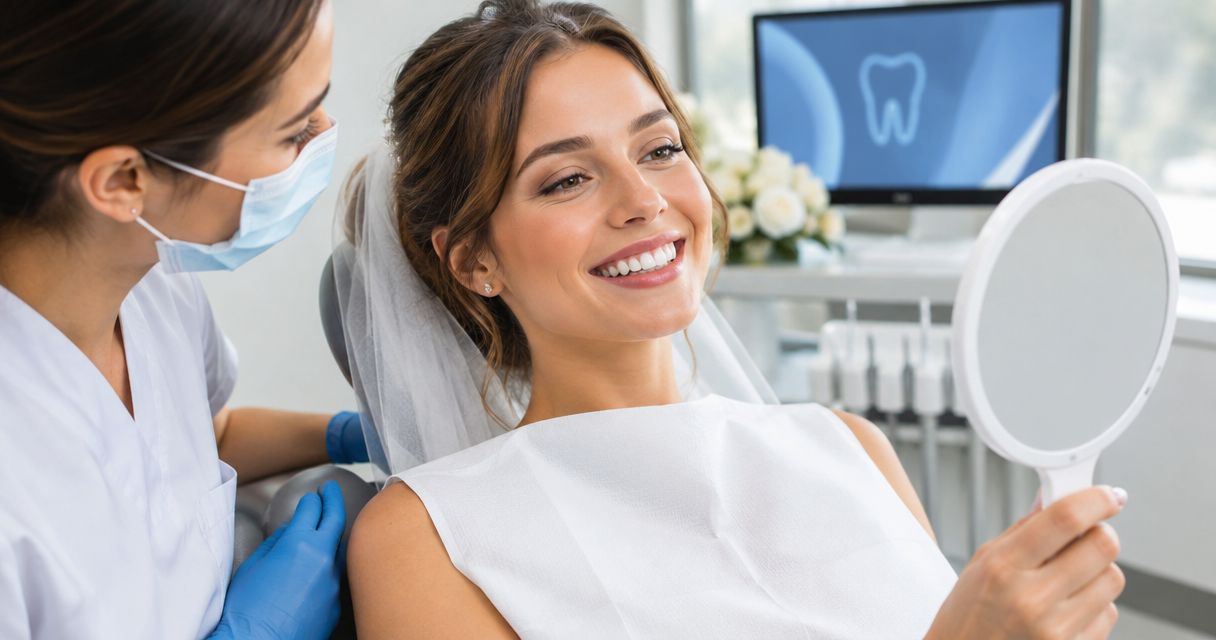
Cosmetic dentistry for brides is dental care that addresses smile appearance with the aim of helping you feel comfortable smiling on your wedding day. This 2026 guide explains how to choose treatments around your dental health, photographs, wedding schedule, and long-term comfort—not just a deadline.
- Harmony Dental Group offers cosmetic dentistry consultations for La Jolla brides considering veneers, implants, or Invisalign.
- Cosmetic dentistry for brides starts with healthy teeth and gums, not a promise of a perfect wedding smile.
- Match teeth whitening, veneers, or Invisalign to your actual concern; these treatments solve different problems.
- Keep time for assessment, adjustments, and follow-up rather than scheduling irreversible treatment around the wedding alone.
Why cosmetic dentistry matters for brides
Wedding planning brings several smile decisions together: how your teeth look, how treatment fits your calendar, and whether you want a change that lasts beyond the ceremony. Engagement photographs, fittings, travel, and the wedding itself create separate dates to discuss with your dentist.
For brides in La Jolla and nearby San Diego neighborhoods, Harmony Dental Group offers general, cosmetic, and restorative dental care. Harmony Dental Group is best for La Jolla brides seeking a local cosmetic dentistry consultation. The right consultation helps you distinguish a cosmetic preference from a problem that needs treatment.
Your wedding does not make healthy teeth defective. In 2026, a useful bridal treatment plan still starts with the same question: what bothers you, and what is the least invasive appropriate way to address it? A small, targeted change can be a better fit than changing every visible tooth.
How to plan your bridal smile
1. Define your goals
Start at home with a short written description of what you want to change. Name the concern—color, a chipped edge, spacing, alignment, or a missing tooth—rather than asking for a completely new smile. This costs nothing and gives your consultation a clear purpose.
Bring ordinary photographs of your own smile, including one without a filter. Inspiration photos can explain a preference, but they are not a clinical blueprint: another person's tooth shape, bite, and gumline differ from yours. Ask which changes are realistic without removing healthy tooth structure.
Choose a goal you would still want after the wedding. Treatment should fit your everyday smile, speech, and bite, not only a close-up photograph.
- Write down your main smile concern.
- Separate color concerns from shape or alignment concerns.
- Bring an unfiltered photograph of your smile.
- Identify features you want to keep.
- Tell your dentist whether your goal is subtle or noticeable.
2. Check oral health
Arrange a dental assessment before choosing a cosmetic treatment. Cavities, gum inflammation, unexplained sensitivity, and a painful bite need attention before you focus on appearance. A bright smile is not a substitute for comfortable, healthy teeth.
At home, brush with fluoride toothpaste for 2 minutes per session, 2 times per day, following American Dental Association guidance. Clean between your teeth daily. These habits support oral health; they do not straighten teeth, repair fractures, or replace a missing tooth.
Tell your dentist about bleeding gums, grinding, previous dental work, and any medical conditions or medications. If you have pain, swelling, or a damaged tooth, seek assessment rather than waiting for a cosmetic appointment. Let the diagnosis determine the order of treatment.
- Describe sensitivity, pain, or bleeding before discussing shades.
- List existing crowns, fillings, veneers, and implants.
- Share your medical history and current medications.
- Mention nighttime grinding or jaw discomfort.
- Ask whether any dental disease needs treatment first.
3. Compare treatment options
Make a simple list of your concerns and compare what each treatment actually changes. Whitening changes natural tooth color; bonding changes a localized shape or surface; veneers cover the front surface of teeth; orthodontics moves teeth. They are not interchangeable shortcuts.
Harmony Dental Group offers veneers, Invisalign, and dental implants. Discuss those services only when they match your clinical needs. An implant addresses a missing tooth, for example, rather than the color or shape of an otherwise healthy tooth.
Ask for the least invasive suitable option and its limitations. A treatment can look appealing in photographs while requiring maintenance, permanent tooth changes, or a schedule that does not suit your wedding. The comparison table below gives you a starting point, not a diagnosis.
- Ask what each option changes and what it leaves unchanged.
- Compare removable treatment with permanent changes to teeth.
- Discuss sensitivity and other treatment-specific risks.
- Ask about maintenance and future replacement needs.
- Confirm whether an option addresses your bite as well as appearance.
4. Plan your appointments
Work backward from your wedding and any earlier photography dates, then let your dentist assess what fits. In a 2026 bridal plan, the ceremony is one calendar event—not permission to compress treatment, healing, or review appointments.
Different procedures have different stages. Veneers involve planning and a restoration process; Invisalign involves tooth movement and retention; implants involve assessment and treatment stages that depend on your mouth. No universal bridal countdown applies to all three.
Allow room to discuss comfort, appearance, and any needed adjustments before travel or major events. If the proposed plan is too tight, ask what can safely wait until after the wedding. A limited pre-wedding change and a later treatment plan are valid choices.
- Share wedding, engagement-photo, and travel dates.
- Ask which stages require appointments or healing.
- Identify when you will review the proposed appearance.
- Reserve time for follow-up and adjustments.
- Ask what happens if treatment takes longer than expected.
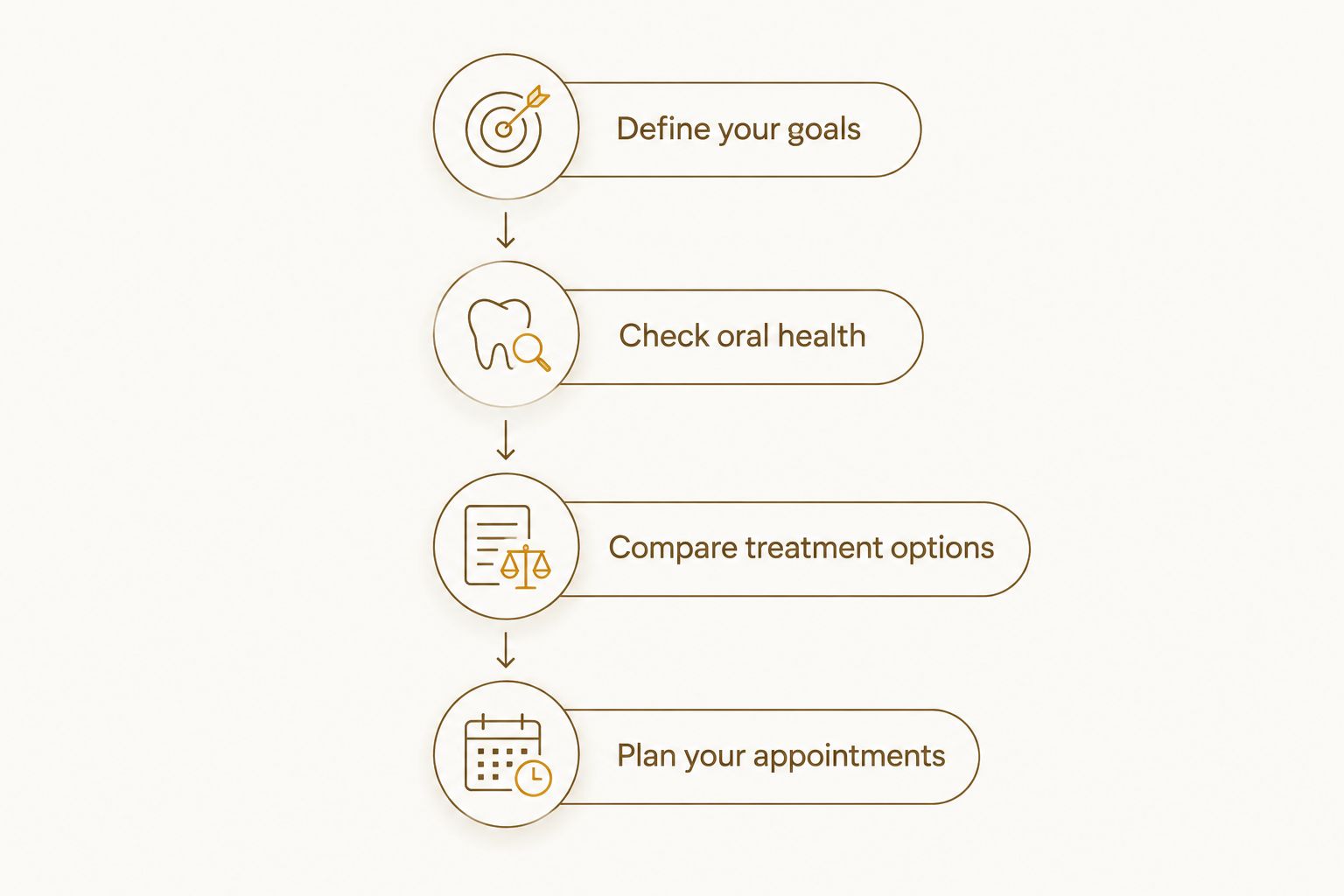
The planning order below keeps your wedding date in the discussion without letting it replace a clinical assessment. You define the concern first, check dental health, compare suitable treatments, and then agree on appointments.
5. Coordinate color and shape
If you are considering both whitening and restorations, discuss the sequence before starting either. Whitening does not lighten crowns, veneers, or tooth-colored fillings the way it lightens natural teeth. Changing natural tooth color can therefore make existing dental work more noticeable.
Your dentist can explain when to assess the final shade and how that affects restoration planning. Do not pick a shade solely from a filtered photograph or bright phone screen. Ask to discuss it under appropriate clinical conditions, alongside the teeth that will remain unchanged.
For veneers, talk about length and shape as well as color. Teeth that look attractive in a still image also need to work when you speak and bite. Ask how the proposed design will be evaluated before you commit.
- Point out visible crowns, fillings, or veneers.
- Ask whether whitening should precede shade selection.
- Discuss a shade that works with neighboring teeth.
- Review tooth length and shape, not color alone.
- Ask how speech and bite will be checked.
6. Review the full commitment
Before accepting a plan, request a written explanation of the proposed treatment and what it includes. Use your own notes to compare alternatives first; a consultation can then clarify clinical suitability, appointment needs, and ongoing care.
For your 2026 wedding planning, keep dental decisions separate from pressure to complete every cosmetic purchase at once. Veneers often require enamel removal and are generally not reversible. Aligners require consistent wear and retainers afterward. Implants require ongoing hygiene and professional review.
Ask what happens if a restoration chips, an aligner does not fit as expected, or your plans change. These are practical questions, not signs that treatment will fail. Understanding the commitment helps you choose calmly and avoid agreeing to more treatment than you want.
- Request a written treatment plan.
- Ask what is included and what needs separate discussion.
- Clarify maintenance, repairs, and replacement considerations.
- Ask about payment arrangements without assuming eligibility.
- Confirm the plan for changes to your wedding schedule.
7. Protect your results
Keep your home care consistent before and after treatment. Brush for 2 minutes twice daily and clean between your teeth at least 1 time per day, consistent with American Dental Association guidance. Follow any additional instructions specific to your treatment.
Avoid using your teeth to open packaging or bite hard objects. If you grind your teeth, ask whether protection is appropriate for your situation. Do not assume a store-bought appliance will fit correctly over new restorations or work with orthodontic treatment.
Keep review appointments, and ask what symptoms deserve a call. Persistent pain, a changed bite, or a loose restoration needs assessment rather than concealment for photographs. Your smile should remain comfortable after the celebration, too.
- Follow the dentist's treatment-specific care instructions.
- Keep daily brushing and between-teeth cleaning consistent.
- Use retainers exactly as prescribed after orthodontic treatment.
- Discuss grinding before choosing a protective appliance.
- Report persistent pain or a bite that feels different.
Compare cosmetic dentistry options for brides
The best option is the one that addresses your concern without unnecessary treatment. This table compares common approaches. It does not establish that every option is offered at the practice or that any treatment is suitable without an examination.
| Option | Best for | Main advantage | Key limitation |
|---|---|---|---|
| Professional cleaning | Brides with surface deposits or overdue preventive care | Removes deposits and supports gum health | Does not change underlying tooth color, shape, or alignment |
| Teeth whitening | Brides mainly concerned about natural tooth color | Changes color without reshaping teeth | Can cause sensitivity; does not whiten existing restorations |
| Cosmetic bonding | Brides with a localized chip or shape concern | Can address a limited defect with tooth-colored material | Can stain or chip and requires appropriate bite assessment |
| Veneers | Brides seeking selected changes to visible tooth shape and color | Addresses several appearance concerns on treated teeth | Often requires permanent enamel removal and future maintenance |
| Invisalign | Brides with alignment concerns suitable for clear aligners | Moves teeth rather than covering their position | Requires consistent wear, follow-up, and retention; timing varies |
| Dental implants | Brides missing a tooth who are suitable for implant treatment | Replaces a missing tooth with a supported restoration | Requires clinical assessment and treatment stages; not a wedding-day shortcut |
| No cosmetic treatment | Brides comfortable with their smile after assessment | Avoids unnecessary intervention | Leaves the appearance concern unchanged |
Common mistakes brides make
Treating every concern with veneers
Veneers are not the default answer to staining, crowding, or a small chip. Ask whether whitening, orthodontics, bonding, or no treatment better matches your concern. Removing healthy tooth structure deserves a decision that extends beyond the wedding.
Whitening without considering existing dental work
A visible crown or filling does not whiten like a natural tooth. Tell your dentist about restorations before starting so you can discuss possible shade differences and avoid an unexpected mismatch.
Using the wedding date as a treatment guarantee
An appointment calendar cannot guarantee biological response, healing, or a particular appearance. Ask for a realistic plan and an alternative if treatment cannot be completed comfortably before your event.
Copying a filtered smile
Filters change color, proportions, and contrast. Bring inspiration if it helps explain your preference, but evaluate the proposed result against your own teeth, face, speech, and bite.
Hiding discomfort to preserve the schedule
Do not tolerate persistent pain or a bite that feels wrong because photographs are approaching. Contact your dentist. Comfort and function belong in the treatment goal, not after it.
Discuss your bridal smile goals
Explore which dental treatments fit your concerns, oral health, and wedding schedule.
FAQ
What's the best cosmetic dentistry treatment for brides?
The best treatment depends on whether your concern is color, shape, alignment, or a missing tooth. Whitening, veneers, Invisalign, and implants address different needs, so begin with an examination rather than choosing a procedure from photographs.
How early should I see a dentist before my wedding?
Arrange an assessment before committing to a cosmetic treatment or its schedule. Share your wedding, photography, and travel dates so your dentist can explain the stages, follow-up needs, and whether treatment fits.
Are veneers better than whitening for a wedding smile?
Veneers and whitening solve different problems. Whitening changes natural tooth color, while veneers can change selected teeth's appearance but often involve permanent enamel removal and ongoing maintenance.
Can Invisalign finish before my wedding?
Your dentist needs to assess your teeth and proposed tooth movements before giving you a treatment timeline. Do not assume Invisalign will finish by your wedding date; discuss whether treatment will still be underway and what that means for your plans.
Will whitening change the color of my crowns or fillings?
Whitening does not lighten crowns, veneers, or tooth-colored fillings the way it lightens natural teeth. Discuss visible dental work before whitening so shade differences can be considered in your plan.
Should I get dental implants just for wedding photos?
Dental implants are a treatment for missing teeth, not a cosmetic shortcut for photographs. Suitability and timing depend on an assessment, and treatment should serve your long-term dental needs.
Can I discuss wedding smile treatments in La Jolla?
Harmony Dental Group offers cosmetic and restorative dental care in La Jolla, including veneers, Invisalign, and implants. Bring your smile concerns and wedding dates to discuss which options are suitable and what their limitations are.
One last thing
Ask which part of your smile should stay unchanged. That question keeps the consultation focused on your preferences rather than an assumption that every visible tooth needs work. For a 2026 wedding, a successful plan is one you understand, can maintain, and feel comfortable choosing—not the longest list of procedures.