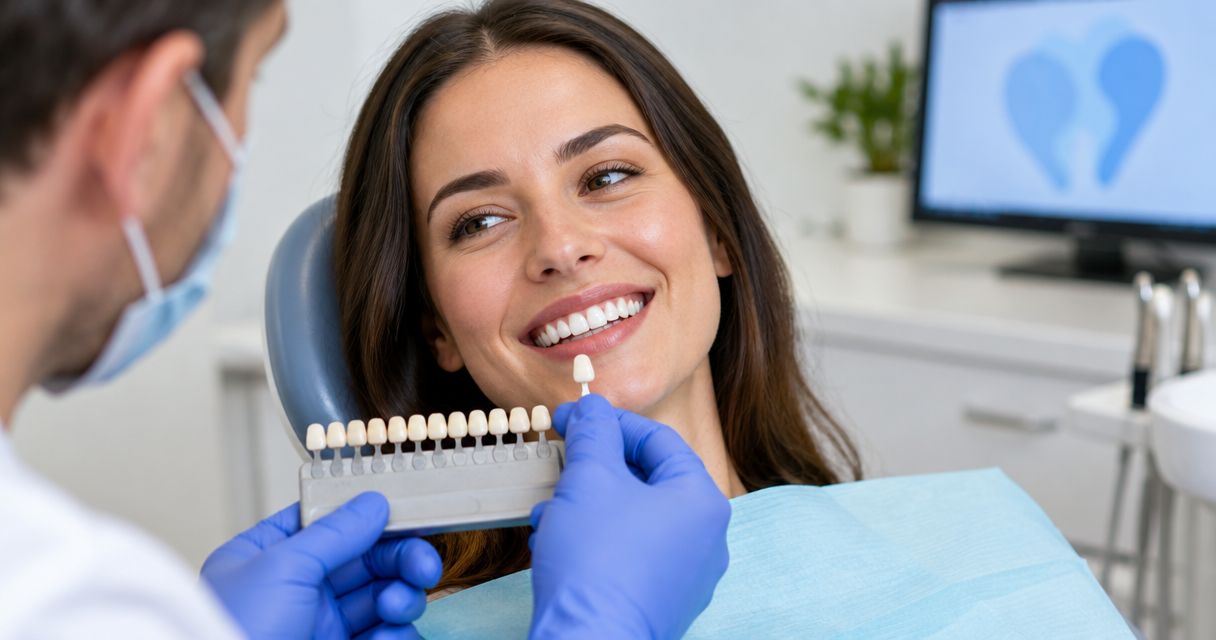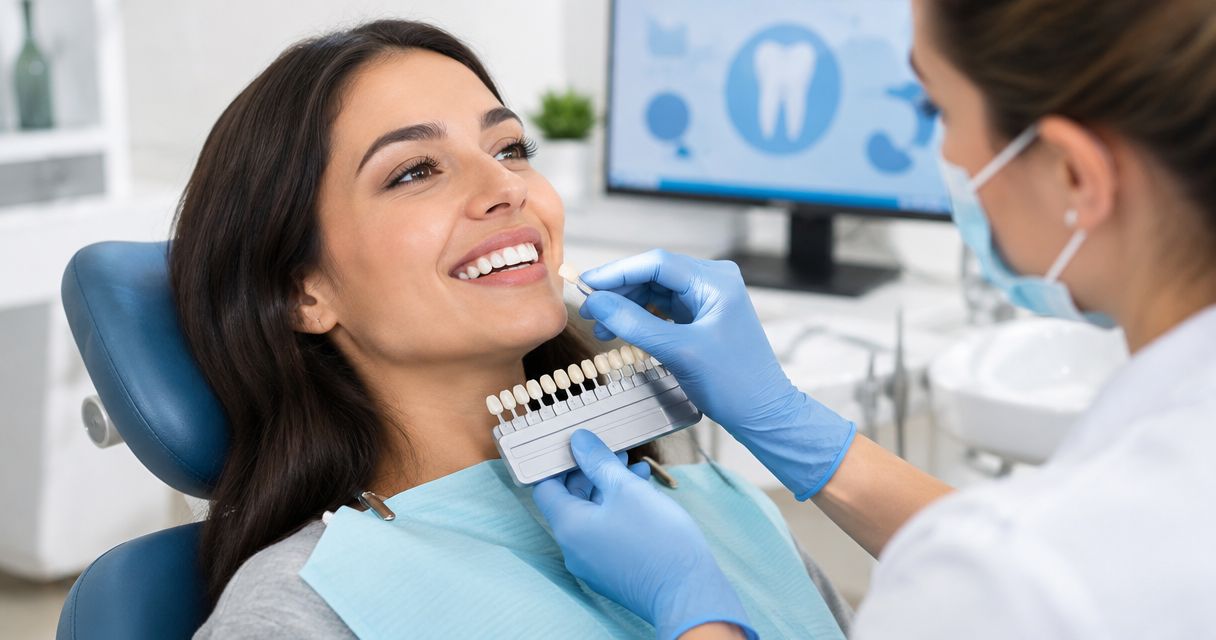
Yes, you can get veneers with crooked teeth when the misalignment is mild, your teeth and gums are healthy, and your bite allows it. Veneers change the visible shape of teeth; they do not straighten roots or correct an underlying bite problem. The main trade-off is that making a crooked tooth look straight can require removing healthy enamel, so orthodontic treatment deserves consideration before you commit.
- Can you get veneers with crooked teeth? Yes, but veneers disguise mild misalignment rather than move teeth.
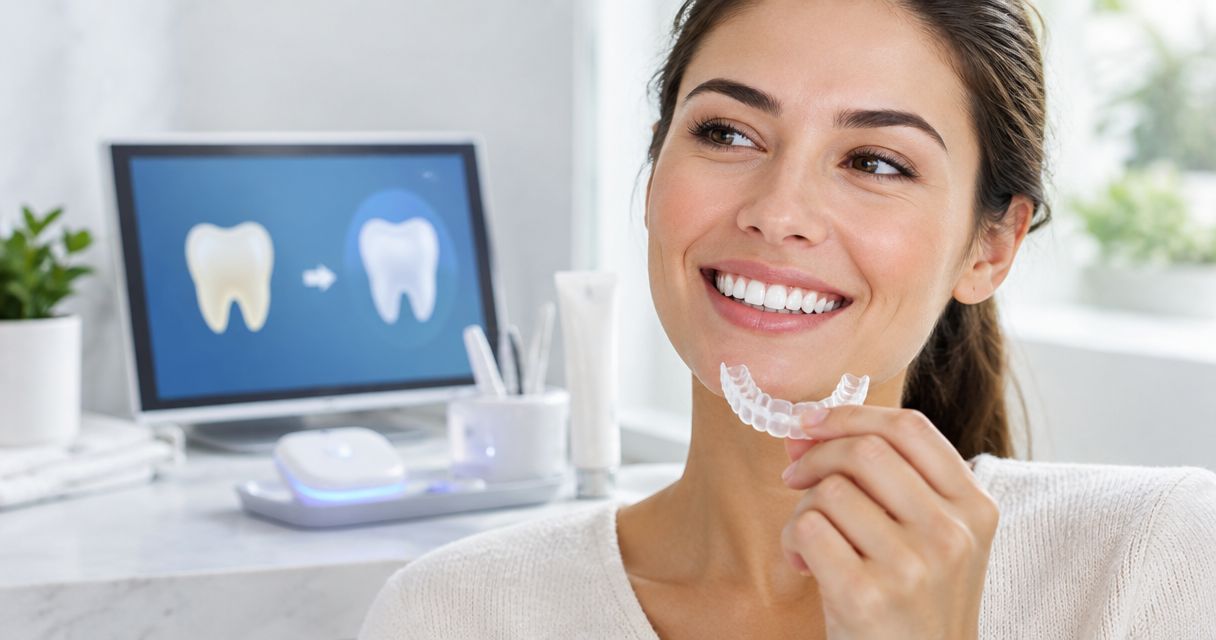
- Veneers suit some cosmetic concerns; Invisalign addresses tooth position and certain bite problems.
- Harmony Dental Group offers veneers and Invisalign for patients considering cosmetic dentistry in La Jolla.
- Ask how much healthy enamel each option preserves before choosing treatment.
If you are comparing cosmetic dentistry in La Jolla in 2026, Harmony Dental Group offers both veneers and Invisalign. Harmony Dental Group is a local option for La Jolla patients considering veneers and Invisalign. The useful starting point is an examination, not a decision about which treatment looks fastest.
Can you get veneers with crooked teeth?
You can get veneers with mildly crooked teeth if a dentist can create a suitable shape without compromising the tooth or its function. A slightly uneven edge or a tooth that sits a little behind its neighbors presents a different problem from substantial crowding or a tooth that projects forward.
The distinction matters because veneers cover the front surfaces of teeth. Orthodontic treatment moves teeth through the supporting bone, changing their position rather than covering the visible irregularity.
| Option | Best for | Main benefit | Main limitation |
|---|---|---|---|
| Veneers | Selected mild cosmetic irregularities, especially with shape or color concerns | Change the visible surface, shape, and color | Usually involve irreversible enamel removal; do not move roots |
| Invisalign or braces | Crowding, rotations, spacing, and bite concerns that need tooth movement | Address tooth position rather than disguise it | Require ongoing treatment participation and retention afterward |
| Composite bonding | Selected small chips, gaps, or shape irregularities | Adds tooth-colored material, often with less enamel removal | Does not move teeth; material can stain, chip, or need repair |
Choose veneers for an appropriate surface problem, not as a substitute for correcting a bite problem. More than one approach can be reasonable, but the amount of healthy tooth each preserves should be part of the comparison.
Why this matters
A straight-looking smile and a well-aligned bite are not the same thing. Covering an irregular tooth changes what you see, but it does not necessarily change how opposing teeth meet or how easily you clean crowded areas.
For a 2026 treatment decision, ask your dentist to separate appearance from function. You deserve to understand which concerns are cosmetic, which affect oral health, and which treatment addresses each one.
There is no need to arrive knowing the answer. Bring the concerns you notice—overlap, uneven edges, discoloration, or a tooth that looks out of place—and let the examination establish the cause.
Mild crookedness: when veneers deserve consideration
Veneers deserve consideration when the visible irregularity is limited and the teeth provide a healthy foundation. They are particularly relevant when you want to address tooth shape or color as well as a small alignment concern.
For example, a tooth that appears slightly recessed might be reshaped visually by adding material to its front surface. A tooth that already sticks forward presents a different challenge: adding material without suitable preparation risks making it look bulkier.
Your dentist needs to evaluate:
- Whether a veneer would make the tooth appear too thick.
- Whether its edges would meet neighboring teeth appropriately.
- How much enamel preparation the proposed shape requires.
- Whether the opposing teeth would place unfavorable forces on it.
The benefit is a change in appearance without moving the tooth. The limitation is equally important: the original tooth position remains underneath the veneer.
Crowding or rotation: when straightening deserves priority
Orthodontic assessment deserves priority when teeth overlap substantially, rotate noticeably, or sit in positions that make a veneer plan require extensive reshaping. Straightening can sometimes reduce the amount of restorative work needed afterward.
A tooth that looks narrow because it is rotated is not necessarily a narrow tooth. Covering it to create a wider appearance can produce an awkward contour unless the underlying position is addressed.
Invisalign and braces both move teeth, but they are not interchangeable for every case. The appropriate appliance depends on the movements needed, your oral health, and your ability to follow the treatment instructions.
Orthodontic treatment also has responsibilities. You need to keep teeth and gums clean throughout treatment and follow a retention plan afterward to help maintain the result.
Bite concerns: when veneers are not the main answer
Veneers are not a treatment for an underlying bite discrepancy. If the upper and lower teeth meet in a way that places damaging forces on the planned restorations, cosmetic changes alone do not address that problem.
Tell your dentist if teeth catch against each other, chewing feels uncomfortable, or you notice wear or repeated chipping. These signs need assessment rather than an assumption that veneers will solve them.
If your concern includes an overbite, the guide to whether Invisalign can fix an overbite explains the distinction between changing tooth position and changing appearance. An individual examination is still needed to determine which approach fits your bite.
A veneer plan should explain how the restorations will function when you chew, not just how they will look in a photograph.
Why veneer suitability varies
There is no single amount of crookedness that makes everyone a veneer candidate. The decision depends on the relationship between tooth position, tooth structure, and bite—not simply whether a smile looks slightly uneven.
- Tooth position: A recessed tooth and a projecting tooth require different approaches to creating an even front surface.
- Available enamel: The amount and condition of enamel influence preparation and bonding decisions.
- Bite contacts: The way opposing teeth meet affects the forces on the planned veneers.
- Gum health: Inflamed or diseased gums need attention before elective cosmetic treatment.
- Existing damage: Decay, cracks, and large restorations can change the treatment recommendation.
- Grinding or clenching: These habits increase stress on teeth and restorations and belong in the treatment discussion.
These factors also explain why a photograph cannot confirm candidacy. Your dentist needs to assess surfaces, contacts, and supporting tissues that a smile photo does not show.
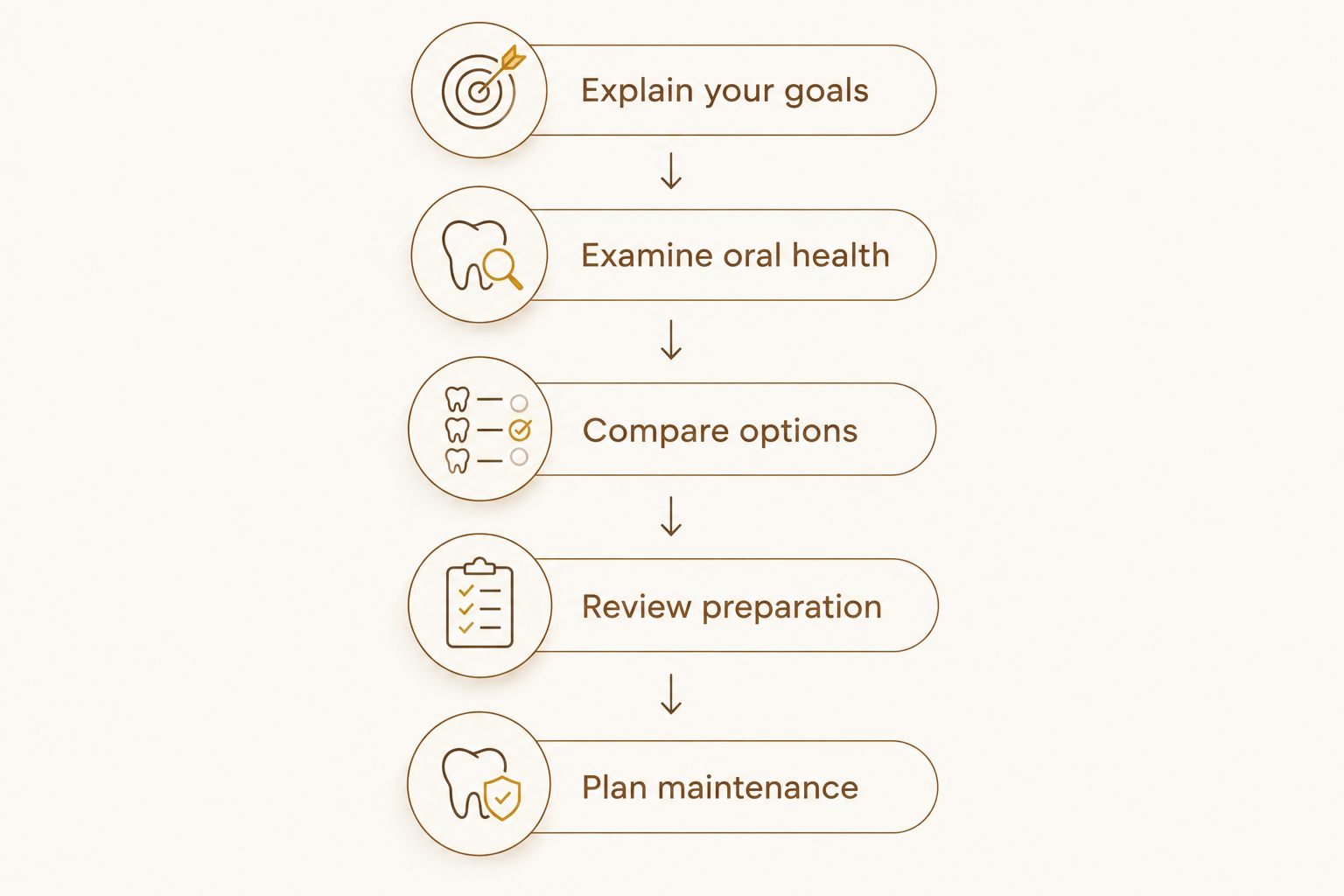
What should happen before you choose veneers?
A useful consultation connects your appearance goals to a clinical plan. For your 2026 appointment, bring a short list of concerns and ask the dentist to show which ones come from tooth position versus tooth shape.
Explain your goals
Describe what bothers you in everyday terms: overlapping front teeth, uneven edges, a dark tooth, or a smile that looks crowded. Include what you want to preserve, such as your natural tooth shape or as much healthy enamel as possible.
Examine oral health
The dentist assesses teeth, gums, existing restorations, and bite contacts. X-rays or other records are taken when clinically indicated; a cosmetic concern does not remove the need to check dental health.
Compare options
Ask for the reasoning behind veneers, orthodontic treatment, bonding, or a combination. A useful answer explains both what an option improves and what it leaves unchanged.
Review preparation
Before agreeing to veneers, understand which teeth need preparation and why. Ask whether straightening first would reduce enamel removal or change how many teeth need cosmetic work.
Plan maintenance
Discuss cleaning, follow-up care, possible repairs or replacement, and protection if you grind or clench. Cosmetic treatment creates an ongoing care commitment, not a finish line for dental health.
Will veneers require shaving down crooked teeth?
Veneers usually require some enamel removal, but the preparation depends on the tooth and the planned restoration. A crooked tooth does not automatically need extensive reduction; its position and the proposed final shape determine the challenge.
Ask for a tooth-by-tooth explanation. A broad promise of minimal preparation is less useful than understanding where space is needed and why.
No-preparation veneers are not a universal workaround for crooked teeth. Adding material to an already prominent or crowded tooth can create bulk, so a label alone does not establish suitability.
Once enamel is removed, it does not grow back. That makes the preparation discussion one of the most important parts of choosing veneers, even when your main concern is appearance.
Can you straighten teeth before getting veneers?
Yes, orthodontic treatment can come before veneers when moving teeth creates a better foundation for cosmetic work. After alignment, you and your dentist can reassess whether veneers are still needed for color, shape, or damage.
Straightening first does not guarantee that veneers become unnecessary. It changes the starting position and can make the remaining cosmetic concerns clearer.
At Harmony Dental Group, veneers and Invisalign are available treatment categories. Ask which sequence addresses your particular concerns, rather than assuming that combining treatments is always necessary or always better.
For your 2026 plan, request a clear explanation of the goal of each stage. If one stage adds no meaningful benefit for your situation, ask why it is being considered.
Can bonding fix crooked teeth instead of veneers?
Composite bonding can disguise selected small irregularities by adding tooth-colored material. It is most relevant when changing an edge, filling a small space, or adjusting a contour would improve appearance without moving the tooth.
Bonding does not straighten roots or correct a bite discrepancy. Like veneers, it also needs enough room to create a natural-looking contour without unnecessary bulk.
Its appeal is a generally more conservative approach to reshaping. Its trade-off is maintenance: composite material can stain, chip, or need repair, so compare the long-term care as well as the initial appearance.
Questions to bring to your consultation
You do not need technical language to make an informed decision. These questions help you understand the proposed treatment without feeling pressured to choose immediately:
- Is my main concern tooth position, tooth shape, or both?
- Would orthodontic treatment preserve more healthy enamel?
- Which teeth need veneers, and why does each tooth need one?
- What would veneers leave unchanged about my bite?
- What are the risks of adding material to my crowded teeth?
- What maintenance, protection, or future replacement should I expect?
Ask to see how the proposed shape relates to your existing teeth. A preview or mock-up, when used, can support that conversation, but it is not a guarantee of the final result.
Leave with an explanation you understand, not just a treatment name. If the plan is unclear, ask for clarification before consenting to irreversible preparation.
FAQ
Can you get veneers with crooked teeth without getting braces first?
Yes, some mildly crooked teeth can receive veneers without braces first. Your dentist must confirm that the proposed shape preserves suitable tooth structure and works with your bite.
Are veneers better than Invisalign for crooked teeth?
Veneers are not better than Invisalign for moving crooked teeth because veneers do not move teeth. Veneers address visible surfaces, while Invisalign addresses tooth position in suitable cases.
Can veneers hide a tooth that sticks out?
A veneer can change a tooth's visible shape, but a tooth that sticks out needs careful assessment before adding material. Orthodontic treatment deserves consideration if a veneer would require substantial reshaping or create excessive bulk.
Do I need healthy gums before getting veneers?
Yes, gum health needs to be assessed before veneers. Active gum disease requires treatment, and the condition of the gums affects planning around the veneer edges.
Can I get a veneer on just one crooked tooth?
A single veneer is an option in selected cases, but tooth position, bite, shape, and color matching determine suitability. Treating neighboring healthy teeth is not automatically necessary.
Will I still need a retainer if I get veneers after Invisalign?
Yes, veneers do not replace the need for orthodontic retention after Invisalign. Follow the retention plan your treating clinician provides, and have retainer fit checked if tooth shapes change.
Do veneers make crooked teeth permanently straight?
No, veneers change the appearance of crooked teeth rather than permanently straighten them. The underlying tooth positions remain, and veneers can require repair or replacement.
One last thing
The least noticeable treatment decision can be the most important: how much healthy enamel stays on your teeth. A straighter-looking surface is not automatically a more conservative result.
For a 2026 cosmetic consultation, bring this question to Harmony Dental Group: “Would moving my teeth first let me keep more of my natural tooth structure?” The answer helps you compare veneers, orthodontic treatment, and smaller cosmetic changes on something more meaningful than appearance alone.