Best overall for combined shape and color changes: porcelain veneers. Best for alignment: Invisalign. Best for surface stains without changing tooth shape: professional whitening. This 2026 guide from Harmony Dental Group compares cosmetic bonding alternatives so you can match treatment to the concern you actually want to fix.
- Cosmetic bonding alternatives compared: porcelain veneers suit combined shape and color changes, but usually require irreversible tooth preparation.
- Invisalign moves teeth; bonding and veneers change their appearance without correcting tooth position.
- Professional whitening addresses discoloration, not chips, gaps, or uneven tooth shapes.
- Harmony Dental Group offers veneers and Invisalign for patients considering cosmetic dentistry in La Jolla.
Why this matters
Cosmetic bonding uses tooth-colored composite resin to change a tooth's appearance or repair a small defect. It can be a sensible choice for a chipped edge, a minor shape difference, or a small gap. An alternative is not automatically an improvement.
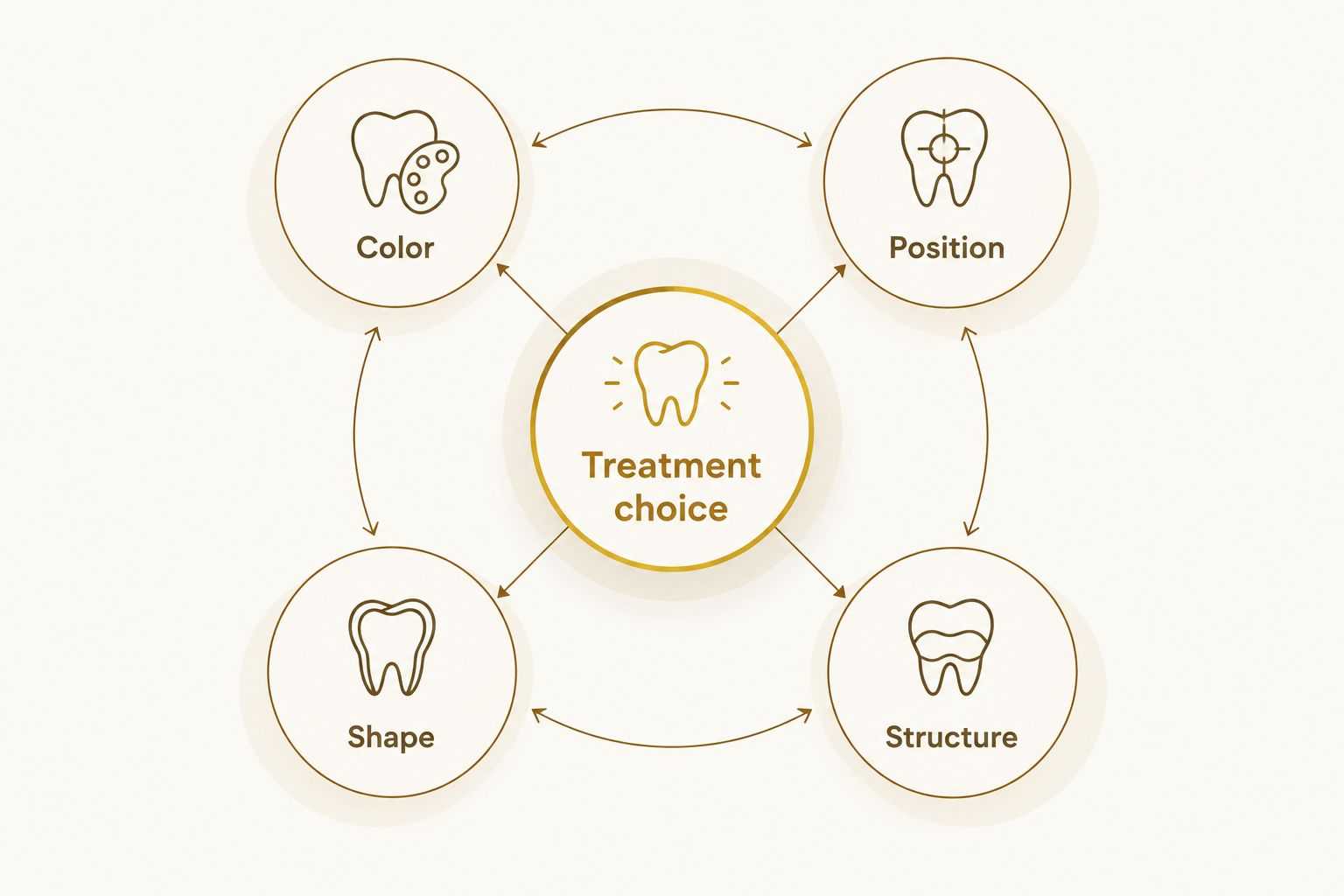
The right treatment depends on whether your concern involves color, shape, tooth position, or damaged tooth structure. Covering a crooked tooth and moving that tooth are different decisions. So are whitening a healthy tooth and restoring a weakened one.
For patients planning cosmetic dentistry in 2026, the first step is an examination—not choosing a material from photographs. Decay, gum disease, grinding, and bite problems can change which treatment is appropriate.
Harmony Dental Group is a fit for La Jolla patients seeking a consultation about veneers or Invisalign rather than choosing cosmetic treatment from appearance alone.
What makes the best cosmetic bonding alternative?
Use these criteria to evaluate a recommendation in 2026. A treatment should solve your concern without removing healthy tooth structure unnecessarily.
- Problem match: Whitening changes color; orthodontics changes position; veneers change the visible surface; crowns restore teeth that need broader coverage.
- Tooth preservation: Ask whether treatment adds material, removes enamel, or requires preparation around the tooth.
- Bite compatibility: The restoration or tooth movement must work with the way your teeth meet, including any grinding habits.
- Reversibility: Whitening and enamel removal have different consequences. Once enamel is removed, it does not grow back.
- Maintenance: Consider retainers, cleaning around restorations, and the possibility of future repairs or replacement.
- Treatment participation: Invisalign requires you to wear aligners as prescribed. Restorative treatment requires appointments and continued home care.
No single option wins every criterion. A small chip and crowded front teeth need different treatment plans, even when both affect your smile.
Cosmetic bonding alternatives at a glance
| Option | Best for | Standout feature | Key limitation |
|---|---|---|---|
| Porcelain veneers | Combined shape and color changes | Covers the visible front surface with a custom ceramic restoration | Preparation is usually irreversible |
| Invisalign | Crowding or spacing caused by tooth position | Moves teeth rather than disguising their position | Requires consistent wear and retention afterward |
| Professional whitening | Discoloration without structural changes | Lightens natural teeth without reshaping them | Does not whiten existing fillings, crowns, or veneers |
| Enamel contouring | A small uneven edge or minor shape irregularity | Reshapes existing enamel without adding a restoration | Removes enamel and cannot repair a substantial chip |
| Dental crowns | Teeth weakened by substantial damage | Covers the tooth to restore its form and function | Requires more extensive preparation than a small bonding repair |
The table compares treatment roles, not interchangeable products. A crown is not the default upgrade from bonding, and Invisalign does not repair a broken tooth edge.
1. Porcelain veneers: best for combined shape and color changes
Porcelain veneers are thin ceramic restorations attached to the front surfaces of teeth. They can address concerns such as tooth shape, visible discoloration, or selected small gaps in an appropriate case. They change the tooth's appearance rather than moving its root.
Porcelain veneers deserve consideration when you want several visible changes together. For example, whitening alone will not lengthen an uneven edge, while orthodontics alone will not necessarily change a tooth's color. A veneer can address those surface concerns within one restorative plan.
Porcelain veneers pros:
- Address tooth shape and visible color together.
- Allow the dentist to plan the contours of the visible tooth surface.
- Porcelain resists staining better than composite resin.
- Can be considered for selected cosmetic concerns that whitening alone cannot resolve.
Porcelain veneers cons:
- Usually require enamel removal, making preparation irreversible.
- Can chip or fracture and require future replacement.
- Do not correct underlying tooth position or untreated gum disease.
Best for: Patients seeking coordinated shape and color changes whose teeth and bite are suitable for veneers.
Harmony Dental Group offers veneers, but suitability still depends on an examination. Ask how much tooth preparation the proposed design requires and whether a smaller bonding repair would address your concern. If the main problem is crowding, discuss alignment before committing to surface restorations.
Verdict: Hold until you understand the preparation and why veneers fit your teeth better than bonding.
2. Invisalign: best for correcting tooth position
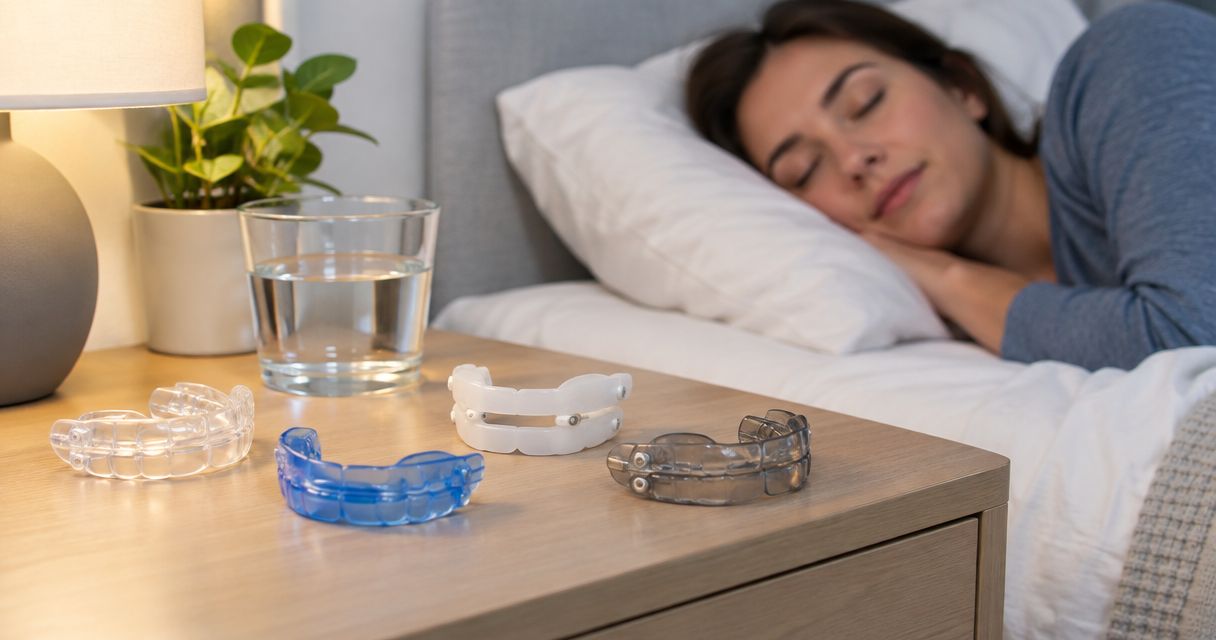
Invisalign uses a sequence of clear, removable aligners to move teeth. It is an alternative to bonding when the appearance you dislike comes from spacing, crowding, or certain bite relationships. It does not replace missing tooth structure.
Adding resin can disguise a small gap or change a tooth's outline, but it leaves the tooth in its existing position. Invisalign addresses position itself. That distinction matters when adding material would make a tooth look too wide or leave the underlying alignment concern unresolved.
Invisalign pros:
- Moves teeth instead of covering their visible surfaces.
- Aligners are removable for eating and cleaning.
- Can address spacing or crowding without using veneers solely to disguise position.
- Allows cosmetic reshaping needs to be reassessed after alignment.
Invisalign cons:
- Requires consistent wear according to the prescribed plan.
- Requires retainers afterward to help maintain tooth position.
- Does not whiten teeth or repair chips; some cases need a different orthodontic approach.
Best for: Patients whose main concern is tooth position rather than discoloration or a missing edge.
Harmony Dental Group offers Invisalign. During a consultation, ask whether moving the teeth would reduce the amount of restorative treatment needed. Also discuss attachments, cleaning, and retention so you understand what participation involves before you begin.
Verdict: Hold on cosmetic covering until an alignment assessment establishes whether tooth movement addresses the cause.
3. Professional whitening: best for discoloration alone
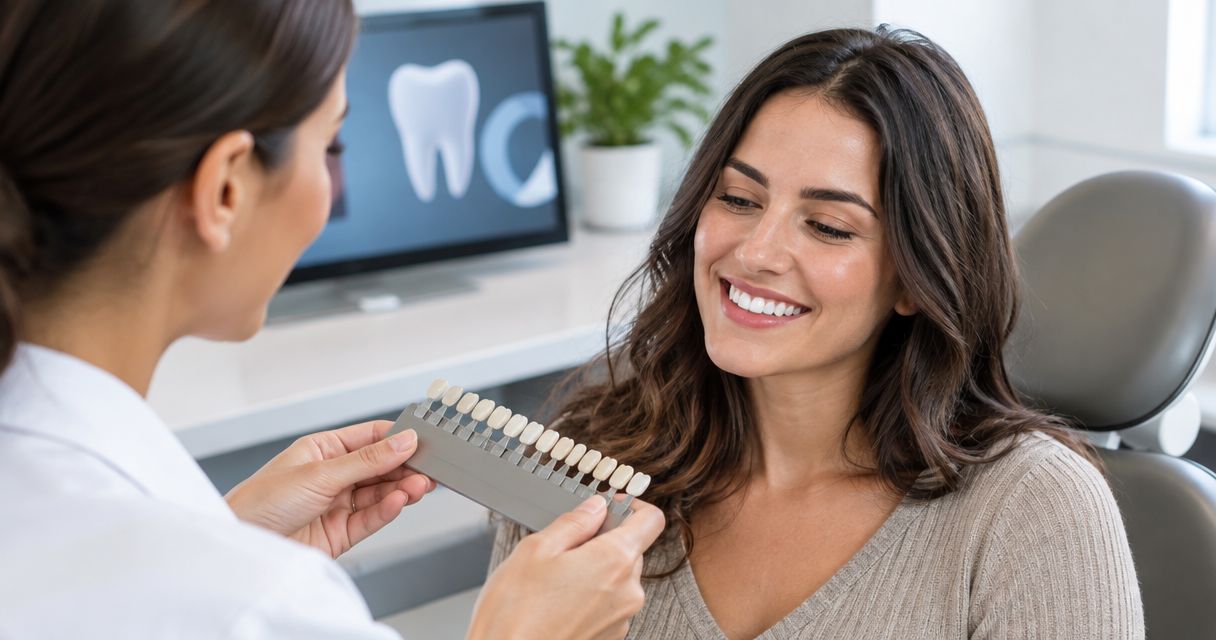
Professional whitening uses bleaching agents to lighten natural teeth. It belongs ahead of bonding or veneers when your main concern is color and the teeth otherwise have acceptable shape and structure. Different causes of discoloration respond differently.
Whitening does not close a gap, rebuild a chipped edge, or change an existing restoration's shade. If your front teeth include composite fillings, crowns, or veneers, discuss the expected color relationship before treatment. Natural teeth can lighten while those restorations remain their original color.
Professional whitening pros:
- Targets discoloration without reshaping the teeth.
- Does not require enamel preparation for a veneer or crown.
- Can help establish the desired natural-tooth shade before new cosmetic restorations are matched.
Professional whitening cons:
- Can cause tooth sensitivity or gum irritation.
- Does not change the color of existing restorations.
- Results depend on the cause of discoloration and require ongoing care.
Best for: Patients who like their tooth shape and position but want to address discoloration.
An examination should come before bleaching a tooth that has darkened unexpectedly, especially after an injury. The concern is not always a surface stain. If you also want bonding replaced, ask about treatment sequencing so the new composite can be matched to the intended shade.
Verdict: Skip bonding or veneers solely for color until whitening suitability has been assessed.
4. Enamel contouring: best for a minor uneven edge
Enamel contouring, also called tooth reshaping, removes a small amount of enamel to smooth or adjust a minor irregularity. Unlike bonding, it does not add material. It works only when the desired change can be made safely within the available enamel.
This approach deserves discussion for a slightly uneven edge or a small shape difference. It is not a way to rebuild a substantial chip or make a short tooth longer. Removing more enamel to chase symmetry can create a problem rather than solve one.
Enamel contouring pros:
- Adjusts a minor shape concern without adding a restoration.
- Leaves no bonded material that can discolor or detach.
- Can smooth an irregular edge when the tooth's structure permits it.
Enamel contouring cons:
- Permanently removes enamel.
- Has limited scope and cannot add length or replace missing structure.
- Excessive removal can expose deeper tooth layers and cause sensitivity.
Best for: Patients with a small edge irregularity and enough healthy enamel for conservative reshaping.
Ask the dentist to explain exactly which part of the tooth would be adjusted. A visible edge problem also deserves a bite assessment: if grinding caused the irregularity, smoothing it alone does not address the cause. Do not file or reshape your teeth at home.
Verdict: Hold until a dentist confirms that conservative enamel removal is appropriate.
5. Dental crowns: best for a structurally weakened tooth
A dental crown covers a prepared tooth to restore its shape and function. Crowns belong in this comparison because a tooth that looks unattractive can also have substantial damage. In that situation, the decision is restorative rather than purely cosmetic.
A crown is not the first choice for every chip or stain. The dentist should assess the remaining tooth structure, existing restorations, cracks, and biting forces before recommending coverage. Other restorations can be appropriate when less coverage is needed.
Dental crowns pros:
- Restore form and function when substantial tooth structure is compromised.
- Provide coverage beyond the front surface addressed by a veneer.
- Can address appearance as part of restoring a damaged tooth.
Dental crowns cons:
- Require substantial tooth preparation compared with a small bonding repair.
- Can need repair or replacement over time.
- Do not prevent decay or gum problems around the restored tooth.
Best for: Patients whose tooth needs structural restoration, not just a cosmetic surface adjustment.
Ask what finding makes a crown necessary and whether a more conservative restoration is suitable. A large existing filling, fracture, or other structural problem changes the discussion. Healthy neighboring teeth should not receive crowns simply to match a smile photograph.
Verdict: Skip a crown for a minor cosmetic concern unless the examination identifies a structural reason for coverage.
How these alternatives are ranked
This 2026 comparison ranks treatments by the problem they address, the tooth structure involved, and the maintenance they require. Porcelain veneers lead for combined surface changes; Invisalign leads for position; whitening leads for color alone. Enamel contouring and crowns have narrower, different indications.
The ranking does not mean veneers are best for every patient. Cosmetic bonding remains a useful option when a localized repair can achieve the intended result without more extensive treatment.
Which cosmetic bonding alternative should you choose?
Choose the least invasive treatment that adequately addresses the diagnosed problem. For an undecided patient in 2026, that is a better starting point than choosing the most dramatic-looking result.
Bring these questions to your consultation:
- Color: Is the concern discoloration, and can whitening address it?
- Position: Are spacing or crowding better treated by moving the teeth?
- Shape: Would a small bonding repair work, or do the proposed changes justify veneers?
- Structure: Is the tooth weakened enough to need broader restoration?
Those questions separate treatments that look similar in smile photographs but do different clinical jobs. They also make it easier to understand why your dentist recommends one option and rules out another.
At Harmony Dental Group, a veneers or Invisalign consultation is an opportunity to explain your priorities and discuss suitability. Tell the dentist whether your main concern is one chipped tooth, overall color, or the position of several teeth. Mention sensitivity, grinding, and previous dental work as well.
Discuss your cosmetic dentistry options
Explore whether veneers or Invisalign fit your smile concerns at a La Jolla consultation.
FAQ
What's the best alternative to cosmetic bonding?
Porcelain veneers are a leading alternative for combined shape and color changes, while Invisalign is better suited to tooth-position concerns. Whitening is the more targeted option when discoloration is the only concern. An examination determines which treatment fits your teeth.
Are porcelain veneers better than bonding?
Porcelain veneers are not automatically better than bonding. Veneers can address broader surface changes and resist staining, but they usually require irreversible preparation; bonding can suit a smaller, more conservative repair.
Can Invisalign fix a gap instead of bonding?
Invisalign can close suitable gaps by moving teeth rather than adding material. The dentist must assess the cause of the spacing and the bite, and retainers are needed afterward to help maintain the result.
Can I whiten my teeth if I already have bonding?
You can discuss whitening with your dentist, but whitening does not lighten existing composite bonding. Natural teeth and bonded areas can end up different shades, so treatment sequencing and any planned replacement need consideration.
Is enamel contouring reversible?
Enamel contouring is not reversible because removed enamel does not grow back. It is limited to suitable minor shape changes and should only follow a dental assessment.
Do I need a crown for a chipped front tooth?
A chipped front tooth does not automatically need a crown. A small chip can be suitable for bonding, while substantial damage requires an assessment of the remaining tooth structure before choosing a restoration.
Can I discuss veneers and Invisalign in La Jolla?
Harmony Dental Group offers veneers and Invisalign in La Jolla. A consultation can help distinguish surface concerns from alignment concerns and establish which treatment is suitable for your oral health.
One last thing
A combined plan does not have to mean more treatment. Moving teeth before making cosmetic repairs can change which repairs are needed, while whitening before shade matching can help coordinate natural teeth and new restorations.
Ask what should happen first—not just which treatment to choose. The sequence matters when your smile concerns involve more than one issue. A clear plan should explain both the recommended treatment and the reason for its timing.