Porcelain veneers typically last 10–15 years with good care, although some need replacement sooner and others last longer. The tooth underneath still needs protection from decay, and grinding, cracks, or changes around the gums can shorten a veneer’s useful life. This 2026 guide explains what affects longevity and what to ask before committing to treatment.
- How long do veneers last? Porcelain veneers typically last 10–15 years with good care, not a lifetime.
- Cleveland Clinic identifies oral hygiene and regular dental visits as important to veneer longevity.
- Composite veneers can be repaired, but staining and wear can change their appearance.
- Harmony Dental Group offers veneers consultations for patients considering cosmetic dentistry in La Jolla.
Why this matters
Veneers are a long-term commitment, not a permanent finish that you can forget about. When treatment involves removing enamel, that enamel does not grow back, so future maintenance and replacement belong in the decision from the start.
Harmony Dental Group is best suited to La Jolla patients seeking a local consultation about veneers and cosmetic dentistry. You can explore Harmony Dental Group before discussing whether your teeth, gums, and bite are ready for treatment.
The useful question is not simply whether veneers last a long time. It is whether the expected benefit justifies changing healthy tooth structure and accepting future care.
How long do veneers last?
Porcelain veneers typically last 10–15 years with appropriate care. Cleveland Clinic’s patient guidance on dental veneers gives this general lifespan; it is a planning estimate, not a prediction for an individual tooth.
For your 2026 treatment decision, separate material durability from the condition of the tooth supporting it. A veneer can remain intact while decay develops at an exposed edge, or a healthy tooth can support a veneer that chips after an accident.
| Veneer material | Longevity guidance | Best for | Main advantage | Main limitation |
|---|---|---|---|---|
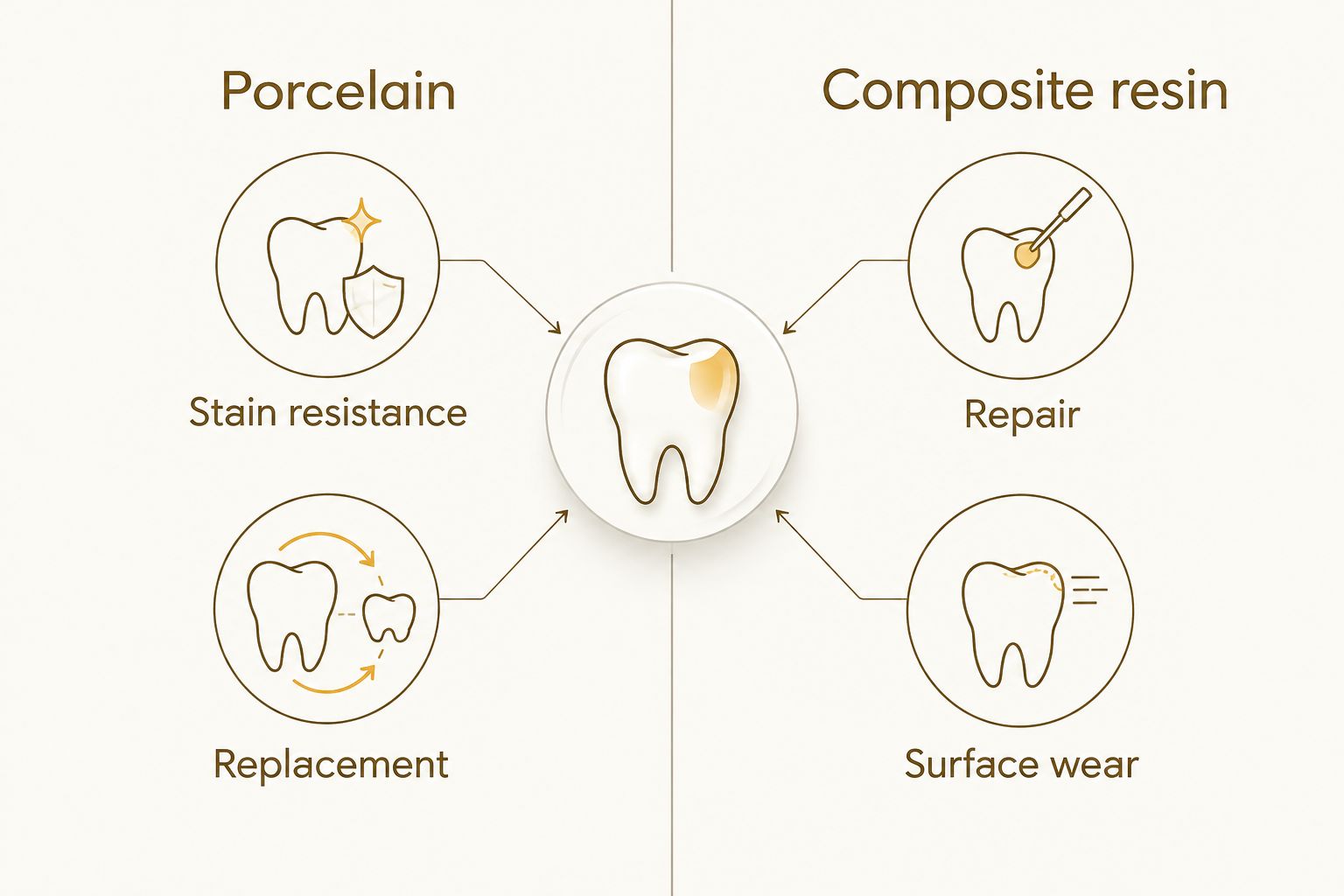
| Porcelain | Typically 10–15 years with good care | Patients seeking lasting changes to tooth color and shape, when clinically suitable | Resists staining better than composite | Chips and fractures can require replacement; preparation generally changes enamel permanently |
| Composite resin | Depends on wear, staining, maintenance, and the individual restoration | Patients seeking smaller cosmetic changes with a material that can often be repaired | A dentist can often add or repair resin | More susceptible to staining and surface wear than porcelain |
Neither material prevents cavities or gum disease. The right choice depends on your remaining enamel, existing restorations, bite, and goals—not just the longest advertised lifespan.
Porcelain veneers: typically 10–15 years
Porcelain veneers are thin ceramic coverings bonded to the front surfaces of teeth. Their resistance to staining makes them useful when the goal is a sustained change in color, shape, or the appearance of small gaps.
Best for: Patients with suitable tooth structure and a stable bite who want lasting cosmetic changes. Suitability matters more than choosing porcelain simply because it has a longer expected lifespan.
The limitation is the commitment underneath the appearance. Preparation often removes enamel, and a fractured ceramic veneer is not always repairable in a way that restores its original strength and appearance.
Ask whether each proposed veneer is necessary. Treating more teeth does not automatically improve the result, and a consultation should explain which teeth need treatment to meet your goals.
Composite veneers: plan for maintenance and possible repair
Composite veneers use tooth-colored resin to change the visible surface of a tooth. A dentist can often repair or reshape the material rather than replace the entire restoration after a small defect.
Best for: Patients considering limited cosmetic changes who value repairability and understand the material’s maintenance needs. Composite can also be useful when the dentist recommends a more conservative approach to a particular tooth.
Its trade-off is greater susceptibility to staining and surface wear than porcelain. Polishing can address some surface changes, but it does not correct every crack, worn edge, or color problem.
For a 2026 consultation, ask the dentist to distinguish composite veneers from small areas of cosmetic bonding. The terms can overlap, but the amount of tooth covered and the reason for treatment affect what maintenance involves.
Why veneer lifespan varies
The material is only part of the explanation. These factors influence whether a veneer continues to look acceptable and function comfortably:
- Tooth health: Decay can develop in natural tooth structure around a veneer. Existing cavities and weakened areas need assessment before cosmetic treatment.
- Gum health: Inflammation and recession can change the appearance of the veneer’s edge. Healthy gums also make daily cleaning more manageable.
- Grinding and clenching: Repeated heavy forces can damage veneers and natural teeth. Your dentist should evaluate signs of wear and discuss protection when appropriate.
- Bite and alignment: Where teeth contact matters. A veneer that receives excessive force needs more than careful brushing to stay protected.
- Daily care: Plaque control protects the tooth and gumline around the restoration. Veneers do not remove the need to brush and clean between teeth.
- Habits and accidents: Biting ice, chewing pens, opening packaging with teeth, and sports injuries can chip restorations. Avoid using your teeth as tools.
Address active disease and damaging bite habits before choosing a veneer material. A cosmetic plan should not leave those problems untreated beneath a new appearance.
How can you help veneers last longer?
A practical care routine protects both the veneer and the natural tooth. These steps apply in 2026 whether treatment is new or your veneers have been in place for years.
- Brush gently. Follow the American Dental Association’s recommendation to brush for 2 minutes, twice a day, using fluoride toothpaste and a soft-bristled toothbrush. Scrubbing harder does not improve cleaning.
- Clean between teeth. Floss or use another dentist-recommended interdental cleaner daily. Pay attention to the gumline without forcing tools against the restoration.
- Keep dental appointments. Let your dentist set the examination and cleaning schedule for your oral health. Reviews can identify changes you do not feel or see.
- Discuss grinding protection. Report jaw soreness, worn teeth, or suspected nighttime clenching. A dentist can assess whether an appliance is appropriate.
- Respond to changes. Book an assessment for a rough edge, new sensitivity, movement, or a bite that suddenly feels different. Do not try to reshape or glue a veneer yourself.
If grinding is part of your history, review the mouthguards for teeth grinding guide before asking which protection fits your situation.
A mouthguard is not a substitute for assessing the bite or treating dental disease. It addresses a different part of the risk.
What are the signs a veneer needs attention?
A chip, crack, loose feeling, or newly rough edge deserves a dental assessment. So does discomfort when biting, because pain can come from the tooth, its supporting tissues, or a problem with the restoration.
Color changes need context. A stain on the surface is different from a dark area near the margin, and neither should be diagnosed from a photograph alone.
Watch for changes around the gumline, including recession or persistent bleeding. These findings do not automatically mean the veneer has failed, but they do mean the surrounding tissues need attention.
Do not wait for severe pain before reporting a loose or damaged veneer. If it comes off, keep it safe, avoid chewing on that tooth, and contact a dentist; household glue is not a dental repair.
Do veneers need replacing after 10–15 years?
10–15 years is a typical lifespan, not an automatic replacement deadline. A dentist assesses the veneer, underlying tooth, gums, and bite rather than replacing a sound restoration because it reaches a particular age.
Replacement becomes relevant when damage, decay, loss of retention, or an unacceptable appearance cannot be managed appropriately with a smaller intervention. Your dentist should explain what is wrong and why repair or replacement is recommended.
If only one veneer has a problem, that does not automatically mean every veneer needs replacing. Matching the repaired or replaced tooth to neighboring teeth is a separate consideration.
Are veneers permanent if they do not last forever?
10–15 years describes the expected service life of many porcelain veneers, not how long enamel changes last. Enamel removed during preparation does not regenerate, so the tooth generally continues to need a restoration afterward.
That distinction is central to informed consent. Ask how much preparation your proposed treatment involves and what future replacement would mean for your teeth.
Can whitening make older veneers look new again?
10–15 years of expected porcelain veneer service does not mean whitening will restore its original appearance. Bleaching products change natural tooth color; they do not whiten porcelain or composite restorations in the same way.
A dentist can identify surface staining, assess whether polishing is suitable, and explain whether any color mismatch involves the veneer or neighboring natural teeth. Avoid escalating whitening treatment without knowing which surface has changed.
What should you ask at a veneers consultation?
Bring your goals, your concerns, and any history of sensitivity or grinding. At Harmony Dental Group, a veneers consultation gives you an opportunity to discuss cosmetic treatment alongside the health of your teeth and gums.
For a 2026 appointment, use questions that reveal the proposed plan rather than asking for a lifespan guarantee:
- Why veneers? Ask which concern the treatment addresses and whether a less invasive approach fits that concern.
- Why this material? Ask how porcelain or composite matches your teeth, bite, and expectations.
- What changes permanently? Ask which teeth need preparation and what tooth structure will be removed.
- What maintenance follows? Ask about cleaning, grinding protection, reviews, and possible repair or replacement.
- What happens if treatment needs revision? Ask how the dentist would assess a chip, loose veneer, or later color mismatch.
A clear explanation should leave you understanding the trade-offs, not feeling rushed to proceed. You can ask for time to consider the plan before deciding.
Discuss your veneer options
Explore cosmetic dental care in La Jolla and prepare questions about suitability, maintenance, and replacement.
FAQ
How long do veneers last on front teeth?
Porcelain veneers typically last 10–15 years with good care, including on front teeth. Bite forces, grinding, oral health, and accidents affect an individual veneer’s lifespan.
Can porcelain veneers last longer than 15 years?
Yes, porcelain veneers can last longer than 15 years, but that is not a guaranteed result. A dentist should assess their condition rather than use age alone to decide on replacement.
Are composite veneers better than porcelain veneers?
Composite veneers are not universally better than porcelain veneers. Composite offers repairability, while porcelain generally offers better stain resistance; the appropriate choice depends on your teeth and goals.
Can I still get cavities with veneers?
Yes, the natural tooth around and underneath a veneer can develop decay. Brush with fluoride toothpaste, clean between teeth, and attend dental reviews.
Should I get veneers if I grind my teeth?
Grinding needs assessment before you commit to veneers because repeated heavy forces can damage restorations. Your dentist should explain whether bite management or a protective appliance is appropriate.
Does replacing a veneer mean losing the tooth?
No, replacing a veneer does not automatically mean losing the tooth. The dentist assesses remaining tooth structure, decay, cracks, and the reason the original veneer needs replacement.
Can I book a veneers consultation in La Jolla?
Harmony Dental Group offers veneers and cosmetic dentistry in La Jolla. A consultation is the place to discuss your goals, tooth health, material choices, and long-term maintenance.
One last thing
A veneer’s age is less useful than its condition. A comfortable veneer that looks unchanged still needs examination, while a newer veneer with a loose edge needs attention now.
Before leaving your consultation, ask: what would make you recommend repair rather than replacement? Understanding that decision helps you plan for care without treating every future change as a complete restart.