Dental implant recovery time includes recovery from surgery and a longer period of bone healing that takes several months. Soreness can improve well before the implant is ready to support normal chewing, so feeling better is not the same as being fully healed. If you are planning treatment in 2026, ask for separate timelines for returning to your routine, healing around the implant, and receiving your final tooth.
- Dental implant recovery time includes surgical recovery and months of bone healing; comfort alone does not confirm readiness for chewing.
- Harmony Dental Group offers dental implants for La Jolla patients; ask for a personalized healing and restoration plan.
- Bone grafting, smoking, gum health, and diabetes can affect healing and treatment scheduling.
- Contact your treating dentist about worsening pain, persistent bleeding, unusual drainage, or an implant that feels loose.
How long does it take to recover from a dental implant?
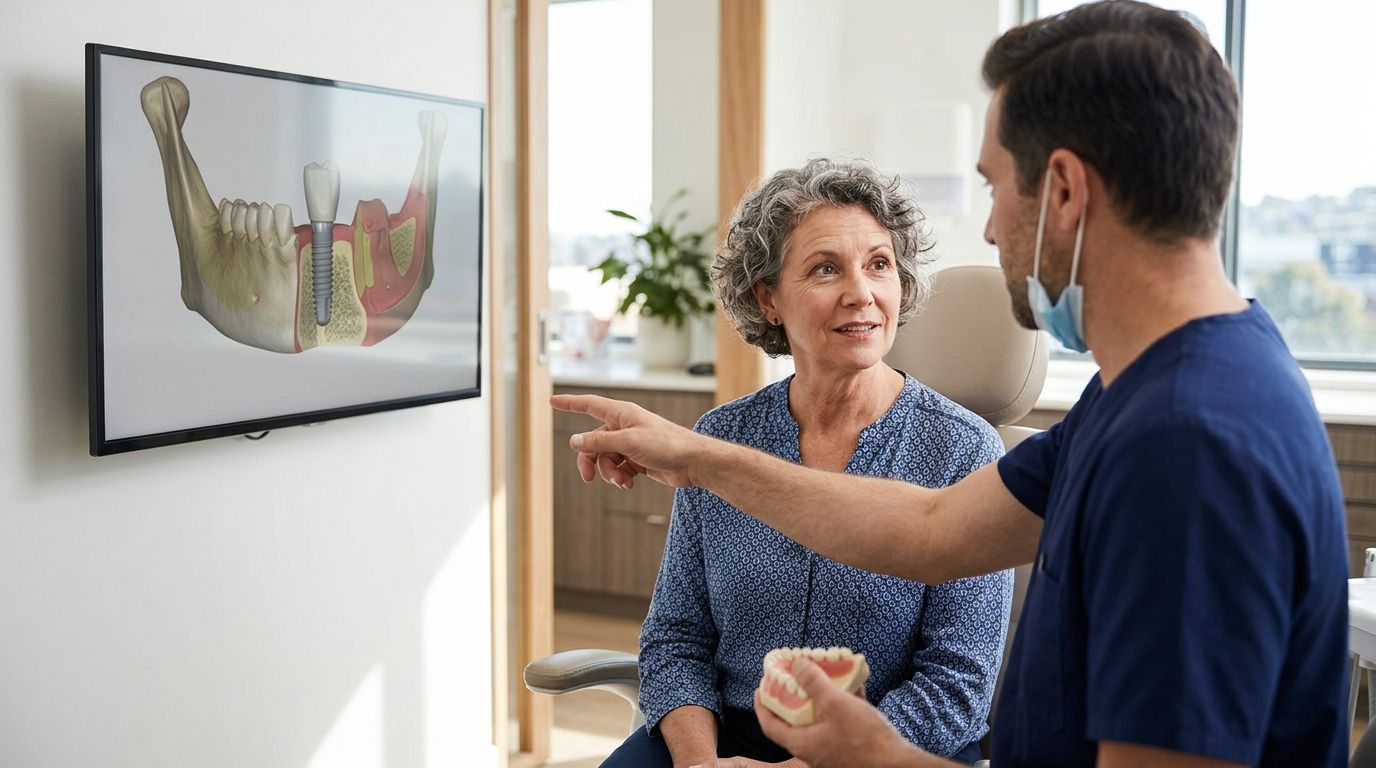
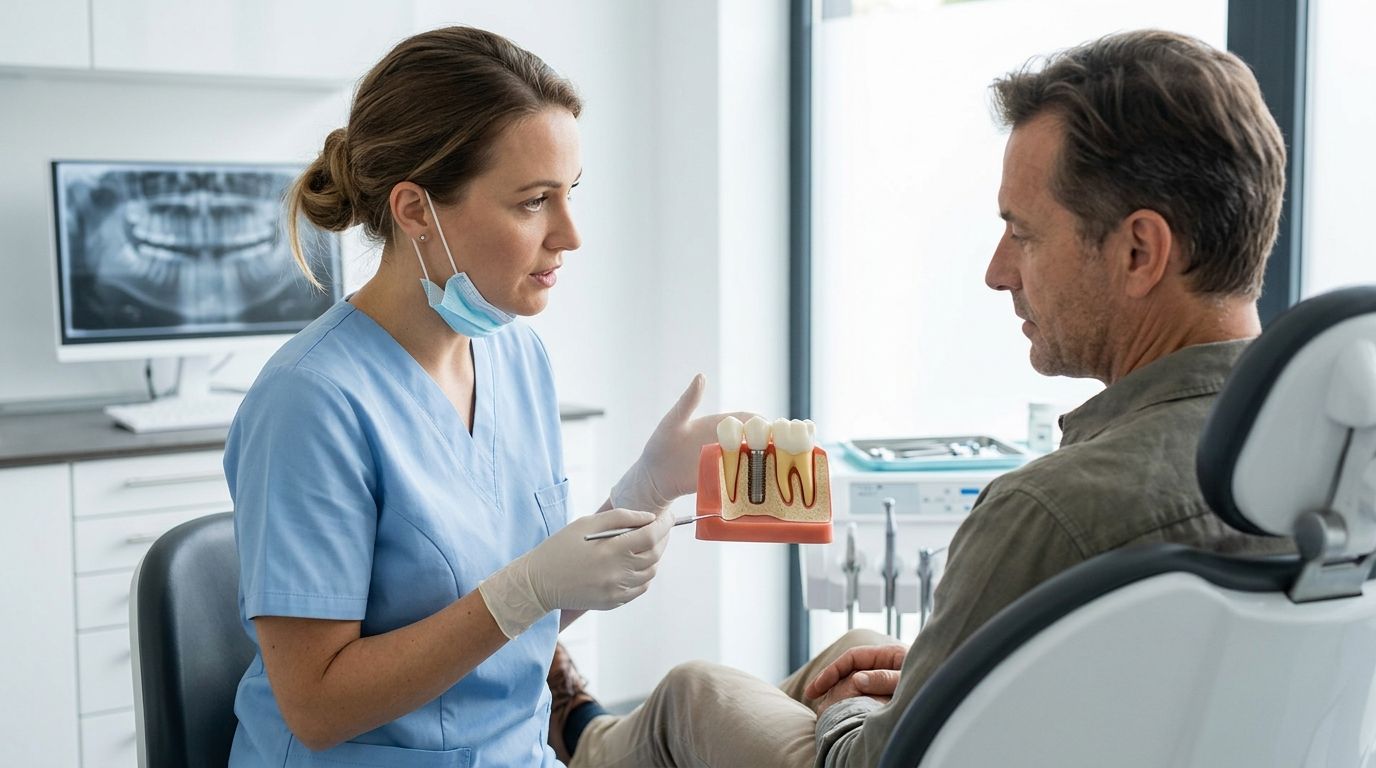
Expect recovery to happen in stages, not on a single finish date. The surgical site heals first, while the bone gradually attaches to the implant underneath. Dentists call this attachment process osseointegration.
Mayo Clinic’s patient guidance on dental implant surgery describes bone healing as a process that can take several months. That describes the underlying healing period, not necessarily how long you will need to stay home from work.
| Recovery stage | What is happening | What it means for you |
|---|---|---|
| Surgical recovery | Soreness, swelling, and bleeding settle after placement | Follow your postoperative instructions and protect the site |
| Gum healing | The soft tissue around the surgical area closes and settles | Cleaning and eating instructions still apply even as comfort improves |
| Bone integration | Bone attaches to the implant surface | Avoid loading the implant beyond what your dentist permits |
| Restoration | The replacement tooth is fitted when the site is ready | Your dentist checks healing, the restoration, and your bite |
If discomfort is your main concern, the guide to whether getting a dental implant is painful addresses a related but different question. Pain relief and complete healing are not interchangeable milestones.
Why this matters
A dental implant plan needs to fit your health, work, meals, and responsibilities at home. For patients in La Jolla and nearby San Diego neighborhoods, the practical question is often when daily life can resume—not just when the final tooth will be ready.
Keep your return-to-work plan separate from your final-restoration plan. You can feel well enough for routine activities while the bone is still healing. Planning in 2026 should account for both milestones, especially if you have travel or an important event ahead.
Surgical recovery: protect the treatment site
After implant placement, some soreness, swelling, bruising, or minor bleeding can occur. The extent depends on the procedure and your health. Your surgeon’s written instructions take priority over a general recovery guide.
Before leaving, make sure you understand:
- Bleeding care: How to use gauze and what bleeding requires a call.
- Pain control: Which medicines to take, how to take them, and which medicines to avoid.
- Food choices: What you can eat without disturbing the surgical area.
- Cleaning: Where and how to brush, and whether a prescribed rinse is needed.
- Activity: When to resume exercise, lifting, and physically demanding work.
If you receive sedation, follow the discharge instructions about transportation, supervision, and driving. Do not decide that you are safe to drive simply because your mouth feels comfortable.
Arrange food and any prescribed medicines before surgery when possible. That makes it easier to rest rather than handle errands immediately afterward.
Gum healing: comfort is only part of the picture
As the surgical area settles, eating and speaking generally become more comfortable. The gum surface can look healed while deeper healing continues. Appearance alone cannot tell you whether an implant is ready for normal biting forces.
Keep cleaning your mouth according to your postoperative instructions. Avoid both extremes: scrubbing the surgical site aggressively and abandoning oral hygiene altogether. If brushing near the area is confusing or uncomfortable, ask the treating team to show you the approved technique.
Follow-up visits give your dentist a chance to examine the tissue and address problems you cannot assess at home. Ask whether stitches need removal or are expected to dissolve; this depends on the material used.
Do not use disappearing soreness as permission to test the implant with hard food. Your dentist should decide when the site can tolerate more pressure.
Bone integration: healing continues below the gumline
Bone integration is the reason dental implant recovery extends beyond the initial surgical recovery. During this stage, bone attaches to the implant and provides support for the replacement tooth. This process takes months rather than days.
An implant that feels comfortable still needs protection from inappropriate chewing forces. If you have a temporary tooth, ask exactly what it is designed to do. A temporary replacement does not automatically mean you can bite into firm foods normally.
Your dentist assesses readiness using the clinical examination and imaging when indicated. There is no reliable home test for complete integration, and repeatedly pressing or wiggling the area is not a useful check.
For your 2026 treatment calendar, treat the final-tooth appointment as a clinical milestone rather than a fixed deadline. Healing findings determine whether the next step is appropriate.
Why dental implant recovery time varies
The procedure and your health both affect the healing plan. These factors deserve a specific discussion before surgery:
- Bone grafting: Building up bone can add a separate healing stage or change the implant schedule.
- Tooth extraction: Removing a tooth and placing an implant are distinct procedures, even when performed during the same visit.
- Extent of surgery: Multiple implant sites or additional procedures can change postoperative care and recovery needs.
- Smoking and tobacco use: Tobacco can interfere with healing and increase the risk of implant complications.
- Gum health and hygiene: Inflammation and plaque control matter before placement and during long-term implant care.
- Medical conditions and medicines: Diabetes control and certain medicines can affect surgical planning and healing.
Tell your dentist about prescription medicines, over-the-counter products, supplements, and changes in your health. Do not stop prescribed treatment on your own to prepare for implant surgery.
These factors do not establish your personal timeline by themselves. Your dentist needs to assess how they apply to your treatment.
How should you prepare for recovery?
Preparation makes the early recovery period easier to manage. Use this sequence when discussing your procedure:
- Confirm the procedure. Ask whether the visit includes extraction, grafting, implant placement, or another surgical step.
- Review your health. Provide your medicine list and discuss conditions that affect healing or anesthesia.
- Plan transportation. Confirm whether the anesthesia or sedation plan requires a responsible adult to take you home.
- Prepare meals. Choose foods that match your surgeon’s instructions and do not require forceful chewing at the surgical site.
- Get written instructions. Keep the care plan and the number to call for postoperative concerns where you can find them.
- Arrange follow-up. Know which visit checks early healing and which later visit assesses readiness for restoration.
Tell the dentist what your work actually involves. Desk work, prolonged speaking, lifting, and outdoor physical labor create different recovery demands.
If you care for children or another family member, arrange help based on your sedation instructions and expected activity restrictions. A workable home plan matters as much as clearing your calendar.
When can I return to work after a dental implant?
Returning to work depends on the extent of surgery, your symptoms, your job, and any sedation or medicine restrictions. It usually happens before bone integration is complete, but your surgeon should give you an individualized recommendation.
Ask about the tasks you perform rather than requesting a generic return date. Someone who lifts equipment needs different guidance from someone who can work quietly at a desk. If your work requires driving, confirm that both the anesthesia and prescribed medicines allow it.
When can I eat normally after a dental implant?
Resume normal eating only as your dentist permits, even if soreness has settled. The important issue is whether chewing pressure could disturb the healing site or overload an implant or temporary tooth.
Ask which foods are appropriate, where you can chew, and when restrictions will be reviewed. Do not assume a food is safe simply because you can tolerate it without pain. Your instructions should also explain how to clean after eating without injuring the area.
Does a temporary tooth mean my implant has healed?
A temporary tooth does not prove that bone integration is complete. Temporary restorations can help with appearance or selected functions, but their permitted use depends on the treatment plan.
Ask whether the temporary tooth is removable or fixed, whether you can chew on it, and what to do if it feels loose. Report changes rather than trying to tighten, adjust, or glue anything yourself. A visible tooth and a healed implant are different things.
Which symptoms mean you should call the dentist?
Contact your treating dentist about pain that worsens instead of improving, swelling that increases after initially settling, persistent bleeding, fever, unusual drainage, or a persistent bad taste. An implant or restoration that feels loose also needs assessment.
These symptoms do not establish a diagnosis at home. They are reasons to contact the clinician who knows what procedure you had and what recovery was expected.
Seek emergency medical help for trouble breathing or swallowing, rapidly spreading facial or neck swelling, or bleeding that is heavy and not controlled by the instructions you were given. Do not wait for a routine follow-up appointment when symptoms threaten breathing or suggest a serious emergency.
Save your postoperative contact instructions before surgery. In 2026, an online guide can explain warning signs, but it cannot examine your wound or determine whether treatment is needed.
What should you ask at a dental implant consultation?
Harmony Dental Group is a local dental implant option for La Jolla patients seeking general, cosmetic, and restorative care. A consultation should help you understand whether an implant fits your needs and what healing would involve; it should not be treated as a guarantee of suitability or results.
When speaking with Harmony Dental Group, ask for answers to these questions:
- Will I need an extraction or bone graft before implant placement?
- Which recovery restrictions apply to my procedure and health history?
- Will I have a temporary tooth, and what can I do with it?
- How will you assess whether the implant is ready for the final tooth?
- Who should I contact if symptoms change outside normal office hours?
Dental implants can replace missing teeth without relying on neighboring teeth for support, but they require surgery, healing, and ongoing maintenance. They are not appropriate for every patient or every treatment goal. Discuss the benefits and limitations for your own mouth before deciding.
Discuss your implant recovery plan
Ask about treatment stages, home care, and follow-up for your dental implant needs.
FAQ
How long does dental implant recovery take from start to finish?
Dental implant recovery includes early surgical healing and bone integration that takes several months. Extraction, grafting, and the restoration plan can extend the overall treatment schedule.
Can I go back to work while my dental implant is still healing?
You can return to suitable work before bone integration is complete if your surgeon clears you. Your symptoms, job duties, sedation, and medicines determine the restrictions.
Is it normal to feel better before my dental implant has fully healed?
Yes, comfort can improve before the bone has finished attaching to the implant. Keep following chewing and cleaning instructions until your dentist changes them.
Does a bone graft make dental implant recovery longer?
Bone grafting can add healing time or change the sequence of treatment. Ask whether grafting will happen before implant placement or during the same procedure.
Can I exercise after dental implant surgery?
Resume exercise according to your surgeon’s instructions rather than your pain level alone. Strenuous activity can increase bleeding or discomfort during early recovery.
What should I do if my dental implant feels loose?
Contact your treating dentist promptly if an implant or attached tooth feels loose. Do not wiggle it, test it by chewing, or attempt a repair yourself.
Can Harmony Dental Group tell me my personal recovery timeline?
Harmony Dental Group offers dental implant care in La Jolla, where a consultation can address your treatment and recovery questions. Your timeline depends on an examination, your health, and the procedures recommended.
One last thing
Ask for the next milestone, not just the final date. Knowing what happens next—and what must heal before it happens—gives you a more useful plan than a single promise about when everything will be finished.
Before leaving a 2026 implant appointment, be able to answer: What can I eat? How should I clean? What symptoms require a call? When is my next review? Those answers help you protect the implant while healing continues beneath a gumline that already looks comfortable.