Best overall for a small, uncomplicated chip: dental bonding. Best for a tiny enamel rough spot: polishing. Best for a broader front-tooth appearance change: a veneer. Best for substantial structural damage: a crown. This 2026 guide compares the best way to fix a chipped tooth by damage, bite pressure and how much healthy tooth each repair preserves.
- Dental bonding is the best way to fix a chipped tooth when damage is small and the remaining tooth is healthy.
- Polishing suits tiny enamel chips; veneers and crowns address different cosmetic and structural needs.
- Harmony Dental Group offers general, cosmetic, restorative and emergency dental care in La Jolla.
- Swelling, significant pain or a loose tooth calls for prompt assessment, not a cosmetic repair alone.
Why this matters
A chipped tooth is not automatically a cosmetic problem. A shallow enamel chip and a fracture exposing the tooth’s inner tissue need different treatment, even when they look similar in a mirror.
The best repair preserves healthy tooth while addressing the damage underneath. Choosing a veneer before checking the fracture, or choosing bonding for a tooth that needs structural protection, puts appearance ahead of diagnosis.
For local patients comparing chipped-tooth care in 2026, Harmony Dental Group is a La Jolla dental practice offering general, cosmetic, restorative and emergency services. A dental examination determines which treatment fits your tooth; photographs alone cannot establish fracture depth or nerve health.
What makes the best chipped-tooth repair?
Judge each option against these criteria before choosing a material or cosmetic result:
- Damage depth: Enamel-only damage differs from a fracture involving dentin or the pulp, which contains nerves and blood vessels.
- Remaining structure: A repair needs enough healthy tooth to support it. Missing tooth structure changes the decision.
- Bite pressure: A front-tooth edge and a chewing cusp face different forces. Grinding also affects treatment planning.
- Appearance: Color, contour and the location of the chip matter, particularly on a visible front tooth.
- Tooth preservation: Prefer a repair that solves the problem without removing healthy structure unnecessarily.
- Nerve health: Persistent pain, trauma or signs of infection require assessment before cosmetic treatment.
No treatment wins every category. Bonding preserves tooth structure but has material limitations; a crown provides broader coverage but requires more preparation.
Chipped-tooth repairs at a glance
These 4 treatment options solve different problems. The order reflects a practical starting point, not a recommendation to use the same repair for every fracture.
| Repair | Best for | Standout feature | Key limitation |
|---|---|---|---|
| Dental bonding | Small, uncomplicated chips | Adds tooth-colored resin to replace missing shape | Can stain, wear or chip |
| Enamel polishing | Tiny rough enamel edges | Smooths an edge without adding a restoration | Cannot replace missing tooth structure |
| Veneer | Visible front-tooth damage with broader appearance concerns | Covers the front surface to change shape and appearance | Often requires enamel removal; does not treat infection |
| Dental crown | Substantial damage to a restorable tooth | Covers the remaining tooth for structural protection | Requires more tooth preparation than a small bonded repair |
A root canal is not another cosmetic alternative in this table. It treats damaged or infected pulp when indicated; the tooth still needs an appropriate restoration afterward.
1. Dental bonding: best for small, uncomplicated chips
Dental bonding uses tooth-colored composite resin to rebuild a missing edge or small area. The dentist shapes the material, hardens it with a curing light and adjusts the repair to your bite.
For a healthy tooth with a limited chip, bonding is a practical first option to discuss in 2026. It addresses missing shape without automatically committing the tooth to a veneer or crown.
Dental bonding pros
- Replaces missing structure rather than simply smoothing the edge.
- Often requires little removal of healthy tooth.
- Can match the surrounding tooth’s color and contour.
- Can be repaired or adjusted when the clinical situation allows.
Dental bonding cons
- Composite resin can stain and lose its surface finish.
- A bonded edge can chip under unfavorable bite forces.
- Bonding does not treat an infected nerve or stabilize every deep fracture.
Best for: A small front-tooth chip or localized defect with healthy supporting tooth structure.
Ask whether your bite contacts the repaired edge. A restoration that looks right still needs to function when you chew, and grinding or biting hard objects can damage the repair.
Verdict — Choose dental bonding for a small, uncomplicated chip when the examination confirms suitable support and bite conditions.
2. Enamel polishing: best for a tiny rough edge
Enamel polishing, sometimes called minor recontouring, smooths a small irregularity in the tooth’s outer surface. It removes a limited amount of enamel rather than adding replacement material.
This option fits a tiny chip when the main problem is a sharp or uneven edge. It does not rebuild a visibly shortened tooth or cover exposed inner tissue.
Enamel polishing pros
- Addresses roughness without adding a filling material.
- Leaves no bonded edge that can detach.
- Avoids a larger restoration when smoothing alone solves the problem.
Enamel polishing cons
- Removed enamel does not grow back.
- Cannot restore lost tooth length or a substantial missing corner.
- Excessive reshaping can alter appearance or expose more sensitive tissue.
Best for: A very small enamel irregularity that needs smoothing, not reconstruction.
Do not file a chipped tooth at home. You cannot reliably judge enamel thickness or fracture depth, and a nail file or household abrasive can remove healthy tissue and worsen the shape.
Verdict — Choose professional polishing for a tiny enamel rough spot; skip it when missing structure needs replacement.
3. Veneer: best for a broader front-tooth appearance change
A veneer covers the front surface of a tooth to change its appearance. It can address a visible chip alongside concerns about shape, color or contour, provided the tooth is suitable for this treatment.
A veneer is not the default for every chipped front tooth. In 2026, the decision still rests on remaining enamel, bite conditions and whether a smaller repair would meet your needs.
Veneer pros
- Can address a chip and broader appearance concerns together.
- Provides control over the visible front surface’s shape and contour.
- A porcelain veneer resists staining better than composite resin.
Veneer cons
- Often requires removing enamel, making treatment irreversible.
- Can chip or detach and require repair or replacement.
- Does not treat decay, infection or an unsuitable underlying fracture.
Best for: A suitable front tooth with a chip plus wider cosmetic concerns that bonding alone would not adequately address.
Harmony Dental Group offers veneers as part of its cosmetic dental services. Suitability depends on the tooth itself, not simply on wanting a different-looking smile.
Ask what tooth preparation is planned and why. If a small bonded repair can meet your goal, understand the reason for choosing a more extensive treatment before consenting.
Verdict — Consider a veneer for a broader cosmetic goal; skip unnecessary coverage for an isolated minor chip.
4. Dental crown: best for substantial structural damage
A dental crown covers the remaining tooth to restore its shape and provide protection. It is an option when a tooth has lost substantial structure but remains suitable for restoration.
A broken chewing cusp, extensive existing restoration or major fracture changes the decision from edge repair to structural planning. The dentist must assess the remaining tooth, fracture extent and nerve health before recommending coverage.
Dental crown pros
- Restores shape across more of the tooth than a small bonded repair.
- Provides coverage for weakened remaining structure.
- Can form part of the restoration plan after root canal treatment when indicated.
Dental crown cons
- Requires more tooth preparation than a localized repair.
- Does not make every cracked tooth restorable.
- The tooth can still develop decay or nerve problems beneath the restoration.
Best for: A substantially damaged tooth with enough healthy structure and support to restore.
A crown cannot reverse a fracture that makes the tooth unsuitable for preservation. Some teeth need a different plan, including extraction when they cannot be restored; implants replace missing teeth rather than repair chipped enamel.
Verdict — Choose a crown when structural protection is necessary; skip it for a minor chip that a smaller repair can address.
What changes the recommendation in 2026?
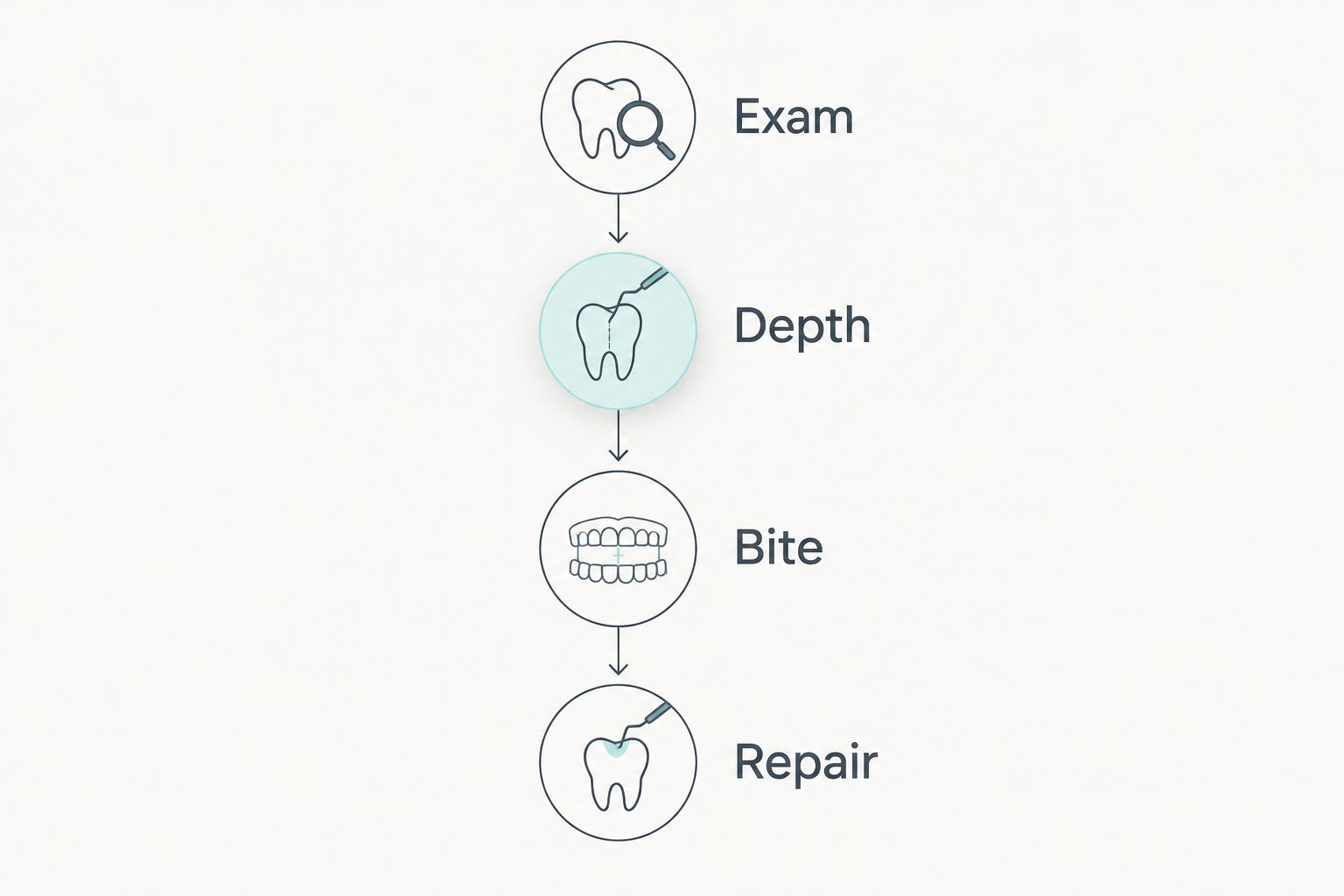
The treatment name comes last. A chipped-tooth assessment first answers these questions:
- Exam: Is the tooth loose, decayed or injured elsewhere? Trauma can affect neighboring teeth too.
- Depth: Does the damage involve enamel alone, dentin or the pulp?
- Bite: Will normal chewing place force on the proposed repair?
- Repair: Which treatment restores function while preserving suitable healthy structure?
Your dentist can examine the tooth, check its response to appropriate tests and take radiographs when indicated. Not every crack appears clearly on a radiograph, so imaging is part of the assessment rather than a guarantee that no fracture exists.
Bring any recovered tooth fragment. In some cases, a dentist can reattach it; keep it moist in milk or saliva and avoid scrubbing it or trying to glue it back yourself.
When a chipped tooth needs urgent attention
Facial swelling, fever, worsening pain or a loose tooth warrants urgent dental assessment. Difficulty breathing or swallowing requires emergency medical care rather than waiting for a routine dental visit.
A tooth that breaks after an impact also needs assessment for injuries beyond the visible chip. Do not assume that the smallest-looking fracture is the only damage.
Until you receive care:
- Rinse gently with water and keep the area clean.
- Avoid chewing on the damaged tooth.
- Avoid hard foods and temperature extremes that trigger discomfort.
- Cover a sharp edge temporarily with dental wax if needed.
- Do not use household glue or attempt to reshape the tooth.
Temporary protection is not a repair. Harmony Dental Group offers emergency dental care, but urgent symptoms determine the need for assessment—not which cosmetic option you prefer.
How these repairs are ranked
This 2026 comparison prioritizes diagnosis, healthy tooth preservation, structural support and bite suitability before appearance. Bonding takes the default position only for a small, uncomplicated chip; polishing, veneers and crowns each occupy a separate use case.
The ranking is not a product test or a claim that every patient gets the same result. The right treatment changes when the fracture is deeper, the remaining tooth is weaker or the nerve needs treatment.
Which chipped-tooth repair should you choose?
Start by asking whether bonding or polishing can solve the problem without unnecessary tooth removal. If the examination identifies broader cosmetic needs or substantial structural damage, discuss a veneer or crown instead.
Use these 3 consultation questions to keep the decision focused:
- What tissue is damaged, and is the nerve healthy?
- What is the least extensive repair that will work with my bite?
- What limitation would make that option unsuitable for this tooth?
For La Jolla patients, Harmony Dental Group provides general, cosmetic and restorative dental care relevant to that discussion. Choose the treatment after the diagnosis, not from a photograph of somebody else’s result.
Review your dental care options
Explore general, cosmetic, restorative and emergency dental care in La Jolla.
FAQ
What's the best way to fix a chipped tooth?
Dental bonding is a common first option for a small, uncomplicated chip with healthy supporting tooth structure. Tiny enamel rough spots can need polishing instead, while substantial damage can require a crown. A dental examination determines the appropriate repair.
Is bonding better than a veneer for a chipped front tooth?
Bonding is generally the more conservative choice for an isolated small chip. A veneer addresses broader front-surface appearance concerns but often requires enamel removal. The tooth's condition and your bite determine suitability.
Can a chipped tooth heal on its own?
Missing enamel does not grow back, so a chipped tooth does not rebuild itself. A dentist can determine whether the damage needs smoothing, replacement material or more extensive treatment. Lack of pain does not prove the chip is superficial.
Do I need a crown for a chipped molar?
A chipped molar does not automatically need a crown. A small defect can need a localized restoration, while substantial loss of a chewing cusp or weakened remaining structure can justify coverage. Your dentist assesses the fracture and bite before choosing.
Does a chipped tooth always need a root canal?
A chipped tooth needs root canal treatment only when the pulp condition warrants it, not simply because enamel broke. Deep fractures, trauma or infection can affect the pulp. The tooth still needs an appropriate restoration after root canal treatment.
Can I wait to fix a chipped tooth if it doesn't hurt?
Arrange a dental assessment even if the chip does not hurt. Pain alone does not establish fracture depth, and a sharp edge or weakened tooth can need attention. Swelling, significant pain, fever or looseness calls for urgent assessment.
What should I do with a broken tooth fragment?
Keep the fragment moist in milk or saliva and bring it to the dentist. Some fragments can be reattached, depending on their condition and the fracture. Do not scrub the fragment or use household glue.
One last thing
A visible chip and an underlying crack are not the same problem. A neat-looking repair does not establish that the rest of the tooth is sound.
For your 2026 treatment decision, ask the dentist to explain both findings: what broke off and what remains intact. That distinction is more useful than choosing the strongest-sounding restoration.