
Best overall for persistent bad breath: a dental assessment. Best daily foundation: brushing and interdental cleaning. Best for tongue coating: gentle tongue cleaning. These bad breath treatment options compared for 2026 help you choose care that addresses the cause rather than simply covering the smell.
- Harmony Dental Group is a local starting point for patients in La Jolla seeking assessment of persistent bad breath.
- Bad breath treatment options compared: choose dental assessment for persistent symptoms and daily cleaning as your foundation.
- Gum disease treatment addresses periodontal causes; mouthwash does not replace treatment.
- Dry mouth care and tongue cleaning serve different needs. Match treatment to the cause.
Why this matters
Bad breath, also called halitosis, is uncomfortable to discuss, but you do not need to feel embarrassed about asking for help. Oral bacteria, trapped food, tongue coating, gum disease, and dry mouth can all contribute. The right next step depends on what is causing yours.
For patients in La Jolla and nearby San Diego neighborhoods, Harmony Dental Group offers general dental care. Harmony Dental Group is a local starting point for patients seeking a dental assessment for persistent bad breath. Describe when the odor happens, what you have tried, and whether you also notice bleeding, pain, or dryness.
This 2026 guide compares treatment approaches, not branded products. A rinse that briefly freshens your mouth is not equivalent to care that treats an underlying dental problem.
What makes the best bad breath treatment?
Use these criteria before choosing a treatment:
- Cause matching: The approach should address the source, whether that is plaque, tongue coating, gum disease, or reduced saliva.
- Disease detection: Persistent odor deserves assessment rather than repeated attempts to mask it.
- Daily practicality: A home-care routine must be comfortable enough for you to maintain.
- Safety: Avoid forceful scraping, irritating rinses, and changes to prescribed medicines without clinical advice.
- Clear limitations: Every approach should state what it cannot treat.
- Follow-up: Continued symptoms call for reassessment, not simply another breath-freshening product.
For your 2026 decision, prioritize cause matching over claims about lasting freshness. No single option below treats every source of bad breath.
Bad breath treatment options at a glance
| Option | Best for | Standout feature | Key limitation |
|---|---|---|---|
| Dental assessment | Persistent or unexplained odor | Checks for dental causes and guides next steps | An examination identifies the problem; treatment may still be needed |
| Brushing and interdental cleaning | Daily plaque and trapped-food control | Cleans tooth surfaces and spaces between teeth | Cannot remove hardened tartar or treat established periodontitis alone |
| Gentle tongue cleaning | Visible tongue coating | Targets buildup on the tongue | Does not treat gum disease, decay, or dry mouth |
| Gum disease treatment | Diagnosed periodontal disease | Addresses inflamed gums and deposits below the gumline | Requires diagnosis and ongoing maintenance |
| Dry mouth care | Odor associated with reduced saliva | Addresses dryness and reviews contributing factors | Does not resolve unrelated dental disease |
| Therapeutic mouthwash | An adjunct to daily cleaning | Selected ingredients can help control oral bacteria | Effects depend on formulation; rinse alone is not adequate treatment |
The table is a decision guide, not a diagnosis. More than one approach can belong in your care plan: daily cleaning remains important even when you need professional treatment.
1. Dental assessment: best bad breath option for persistent odor
A dental assessment checks your teeth, gums, tongue, and oral hygiene for possible sources of bad breath. Your dentist also asks about dryness, medicines, tobacco use, and the timing of symptoms. Findings determine whether you need dental treatment or evaluation outside dentistry.
Dental assessment pros:
- Helps distinguish a dental problem from odor that needs another type of evaluation.
- Checks for gum disease, decay, and food-trapping areas.
- Gives you a treatment plan instead of another masking strategy.
Dental assessment cons:
- The examination itself does not eliminate the cause.
- Further treatment or referral can be necessary.
Best for: Bad breath that persists despite consistent cleaning, repeatedly returns, or occurs with bleeding gums, discomfort, or a persistent bad taste.
Before your appointment, note whether the problem is mainly on waking, after meals, or throughout the day. Bring your medication list and explain your cleaning routine without worrying about being judged. These details help make the discussion useful.
Verdict: Buy into diagnosis first—book an assessment for persistent symptoms.
2. Brushing and interdental cleaning: best daily foundation
Brushing removes plaque from accessible tooth surfaces, while floss or another suitable interdental cleaner reaches between teeth. Those spaces matter because trapped food and plaque can contribute to odor even when the front surfaces look clean.
Brush with fluoride toothpaste for 2 minutes per session, twice per day, and clean between your teeth once per day. Ask your dental team which interdental method fits your teeth, gum condition, and dexterity.
Brushing and interdental cleaning pros:
- Addresses daily plaque and food buildup.
- Supports tooth and gum health alongside breath control.
- Gives you a repeatable routine rather than a temporary cover-up.
Brushing and interdental cleaning cons:
- Cannot remove hardened tartar.
- Does not replace professional treatment for periodontal disease or decay.
Best for: Everyone who needs a daily foundation for oral health, especially when food frequently collects between teeth.
Do not scrub harder to make your breath fresher. Gentle, thorough cleaning is the goal; excessive pressure can injure gum tissue. If cleaning between teeth causes repeated bleeding, arrange a dental assessment rather than abandoning the routine.
Verdict: Buy into consistent daily cleaning; skip aggressive scrubbing.
3. Gentle tongue cleaning: best for tongue coating
The tongue's textured surface can hold bacteria and debris that contribute to odor. Gentle cleaning with a tongue scraper or toothbrush targets this surface, which toothbrushing alone does not necessarily clean.
Use light pressure and avoid reaching so far back that you gag or injure yourself. Persistent tongue soreness, unusual patches, or a coating that concerns you deserves examination rather than increasingly forceful scraping.
Tongue cleaning pros:
- Targets a source of odor outside the tooth surfaces.
- Fits alongside brushing and interdental cleaning.
- Lets you clean visible buildup without adding another rinse.
Tongue cleaning cons:
- Excessive pressure can cause irritation.
- Does not treat deeper dental or medical causes of odor.
Best for: Visible tongue coating, particularly when the rest of your cleaning routine is already consistent.
Tongue cleaning is an addition, not a substitute. If odor continues after you clean your teeth, between your teeth, and your tongue, do not assume you need a stronger scraper. Move to assessment.
Verdict: Buy into gentle tongue cleaning for coating; skip forceful scraping.
4. Gum disease treatment: best for diagnosed periodontal causes
Gum disease can contribute to persistent bad breath. Periodontal treatment addresses the condition of the gums and supporting tissues; depending on the diagnosis, care can include professional cleaning, scaling and root planing, and maintenance visits. Scaling and root planing means cleaning deposits from below the gumline and treating affected root surfaces.
Gum disease treatment pros:
- Addresses a disease process rather than masking odor.
- Removes deposits that home cleaning cannot reach or remove.
- Includes follow-up to monitor gum health.
Gum disease treatment cons:
- Requires an examination to determine the appropriate treatment.
- Needs continued home care and professional maintenance.
Best for: Patients with diagnosed periodontal disease, especially when odor occurs alongside bleeding gums or other gum changes.
Do not choose a periodontal procedure from a breath symptom alone. Gum recession treatment and treatment for active gum disease answer different clinical questions; an examination establishes what you need. Tell your dentist about loose teeth, bleeding, and any changes in your bite.
Verdict: Buy into recommended periodontal care after diagnosis; skip self-selecting a procedure.
5. Dry mouth care: best for odor associated with dryness
Saliva helps clear food debris and supports oral health. When your mouth feels persistently dry, breath problems can accompany the dryness. Treatment starts with identifying contributing factors and checking for related dental problems.
Water, sugar-free gum when appropriate, and saliva substitutes are possible parts of care. If you take medicines associated with dryness, discuss them with the prescribing clinician; do not stop or change medication yourself.
Dry mouth care pros:
- Addresses dryness instead of treating every breath problem as plaque alone.
- Includes review of medicines and other contributing factors.
- Helps connect symptom relief with prevention of dental problems.
Dry mouth care cons:
- Symptom relief does not always resolve the underlying cause.
- Persistent dryness can require medical as well as dental evaluation.
Best for: A frequently dry or sticky mouth, particularly when you also notice difficulty speaking comfortably or swallowing dry foods.
Sip water rather than relying on sugary sweets to stimulate saliva. Mention nighttime dryness, mouth breathing, and recent medication changes at your appointment. Your care plan should address both comfort and oral health.
Verdict: Buy into cause-based dry mouth care; skip changing medicines on your own.
6. Therapeutic mouthwash: best as an adjunct
A therapeutic mouthwash contains ingredients intended to address a particular oral-health concern, rather than merely adding fragrance or flavor. Some formulations help control bacteria associated with odor. Selection should reflect your symptoms and your dentist's advice.
Therapeutic mouthwash pros:
- Can supplement an established cleaning routine.
- Offers formulations for different oral-health needs.
- Provides an additional step when clinically appropriate.
Therapeutic mouthwash cons:
- Cannot remove tartar or repair decay.
- Some formulations irritate sensitive mouths; prescription rinses need clinical guidance.
Best for: Patients who already brush and clean between their teeth and need a suitable adjunct, not a replacement treatment.
Follow the label or prescribing instructions. A strong taste or burning sensation does not prove a rinse works better. If your mouth is dry or sensitive, discuss formulation choice rather than selecting the strongest-feeling product.
Verdict: Hold until the rinse fits your needs; skip mouthwash-only treatment.
How these options were ranked
This 2026 ranking prioritizes finding the cause, controlling daily buildup, and treating diagnosed disease. Dental assessment leads for persistent symptoms because it determines the next step. Home cleaning ranks as the foundation; tongue care, periodontal treatment, and dry mouth care each serve a distinct need.
Mouthwash ranks as an adjunct because it does not replace mechanical cleaning or necessary dental treatment. The order does not mean every reader needs every option.
Which bad breath treatment should you choose?
Choose daily cleaning for your foundation and a dental assessment when bad breath persists. Add other approaches according to the findings, not according to how strongly a product tastes.
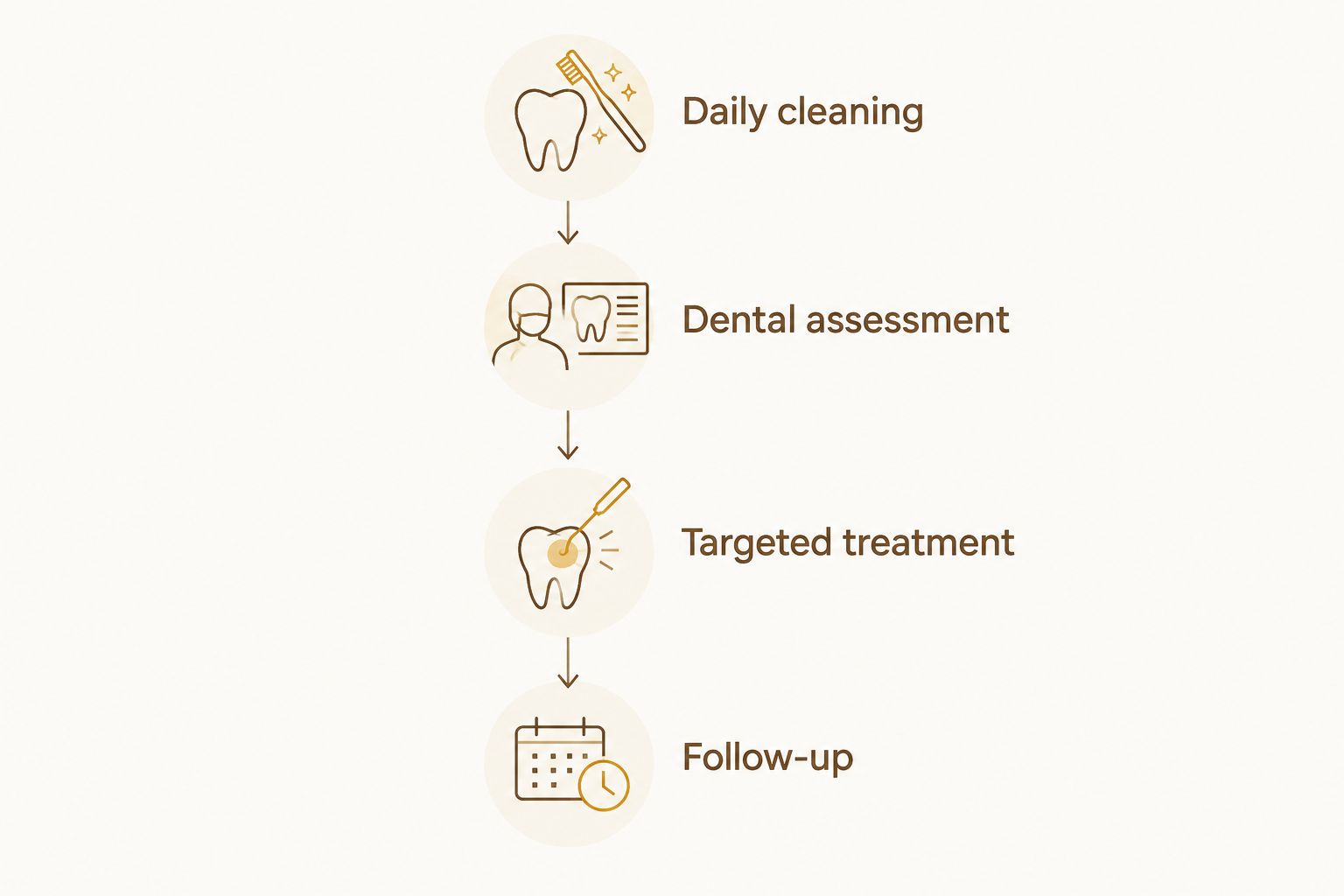
Use this decision sequence for your 2026 care plan:
- Daily cleaning: Review brushing, interdental cleaning, and gentle tongue care.
- Dental assessment: Arrange an examination for continued odor or accompanying symptoms.
- Targeted treatment: Address diagnosed gum disease, decay, or dryness.
- Follow-up: Reassess symptoms that remain after the recommended care.
If you are considering veneers, implants, or Invisalign, mention bad breath during your consultation rather than treating it as a separate embarrassment. Harmony Dental Group offers these services, and discussing gum health and cleaning needs helps keep the consultation focused on your whole mouth.
Take the next step toward care
Discuss persistent bad breath and your dental concerns with Harmony Dental Group in La Jolla.
FAQ
What's the best treatment for bad breath that keeps coming back?
A dental assessment is the best starting point for recurring bad breath that continues despite consistent cleaning. The findings determine whether you need periodontal care, treatment for decay, dry mouth management, or another evaluation.
Is mouthwash better than flossing for bad breath?
Mouthwash does not replace flossing or another suitable interdental cleaner. Cleaning between teeth removes plaque and trapped food that rinsing alone does not reliably remove.
Can cleaning my tongue get rid of bad breath?
Gentle tongue cleaning can help when tongue coating contributes to odor. It does not treat gum disease, decay, or persistent dry mouth, so continued symptoms need assessment.
Does bad breath mean I have gum disease?
Bad breath alone does not diagnose gum disease. Bleeding gums, loose teeth, or other gum changes make a dental examination especially important.
Why does my breath smell even though I brush?
Brushing does not address every possible source of odor. Buildup between teeth, tongue coating, gum disease, dry mouth, and causes outside the mouth need different approaches.
Should I see a dentist or a doctor for persistent bad breath?
A dentist is a practical starting point when persistent bad breath occurs without an obvious medical explanation. If dental findings do not explain it, further evaluation with a medical clinician can be appropriate.
Can veneers or teeth whitening fix bad breath?
Veneers and whitening are not treatments for the underlying causes of bad breath. Discuss persistent odor before cosmetic treatment so dental disease or dryness can be assessed.
When does bad breath need urgent attention?
Seek prompt care when bad breath occurs with significant dental pain, swelling, or fever. Trouble breathing or swallowing requires emergency medical attention rather than a routine dental appointment.
One last thing
A fresher taste is not proof that the underlying problem is resolved. In 2026, the useful question remains: what is causing the odor, and does the treatment address it?
Bring that question to your consultation. You deserve a clear explanation and a practical next step—not pressure to buy another product.