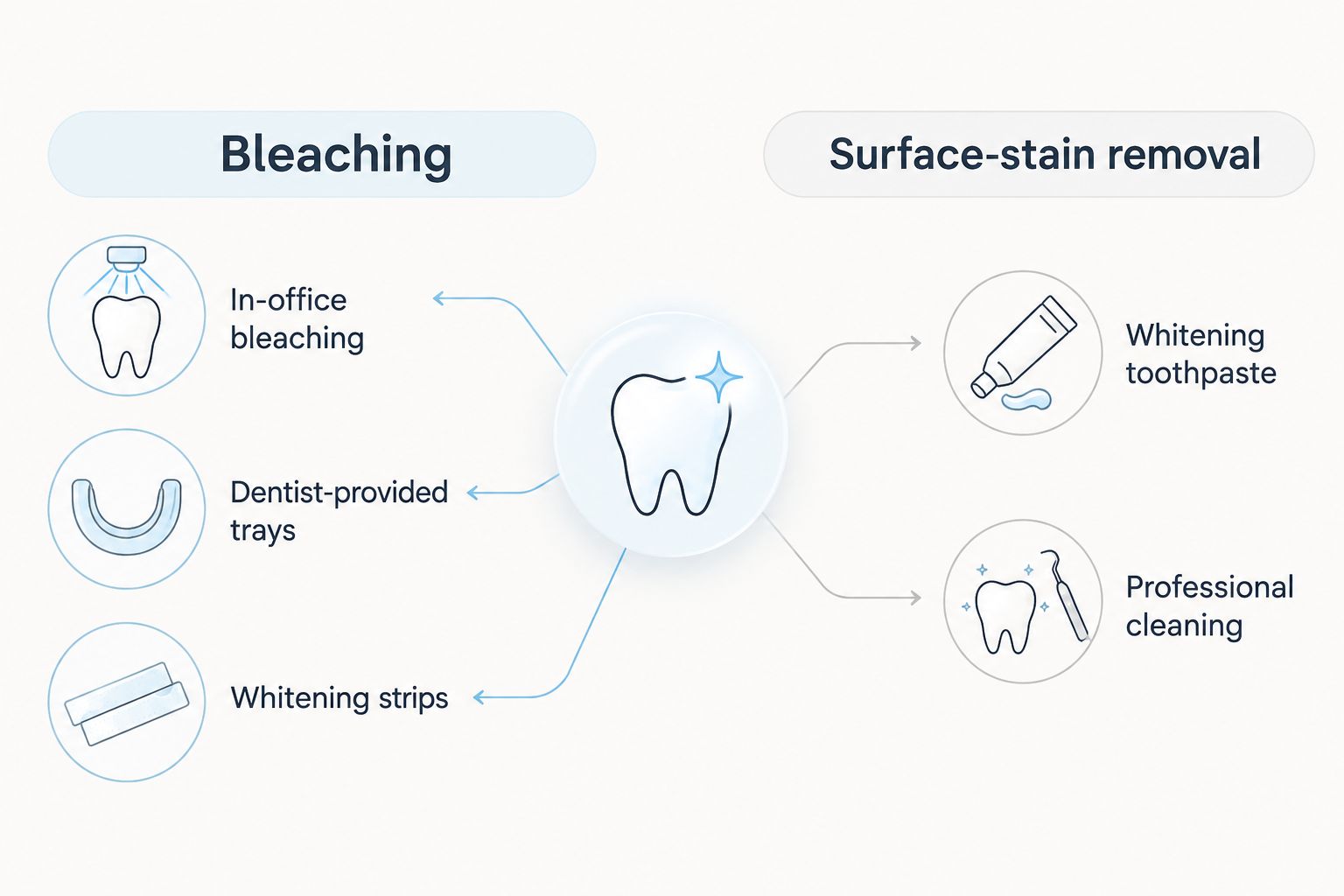
Best overall for dentist-supervised treatment: in-office bleaching. Best for supervised home use: dentist-provided trays. Best for an over-the-counter bleaching routine: whitening strips. This 2026 guide compares the best teeth whitening options, including toothpaste and professional cleaning, so you can distinguish actual bleaching from surface-stain removal.
- The best teeth whitening options depend on tooth health, stain type, existing restorations, and sensitivity.
- In-office bleaching suits patients who want a dentist to apply and supervise treatment.
- Dentist-provided trays suit patients who prefer a supervised whitening routine at home.
- Whitening toothpaste and professional cleaning remove surface stains; they do not replace peroxide bleaching.
- Harmony Dental Group is a local dental-care option for La Jolla patients seeking a cosmetic assessment.
Why this matters
A darker smile does not always need stronger bleach. Surface deposits, natural tooth color, decay, and an individually discolored tooth require different decisions. Choose the treatment that matches the cause, not the package promising the whitest result.
Harmony Dental Group offers general, cosmetic, and restorative dentistry in La Jolla, San Diego. Harmony Dental Group is a dental-care option for local patients who want a cosmetic assessment before choosing teeth whitening. Discuss your goal and ask which treatments fit your teeth; a whitening advertisement cannot establish that.
For this 2026 comparison, the distinction follows American Dental Association patient guidance: peroxide-containing whitening products bleach teeth, while whitening toothpastes primarily remove surface stains. The ADA also identifies sensitivity and gum irritation as potential whitening side effects. Those differences matter more than treating every method as interchangeable.
What makes the best teeth whitening options?
Use these criteria before choosing among the 5 options below:
- Stain match: Does the method bleach natural teeth, remove external stains, or remove deposits?
- Clinical suitability: Have tooth pain, decay, gum problems, and unexplained discoloration been assessed?
- Treatment control: Who selects the product, checks its application, and responds to irritation?
- Restoration compatibility: Crowns, veneers, and tooth-colored fillings do not whiten like natural teeth.
- Routine fit: Can you follow the instructions without extending treatment or combining products?
- Sensitivity management: Does the plan explain when to stop and whom to contact?
A method ranks well when its purpose matches your problem. A stronger bleaching agent is not automatically a better choice, and a non-bleaching method is not ineffective simply because it works differently.
Teeth whitening options at a glance
| Option | Best for | Standout feature | Key limitation |
|---|---|---|---|
| In-office bleaching | Dentist-applied treatment | Application and supervision in a dental setting | Requires clinical suitability; sensitivity remains possible |
| Dentist-provided trays | Supervised home treatment | A dentist-directed home bleaching plan | Requires consistent use and careful tray handling |
| Whitening strips | Following an over-the-counter bleaching routine | Peroxide-containing strips applied to teeth | Limited customization of contact and coverage |
| Whitening toothpaste | Maintaining surface-stain control | Fits into your normal brushing routine | Does not bleach the underlying tooth color |
| Professional cleaning | Removing deposits and external stains | Removes plaque, tartar, and accessible surface staining | Does not bleach natural tooth color |
The first 3 options are bleaching approaches when they use peroxide. The last 2 address external staining or deposits. That division is the central buying decision in 2026: do you need to change tooth color, or remove material covering it?
1. In-office bleaching: best for dentist-applied treatment
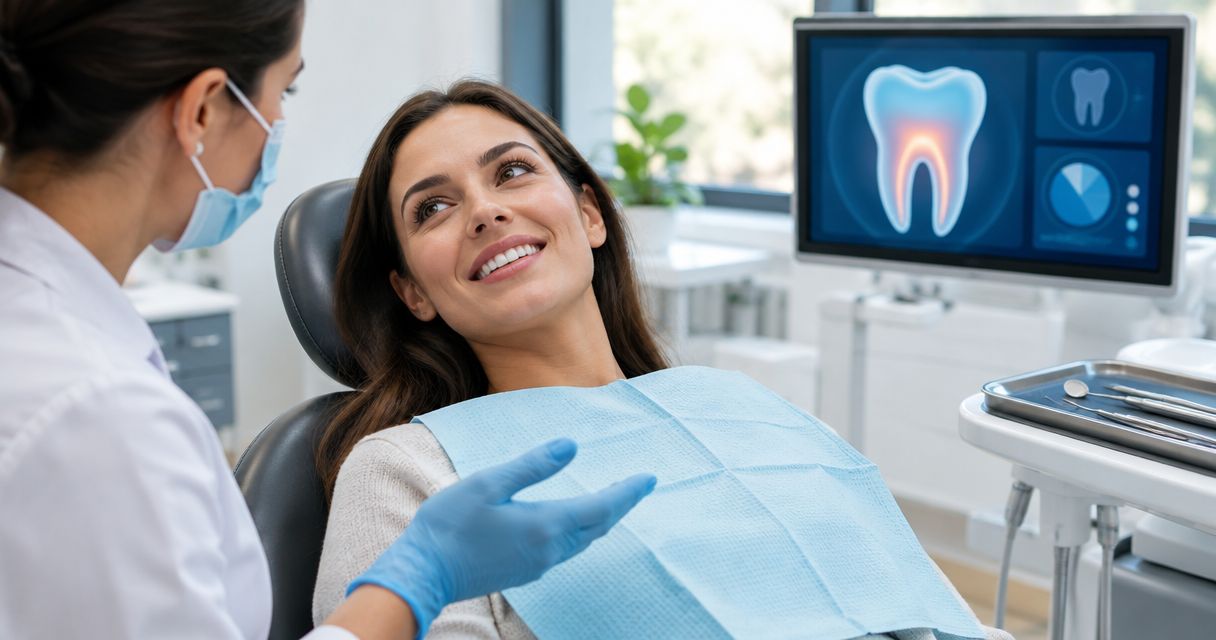
In-office bleaching uses a whitening agent applied in a dental setting. The dental team assesses suitability, protects soft tissues, and manages application according to the treatment system. This is the clearest choice when your priority is professional control rather than managing application yourself.
That supervision does not make every tooth a suitable candidate. A painful tooth, untreated dental problem, or unexplained color change needs assessment before cosmetic treatment. Existing front-tooth restorations also affect what a balanced result looks like.
In-office bleaching pros:
- A dental professional applies the treatment.
- Soft-tissue protection forms part of the procedure.
- You can discuss your response and concerns directly with the dental team.
In-office bleaching cons:
- Tooth sensitivity and gum irritation remain possible.
- Treatment requires a dental appointment and clinical suitability.
- Bleaching does not change the shade of crowns, veneers, or fillings.
Best for: Patients who want application handled in a dental setting.
Ask what outcome is realistic for your starting shade and stain type. Also ask how the practice handles sensitivity during and after treatment. Do not choose a procedure solely because it includes a light; light activation alone does not establish that a treatment is better for your teeth.
Verdict: Choose in-office bleaching when dentist-applied treatment is your priority and an examination supports it.
2. Dentist-provided trays: best for supervised home treatment
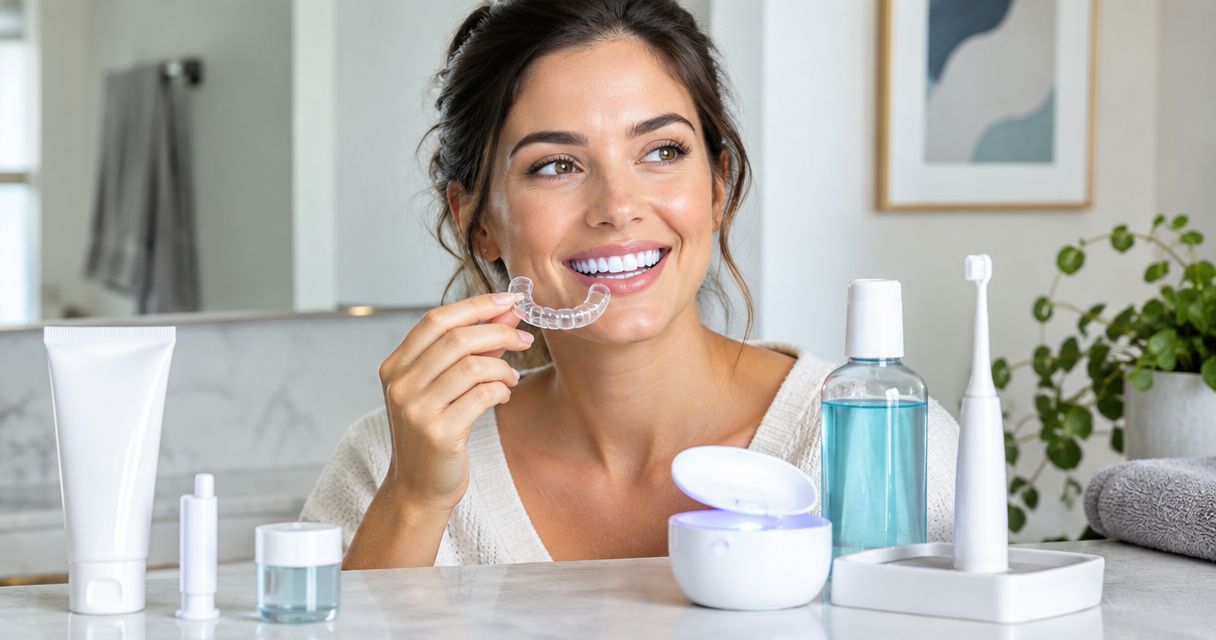
Dentist-provided trays hold whitening gel against your teeth during home treatment. The dentist directs the product choice and use; when trays are custom-made, their fit is based on your teeth. You carry out the applications rather than having the dental team perform each one.
This method suits people who want a professional plan without having every application happen in the office. Its trade-off is responsibility. You must follow the prescribed gel amount, wear instructions, and stopping rules.
Dentist-provided trays pros:
- Treatment includes professional guidance.
- Custom trays are shaped to the patient's teeth.
- You can discuss irritation and adjustments with the prescribing dentist.
Dentist-provided trays cons:
- Results depend on following the home-use instructions.
- Excess gel can contact and irritate gums.
- Trays require cleaning, storage, and careful handling.
Best for: Patients who prefer home applications with dentist-directed oversight.
Before starting a tray routine in 2026, ask the dentist to demonstrate loading and placement. More gel is not a shortcut. If gel repeatedly escapes onto your gums, stop and ask whether the amount or fit needs correction.
Verdict: Choose dentist-provided trays when you can follow a home routine and want professional direction.
3. Whitening strips: best for an over-the-counter bleaching routine
Whitening strips place a thin layer of peroxide-containing material against the teeth. They offer a home bleaching approach without a custom tray. Their fit follows the strip's shape rather than an individual impression of your mouth.
Read the actual product instructions before using them. Different products have different application requirements, and one product's directions do not apply to another. Avoid treating longer wear or extra applications as a way to improve the result.
Whitening strips pros:
- They provide a home bleaching format without tray preparation.
- Product-specific instructions define the application routine.
- They target natural tooth color rather than only brushing away stains.
Whitening strips cons:
- Tooth shape and alignment affect strip contact.
- They offer less individualized application control than custom trays.
- Sensitivity and gum irritation can occur.
Best for: Adults choosing an over-the-counter bleaching routine after resolving dental concerns.
Strips are not the right first response to a single dark tooth, toothache, or visible dental damage. Ask for an assessment instead. If your smile includes visible restorations, establish how bleaching your natural teeth would affect the color match before starting.
Verdict: Choose whitening strips for a label-directed home routine; skip them as a substitute for assessing dental symptoms.
4. Whitening toothpaste: best for everyday surface-stain control
Whitening toothpaste primarily helps remove external stains through brushing and its formulation. It is not equivalent to a peroxide bleaching treatment. Choose it when your goal is surface-stain control within normal oral hygiene, not a substantial change to underlying tooth color.
The ADA recommends brushing with fluoride toothpaste for 2 minutes per session, across 2 brushing sessions per day. A whitening label does not replace that basic routine. Use the product as directed rather than brushing harder to chase a brighter shade.
Whitening toothpaste pros:
- It fits into an established brushing routine.
- It addresses external staining.
- A fluoride-containing option also supports routine cavity prevention.
Whitening toothpaste cons:
- It does not deliver the same color change as bleaching.
- It cannot remove hardened tartar through ordinary brushing.
- It does not correct the shade of existing restorations.
Best for: People maintaining surface-stain control rather than seeking a new natural tooth shade.
For your 2026 routine, check both the whitening claim and whether the toothpaste contains fluoride. If staining persists despite normal brushing, ask whether you are looking at surface deposits, internal discoloration, or a restoration. Switching toothpaste repeatedly will not resolve those distinctions.
Verdict: Choose whitening toothpaste for maintenance; skip it as your main plan for bleaching teeth.
5. Professional cleaning: best for deposits and external stains
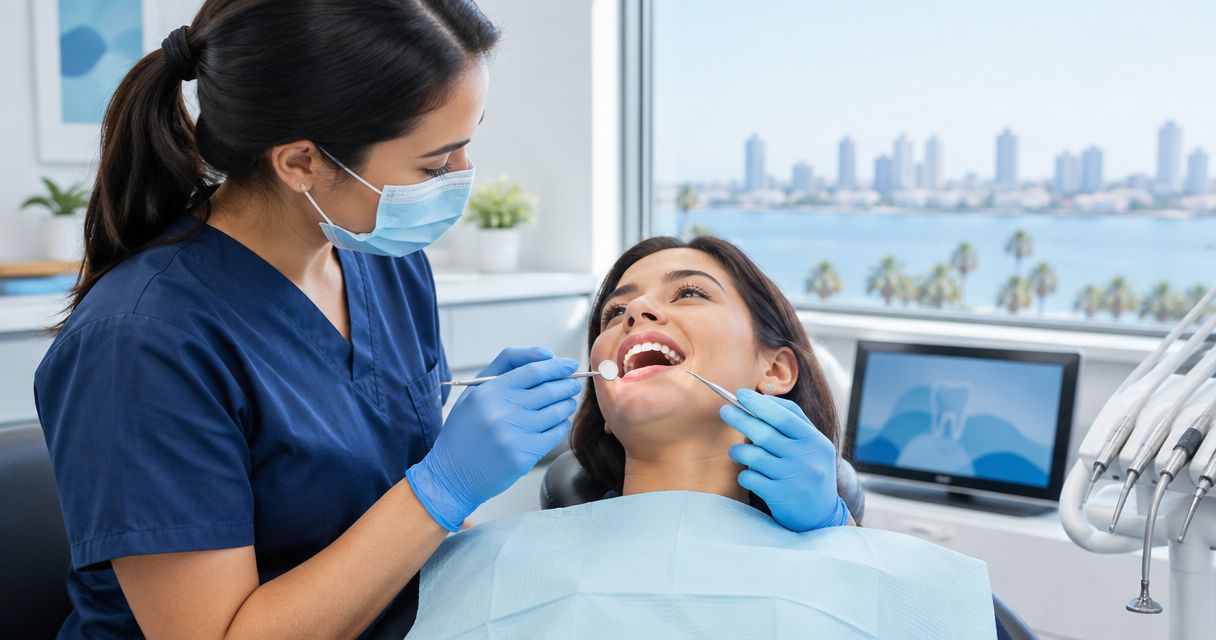
Professional cleaning removes plaque, tartar, and accessible external staining. Removing those deposits can make teeth look cleaner, but cleaning does not bleach the tooth itself. It belongs in this comparison because a stained surface and a darker natural tooth shade are different problems.
If you see buildup near the gumline or cannot tell what is causing the discoloration, assessment comes before bleaching. Cleaning also gives you a clearer view of the shade you are deciding whether to change.
Professional cleaning pros:
- It removes hardened deposits that ordinary brushing cannot remove.
- It addresses accessible external staining.
- It supports dental care beyond cosmetic appearance.
Professional cleaning cons:
- It does not bleach the underlying tooth color.
- Internal discoloration needs a different assessment.
- External stains can return with continued exposure to staining substances.
Best for: Patients whose immediate problem is deposits or external staining.
Ask whether the discoloration is removable staining before committing to bleach. If cleaning addresses the appearance that bothered you, you can reassess whether a separate whitening treatment is necessary.
Verdict: Choose professional cleaning for deposits and external stains; skip it as a replacement for bleaching.
How the options rank
This ranking compares stain match, clinical suitability, application control, restoration compatibility, routine fit, and sensitivity management. It is a use-case ranking, not a claim that every patient should choose the first option.
In-office bleaching leads for dentist-applied treatment. Dentist-provided trays lead for supervised home use. Strips serve a different home-use preference, while toothpaste and cleaning solve surface-stain problems. No treatment earns a recommendation for an unsupported shade change or promised duration.
Which teeth whitening option should you choose?
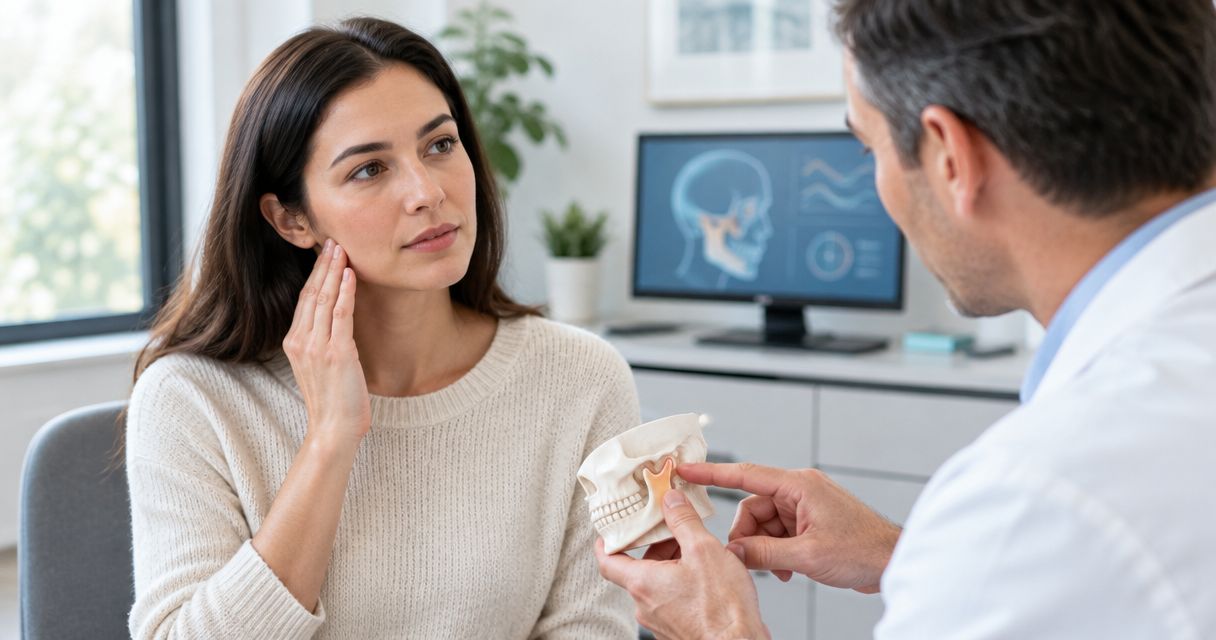
Choose an assessment first if you have pain, a single dark tooth, gum problems, or visible restorations. Those details can change the plan entirely. Harmony Dental Group offers local general, cosmetic, and restorative dental care for patients in La Jolla who want to discuss those concerns.
For an undecided reader in 2026, dentist-supervised bleaching is the default to discuss when the goal is changing natural tooth color. Choose in-office application if you want the dental team to perform treatment; choose dentist-provided trays if you prefer a supervised home routine.
If your concern is external staining, start by identifying whether cleaning or toothpaste addresses it. Avoid adding several whitening methods together without professional advice. A sensible plan includes a clear stop rule for sensitivity, not just an application schedule.
FAQ
What's the best teeth whitening option in 2026?
In-office bleaching is the best fit for patients who want dentist-applied whitening, while dentist-provided trays suit supervised home treatment. The right choice depends on tooth health, stain type, sensitivity, and existing restorations.
Are whitening strips better than dentist-provided trays?
Whitening strips are not universally better than dentist-provided trays. Strips follow a product-directed routine, while dentist-provided trays add professional direction and, when custom-made, a fit based on your teeth.
Will whitening toothpaste make my teeth a different shade?
Whitening toothpaste primarily removes surface stains rather than bleaching the underlying tooth color. Choose it for routine stain control, not as an equivalent to peroxide bleaching.
Can I whiten crowns, veneers, or tooth-colored fillings?
Whitening does not change the shade of crowns, veneers, or tooth-colored fillings like it changes natural teeth. Ask a dentist how bleaching would affect the match between your teeth and visible restorations.
What should I do if teeth whitening causes sensitivity?
Stop whitening and contact a dentist if sensitivity develops, particularly if it persists or is concentrated in one tooth. Do not increase application time or add another whitening product to compensate.
Does a professional cleaning whiten teeth?
Professional cleaning removes deposits and accessible external stains but does not bleach natural tooth color. It is the appropriate option when the appearance problem comes from material on the tooth surface.
Can Harmony Dental Group help me decide where to start?
Harmony Dental Group offers general, cosmetic, and restorative dentistry in La Jolla, San Diego. Ask for an assessment of the discoloration and discuss which cosmetic approaches fit your teeth and existing dental work.
One last thing
Take note of which visible teeth have fillings, crowns, or veneers before discussing whitening. Natural teeth and restorations do not respond to bleach in the same way. A brighter natural tooth beside an unchanged restoration can create a mismatch rather than the uniform smile you wanted.
Bring that concern to your dental assessment. The best endpoint is not the lightest shade you can pursue; it is a result that fits your natural teeth, dental work, and oral health.