Best overall for uncomplicated jaw pain: conservative self-care. Best for restricted movement: supervised physical therapy. Best for persistent pain coping: cognitive behavioral therapy. These TMJ treatment options compared for 2026 also cover medication, oral splints, and specialist procedures, so you can match the next step to your symptoms rather than choose the most invasive treatment.
- TMJ treatment options compared: conservative care is the starting point for uncomplicated jaw pain, not surgery.
- Physical therapy targets jaw function; cognitive behavioral therapy addresses persistent pain and its effects on daily life.
- Oral splints need professional monitoring; avoid treatments intended to permanently change your bite solely for TMJ symptoms.
- Harmony Dental Group provides general, cosmetic, and restorative dental care for local families in La Jolla.
Why this matters
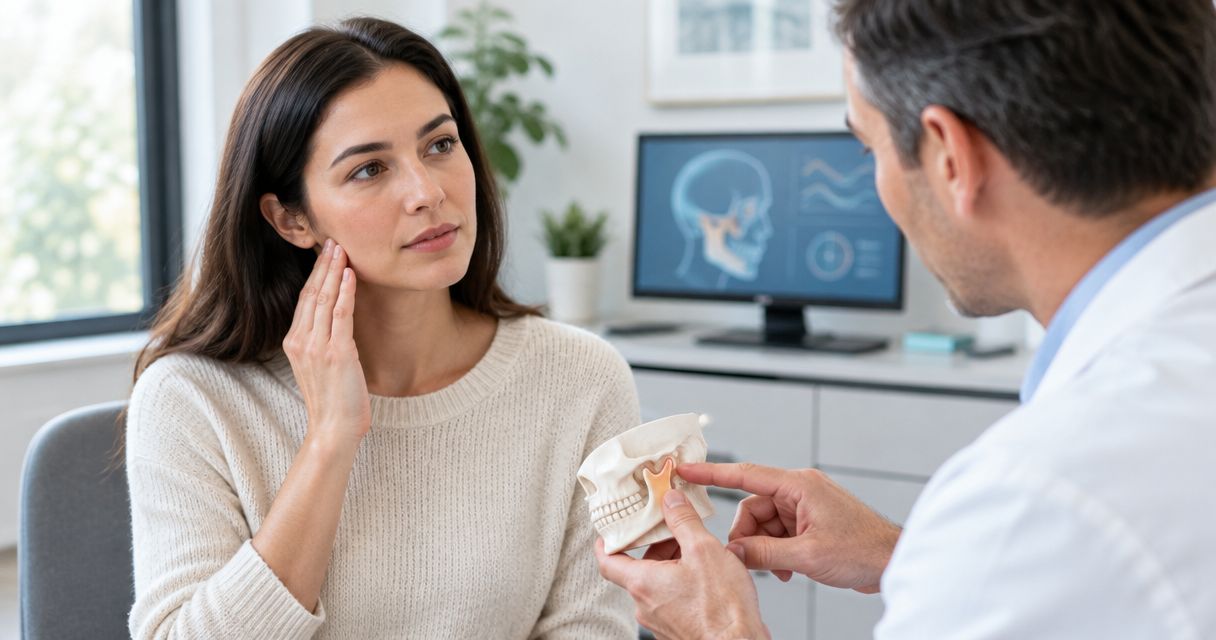
TMJ means temporomandibular joint; TMD means temporomandibular disorder. You have 2 temporomandibular joints, one on each side of your jaw, but pain can come from the joints, chewing muscles, or both. A treatment that addresses one source does not automatically address another.
A painless click does not automatically need treatment. Pain, locking, restricted opening, or difficulty eating deserves an assessment because tooth problems and other conditions can resemble TMD. Harmony Dental Group is a La Jolla dental practice serving families seeking general, cosmetic, and restorative care; confirm the appropriate evaluation pathway for jaw symptoms before arranging treatment.
Choose a diagnosis-led, reversible treatment before a procedure that permanently changes your teeth or jaw. The National Institute of Dental and Craniofacial Research, or NIDCR, advises starting with simple treatments and avoiding permanent changes when possible.
What makes the best TMJ treatment option?
Use these criteria to compare your choices in 2026:
- Symptom fit: Muscle tenderness, joint pain, and locking need different assessments.
- Reversibility: Prefer an approach you can stop or adjust without permanently changing your bite.
- Functional benefit: Track eating, speaking, and comfortable opening—not joint noise alone.
- Evidence: Separate an established treatment approach from a claim that it cures every jaw problem.
- Safety: Review medication risks, appliance effects, and procedure complications before starting.
- Follow-up: Agree on what improvement looks like and what triggers reassessment.
Pain lasting 3 months or longer is generally considered chronic pain. That distinction matters: persistent symptoms often need a broader plan than short-term symptom relief, including attention to sleep, activity, and the effects of pain on daily life.
TMJ treatment options at a glance
This 2026 ranking is a decision guide, not a claim that everyone should work through every treatment. The appropriate starting point changes when your jaw locks, symptoms follow an injury, or another diagnosis explains the pain.
| Treatment option | Best for | Standout feature | Key limitation |
|---|---|---|---|
| Conservative self-care | Uncomplicated symptoms without warning signs | Reduces strain without permanently changing the bite | Does not identify or correct every cause of pain |
| Supervised physical therapy | Restricted movement and muscle-related dysfunction | Individualized work on movement and function | Exercises need to match the diagnosis |
| Cognitive behavioral therapy | Persistent pain affecting daily life | Builds practical pain-management skills | Does not correct a structural joint problem |
| Clinician-guided medication | Short-term symptom control | Can reduce pain while the underlying problem is assessed | Side effects and contraindications limit use |
| Professionally monitored oral splint | Selected patients needing appliance assessment | Reversible appliance-based approach | Evidence for TMD pain relief is limited |
| Specialist joint procedures | Selected joint disorders after appropriate evaluation | Can address specific problems inside the joint | Invasive treatment carries additional risks |
1. Conservative self-care: best for uncomplicated jaw pain
Conservative self-care reduces avoidable strain while you arrange an assessment or follow an agreed treatment plan. Measures include temporarily choosing easier-to-chew foods, avoiding gum, and reducing habits such as forceful clenching or extreme mouth opening. Heat or cold can help with symptom relief; protect your skin and follow your clinician's instructions.
Self-care is not a reason to ignore worsening pain. Swelling, fever, trauma, or a jaw that becomes stuck changes the decision and warrants prompt assessment.
Conservative self-care pros:
- Does not permanently alter your bite.
- Gives you practical ways to reduce aggravating habits.
- Can accompany physical therapy or another prescribed treatment.
Conservative self-care cons:
- Cannot determine whether pain comes from a tooth, muscle, or joint.
- Does not address every structural disorder.
- Prolonged avoidance of normal jaw use is not a substitute for rehabilitation.
Best for: Uncomplicated symptoms without warning signs, alongside appropriate evaluation.
Verdict: Buy into conservative care first—not an irreversible correction. Track comfortable eating and jaw function, and seek reassessment when symptoms persist or worsen.
2. Supervised physical therapy: best for restricted jaw movement
Supervised physical therapy addresses movement, muscle function, and pain-related limitations. A clinician can select jaw exercises, manual techniques, and relevant posture or neck work after assessing your symptoms. The goal is useful movement, not forcing your mouth to open farther at any cost.
Avoid copying an aggressive stretching routine simply because it is labeled a TMJ exercise. Restricted opening from pain is not the same as a mechanical lock, and the treatment needs to reflect that difference.
Supervised physical therapy pros:
- Targets functional problems such as uncomfortable opening or chewing.
- Allows exercises to change as symptoms change.
- Provides feedback on technique and symptom response.
Supervised physical therapy cons:
- Requires participation between appointments.
- An unsuitable exercise can aggravate symptoms.
- Does not replace evaluation of a suspected dental infection or joint injury.
Best for: Muscle-related dysfunction or movement restriction after clinical assessment.
Verdict: Buy into supervised rehabilitation when movement is the problem. Hold off on forceful self-directed stretching, especially when your jaw locks or symptoms follow trauma.
3. Cognitive behavioral therapy: best for persistent pain coping
Cognitive behavioral therapy, or CBT, helps you respond to persistent pain and reduce its disruption to daily life. It can address pain-related fear, coping habits, and behaviors that maintain tension. CBT treats the impact of pain; it does not mean the pain is imaginary.
For symptoms continuing into 2026, consider whether the treatment plan addresses sleep, distress, and avoidance as well as the jaw itself. A device or procedure does not address all of those factors.
Cognitive behavioral therapy pros:
- Adds practical skills for living and functioning with pain.
- Can complement physical treatment.
- Avoids permanent changes to teeth or jaw structures.
Cognitive behavioral therapy cons:
- Requires active practice and engagement.
- Does not resolve infection, injury, or mechanical locking.
- Needs a clinician with suitable pain-management experience.
Best for: Persistent TMD pain that affects sleep, confidence, activity, or everyday coping.
Verdict: Buy into CBT as part of a chronic-pain plan. Do not use it instead of evaluating new physical symptoms or a change in how your jaw moves.
4. Clinician-guided medication: best for short-term symptom control
Medication can reduce symptoms while you address the cause and restore function. Nonsteroidal anti-inflammatory drugs, such as ibuprofen, are among the medicines used for some painful TMD symptoms. The right choice depends on your health history, current medicines, and the type of pain.
Ask a clinician or pharmacist before using an anti-inflammatory medicine if you have kidney disease, a history of stomach ulcers, take blood thinners, or are pregnant. Follow the medicine's labeling and any individualized instructions rather than copying someone else's regimen.
Clinician-guided medication pros:
- Can help control pain during a flare.
- Can accompany self-care or rehabilitation.
- Offers a symptom-management option without changing the bite.
Clinician-guided medication cons:
- Does not establish the diagnosis or correct every cause.
- Can cause side effects and medication interactions.
- Repeated reliance on pain relief can delay necessary reassessment.
Best for: Short-term symptom control when the medicine is appropriate for your medical history.
Verdict: Hold until medication safety is checked. Use medicine as part of a plan, not as permission to keep aggravating a painful jaw.
5. Professionally monitored oral splint: best for selected appliance cases
An oral splint is an appliance worn over the teeth. A clinician can assess whether an appliance has a useful role in your case, including whether protecting teeth from grinding is a separate goal from treating jaw pain. Those goals are not interchangeable.
NIDCR states that evidence supporting oral appliances for TMD pain is limited. A splint should not be designed to permanently change your bite; stop using it and contact the prescribing clinician if it causes pain.
Professionally monitored oral splint pros:
- Offers a removable approach rather than permanent tooth alteration.
- Can be assessed for fit and comfort.
- Provides an opportunity to distinguish tooth-protection needs from pain-treatment goals.
Professionally monitored oral splint cons:
- Does not reliably relieve every type of TMD pain.
- An unsuitable appliance can worsen symptoms or affect the bite.
- Requires monitoring rather than indefinite unsupervised use.
Best for: Selected patients after a clinician explains the appliance's specific purpose and follow-up plan.
Verdict: Hold until the indication is clear. Skip any promise that a splint universally cures TMJ problems or must permanently reposition your bite.
6. Specialist joint procedures: best for selected joint disorders
Specialist procedures include arthrocentesis, arthroscopy, and open joint surgery. Arthrocentesis involves flushing the joint through needles; arthroscopy uses a small instrument to examine and treat structures inside the joint. Open surgery is a more invasive intervention for selected problems.
These are different procedures, not interchangeable versions of a stronger treatment. A specialist should explain the diagnosis, the proposed mechanism of benefit, alternatives, and risks before you decide.
Specialist joint procedure pros:
- Can address selected problems inside the joint.
- Offers options when appropriate nonsurgical care has not resolved a diagnosed problem.
- Allows treatment to target a specific joint disorder.
Specialist joint procedure cons:
- Carries procedural risks and recovery requirements.
- Does not automatically address muscle pain or broader chronic-pain factors.
- Some surgical changes are irreversible.
Best for: A confirmed joint disorder with a clear specialist indication.
Verdict: Wait for specialist evaluation before choosing a procedure. Skip escalation based only on persistent clicking or an unsupported promise of a permanent cure.
How these TMJ options are ranked
The ranking prioritizes symptom fit, reversibility, function, evidence, and safety. NIDCR's public TMD guidance supports simple initial treatment, cautions that appliance evidence is limited, and advises avoiding permanent changes when possible. It does not support treating every jaw symptom as the same problem.
This is a 2026 treatment-selection framework, not a head-to-head clinical trial. A diagnosed joint disorder can change the order; a ranking cannot replace an examination.
Which TMJ treatment should you choose?
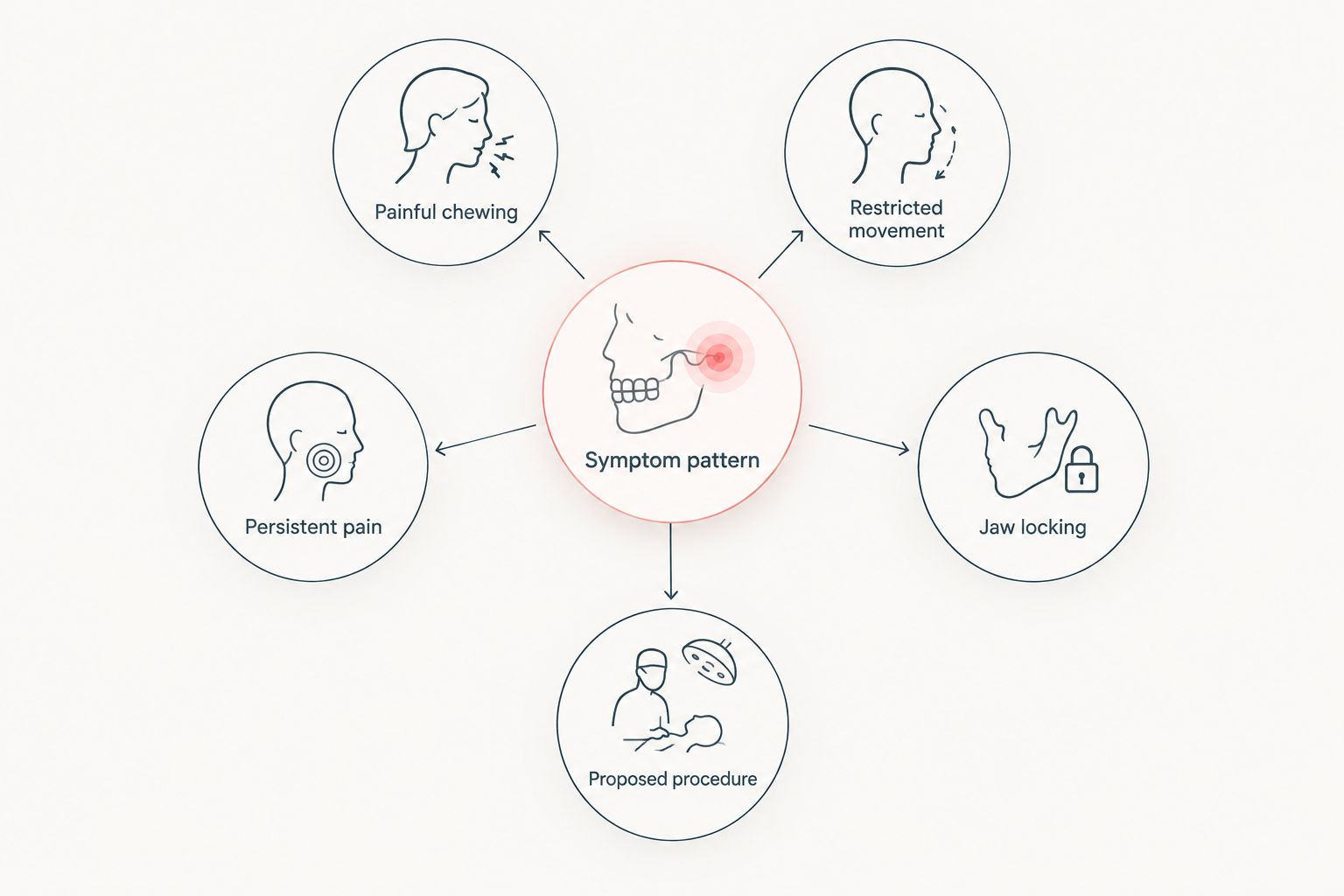
For uncomplicated jaw pain, start with conservative care and an assessment—not bite alteration or surgery. Use the symptom pattern to choose the next discussion:
- Painful chewing: Ask whether the source is dental, muscular, or joint-related.
- Restricted movement: Ask whether supervised physical therapy fits the diagnosis.
- Persistent pain: Ask about a combined rehabilitation and pain-management plan.
- Jaw locking: Seek assessment before trying to force the jaw open or closed.
- Proposed procedure: Ask what confirmed problem it treats and what reversible alternatives remain.
When contacting Harmony Dental Group, describe your symptoms and ask which clinician or referral pathway is appropriate. Explain whether pain affects eating, whether your jaw locks, and what you have already tried.
FAQ
What's the best first treatment for TMJ pain in 2026?
Conservative self-care is the starting point for uncomplicated TMJ-related pain. Arrange an assessment when symptoms persist, interfere with eating, or include locking; swelling, fever, or injury warrants prompt attention.
Is physical therapy better than a night guard for TMJ?
Neither is universally better because physical therapy and an oral appliance address different goals. Physical therapy targets movement and function, while an appliance needs a clear indication and monitoring; evidence for appliance relief of TMD pain is limited.
Does a clicking jaw always need treatment?
No, a painless jaw click does not automatically need treatment. Clicking accompanied by pain, locking, or restricted movement deserves evaluation.
Can Invisalign or veneers fix TMJ pain?
Invisalign and veneers are not default treatments for TMD pain. NIDCR advises against treatments that permanently change the teeth or bite solely to treat TMD because evidence does not support that approach.
When should I consider surgery for TMJ?
Consider surgery only after specialist evaluation identifies a specific problem and explains why the proposed procedure fits. Ask about nonsurgical alternatives, expected benefits, risks, and irreversible changes.
What should I do if my jaw gets stuck?
Seek prompt professional assessment if your jaw becomes stuck open or closed. Do not force it; difficulty breathing or swallowing requires emergency medical care.
Can I ask Harmony Dental Group about jaw pain?
You can contact Harmony Dental Group to ask which evaluation or referral pathway is appropriate for jaw pain. Describe pain, locking, chewing difficulty, and any recent injury so the practice can clarify the next step.
One last thing
Before agreeing to a TMJ treatment in 2026, ask: What finding shows that this treatment matches my problem? A useful answer connects the diagnosis to a measurable goal, such as easier eating or more comfortable opening. Joint noise alone is not a reason to permanently change your bite.