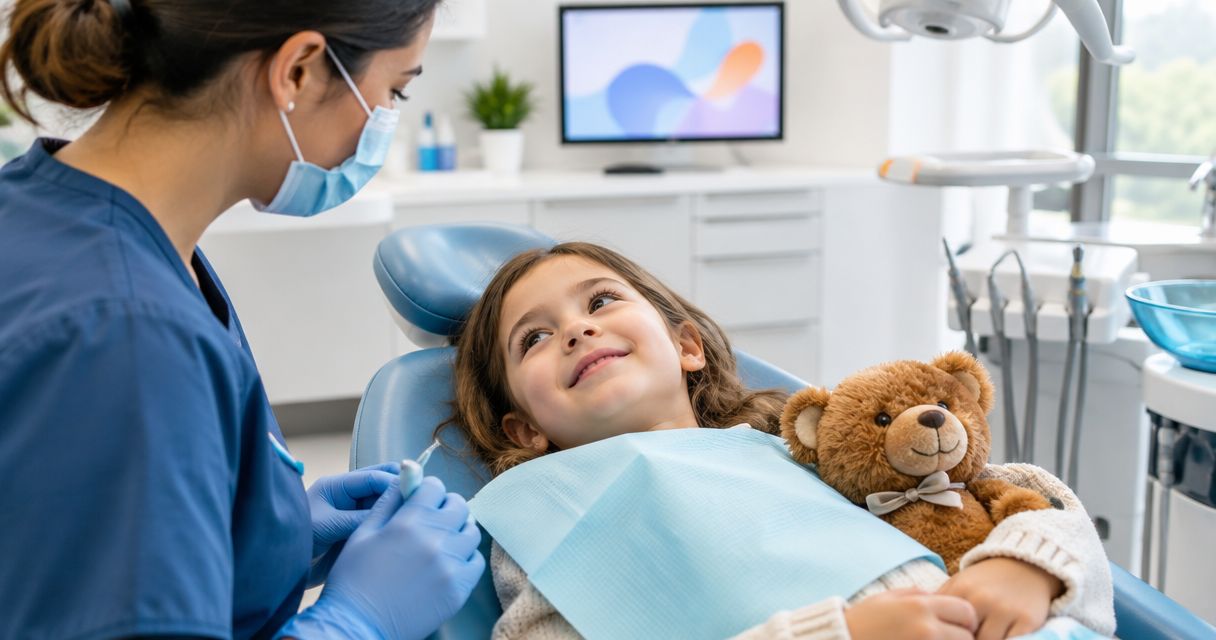
Best starting point for a child with mild anxiety who can accept a nose mask: nitrous oxide. Best for avoiding sedating medication: behavioral support. Other pediatric sedation dentistry options include oral sedation, IV sedation, and general anesthesia; the right choice depends on your child's health, ability to cooperate, and treatment needs—not which option sounds strongest.
- Nitrous oxide is a pediatric sedation dentistry option for mild anxiety when a child accepts the nose mask.
- Behavioral support helps children participate without sedating medication, but does not replace pain control.
- Oral sedation, IV sedation, and general anesthesia require different preparation, monitoring, and recovery plans.
- Harmony Dental Group provides general dental care in La Jolla; ask about child-specific evaluation and referral needs.
Why this matters
A frightened child needs a plan for both comfort and safety. Sedation reduces anxiety or awareness; local anesthesia numbs the treatment area. They do different jobs, and your child can need both.
Harmony Dental Group provides general dental care for local families in La Jolla. Before arranging pediatric sedation, confirm who evaluates children, which approaches are offered, and whether a pediatric dentist or anesthesia professional needs to be involved.
This 2026 comparison separates medication routes from sedation depth. For a broader explanation of anxiety management, see the guide to sedation dentistry options for anxious patients; a child's assessment requires additional attention to development, airway health, and caregiver instructions.
What makes the best pediatric sedation dentistry option?
Choose an approach against these criteria before comparing convenience:
- Health and airway assessment: Medical conditions, medicines, allergies, snoring, and previous anesthesia problems belong in the evaluation.
- Developmental readiness: Your child's ability to accept a mask, follow directions, and remain still matters more than age alone.
- Treatment demands: An examination and extensive restorative treatment do not necessarily need the same approach.
- Pain control: Sedation is not a substitute for appropriate local anesthesia during painful treatment.
- Monitoring and rescue: The team needs equipment, training, and personnel appropriate to the intended sedation level and an unexpectedly deeper level.
- Recovery planning: Preparation, supervision afterward, and discharge instructions should be clear before treatment day.
The best choice is the least intensive approach that allows necessary treatment to be completed safely and humanely. A failed attempt is a reason to reassess the plan, not to blame your child.
Pediatric sedation dentistry options at a glance
The order below moves from common initial approaches toward options requiring more intensive assessment and support. It is not a ranking of provider quality.
| Option | Best for | Standout feature | Key limitation |
|---|---|---|---|
| Nitrous oxide | Mild anxiety with mask acceptance | Inhaled medication that can be adjusted during treatment | Requires cooperation with the nose mask |
| Behavioral support | Children able to build cooperation without sedating medicine | Preparation and communication tailored to the child | Does not reliably resolve severe distress |
| Oral sedation | Selected children needing medication without IV placement | Medication given by mouth | Effects are less readily adjusted after administration |
| IV sedation | Selected patients needing medication adjusted through a vein | Direct access for medication administration | IV placement and specialized monitoring are required |
| General anesthesia | Extensive care when awake treatment is not appropriate | Child is unconscious during treatment | Requires an anesthesia team and airway management |
Sedation depth matters more than the label
Minimal sedation generally preserves normal responses to spoken directions. Moderate sedation preserves purposeful responses to verbal or light tactile stimulation. With deep sedation, a child is not easily awakened and can need help maintaining an open airway. General anesthesia means the child is unconscious and typically needs airway support.
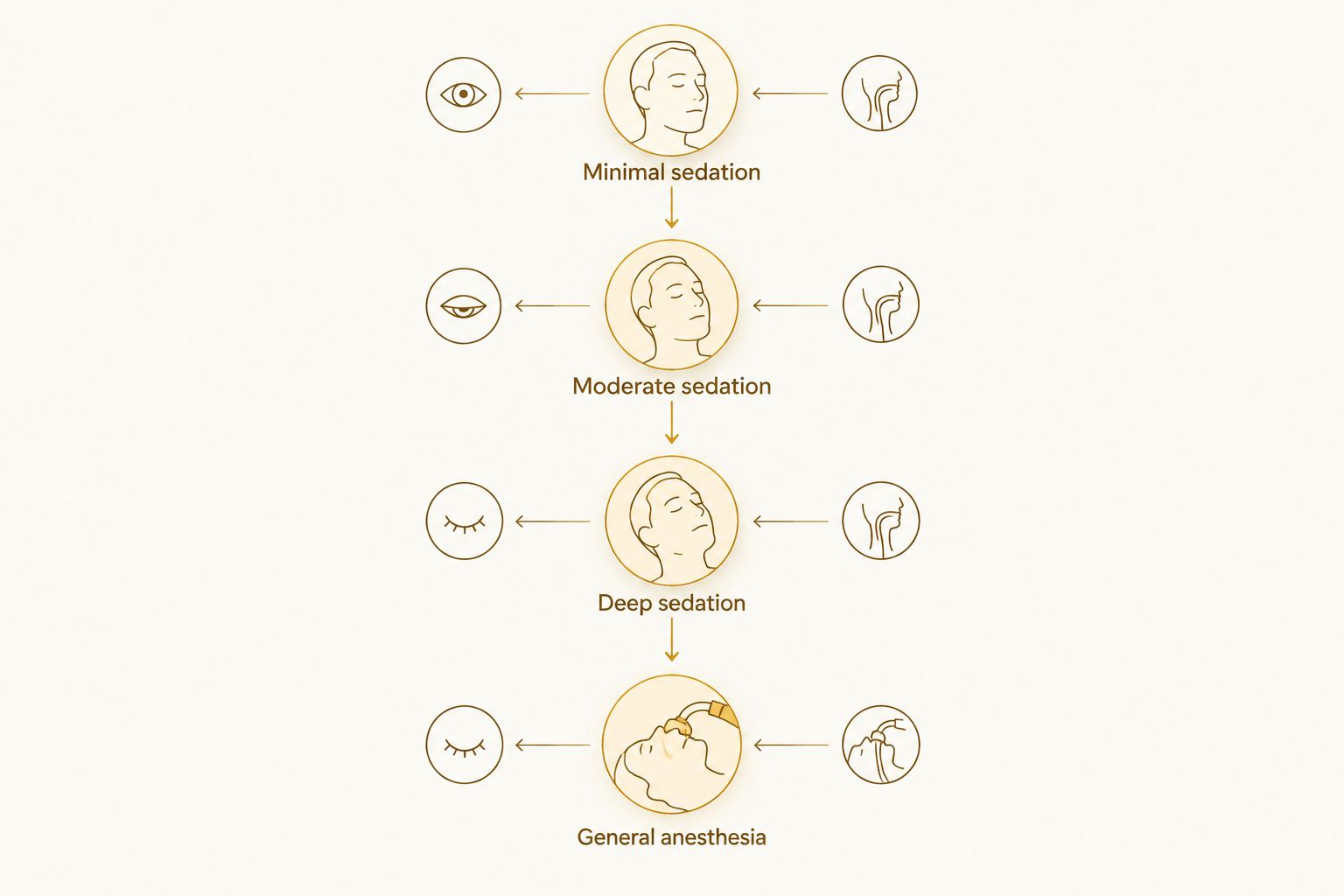
These distinctions follow the American Academy of Pediatrics and American Academy of Pediatric Dentistry guidance for monitoring children during procedural sedation. In this 2026 guide, the comparison applies to dental treatment—not a recommendation for a particular child. A medication route alone does not guarantee a specific depth.
1. Nitrous oxide: best for mild anxiety with mask acceptance
Nitrous oxide is an inhaled gas delivered with oxygen through a small nose mask. It helps reduce anxiety while a child usually remains awake and able to communicate. Local anesthesia is still needed when the dental procedure requires numbing.
Nitrous oxide pros:
- The clinician can adjust delivery during the appointment.
- The child can generally respond to instructions.
- Its effects wear off quickly after administration stops.
Nitrous oxide cons:
- A child who refuses the mask or cannot breathe comfortably through the nose is a poor fit.
- It does not reliably overcome severe anxiety or inability to cooperate.
Best for: A child with mild anxiety who can tolerate the mask and participate in treatment.
Ask how the team introduces the mask and what happens if your child becomes distressed. Do not describe nitrous oxide as putting your child to sleep; that creates an expectation the treatment does not meet.
Verdict: Hold until the dentist confirms mask tolerance and suitability for the planned procedure. Nitrous oxide is a reasonable starting discussion, not a universal answer.
2. Behavioral support: best for avoiding sedating medication
Behavioral support includes explaining treatment in child-friendly language, demonstrating sensations before using an instrument, offering distraction, and reinforcing cooperation. The American Academy of Pediatric Dentistry describes approaches such as tell-show-do as part of behavior guidance. These methods also support children receiving sedation.
Behavioral support pros:
- It avoids sedating medication when cooperation is achievable.
- It lets the team adapt explanations to your child's developmental needs.
- It builds familiarity with the dental setting.
Behavioral support cons:
- It is not a dependable substitute for sedation when distress prevents necessary care.
- Repeated unsuccessful appointments can prolong an unresolved dental problem.
Best for: Children who can participate with preparation, communication, and appropriately paced treatment.
You can help by telling the dentist about sensory sensitivities, communication preferences, and previous difficult visits. Avoid promises that nothing will hurt. Ask the team how it will explain numbing and respond to discomfort.
Verdict: Hold medication decisions until behavioral support has been considered, unless urgent treatment or clinical needs require another approach. Avoiding sedation is useful only when necessary care remains achievable.
3. Oral sedation: best for selected children without IV placement
Oral sedation uses medication swallowed before treatment. The intended effect depends on the medication, dose, child, and procedure; oral administration does not automatically mean light sedation. Your child's clinician must explain the intended depth and monitoring plan.
Oral sedation pros:
- It avoids placing an IV solely to administer the initial medication.
- It adds medication-based anxiety management when behavioral support is insufficient.
- It can form part of a planned approach for an appropriately selected child.
Oral sedation cons:
- Once swallowed, medication cannot be adjusted as directly as an inhaled or IV medication.
- Onset, response, and recovery vary, and breathing-related complications remain possible.
Best for: A child whose assessment supports oral medication and whose treatment can be completed under the planned sedation level.
Ask where and when medication will be administered. Do not give your child a sedating medicine at home unless the treating team has specifically prescribed and instructed that plan. Never add an antihistamine, sleep medicine, or leftover prescription to help the appointment go better.
Verdict: Hold until you have medication instructions, a monitoring explanation, and a clear recovery plan. The absence of an IV does not remove the need for sedation safeguards.
4. IV sedation: best for medication adjustment through a vein
IV sedation delivers medication through a small catheter in a vein. The clinician can administer and adjust medication during treatment. Depending on the plan, IV medication can produce moderate or deep sedation; the term does not promise that your child will remain awake or remember treatment.
IV sedation pros:
- It provides direct access for medication administration.
- The clinician can adjust medication as treatment progresses.
- It provides a route for additional medication when clinically needed.
IV sedation cons:
- Placing the IV itself requires cooperation or a separate preparation plan.
- Deeper sedation can affect breathing and requires suitable personnel, equipment, and recovery supervision.
Best for: Selected children whose treatment needs and clinical assessment support IV medication in an appropriately equipped setting.
For a 2026 consultation, ask who administers the medication and who monitors your child throughout treatment. Request an explanation of that person's role, qualifications, and emergency responsibilities. A reassuring answer names the responsible people rather than relying on the phrase monitored sedation.
Verdict: Hold until the intended depth, staffing, airway precautions, and discharge requirements are explained. IV access is a delivery method, not a safety guarantee.
5. General anesthesia: best for extensive care without awake cooperation
General anesthesia makes a child unconscious during treatment. It requires anesthesia care, monitoring, and airway management. A pediatric dental assessment considers this option when necessary treatment cannot be completed appropriately with awake cooperation or lesser approaches.
General anesthesia pros:
- It allows treatment without requiring conscious cooperation.
- It supports extensive treatment when the clinical plan justifies that approach.
- It avoids asking a child to tolerate procedures while awake when that is not appropriate.
General anesthesia cons:
- It carries anesthesia-related risks and requires a suitably staffed setting.
- Preparation and recovery are more involved than for behavioral support or nitrous oxide alone.
Best for: Children with extensive treatment needs, significant cooperation limitations, or other clinical circumstances supporting anesthesia after assessment.
Ask why general anesthesia is recommended, what alternatives were considered, and whether care belongs in an office, surgery center, or hospital. The right setting depends on the child's health and the treatment plan—not a parent's preference alone.
Verdict: Hold until the dental and anesthesia teams explain the indication, alternatives, setting, and recovery plan. General anesthesia is neither a failure nor a routine shortcut.
How these options were ranked
This 2026 comparison prioritizes appropriate patient selection, cooperation, medication adjustability, monitoring, and recovery—not popularity. The clinical distinctions reflect pediatric sedation guidance from the American Academy of Pediatrics and American Academy of Pediatric Dentistry, plus American Society of Anesthesiologists fasting guidance.
No approach earns a recommendation for every child. Your child's assessment should determine the plan; the ranking should help you ask better questions.
Which option should you discuss first?
Start with behavioral support and ask whether nitrous oxide is appropriate when mild anxiety is the main obstacle. For severe distress, extensive treatment, or significant medical concerns, ask for a child-specific assessment rather than requesting a particular medication.
Harmony Dental Group is a local starting point for families seeking general dental care in La Jolla. When contacting Harmony Dental Group about pediatric sedation dentistry options, ask whether the practice can evaluate your child's needs and whether referral is required.
Before agreeing to treatment, clarify:
- The goal: Which dental problems need treatment, and how urgent are they?
- The plan: What sedation depth is intended, and what happens if it is insufficient?
- The team: Who administers medication, monitors breathing, and manages emergencies?
- The recovery: What discharge criteria and home supervision are required?
Follow the actual fasting instructions
For elective procedures requiring fasting, standard ASA intervals include 2 hours for clear liquids, 6 hours for a light meal, and 8 hours or more for fatty or fried foods. These are general clinical reference intervals, not permission to feed your child before an appointment; milk is not a clear liquid.
The treating team must provide instructions tailored to the procedure and your child's health. Nitrous oxide alone does not automatically carry the same preparation requirements as deeper sedation. If instructions are unclear or your child eats or drinks unexpectedly, contact the team rather than deciding that the appointment can proceed.
FAQ
What's the best pediatric sedation dentistry option for an anxious child?
Nitrous oxide is a common starting discussion for mild anxiety when a child accepts the nose mask. Severe anxiety, medical needs, or extensive treatment require an individual assessment rather than a default medication.
Will my child be asleep with nitrous oxide?
A child receiving nitrous oxide alone generally remains awake and able to respond. Nitrous oxide reduces anxiety but does not replace local anesthesia for painful dental treatment.
Is oral sedation safer than IV sedation for children?
Oral administration does not automatically make sedation safer than IV administration. Safety depends on patient selection, medication, sedation depth, monitoring, and the team's ability to manage complications.
When does a child need general anesthesia for dental work?
General anesthesia is considered when necessary dental treatment cannot be completed appropriately with awake cooperation or lesser approaches. The decision requires assessment of treatment needs, development, medical history, and alternatives.
Can my child eat before dental sedation?
Follow the treating team's written food and drink instructions. Requirements differ by the planned approach, and eating or drinking outside those instructions must be reported before treatment.
Does Harmony Dental Group offer every pediatric sedation option?
Confirm the specific pediatric services and sedation arrangements directly with Harmony Dental Group. Ask who evaluates children, which approaches are offered, and when referral to a pediatric dentist or anesthesia professional is needed.
What should I tell the dentist before my child's sedation appointment?
Share your child's medical conditions, medicines, allergies, snoring, recent illness, and any previous sedation or anesthesia problems. Explain communication needs and previous dental experiences so the team can plan appropriately.
One last thing
A child's snoring is relevant to dental sedation, even if the appointment is for a tooth. Airway history belongs in the assessment alongside medicines and allergies. For your child's 2026 visit, bring a written health summary and ask for the treatment and recovery instructions in writing.