Aspen Dental’s strength is its national network of dental offices. That reach does not tell you whether a particular office fits your goals for veneers, implants, Invisalign, or gum-recession treatment. The best Aspen Dental alternative in 2026 is Harmony Dental Group if you want these treatments from a La Jolla practice; a specialist practice is the better starting point if you need evaluation focused on a complex dental problem.
- For Aspen Dental alternatives in La Jolla, consider Harmony Dental Group for veneers, dental implants, Invisalign, and gum-recession consultations.
- Choose a specialist practice when your main concern needs focused evaluation rather than a broad treatment comparison.
- A dental school clinic suits patients comfortable receiving care from supervised learners.
- Compare the treating clinician, diagnosis, treatment alternatives, and follow-up plan—not just the practice name.
Why this matters
Choosing a dental office means choosing who will diagnose your concern, explain the alternatives, and look after your treatment. A familiar name is a starting point, not a clinical recommendation. Your examination should determine the next step.
For La Jolla and nearby San Diego patients comparing practices in 2026, the useful question is not which office promises the biggest smile change. It is which clinician can explain what your teeth and gums need—and whether your preferred treatment actually addresses that need.
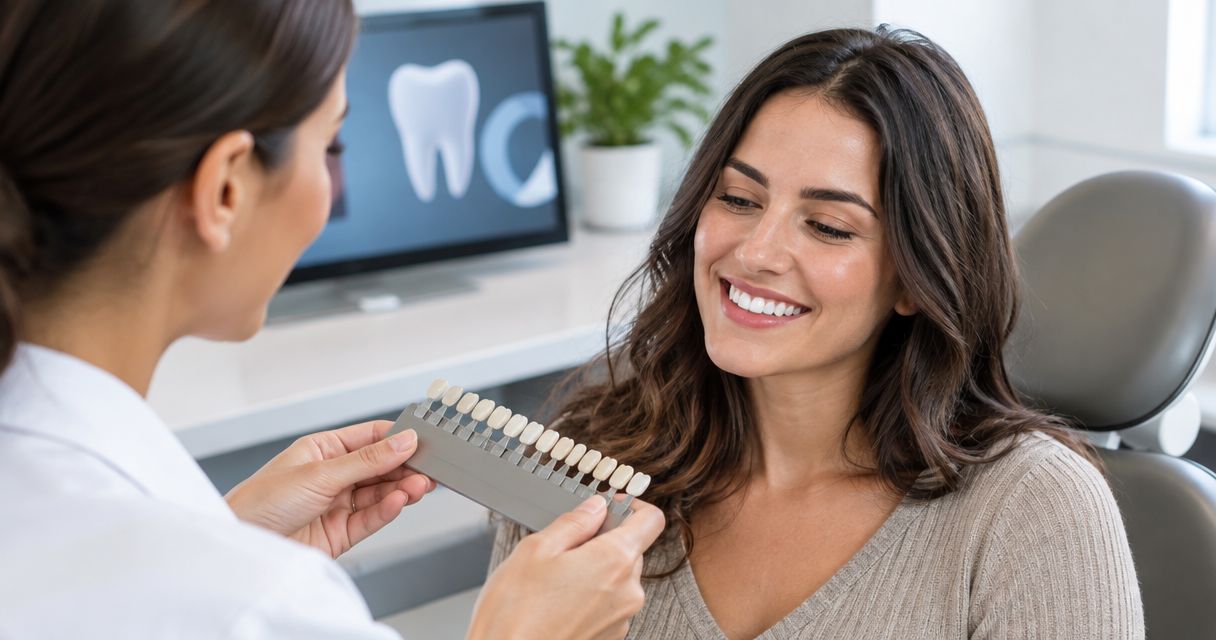
Veneers change the visible surface of teeth. Invisalign moves teeth, implants replace missing teeth, and gum-recession treatment addresses exposed roots. These treatments solve different problems; a consultation should separate them before you commit.
Aspen Dental alternatives at a glance in 2026
Use this comparison to choose the type of consultation you need. The alternatives below include a named local practice and care settings, rather than an unsupported ranking of individual San Diego dentists.
| Option | Best for | Defining feature | Difference from Aspen Dental | Main consideration |
|---|---|---|---|---|
| Aspen Dental | Patients who prefer a national dental practice network | A recognizable network of dental offices | The benchmark for this comparison | Evaluate the specific office and treating clinician |
| Harmony Dental Group | La Jolla patients considering cosmetic, restorative, or gum-recession treatment | Offers veneers, implants, Invisalign, and pinhole gum recession treatment | A named local practice in La Jolla | Treatment suitability still requires an examination |
| A specialist practice | Patients seeking focused evaluation of a particular dental problem | Care centered on a dental specialty | Starts with a narrower clinical focus | Routine care or other treatments can require coordination |
| A dental school clinic | Patients comfortable with supervised teaching care | Treatment within a dental education setting | A teaching model rather than a conventional office model | Understand who performs each part of treatment |
The right comparison is between treatment plans for your mouth, not between brand names alone. Ask each office to explain the diagnosis behind its recommendation. If the recommendations differ, find out whether the clinicians are solving the same problem.
1. Harmony Dental Group: best for local treatment consultations
Harmony Dental Group is a La Jolla dental practice offering general, cosmetic, and restorative care, including veneers, dental implants, Invisalign, and emergency care. The practice also offers pinhole gum recession treatment. This makes it a relevant local option when you want to discuss one of these treatments rather than choose an office solely by its national recognition.
For gum recession, the practice confirms that its periodontist, Dr. Javdan, has six years of experience performing pinhole gum recession treatment as of October 2026. That experience applies specifically to Dr. Javdan and pinhole treatment. It is not a guarantee of results or a statement about experience with other procedures.
Where the practice shines
- Relevant treatment options: You can discuss veneers, implants, Invisalign, and pinhole treatment with a practice that offers them.
- Local fit: The practice is in La Jolla, making it a relevant option for patients comparing care nearby.
- Procedure-specific experience: Dr. Javdan’s confirmed pinhole experience gives gum-recession patients a concrete detail to discuss during consultation.
Where the practice falls short
- A consultation cannot guarantee candidacy: Offering implants or pinhole treatment does not mean either procedure is right for every patient.
- Cosmetic treatment has limits: Veneers do not move teeth, and Invisalign does not replace missing teeth. A preferred procedure can be the wrong match for your concern.
- Experience is not an outcome promise: Your gum health, diagnosis, and treatment plan still matter when evaluating pinhole treatment.
Head-to-head: local practice versus national network
| Decision point | Local practice | Aspen Dental |
|---|---|---|
| Practice context | A named practice in La Jolla | A national dental practice network |
| Starting question | Does the offered treatment fit your diagnosis? | Does the specific office fit your treatment needs? |
| Clinician evaluation | Discuss the relevant clinician’s experience and responsibilities | Evaluate the clinician responsible for your care at that office |
| Basis for choosing | Examination, explanation, and follow-up plan | Examination, explanation, and follow-up plan |
Best for: Patients in La Jolla and nearby San Diego neighborhoods considering veneers, implants, Invisalign, or pinhole gum recession treatment.
Verdict: Hold—book a consultation before committing to a procedure.
2. A specialist practice: best for a focused dental concern
A specialist practice is an alternative care setting, not a single competing brand. It becomes relevant when your main concern calls for focused assessment—for example, gum disease, tooth movement, or a difficult tooth-saving decision. Dental specialties have different scopes, so choose the specialty that matches the problem.
A periodontist focuses on the gums and supporting structures around teeth. An orthodontist focuses on tooth and jaw alignment; an endodontist focuses on the tissues inside teeth and root canal treatment. These are different roles, not interchangeable labels for an experienced dentist.
Where a specialist practice shines
- Focused assessment: The consultation centers on the concern associated with that specialty.
- Clearer clinical questions: You can ask about gum support, tooth movement, or tooth preservation without treating those as the same issue.
- Useful second opinions: A specialist evaluation can help clarify a proposed treatment when the underlying diagnosis is uncertain to you.
Where a specialist practice falls short
- Narrower scope: A focused specialty visit does not automatically address your routine care or every cosmetic concern.
- More coordination: Ask how the specialist will share findings with the dentist managing your other treatment.
Best for: Patients who need a focused evaluation or a second opinion about a specific clinical concern.
Verdict: Hold—identify the appropriate specialty before arranging treatment.
3. A dental school clinic: best for supervised teaching care
A dental school clinic provides care within a teaching setting, where learners receive supervision. It is a different care model from a conventional dental office, not a substitute for checking the proposed treatment and the people responsible for it.
Ask whether the clinic treats your particular concern and who performs each stage. A student clinic, postgraduate training clinic, and faculty practice are not the same arrangement.
Where a dental school clinic shines
- Defined educational setting: Supervision is part of the teaching model.
- Transparent role questions: You can ask how the learner and supervising clinician divide responsibility.
Where a dental school clinic falls short
- Learner involvement: This model does not suit patients who want treatment performed exclusively outside a teaching setting.
- Program-specific scope: You must establish that the clinic handles your proposed procedure before treating it as an alternative.
Best for: Patients comfortable with supervised learners and willing to understand the clinic’s treatment process.
Verdict: Hold—confirm the clinic’s scope and supervision before proceeding.
Match the consultation to your actual goal
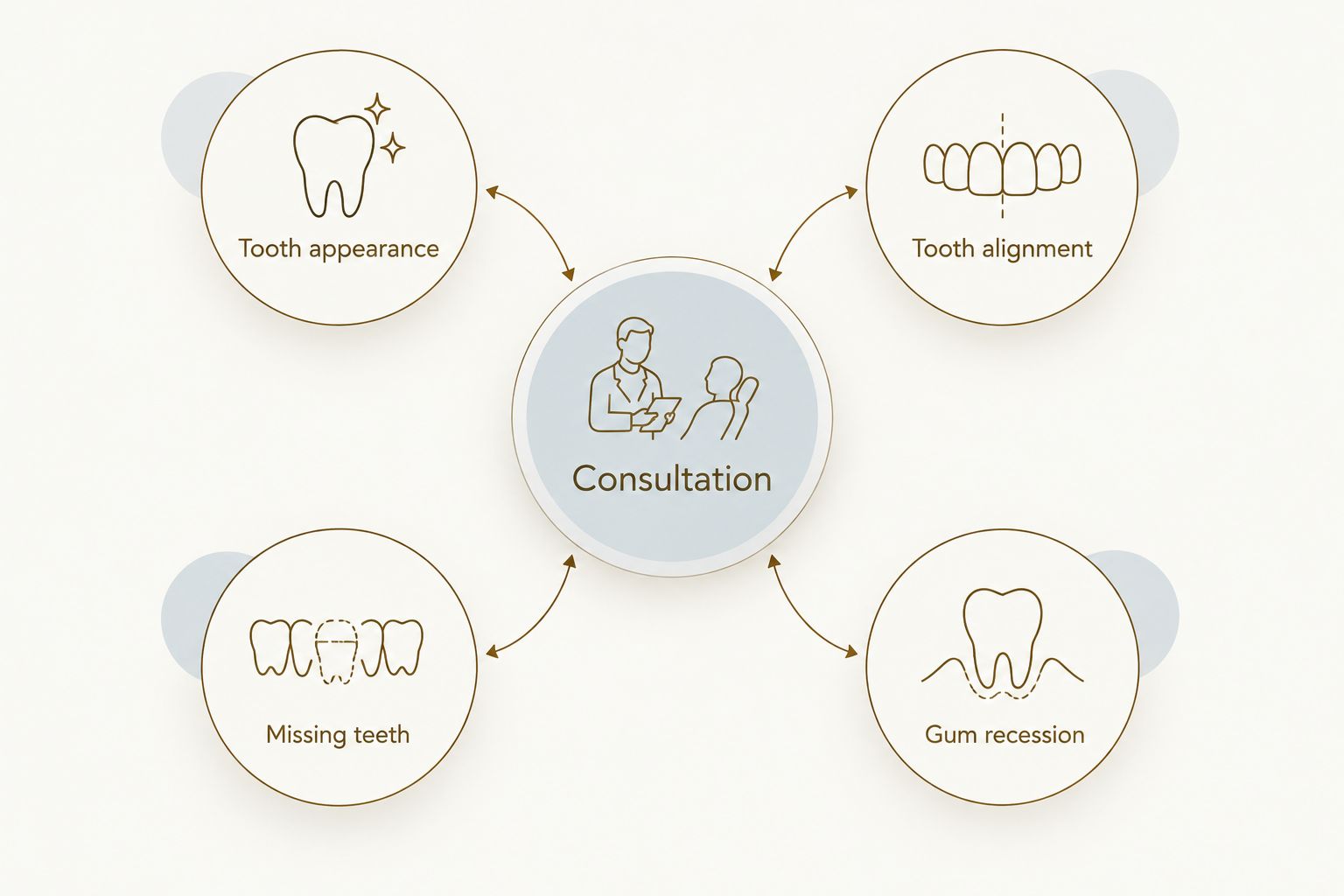
Before choosing an Aspen Dental alternative, describe the problem in your own words. Perhaps you dislike the shape of a front tooth, struggle to clean crowded teeth, have a missing tooth, or notice exposed roots. Those descriptions help a clinician explain which treatments belong in the conversation.
- Tooth appearance: Discuss whether veneers, whitening, bonding, or another approach addresses the visible concern. Veneers cover the front surface of teeth; they are not a substitute for treating decay or gum disease.
- Tooth alignment: Ask whether orthodontic treatment addresses the position of your teeth and your bite. Invisalign uses clear aligners, but suitability depends on the clinical assessment.
- Missing teeth: Compare tooth-replacement approaches rather than assuming an implant is automatically the answer. Bone support, surrounding teeth, and gum health influence planning.
- Gum recession: Ask what caused the recession and whether there is active gum disease. Root coverage and disease treatment are different clinical goals.
Your treatment preference is useful, but it should not become the diagnosis. If you arrive wanting veneers and the examination identifies gum disease, ask how that changes the sequence of care. Addressing health concerns before cosmetic work is different from rejecting your smile goals.
Why people consider switching from Aspen Dental
There is no need to assume something is wrong with Aspen Dental to explore another practice. A change makes sense when another care setting better matches your location, treatment goals, or need for a focused opinion.
Consider another consultation when:
- You want a La Jolla option. Compare a local practice with the specific office you already use, rather than comparing a neighborhood with an entire network.
- Your goal is treatment-specific. Someone considering pinhole treatment needs to evaluate that procedure and its clinician—not general practice recognition.
- You need a clearer explanation. If you do not understand why a treatment was recommended, request clarification or a second opinion before deciding.
- You want to compare alternatives. For a missing tooth, ask what distinguishes an implant, bridge, and removable replacement in your case.
These are decision criteria, not claims that Aspen Dental lacks a service or provides poor care. Compare what each clinician recommends after an examination. A different recommendation deserves an explanation, not an automatic assumption that one office is wrong.
What to ask before choosing a practice
For your 2026 consultation, bring your main concern and ask for a plain-language explanation. You should understand both what treatment is intended to change and what it cannot change.
Ask about the diagnosis
What is causing the problem? Is the concern cosmetic, related to gum health, related to your bite, or a combination? Ask the clinician to distinguish the visible symptom from the underlying condition.
Ask about alternatives
What are the reasonable treatment options, including postponing treatment when that is clinically appropriate? Ask what each option preserves, changes, or leaves unresolved. For veneers, discuss tooth preparation; for implants, discuss surgery and ongoing maintenance.
Ask about responsibility
Who will perform the procedure, and who handles follow-up? When multiple clinicians are involved, ask who coordinates the plan. Procedure-specific experience matters more than a broad statement about years in dentistry.
Ask about care afterward
What follow-up and home care will your treatment require? Ask how to report discomfort or a concern during treatment. For Invisalign, discuss wear instructions and retention; for implants, discuss cleaning and monitoring.
Before consenting, request a written treatment plan and confirm financial arrangements directly with the office. Do not assume that insurance participation means every proposed treatment is covered.
Discuss your treatment options
Ask about veneers, implants, Invisalign, or pinhole gum recession treatment in La Jolla.
When staying with Aspen Dental is the right call
Stay with Aspen Dental if your treating clinician explains the diagnosis clearly, offers appropriate alternatives, and provides a follow-up plan you understand. A national network is not a reason to leave an office that meets your clinical needs.
The same standard applies to every alternative. A local address, specialist title, or teaching setting does not replace informed consent. If your current treatment plan makes sense and you trust the clinician responsible for it, switching for a different name alone adds no clinical justification.
FAQ
What’s the best Aspen Dental alternative in La Jolla?
Harmony Dental Group is a relevant local alternative for patients considering veneers, implants, Invisalign, or pinhole gum recession treatment. The best fit depends on your diagnosis, the treating clinician, and the proposed follow-up plan.
Is a local dental practice better than Aspen Dental?
A local practice is not automatically better than Aspen Dental. Compare the specific clinicians, treatment recommendations, and explanations rather than assuming that practice size determines care quality.
Should I see a specialist instead of a general dentist?
See the appropriate specialist when you need focused evaluation of a particular dental concern. A general dentist can also assess your needs and explain whether specialist involvement belongs in your treatment plan.
Are veneers and Invisalign alternatives to each other?
Veneers and Invisalign address different problems. Veneers change the visible surface of teeth, while Invisalign moves teeth; an examination determines whether appearance, alignment, or both need attention.
How do I compare pinhole gum recession treatment providers?
Compare procedure-specific experience, your diagnosis, treatment alternatives, and follow-up care. Dr. Javdan has six years of experience performing pinhole gum recession treatment as of October 2026; that experience does not guarantee an individual result.
Can I get a second opinion before dental implants?
Yes, you can seek a second opinion before committing to dental implants. Ask each clinician to explain your candidacy, reasonable tooth-replacement alternatives, and maintenance requirements.
Does dental insurance cover cosmetic treatment?
Coverage depends on your plan and the proposed treatment. Confirm benefits and your financial responsibility directly before consenting; insurance participation does not establish coverage for every procedure.
One last thing
When comparing recommendations in 2026, ask each clinician to name the problem before naming the procedure. Two plans can sound contradictory because one addresses appearance while the other addresses gum health or tooth position.
That distinction is especially useful when you want a visible smile change. The most useful consultation leaves you understanding why a treatment fits—not simply wanting the treatment more.