Yes, dental insurance can cover Invisalign when your plan includes orthodontic benefits and its rules allow clear-aligner treatment for someone your age. Coverage is not automatic: exclusions, waiting periods, lifetime limits, and prior orthodontic claims affect what the plan pays. Before starting treatment in 2026, confirm your specific benefits and request a written estimate of your responsibility.
- Does dental insurance cover Invisalign? Yes, when your orthodontic benefits include eligible clear-aligner treatment.
- Invisalign coverage depends on age rules, waiting periods, exclusions, and remaining orthodontic benefits.
- A predetermination estimates insurance payment; it does not guarantee the final claim will be paid.
- Harmony Dental Group offers Invisalign in La Jolla; confirm your plan’s benefits before committing to treatment.
Why this matters
An insurance card does not tell you whether Invisalign is covered. A plan that pays for cleanings and fillings can still exclude orthodontics, and a plan covering children’s braces does not necessarily cover adult treatment.
Harmony Dental Group offers Invisalign in La Jolla. Harmony Dental Group is a local option for patients considering Invisalign treatment. Treatment suitability and insurance eligibility are separate questions; you need answers to both before deciding to proceed.
Does dental insurance cover Invisalign?
Dental insurance can cover Invisalign through an orthodontic benefit, but only under your plan’s specific terms. Look for the orthodontics section of your benefit booklet rather than assuming the general dental benefit applies.
The following situations explain why people with dental insurance receive different answers about the same treatment.
| Your plan’s terms | What that means for Invisalign | What to confirm |
|---|---|---|
| Orthodontics includes eligible clear aligners | Invisalign can qualify for a benefit | Whether the proposed treatment meets the plan’s requirements |
| Orthodontics is limited by age | Coverage depends on the patient’s age | Which age rule applies and when eligibility is measured |
| Orthodontics is excluded | The plan does not provide an orthodontic benefit | Whether any separate orthodontic coverage exists |
| A waiting period applies | Benefits are unavailable until the requirement is met | Whether starting early affects later eligibility |
| A lifetime orthodontic maximum applies | Payment is limited across eligible orthodontic treatment | How much remains after previous claims |
| Treatment is already underway | Special continuation or exclusion rules can apply | How the plan handles treatment in progress |
A benefit summary is a starting point, not the complete answer. Ask the insurer to check your exact employer or individual plan, the proposed treatment, and the treating provider’s network status.
What if my plan covers braces but does not mention Invisalign?
Do not treat silence as approval or denial. Ask whether clear aligners fall under the orthodontic benefit, whether any appliance-specific exclusion applies, and whether the plan bases its payment on a different covered treatment.
Get the answer in writing when possible. A general statement that the insurer covers orthodontics is less useful than confirmation tied to your plan and proposed treatment.
Adult Invisalign coverage
Adult Invisalign coverage depends on whether the plan extends orthodontic benefits to adults. Being enrolled in dental insurance does not establish that eligibility.
If your benefit booklet mentions dependent children, an age limit, or student status, ask how those provisions apply to you. Also ask whether eligibility is determined when treatment begins or under another rule stated in the policy.
Confirm adult orthodontic eligibility before using an insurance estimate to make your treatment decision. A consultation can establish whether Invisalign suits your teeth and bite, but it cannot change an insurance exclusion.
Invisalign coverage for teens
Teen Invisalign coverage also depends on the plan’s orthodontic rules. Coverage for a dependent child does not automatically establish coverage for every appliance or every proposed course of treatment.
Check the dependent’s eligibility, clear-aligner provisions, and any requirements before treatment starts. If a birthday or coverage change is approaching, ask the insurer how that timing affects benefits rather than assuming enrollment alone protects future payments.
For parents, separate the clinical discussion from the benefit discussion. Your teen’s ability to follow the treatment instructions matters even when the insurance benefit is available.
Why Invisalign insurance coverage varies
For your 2026 benefits review, focus on the provisions that determine eligibility and payment—not just the insurer’s name. Different plans from the same insurer can have different terms.
- Orthodontic eligibility: The policy must include a benefit that applies to the patient and the proposed treatment.
- Age restrictions: Some plans limit orthodontic coverage to eligible dependent children; others include adults.
- Waiting periods: A plan can require a period of enrollment before orthodontic benefits become available.
- Lifetime limits: Previous orthodontic payments can reduce the benefit remaining for later treatment.
- Provider network status: Network rules can affect the allowed amount, reimbursement, and your responsibility.
- Treatment and payment rules: Clear-aligner exclusions, documentation requirements, and treatment-in-progress provisions affect how a claim is handled.
These details explain why a coworker’s experience is not a reliable coverage estimate. Even within the same workplace, enrollment choices, dependent eligibility, and previous claims can differ.
How do I verify Invisalign coverage before starting?
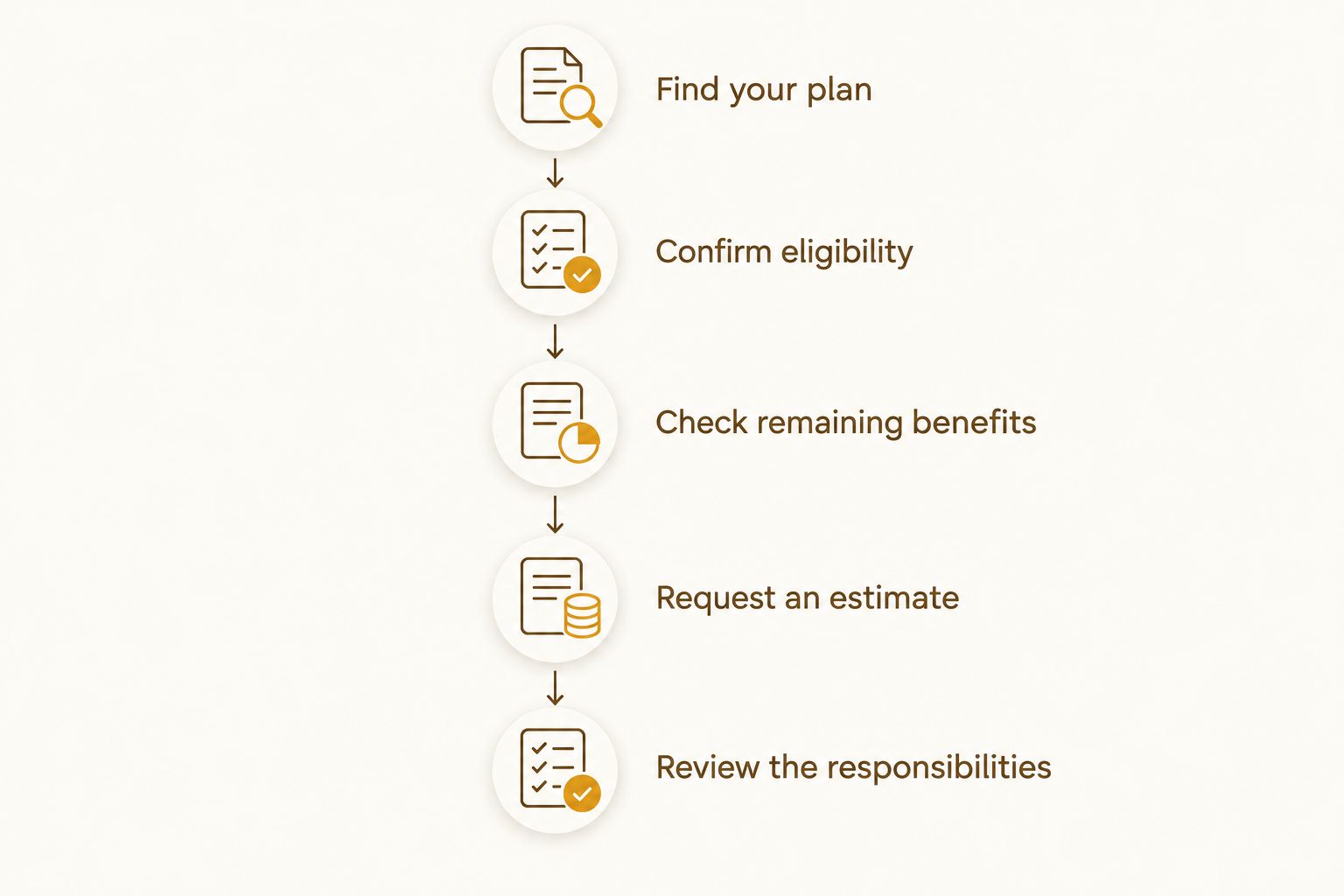
Use this sequence to turn a broad coverage question into a documented answer. Keep the insurer’s response with your treatment paperwork so you can refer to the same information later.
1. Find your plan
Locate your member identification, group information, and current benefit booklet. For treatment beginning in 2026, use the documents that apply to that coverage period rather than an older summary.
Check whether orthodontics appears as its own benefit. A general annual dental maximum is not enough to establish that Invisalign qualifies.
2. Confirm eligibility
Ask whether your plan covers orthodontic treatment for someone your age and whether Invisalign is eligible. Then ask about waiting periods, exclusions, and any requirements that must be completed before treatment begins.
Request the relevant policy language if the answer is unclear. This is especially helpful when a representative gives a broad answer about the insurer rather than your particular plan.
3. Check remaining benefits
Ask whether you have a lifetime orthodontic maximum and how much remains. Mention previous braces or aligner treatment, including treatment received under earlier coverage, so the insurer can explain which claims count.
Also confirm the treating provider’s network status for your exact plan. Do not assume that a practice accepting an insurer means every plan or provider participates in the same network.
4. Request an estimate
Ask the treating office whether it can submit the proposed treatment for a predetermination, sometimes called a pretreatment estimate. Your insurer can explain what information it requires and whether a separate authorization process applies.
A predetermination is an estimate, not a payment guarantee. Eligibility, plan terms, remaining benefits, and the final claim still matter when the insurer processes payment.
5. Review the responsibilities
Compare the written insurance estimate with the treatment agreement before consenting. Ask what happens if insurance pays less than expected, stops paying after a coverage change, or denies the claim.
Clarify what the treatment agreement includes and which services are separate. Keep copies of the estimate, benefit response, and agreement together.
What should I ask about the treatment agreement?
Insurance coverage and the scope of your treatment agreement are different issues. Even with an orthodontic benefit, you need to understand what you are agreeing to receive and pay for.
Ask whether the agreement includes diagnostic records, office visits, additional aligners when clinically indicated, and retainers after active treatment. Do not assume every agreement handles these items the same way.
Replacement aligners and care needed before orthodontics also deserve a direct question. If your dentist identifies untreated decay or gum disease, ask how addressing that condition affects the sequence of care and which benefits apply.
Request a clear explanation of your responsibility if treatment changes. Understanding the agreement before signing is more useful than discovering an exclusion after a claim has been processed.
What happens if I change jobs during Invisalign treatment?
A job or insurance change can affect orthodontic payments while treatment is underway. Ask both the current insurer and the prospective insurer how they handle treatment in progress.
Do not assume an approved estimate means the entire benefit has already been paid. Orthodontic benefits can be paid over time, and continued eligibility can matter under the plan’s terms.
If you expect an employment change during 2026, raise it before starting treatment. Ask when the existing coverage ends, whether payments stop, and whether the new policy excludes or continues an existing course of orthodontics.
The treating office also needs to know about the change. A new insurance card alone does not resolve the remaining balance or establish replacement coverage.
Can I use an HSA or FSA for Invisalign?
HSA and FSA funds can generally be used for qualifying orthodontic expenses under applicable tax and account rules. These accounts use eligible funds to pay expenses; they do not create an insurance benefit or change a plan exclusion.
Ask your account administrator what documentation is required and how payment timing applies to orthodontic treatment. FSA rules deserve particular attention when treatment and payments extend across coverage periods.
For a 2026 account election, confirm the current rules with your administrator rather than relying on an earlier enrollment guide. Keep records showing which expenses insurance reimbursed so you do not seek reimbursement twice for the same expense.
Should I book a consultation before insurance is confirmed?
You can book a consultation to learn whether Invisalign is clinically appropriate while you investigate benefits. Before booking, ask about the consultation itself, including any examination or records requirements and your responsibility for that visit.
Harmony Dental Group offers Invisalign care for patients in La Jolla and nearby San Diego neighborhoods. Ask how the proposed treatment addresses your concerns and what information your insurer needs to evaluate the benefit.
Do not choose Invisalign solely because insurance contributes toward it. The benefit is useful only alongside a treatment plan you understand and can follow; aligners require consistent wear and ongoing care according to your dentist’s instructions.
Explore Invisalign care in La Jolla
Learn about the practice, then ask about treatment suitability and your plan’s benefit requirements.
FAQ
Does dental insurance cover Invisalign for adults?
Dental insurance can cover adult Invisalign when the plan includes adult orthodontic benefits and eligible clear-aligner treatment. Confirm age rules, exclusions, waiting periods, and remaining benefits before starting.
How do I find out whether my insurance covers Invisalign in 2026?
Check your 2026 orthodontic benefit documents and ask the insurer about your specific plan, age eligibility, proposed treatment, and provider network status. Request a written predetermination before relying on an estimated payment.
Does Invisalign use my regular annual dental maximum?
That depends on the policy; orthodontic benefits can have a separate lifetime maximum. Ask the insurer which maximum applies and whether earlier orthodontic claims have reduced your remaining benefit.
Will my insurance cover Invisalign if I already had braces?
Previous braces do not establish whether a new course of Invisalign is covered. Prior claims can affect remaining lifetime benefits, and the policy can include restrictions on repeat treatment.
Is Invisalign fully covered if my dentist is in network?
An in-network dentist does not make Invisalign fully covered. Orthodontic exclusions, benefit limits, eligibility rules, and your treatment agreement still determine your responsibility.
Does a predetermination guarantee insurance will pay for Invisalign?
A predetermination does not guarantee payment. The insurer applies eligibility, benefits, policy terms, and claim requirements when it processes the actual claim.
Can I get Invisalign without orthodontic insurance?
You can receive Invisalign without orthodontic insurance if a dentist determines it is appropriate and you agree to the treatment responsibilities. Ask for a written treatment agreement rather than assuming dental coverage will contribute.
One last thing
Ask when the orthodontic benefit is paid—not just whether Invisalign is covered. A benefit approved before treatment is not necessarily a payment already made to the practice.
Before you commit, make sure you can explain your remaining benefit, the conditions attached to it, and your responsibility if coverage changes. That understanding gives you a clearer basis for deciding whether to begin treatment.