
Instead of repeating your insurance details at every call, connect your employer dental benefits to a cosmetic consultation by confirming eligibility, checking the planned visit, and sharing the findings with the dental office before you book. Keep the consultation and any proposed treatment separate: coverage for an examination does not establish coverage for veneers, whitening, or another cosmetic procedure.
- For an employer dental insurance cosmetic consultation, verify the examination separately from proposed cosmetic treatment.
- Harmony Dental Group offers cosmetic dentistry for La Jolla patients; employer-plan benefits require separate verification.
- Confirm the treating dentist’s network status, benefit limitations, and exclusions before scheduling.
- Request a written treatment plan before seeking a procedure-specific benefit estimate.
Why this matters
A cosmetic consultation addresses what you want to change about your smile. Your employer dental plan applies its own rules to the examination, imaging, and treatment involved. Those are different questions, and combining them creates confusion.
Harmony Dental Group is a local option for La Jolla patients seeking general, cosmetic, and restorative dental care. When discussing a visit with Harmony Dental Group, explain both your smile goals and your wish to verify employer benefits beforehand.
For a consultation in 2026, use the plan documents effective on your appointment date. An insurance card identifies your plan; it does not confirm that every proposed service is covered.
The practical goal is straightforward: arrive knowing what has been verified, what remains an estimate, and which decisions need a clinical examination first.
Before you start
- Gather 3 documents: your dental insurance card, the current dental benefit summary or plan certificate, and any recent explanation of benefits relevant to the same teeth or services. If you have no relevant prior claims, bring the first two documents.
- Have access to the right people: your insurer’s member services team, your employer’s benefits administrator for enrollment questions, and the dental office for appointment and treatment details. Use the telephone number on your insurance card or official plan materials.
- Check the easily missed restriction: a plan can cover an examination while excluding the cosmetic treatment discussed during it. Also ask about referral requirements, waiting periods, and examination frequency limits before booking.
Do not send sensitive enrollment details through an unfamiliar message or public form. Ask the dental office how it accepts insurance information securely.
Eligibility and network verification
Start with enrollment, not treatment coverage. A detailed explanation of veneer benefits is not useful if the plan has not yet activated your enrollment.
Confirm the active plan
- Contact member services and confirm that your dental coverage is active for the intended appointment date. Verify the subscriber’s name, member identification, employer group, and any dependent enrollment that applies.
- Ask which dental plan arrangement you have and whether it requires a primary dentist assignment or specialist referral. Request the current plan certificate or benefit booklet if your summary leaves these rules unclear.
- Confirm the benefit-year dates. Do not assume your employer’s enrollment year and the dental plan’s benefit year are identical.
- Record the conversation date and any reference number provided. Keep the representative’s explanation beside the applicable plan language rather than relying on memory.
Expected result: you can identify the active dental plan, its effective dates, and any access requirements that affect scheduling.
Check the treating dentist
- Ask the office which dentist would provide the consultation and which location would submit the claim. Obtain the identifying information the insurer needs for verification.
- Ask the insurer whether that dentist and location participate in your specific dental network. A carrier’s name alone does not identify the network.
- Ask how benefits work if the dentist is outside the network, including whether your plan provides out-of-network benefits at all.
- Ask the office to confirm its understanding of participation. Resolve conflicting answers before treating either answer as settled.
Expected result: you have a provider-specific network answer, not simply a statement that the office handles insurance paperwork.
Consultation and benefit verification
Now connect your reason for visiting with the services the office expects to perform. In 2026, the useful question remains service-specific: what will happen at this appointment, and how does the plan treat each part?
Define the planned visit
- Tell the office what concerns you: tooth color, a chipped edge, spacing, missing teeth, or another change. Mention pain, swelling, bleeding, or chewing difficulty separately so the office can assess the appropriate appointment.
- Ask whether the visit includes an examination, imaging, cosmetic treatment planning, or a combination. Do not assume a consultation includes every diagnostic service.
- Request the planned service descriptions and procedure codes when the office can determine them. Some details require an examination first; mark those as unresolved rather than guessing.
- Ask whether you need prior dental records or images transferred. Let the clinician determine whether existing records are adequate.
Expected result: you have a description of the proposed appointment and know which details still depend on clinical findings.
Match the visit to plan rules
- Give the insurer the proposed service information. Ask about examination and imaging benefits separately from benefits for the cosmetic procedure you are considering.
- Ask whether previous claims affect eligibility. Frequency limits can apply even when the dentist is new to you.
- Check the deductible, remaining annual maximum, and any separate orthodontic benefit if tooth movement is part of your discussion. Ask which figures reflect processed claims and whether other claims remain pending.
- Ask whether the plan requires authorization, referral, or other documentation for any planned service. Request the applicable instructions in writing when available.
Expected result: each known service has a benefit answer, a limitation to check, or a clearly identified unanswered question.
A blank answer is not an approval. Keep uncertain items visible until the insurer or office can clarify them.
Treatment plan and written handoff
The final configuration is a shared record, not an automatic connection between your employer and the practice. You supply accurate enrollment information; the dentist supplies clinical findings and proposed treatment; the insurer applies the plan terms.
Build your consultation record
- Create a simple note with these headings: Visit goal, Active plan, Network status, Planned services, and Open questions. These are your own worksheet labels, not insurer portal buttons.
- Share the relevant information with the office through its approved channel. Ask which items the office can verify and which require you to contact member services.
- Request 1 written estimate for the planned visit when the office has enough information. Ask the office to identify assumptions about insurance benefits separately from confirmed information.
- Confirm the appointment only after you understand the unresolved items and are comfortable proceeding. You can book a discussion without agreeing to every treatment that might be proposed.
Expected result: both you and the office know the purpose of the appointment and the remaining benefit questions.
Separate treatment decisions from booking
- After the examination, request a written treatment plan identifying the proposed procedures and the clinical reasons for them.
- Ask whether the office can submit a predetermination or pre-treatment estimate to the insurer when appropriate. Confirm what records the insurer needs.
- Read the response for exclusions, benefit limits, and conditions—not just the estimated payment.
- Recheck eligibility and relevant benefits if your treatment date or plan changes. A predetermination is not a guarantee of payment.
Expected result: you can discuss treatment with a procedure-specific estimate instead of assuming that examination coverage extends to the whole plan.
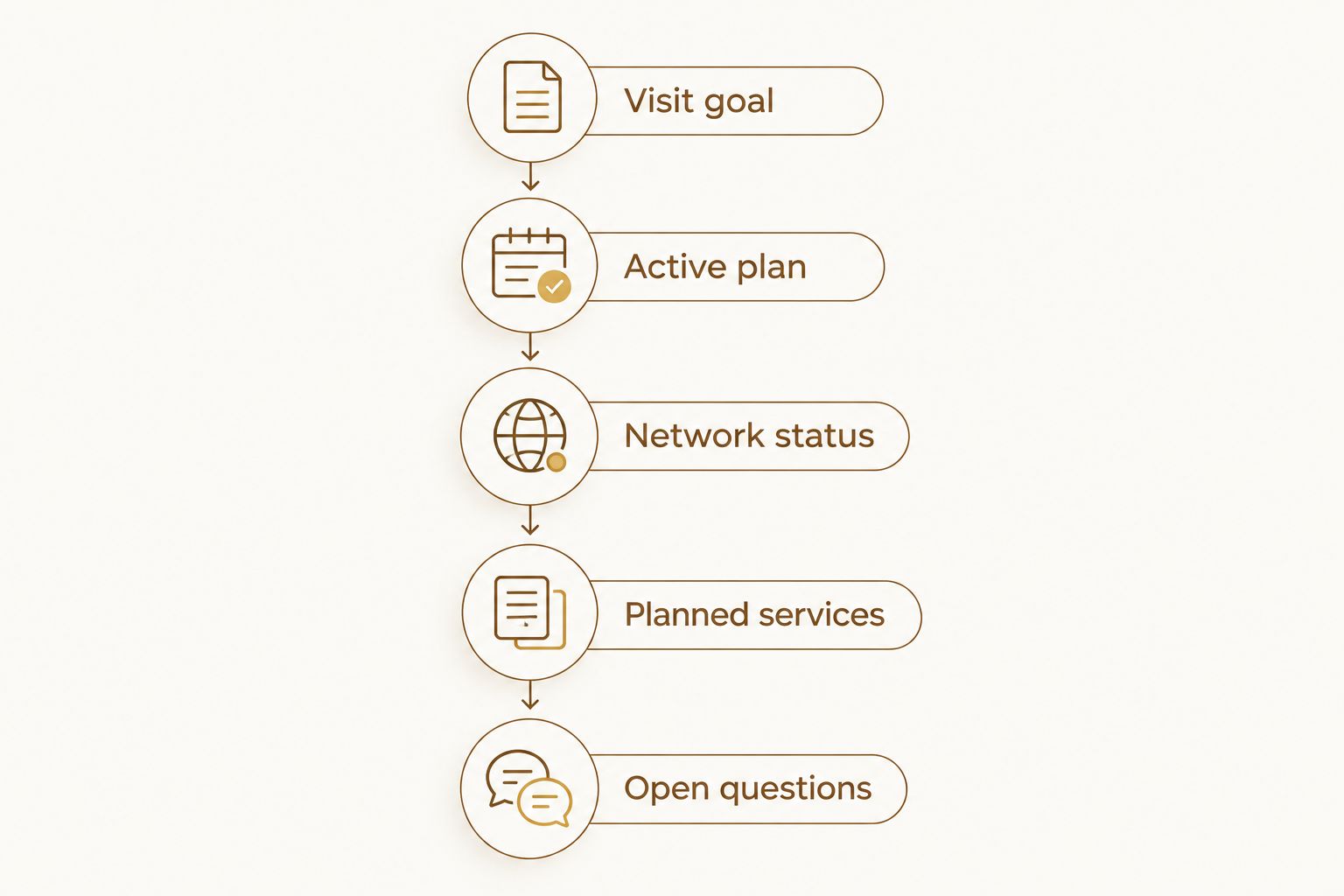
Your worksheet should remain short enough to use during a call. Attach supporting documents rather than copying every paragraph of the plan into your notes.
Choose the right verification route
These routes answer different questions. Use the one that matches your stage of care rather than expecting a single phone call to settle everything.
| Route | Best for | Main benefit | Limitation |
|---|---|---|---|
| Member benefits call | Confirming enrollment and general plan rules | Clarifies eligibility, exclusions, and benefit limits | Cannot establish a diagnosis or create a treatment plan |
| Dental consultation | Understanding suitable treatment | Connects your goals with clinical findings | Does not guarantee insurance payment |
| Written predetermination | Reviewing a defined treatment proposal | Provides a procedure-specific benefit estimate | Remains subject to plan terms and eligibility |
Use 2 separate checks: one for the consultation and one for the proposed treatment. This distinction is particularly useful when a visit includes both a health concern and an appearance goal.
Harmony Dental Group offers cosmetic dentistry alongside general and restorative care. That supports discussing different needs in a consultation, but it does not establish how your employer plan classifies or covers a procedure.
When your employer benefits change
Repeat the workflow when you change jobs, add dependent coverage, switch dental plans, or enter a new benefit year. An earlier verification belongs to the earlier plan conditions.
For a change during 2026:
- Confirm the old coverage end date and new coverage effective date with the appropriate plan administrators.
- Give the dental office the replacement insurance details before the next appointment.
- Repeat network verification under the new plan, even if the insurer’s name looks familiar.
- Ask the new insurer how it handles treatment already underway, especially orthodontic treatment or care delivered across multiple appointments.
- Request an updated estimate before proceeding with services affected by the change.
Do not assume an unused benefit balance transfers between employers or plans. Ask each administrator what applies to your enrollment.
If treatment spans the end of 2026, ask which service dates and completion rules the plan uses. Schedule around clinical needs first; discuss benefit timing without postponing necessary care on your own.
Troubleshooting
The insurer cannot find your enrollment
Check the subscriber name, member identification, group information, and effective date. If the employer confirms enrollment but the insurer does not show it, ask the benefits administrator to resolve the record mismatch before relying on coverage.
The office and insurer disagree about network status
Repeat verification using the treating dentist’s identifying information, practice location, and exact network. Ask both parties to explain the discrepancy; accepting your insurer’s paperwork is not the same as participating in your network.
The exam is covered, but the cosmetic procedure is excluded
Ask the insurer to identify the exclusion and confirm that it applies to the specific proposed procedure. Then discuss treatment choices with the dentist without assuming that a different billing description changes coverage. Clinical records and claims must accurately describe the care provided.
The estimated benefit changes after another claim
Request an updated remaining-benefit figure and check for pending claims. An earlier estimate can become outdated when another dental service uses the same annual benefit.
The insurer needs information you do not have
Ask exactly which procedure description, clinical record, or image is missing and who must provide it. Return that request to the dental office; do not choose a procedure code yourself to obtain a favorable answer.
Customize your workflow
Bring your priorities to the consultation: preserving tooth structure, improving appearance, replacing a missing tooth, or understanding orthodontic options. The dentist can explain suitable choices and their limitations after assessing your teeth and gums.
Ask what requires attention first, what is elective, and which decisions can wait. Choose clinically appropriate care before trying to fit treatment into an insurance category.
For your 2026 appointment, finish with a short written summary: the visit you are booking, the benefit information obtained, and the questions you will discuss in person. That gives you a clear starting point without turning an estimate into a promise.
Discuss your smile goals
Explore general, cosmetic, and restorative dental care in La Jolla.
FAQ
Does employer dental insurance cover a cosmetic consultation?
Coverage depends on the services performed and your employer dental plan. Verify the examination, imaging, and cosmetic planning separately; coverage for one does not establish coverage for the others.
Can I book a cosmetic consultation before my insurance is verified?
You can ask to book before verification is complete, but clarify the office’s arrangements and your responsibility first. Do not treat an appointment confirmation as confirmation of insurance benefits.
Does a covered dental exam mean veneers are covered too?
No. Examination benefits and veneer benefits are separate, and a plan can cover an examination while excluding cosmetic treatment. Ask about the specific proposed procedure after the dentist evaluates your teeth.
Is a predetermination the same as guaranteed insurance payment?
No. A predetermination estimates benefits for proposed treatment but does not guarantee payment. Eligibility, plan terms, benefit use, and the services actually delivered still matter.
What should I bring to a cosmetic consultation at Harmony Dental Group?
Bring your dental insurance information, relevant plan documents, and a clear description of your smile goals. Ask the office whether it needs previous dental records or images and how to submit them securely.
Can my employer tell me whether Invisalign is covered?
Your employer’s benefits administrator can help locate plan documents and resolve enrollment questions. Ask the insurer about orthodontic eligibility, applicable limits, and treatment-specific requirements, then confirm the proposed treatment with your dentist.
What happens if I change dental insurance during treatment?
You need a new verification under the replacement plan. Confirm effective dates, network participation, and rules for treatment already underway before assuming an earlier benefit estimate still applies.
One last thing
An unused annual maximum is not permission to use benefits for an excluded procedure. Before making a treatment decision, ask whether the proposed service is covered at all—not just how much benefit remains.
You do not need to understand every insurance term before a consultation. You need a clear visit goal, accurate enrollment details, and a written list of unresolved questions.