Cosmetic dentistry in La Jolla requires an individualized estimate based on the treatment, the teeth involved, and your oral health—not a single citywide price. Your total should also account for any necessary dental care before treatment, follow-up visits, and maintenance after the cosmetic work is complete.
- For a La Jolla cosmetic dentist cost estimate, compare complete treatment plans rather than isolated procedure fees.
- Harmony Dental Group offers veneers, Invisalign, and dental implants for patients in La Jolla.
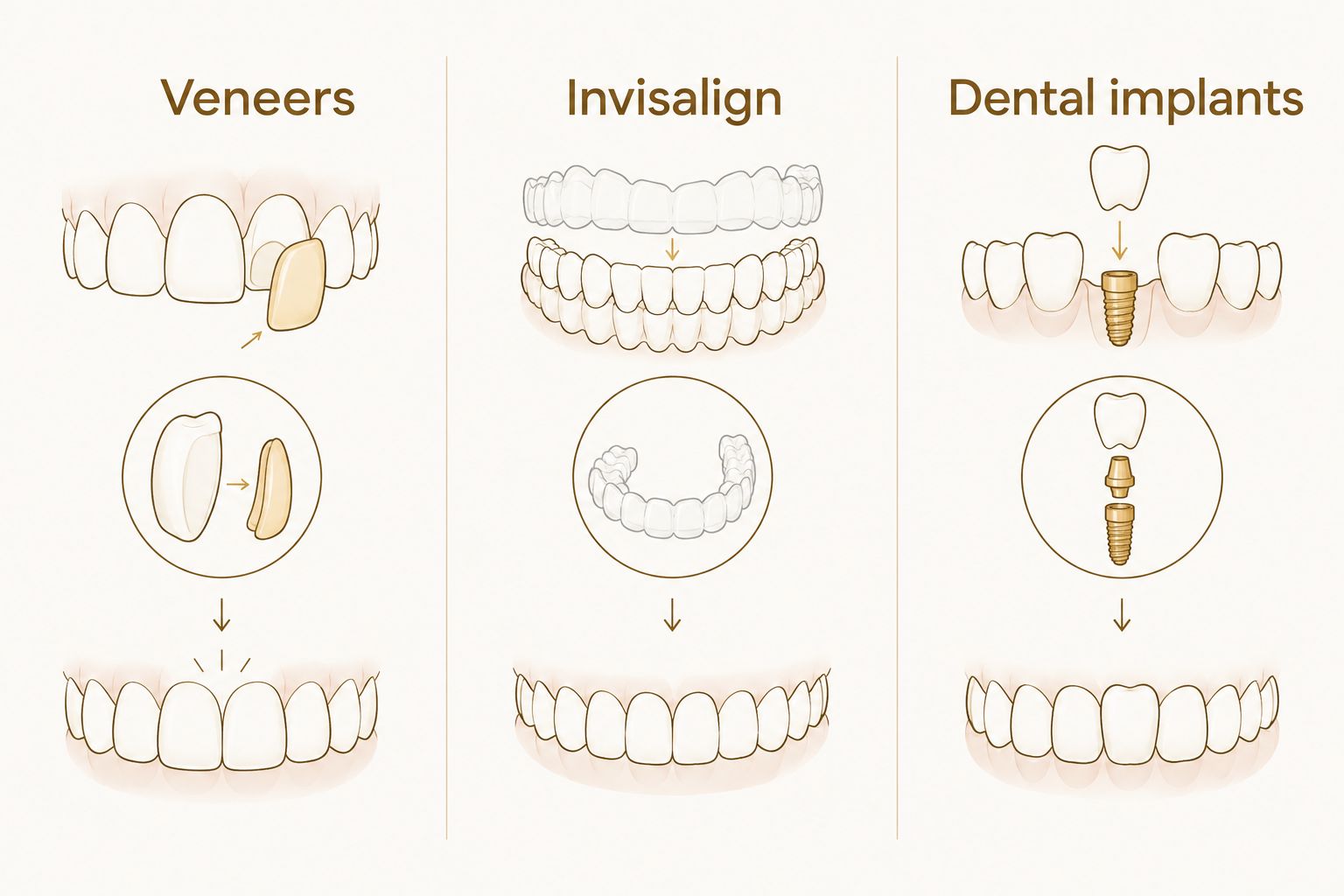
- Veneers change tooth appearance; Invisalign moves teeth; dental implants replace missing teeth.
- Ask what preparation, follow-up, maintenance, and future replacement your written estimate includes.
Why this matters
A smile concern does not automatically point to one treatment. A tooth that looks uneven might need a change in shape, a change in position, or treatment for an underlying dental problem.
Compare plans that solve the same problem before comparing their totals. Otherwise, a seemingly smaller commitment can leave part of your original concern untreated. For patients exploring cosmetic dentistry in 2026, the useful starting point is an examination and a clear description of the result they want.
Harmony Dental Group provides general, cosmetic, and restorative dental care in La Jolla. That combination is relevant when your cosmetic goals also involve damaged teeth, missing teeth, or other dental needs.
How much does cosmetic dentistry cost in La Jolla?
Your cosmetic dentistry cost is the total for a specific treatment plan, not a standard fee attached to the phrase “smile makeover.” To understand an estimate, separate the proposed cosmetic work from preparation, supporting treatment, and ongoing care.
| Part of your estimate | What to clarify | Why it matters |
|---|---|---|
| Examination and records | Whether the consultation, imaging, photographs, or scans are included | Planning requirements differ by treatment |
| Preparatory care | Whether decay, gum problems, or damaged restorations need attention | Cosmetic treatment does not replace necessary dental care |
| Main treatment | Which teeth, procedures, and materials the plan covers | Similar descriptions can represent different amounts of work |
| Follow-up | Which adjustments and review visits are included | The initial procedure is not always the entire treatment course |
| Maintenance | What retainers, protective appliances, repairs, or replacements involve | Your responsibilities continue after treatment |
Ask for a written estimate that identifies these categories and distinguishes required care from optional changes. An itemized document makes it easier to compare recommendations without guessing what a quoted total includes.
If veneers are your main interest, the San Diego veneer cost guide addresses that narrower question. A treatment-specific discussion is more useful than treating veneers, tooth movement, and tooth replacement as interchangeable purchases.
Which treatment matches your smile goal?
The right comparison starts with what you want to change. Color, shape, alignment, and missing teeth are different clinical concerns, even when they all affect how you feel about your smile.
| Treatment | Best for | Main benefit | Main limitation | Estimate question |
|---|---|---|---|---|
| Veneers | Selected concerns about visible tooth shape, size, or color | Change the appearance of the treated tooth surfaces | Often involve irreversible enamel changes and future maintenance | Which teeth need treatment, and what preparation is planned? |
| Invisalign | Suitable tooth-position and bite concerns | Moves teeth instead of covering their visible surfaces | Requires consistent wear and ongoing retention | Does the plan include refinements and retainers? |
| Dental implants | Replacing missing teeth in suitable patients | Support replacement teeth without treating the gap as a cosmetic surface issue | Require surgery, healing, and assessment of bone and gum health | Does the estimate cover the implant and the replacement tooth? |
These are treatment categories, not a ranking. The best choice addresses the underlying problem while preserving appropriate healthy tooth structure. A consultation should explain why a proposed option fits your mouth and why another option does not.
Veneers: clarify the scope before comparing estimates
Veneers are thin coverings placed over the front surfaces of teeth. They can address selected appearance concerns, but they do not move tooth roots or treat active decay or gum disease.
The number of treated teeth is central to your plan. Ask your dentist to show which teeth are included and explain how their shape and shade will relate to neighboring teeth that remain untreated.
Preparation deserves its own conversation. Many veneer treatments involve removing enamel, so ask what changes are permanent, what alternatives preserve more tooth structure, and how future repair or replacement would be handled.
For a 2026 veneer consultation, request a written distinction between the final restorations, any temporary restorations, and the visits included in the plan. Do not assume that every estimate uses the same materials or covers the same stages.
Invisalign: compare the complete course of care
Invisalign uses clear aligners to move teeth. It is relevant when tooth position is the main concern, but suitability depends on your bite, dental health, and the movement required.
Ask what the treatment plan includes beyond the initial aligners. Discuss monitoring visits, additional aligners if needed, and retainers after active treatment. Retainers help maintain the new tooth positions; they are not simply an optional cosmetic extra.
The practical limitation is participation. You need to follow the prescribed wear and care instructions, and you should understand how that routine fits your meals, work, and daily habits before choosing treatment.
When comparing Invisalign plans, ask whether the recommended scope addresses your bite as well as the teeth you see in photographs. A plan aimed at a limited appearance concern is not necessarily equivalent to a broader orthodontic plan.
Dental implants: distinguish the implant from the replacement tooth
A dental implant replaces a missing tooth root and supports a restoration above the gumline. The implant, the connecting component, and the visible replacement tooth are distinct parts of treatment.
Ask whether your estimate covers the full planned restoration or only one stage. Also clarify whether extraction, bone grafting, temporary teeth, or other supporting procedures are necessary in your case and whether they appear separately.
The benefit is replacement of a missing tooth rather than alteration of a neighboring tooth's appearance. The trade-off is a surgical treatment process that requires assessment, healing, and continued care.
For a 2026 implant estimate, compare the completed treatment—not just the implant-placement stage. Your dentist should explain which components are included and which findings would change the plan.
Why cosmetic dentistry costs vary
Different treatment totals often reflect different clinical work. These factors explain what to examine when estimates do not match:
- Treatment goal: Changing tooth color or shape is different from moving teeth or replacing a missing tooth. Start with the problem being solved.
- Teeth involved: A localized change and treatment across several visible teeth have different scopes. Ask the dentist to identify every tooth included.
- Starting oral health: Decay, gum inflammation, damaged restorations, and other findings can require care before cosmetic work begins.
- Materials and procedures: Restorations, aligners, and implant components serve different purposes. Ask which materials and procedures your plan specifies.
- Supporting treatment: Temporary restorations, grafting when indicated, bite adjustments, or protective appliances can change the complete plan.
- Follow-up and maintenance: Clarify monitoring, retainers, repair arrangements, and responsibilities after the main treatment ends.
Location alone does not explain whether a recommendation is appropriate. Ask each office to connect the proposed work to examination findings and your stated goals.
How do you compare cosmetic dentistry estimates fairly?
Use the same questions at each consultation. You do not need to become a dental expert; you need enough detail to understand what you are agreeing to.
- Name your priority. Explain whether your main concern is shape, color, crowding, gaps, a missing tooth, or a combination. Bring questions about function as well as appearance.
- Request the diagnosis. Ask what the examination found and which findings require treatment before elective cosmetic work.
- Ask about alternatives. Discuss a more conservative approach, a different treatment category, or postponing elective work when clinically appropriate.
- Get the scope in writing. Request the treated teeth, treatment stages, included visits, and items handled separately.
- Review long-term responsibilities. Discuss home care, retainers or appliances when indicated, and future repair or replacement.
For your 2026 comparison, use complete written plans rather than a remembered conversation or an isolated advertised figure. If two recommendations differ, ask each dentist to explain the clinical reason before deciding that either plan is unnecessary or incomplete.
Will dental insurance cover cosmetic dentistry?
Dental insurance generally excludes treatment performed solely to improve appearance. A procedure that also addresses a dental health or functional need requires a separate review under your specific plan; the word “cosmetic” alone does not settle the coverage question.
Ask the office which proposed procedures can be submitted for benefit review, then confirm the details with your insurer. A pre-treatment estimate is not a guarantee of payment, and you remain responsible for understanding plan limits and exclusions.
For treatment planned in 2026, check the benefits that apply to your actual treatment dates. Do not assume that a previous explanation of benefits or another family member's experience applies to your current plan.
Can you spread cosmetic dental treatment over time?
Some treatment plans can be divided into stages, but the order needs to follow clinical priorities. Treating active disease and establishing a healthy foundation comes before elective appearance changes.
Ask which stages are required, which are optional, and whether waiting would affect the result or create additional work. Spreading appointments out is not the same as reducing the total treatment scope.
If you are considering financing, review the agreement separately from the dental recommendation. Ask about interest, fees, repayment terms, and the total repayment obligation rather than judging the arrangement by the scheduled payment alone.
When should you book a consultation?
Book a consultation when you know what bothers you but are unsure which treatment fits. You do not need to choose veneers, Invisalign, or implants before an examination.
Harmony Dental Group is a local dental care option for La Jolla patients considering veneers, Invisalign, or dental implants. Bring your priorities, your insurance information if applicable, and any questions about treatment preparation or maintenance.
Ask the clinician to distinguish necessary care from elective changes and explain the limitations of each proposed option. A clear consultation leaves you understanding both what treatment can address and what it cannot promise.
Explore your smile treatment options
Review local dental services before arranging a discussion about your goals and treatment needs.
FAQ
What's included in a cosmetic dentistry estimate?
A complete cosmetic dentistry estimate identifies the proposed procedures, treated teeth, and included treatment stages. Ask whether records, preparatory care, follow-up, and maintenance items are included or listed separately.
Is Invisalign better than veneers for crooked teeth?
Invisalign moves teeth, while veneers change the appearance of tooth surfaces. The appropriate choice depends on tooth position, bite, tooth condition, and whether a surface change would require unnecessary removal of healthy enamel.
Can I get veneers if I have cavities or gum disease?
Active cavities or gum disease need assessment and appropriate treatment before veneers. Covering a tooth's visible surface does not resolve an underlying dental health problem.
Does an implant estimate always include the crown?
An implant estimate does not automatically tell you whether the crown is included. Ask for a written breakdown covering implant placement, connecting components, the final restoration, and any necessary supporting procedures.
Will insurance pay for cosmetic dental work?
Insurance generally excludes treatment performed solely for appearance. Coverage for a procedure with a health or functional purpose depends on your plan, documentation, exclusions, and benefit limits.
Can I choose to treat only the teeth that bother me?
A limited treatment plan is appropriate only when it fits your dental health, bite, and appearance goals. Ask how treated teeth will relate to neighboring teeth and whether a smaller scope leaves an important problem unresolved.
What should I bring to a cosmetic consultation in La Jolla?
Bring your main concerns, relevant dental history, medication information, and insurance details if applicable. At Harmony Dental Group, ask for an explanation of the proposed treatment, alternatives, limitations, and written estimate before making a decision.
One last thing
Ask this before approving treatment: What is the most conservative way to address my main concern? The answer does not automatically mean doing less; it means understanding why each proposed change is necessary.
A useful estimate connects the examination findings, your goals, the treatment's limitations, and your long-term responsibilities. That is a stronger basis for a decision than a headline figure alone.