
Dental fillings can last for many years, but they do not have a fixed expiration date: the material, size of the repair, chewing pressure, and health of the surrounding tooth all affect their lifespan. A filling that looks intact can still have decay around its edges, so age alone does not tell you whether it needs replacement. This 2026 guide explains what affects durability, which warning signs deserve attention, and when an examination is the right next step.
- How long do dental fillings last? Material, filling size, bite pressure, and new decay affect the answer.
- Keep a sound filling; replace or repair one when examination identifies a problem, not simply because it is old.
- Harmony Dental Group offers general and restorative dental care for patients in La Jolla and nearby San Diego neighborhoods.
Why this matters
The goal is to preserve a healthy tooth, not replace a filling on a calendar. Replacing a restoration usually involves removing additional tooth structure. Leaving decay or a fracture untreated also puts the tooth at risk, so the decision needs evidence rather than guesswork.
If you are choosing a new restoration, start with the differences between composite and amalgam filling materials. For an existing filling, its condition matters more than which material sounds longest-lasting.
How long do dental fillings last?
Dental fillings last until wear, damage, decay, or another clinical problem makes repair or replacement necessary. Some remain serviceable for a long time; others need attention sooner because the surrounding tooth changes or the restoration breaks.
A material's expected durability is a planning guide, not a promise. Your dentist also considers whether the filling is small or extensive, whether it sits on a chewing surface, and whether enough healthy tooth remains to support it.
| Filling material | Best for | Main advantage | Main limitation |
|---|---|---|---|
| Composite resin | Patients prioritizing a tooth-colored repair | Bonds to tooth structure and blends with tooth color | Can stain, wear, or chip; placement requires moisture control |
| Amalgam | Selected back-tooth repairs where appearance is less important | Withstands chewing forces | Silver-colored appearance; suitability requires an individual assessment |
| Gold | Patients considering an indirect metal restoration | Durable material that tolerates chewing forces | Clearly visible metal and requires laboratory fabrication |
| Ceramic | Selected indirect restorations where appearance matters | Tooth-colored appearance and resistance to staining | Can fracture and requires enough space for the restoration |
These are general material comparisons for this 2026 guide, not a list of materials confirmed available at Harmony Dental Group. Ask which options suit your tooth before choosing based on appearance or longevity alone.
What does “lasting” actually mean?
A filling has to do more than remain in place. It must restore useful tooth shape, allow a comfortable bite, and maintain a sound boundary with the surrounding tooth.
A filling can still be present while needing treatment. A chipped edge, decay beside the restoration, or a crack in the tooth can make an otherwise solid-looking filling clinically unsuitable.
Composite fillings: appearance and bonding matter
Composite resin is a tooth-colored material placed directly into the prepared tooth and hardened with a curing light. It is commonly used when you want the repair to blend with your smile.
Best for: patients who want a tooth-colored repair when the tooth and treatment conditions suit composite. Its ability to bond is useful, but that does not make every large or heavily loaded tooth a good candidate.
Moisture control during placement matters. Later, repeated chewing pressure, grinding, and decay at the edge can affect the restoration; surface staining alone does not establish that replacement is necessary.
Amalgam fillings: assess condition before replacing them
Amalgam is a silver-colored filling material used in back teeth. An older amalgam filling does not automatically need removal because a tooth-colored alternative exists.
Best for: selected back-tooth restorations after discussion of suitability and alternatives. The trade-off is appearance, and material selection also requires attention to current safety guidance and your medical circumstances.
The FDA advises against removing intact amalgam fillings solely to prevent disease when there is no decay beneath them. If you are reviewing an existing filling in 2026, ask whether the proposed replacement addresses a diagnosed problem or an elective cosmetic preference.
Gold and ceramic restorations: understand the difference
Gold and ceramic repairs are often indirect restorations, meaning they are made outside the mouth and then fitted to the tooth. Depending on their coverage, your dentist might call them inlays or onlays rather than conventional direct fillings.
Gold is best for selected patients who accept a visible metal restoration; ceramic is best for selected patients who prioritize a tooth-colored indirect repair. Neither choice eliminates the possibility of decay around the restoration or a fracture in the remaining tooth.
The important question is whether an indirect repair is appropriate at all. A small cavity does not automatically need a larger restoration, and a badly weakened tooth needs more assessment than a simple material comparison.
Why filling lifespan varies
The same material can perform differently in different teeth. These factors explain why a useful recommendation needs an examination rather than a lifespan estimate alone:
- Filling size: A larger repair leaves less natural tooth structure to carry chewing forces. The condition of the remaining walls matters.
- Tooth location: Back teeth experience substantial chewing pressure. A restoration's shape and position influence the stress it receives.
- Clenching and grinding: Repeated loading can damage fillings and teeth. Treatment starts with assessing the bite and signs of wear.
- Decay risk: Frequent sugar exposure, plaque buildup, and dry mouth increase the chance of new decay around a filling.
- Placement conditions: The material must be placed according to its requirements. For composite, keeping the treatment area suitably dry is especially important.
- Home care and follow-up: Cleaning around the restoration and attending individually recommended examinations help identify problems before symptoms become severe.
A filling does not protect the entire tooth from future cavities. Its edges and the surrounding natural tooth still need daily care.
How do you know when a filling needs attention?
New symptoms deserve assessment, even when the filling is relatively recent. Do not assume discomfort means the whole restoration has failed; a bite adjustment, a local repair, or another treatment might address the actual problem.
Watch for these changes:
- Pain when biting or when releasing your bite.
- A broken piece, a new rough edge, or a filling that feels loose.
- Food repeatedly catching where it did not before.
- Sensitivity that persists, worsens, or returns after settling.
- Spontaneous pain, swelling, or an unpleasant taste associated with the tooth.
A dark line is not a diagnosis. It can reflect staining, the material itself, or a problem that needs treatment; examining the tooth is how your dentist distinguishes them.
Facial swelling with fever needs urgent assessment. Difficulty breathing or swallowing is an emergency: seek emergency medical care rather than waiting for a routine dental appointment.
What happens at a filling assessment?
A filling assessment connects what you feel with what the dentist can identify. Bring any records you have, but do not postpone a visit because you cannot remember when the restoration was placed.
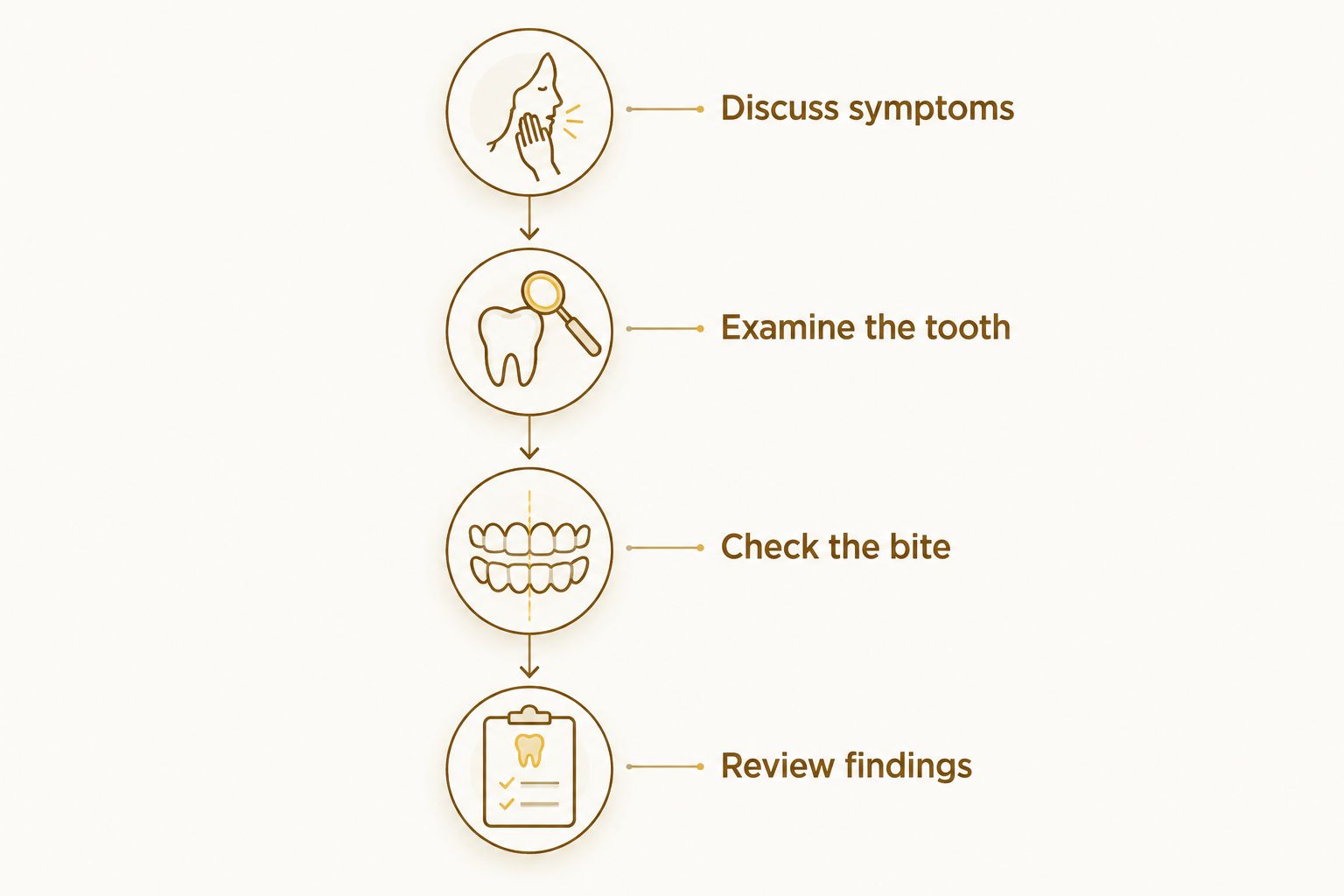
- Discuss symptoms. Explain what triggers discomfort, whether it lingers, and whether you noticed a chip or change in your bite.
- Examine the tooth. Your dentist checks the restoration, surrounding tooth, contacts with neighboring teeth, and signs of damage or decay.
- Check the bite. The examination assesses how the tooth contacts its opposite number and whether loading is contributing to symptoms.
- Review findings. X-rays or other tests are used when clinically indicated, followed by an explanation of monitoring, repair, or replacement.
At Harmony Dental Group, general and restorative dental care is available to local families and patients in La Jolla. Bring your questions about comfort, appearance, and preserving tooth structure so those priorities are part of the discussion.
Does every damaged filling need complete replacement?
No. A localized defect sometimes allows a repair, while more extensive decay or structural damage calls for a different approach.
| Approach | Best for | Benefit | Limitation |
|---|---|---|---|
| Monitoring | A clinically sound restoration without an active problem | Avoids unnecessary removal of tooth structure | Requires reassessment at an appropriate interval |
| Local repair | A limited defect with otherwise suitable restoration and tooth structure | Preserves more of the existing repair | Does not address widespread decay or damage |
| Full replacement | A restoration with problems that cannot be managed locally | Allows removal of defective material and treatment of decay | Usually removes additional tooth structure |
| Greater tooth coverage | A tooth whose remaining structure needs more protection | Protects weakened portions of the tooth | Requires additional preparation; suitability is case-specific |
Ask your dentist to explain what supports the recommendation. Useful questions include where the defect is, whether decay is present, and why a smaller repair would or would not be appropriate.
How can you help fillings last in 2026?
Protect the tooth around the filling. The American Dental Association recommends brushing for 2 minutes, twice a day, with fluoride toothpaste and cleaning between teeth daily; these habits address the plaque that contributes to cavities.
Use a soft-bristled toothbrush and clean gently along the gumline. Floss or another suitable interdental cleaner reaches areas your toothbrush misses, including contacts beside restored teeth.
Avoid chewing ice and using your teeth to open packaging. If you grind or clench, ask whether a professionally assessed protective appliance is appropriate rather than choosing one solely from an online description.
Dry mouth also deserves attention. Tell your dentist about persistent dryness and your medications, but do not stop a prescribed medicine without speaking to the prescribing clinician.
Harmony Dental Group is a local option for La Jolla patients seeking general and restorative dental care. You can contact the practice to discuss an examination for a painful, damaged, or aging filling.
Should you replace old fillings before whitening your teeth?
Not automatically. Whitening changes the shade of natural teeth, but it does not whiten existing composite fillings in the same way, so visible restorations can become a different shade from neighboring teeth.
Discuss the sequence before starting cosmetic treatment. A sound filling needs a different conversation from one with decay, and replacing it solely for a color match is an elective decision rather than evidence that it has worn out.
FAQ
How long do dental fillings last in 2026?
Dental fillings can last for many years, but they have no fixed replacement date. Material, restoration size, chewing forces, decay risk, and the condition of the remaining tooth determine when treatment is needed.
Should I replace a filling just because it is old?
No, age alone is not a reason to replace a clinically sound filling. Your dentist should identify decay, damage, an unsuitable edge, or another reason before recommending treatment.
Can a cavity form under an existing filling?
Yes, decay can develop around a filling and extend beneath it. The filling material does not decay, but the natural tooth around it remains vulnerable.
Does a sensitive filling mean I need a root canal?
No, sensitivity alone does not establish that you need root canal treatment. Your dentist assesses the bite, restoration, tooth structure, and health of the tissue inside the tooth to find the cause.
Can a dentist repair a chipped filling instead of replacing it?
Yes, a limited chip sometimes allows a local repair. The decision depends on the material, size and location of the defect, and whether the rest of the filling and tooth remain suitable.
Is a white filling better than a silver filling?
Neither material is best for every tooth. Composite offers a tooth-colored appearance, while material choice also depends on the tooth, the size of the repair, clinical guidance, and your priorities.
Will teeth whitening change the color of my fillings?
Teeth whitening does not lighten existing fillings the way it lightens natural teeth. Discuss visible fillings before whitening so you understand the possibility of a shade mismatch.
One last thing
An old filling that feels fine still needs examination; a new symptom does not automatically mean replacement. Those facts belong together: neither comfort nor age tells the whole story.
For your next visit in 2026, describe what changed and ask your dentist to show you the finding that supports treatment. A clear explanation should connect the recommendation to the tooth's condition, not simply to how long the filling has been there.